Grit, wit and play - Story of a young leather artisan in Dharavi
Authors
Authors


Grit, wit and play - Story of a young leather artisan in Dharavi
Authors
Authors
We met Mohammad Irfan Alam, aka Irfan Bhai, while on a hunt for a leather artisan for an urgent project deadline. Most of the time, you find the Diamond in the rough, especially in Dharavi. He never finished school and only studied until the eighth grade. Books didn’t feel right. “I wanted to do something,” he says. So he came to Mumbai from Bihar and to Dharavi, the city’s humming heart of work. “Whoever wants to work gets work, here in Dharavi.”
“In Dharavi, whoever wants to work gets work”
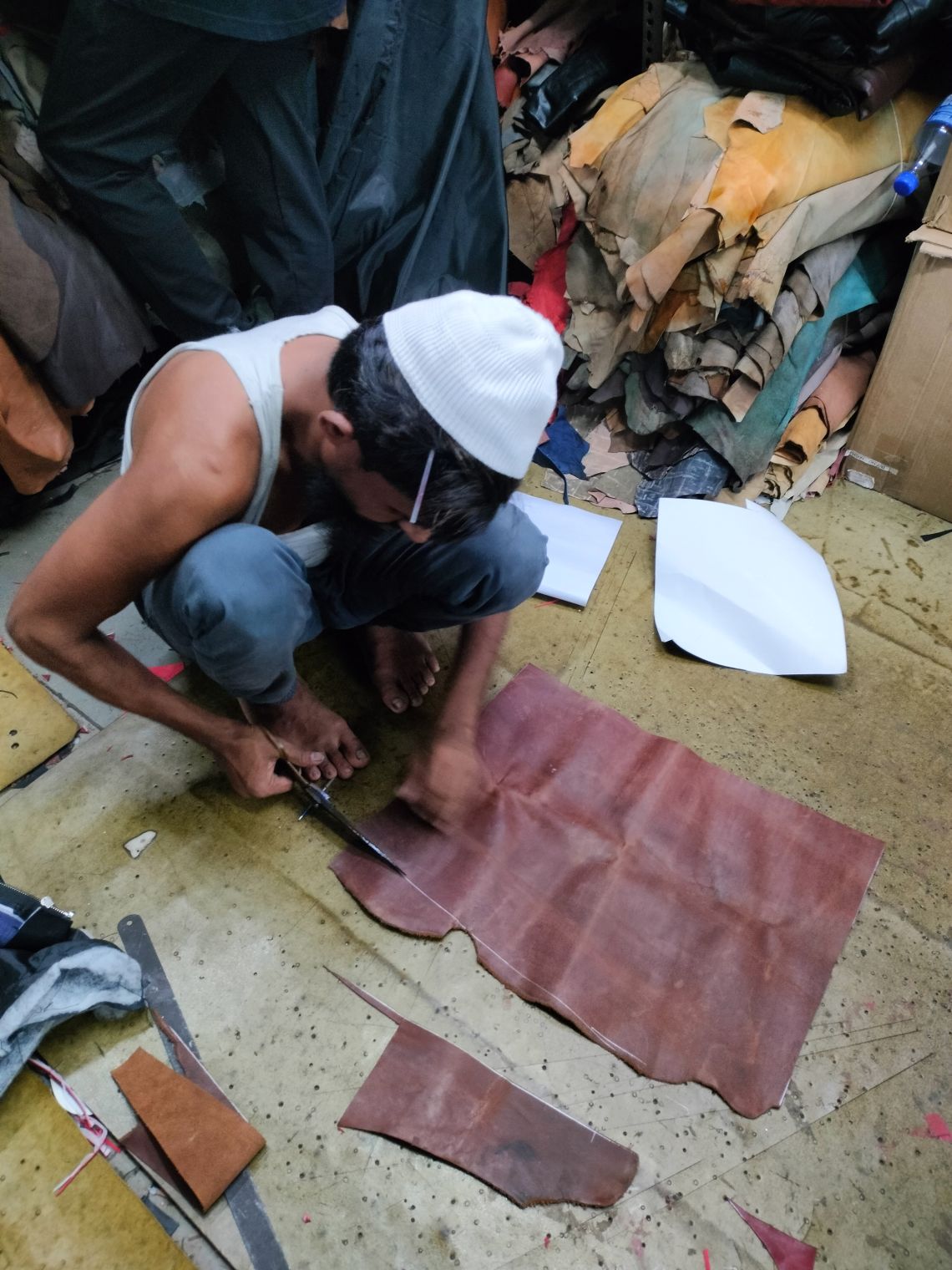
He is thirty now, but he began working in the leather industry at twenty, learning in playful moments from his elder brother, who worked in a workshop nearby. Irfan watched, learned, and slowly found his interest.
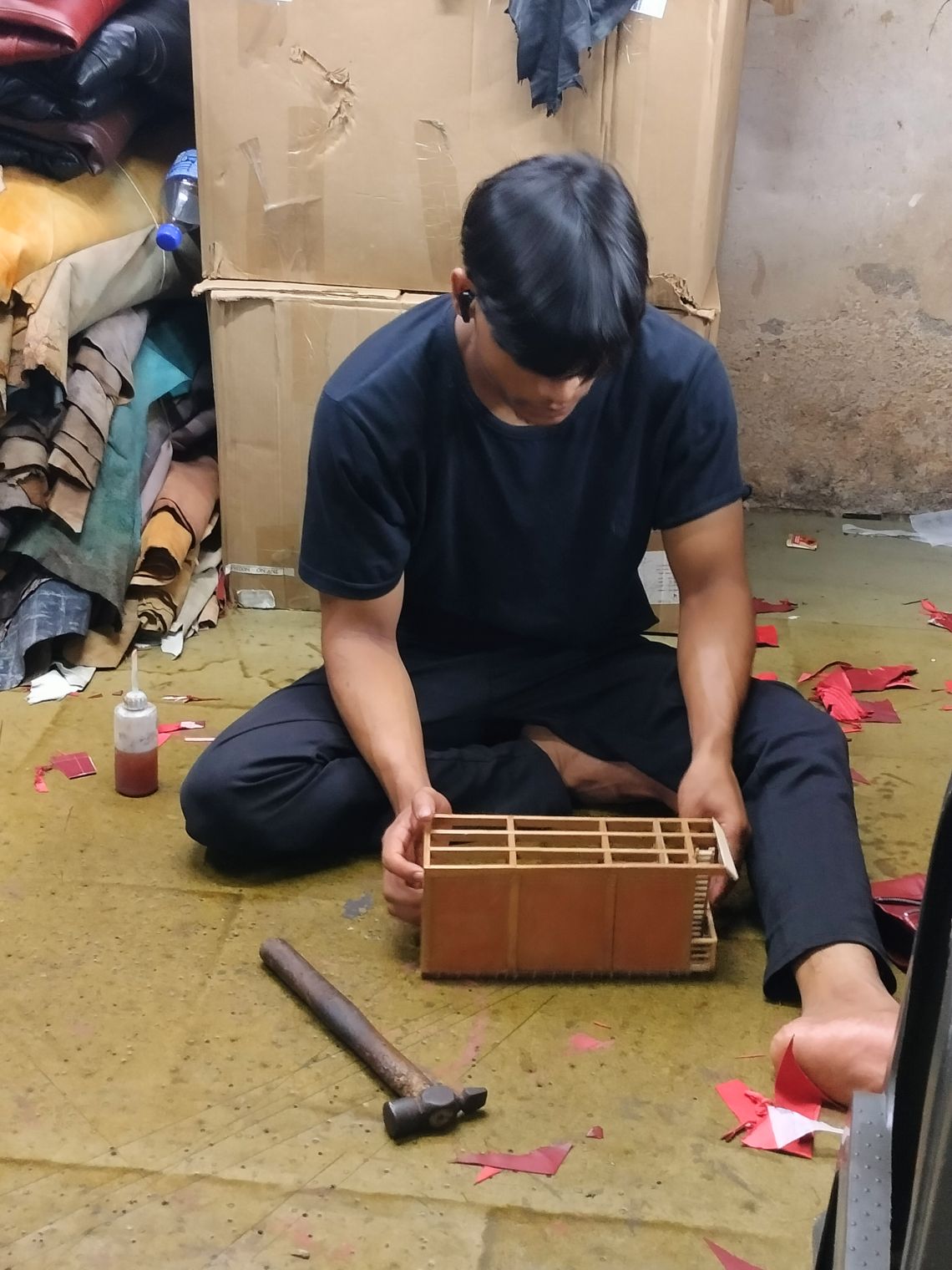
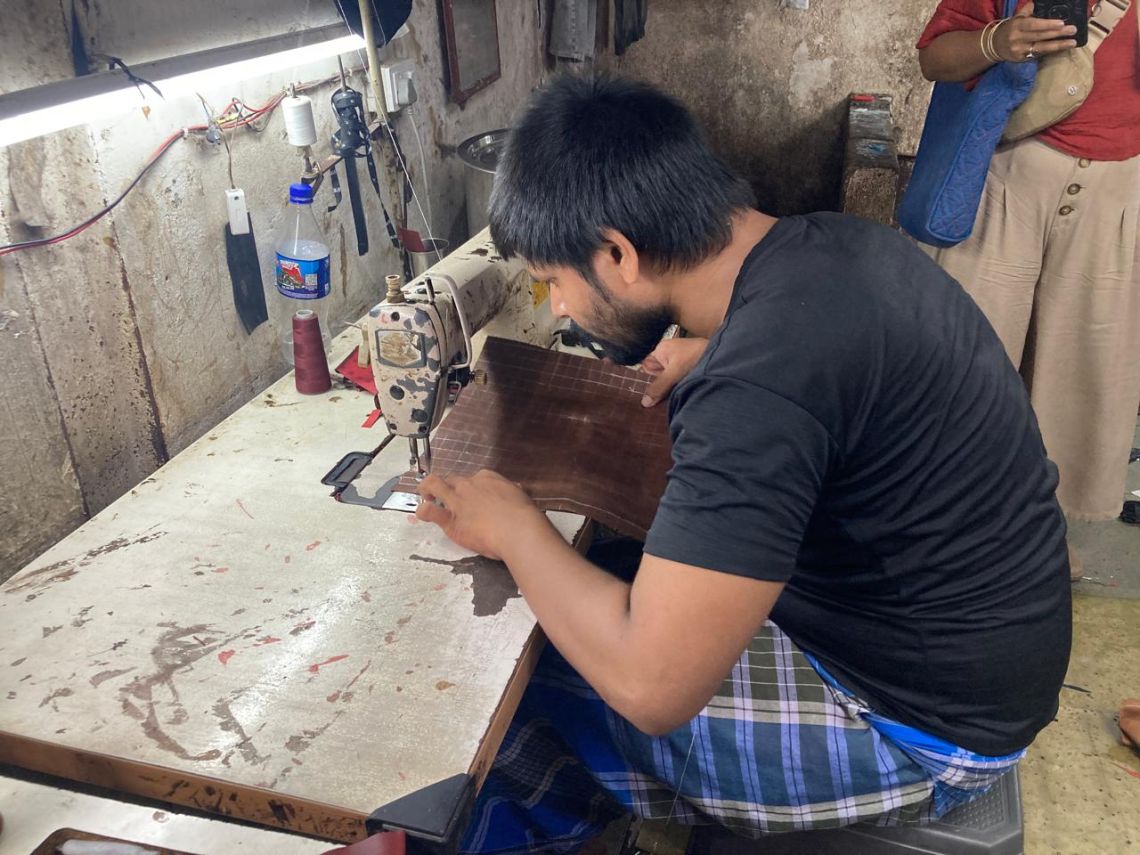
Inside the workshop, four men, Irfan, Khurshid, Danish, and Saddam, live, work, eat, and argue within a few square feet of space. Their beds and machines share the same floor, a tiffin service delivers lunch and dinner, and Wi-Fi delivers the rest. They start around ten in the morning, and work takes them late into the night. When asked why all of them have the surname Alam, Irfan bursts into laughter. “Everyone likes to put Mohammad and Alam! Makes us sound respectable!”
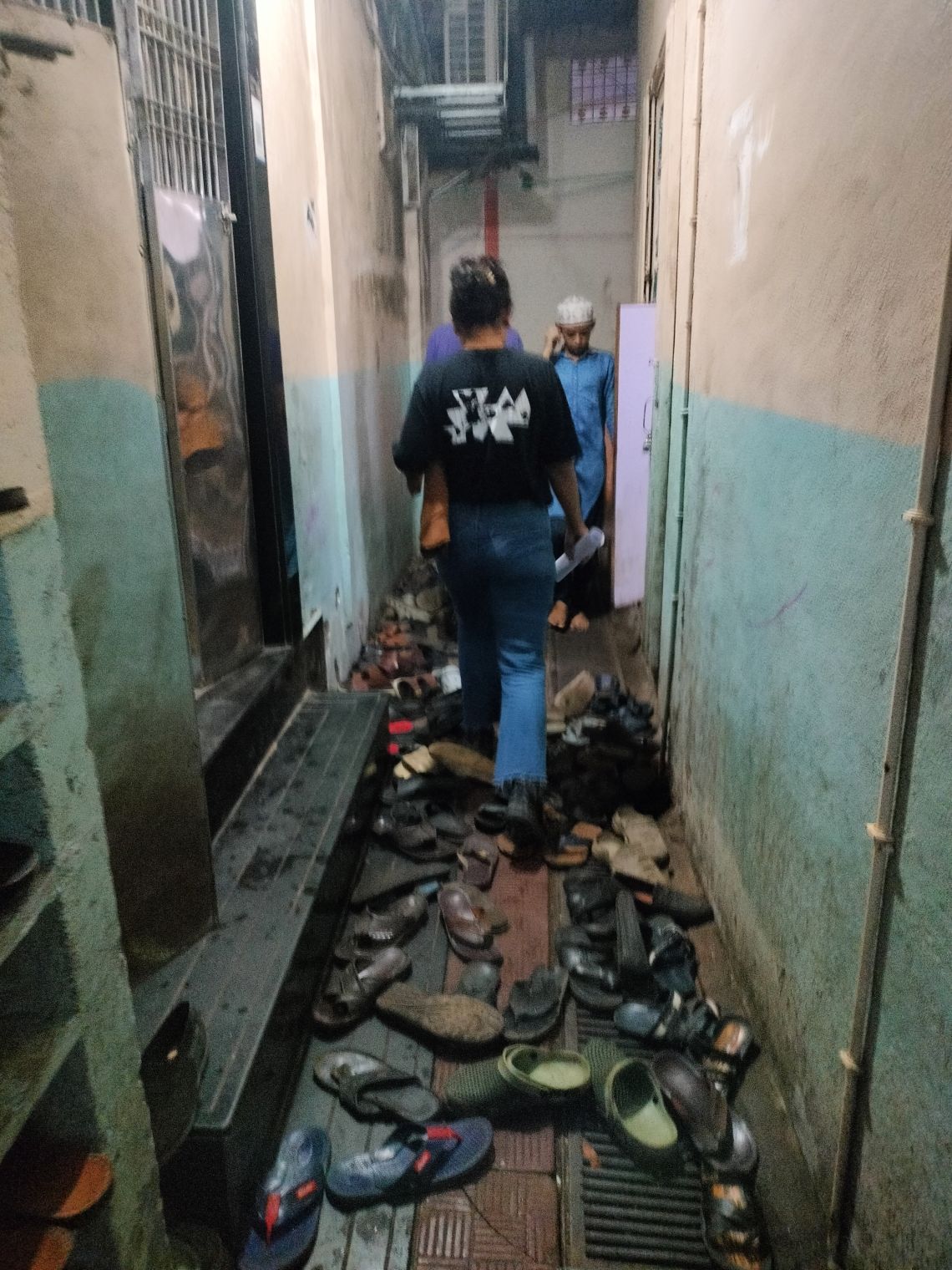


A few days of the week, Irfan becomes Masterji Irfan at the FAB Academy of Fashion. Helping fashion design students work with leather. The story of how he ended up there is a coincidental one. The design program head was wandering through Dharavi one day, and she stumbled upon his workshop and found him, just like that!
He likes it there, the respect, the structure, the quiet acknowledgement that his skill means something. He tells me there’s another Masterji who earns one lakh a month. “I look up to him and have also befriended him,” he says. Back at the workshop, Irfan is the one everyone looks up to and asks for his advice.
“Jyadatar mithi zubaan hai sabki idhar (everyone speaks nicely to each other in Dharavi)”, he says in Hindi. There are many fights, sure, but they get solved. “Sab apne gaav ke hai (Everyone here is from our village)”. Even the owner of the workshop is from Bihar. The neighbours know each other's names. In moments of crisis, the whole neighbourhood will stand together.
Every few months, Irfan goes back to his village in Seetamandi, Patna, Bihar. He’s not married yet, so he uses his time to travel. Bengal, Kashmir, wherever the train takes him. “If Irfan were married,” his friend Saddam jokes, “he’d be travelling with his wife, not with us!”
He talks about real leather with reverence. He refuses to work with artificial leather materials. “Rexine is fake, it is made fast and also dies fast. Real leather lives longer and takes relatively more time to make. It ages well, too. Sometimes, what we make today becomes someone’s heirloom.”
“Rexine is fake, it is made fast and also dies fast. Real leather lives longer and takes relatively more time to make. It ages well, too. Sometimes, what we make today becomes someone’s heirloom.”
Once, the tanneries used to be here in Dharavi itself, he tells me. Now the hides come from Chennai, but the rhythm continues. In a world sprinting towards convenience, Irfan and his colleagues persistently and efficiently add value to the craft of making by hand, a gentle reminder that the best things sometimes take a little more time!



People involved
Related articles

In this article, we situate ourselves in Chile and examine homegrown neighbourhoods in various terrains.





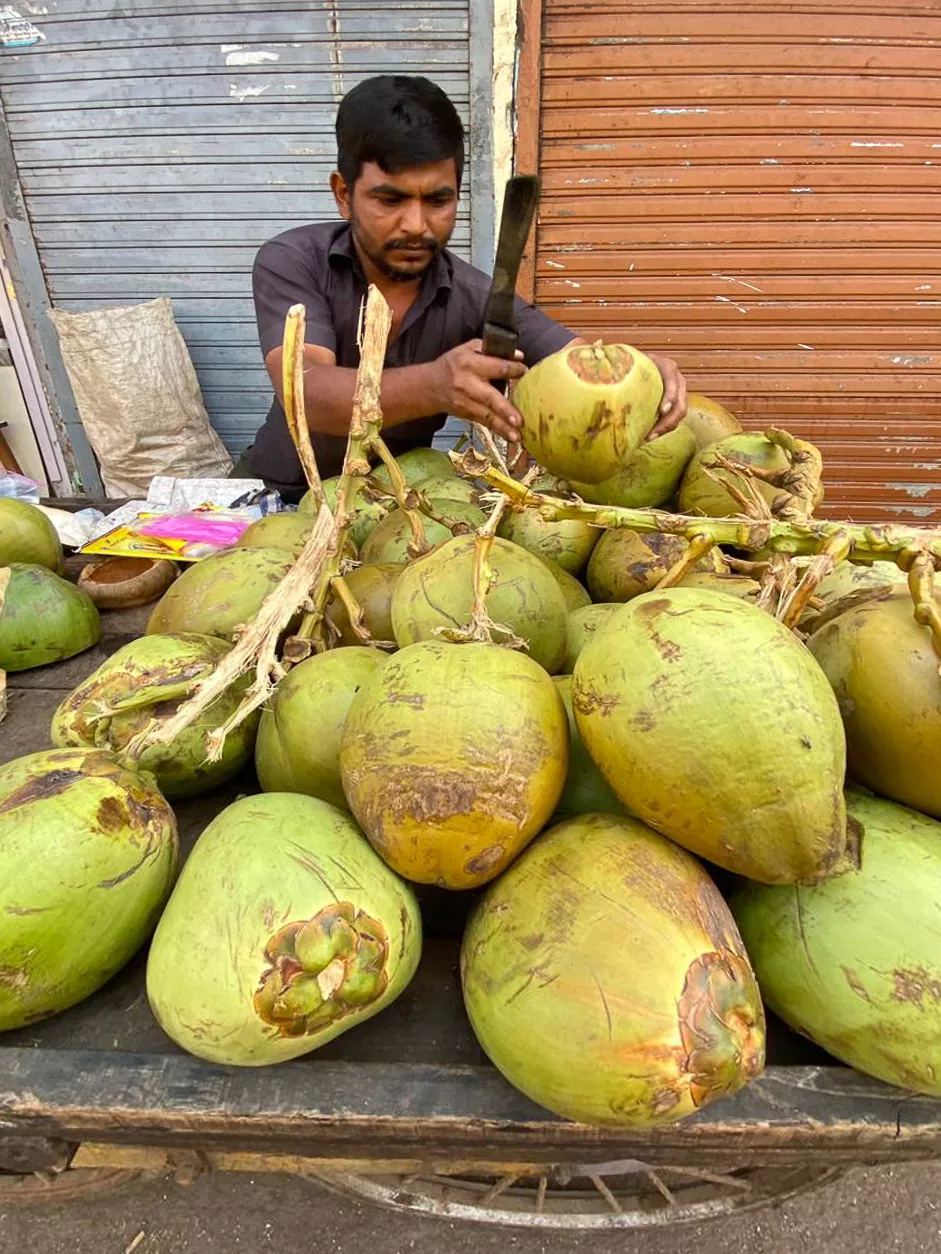
As the title suggests, Life Got Better with Coconuts for Kausar Shaikh. He came to Mumbai 15 years ago, leaving his family farm in Jharkhand, because he was not keen on agriculture and was seeking a different path. Seeing other migrants from his region successfully start small businesses gave him the confidence to leave years of unstable work in Mumbai behind and become a thriving coconut vendor in Dharavi.
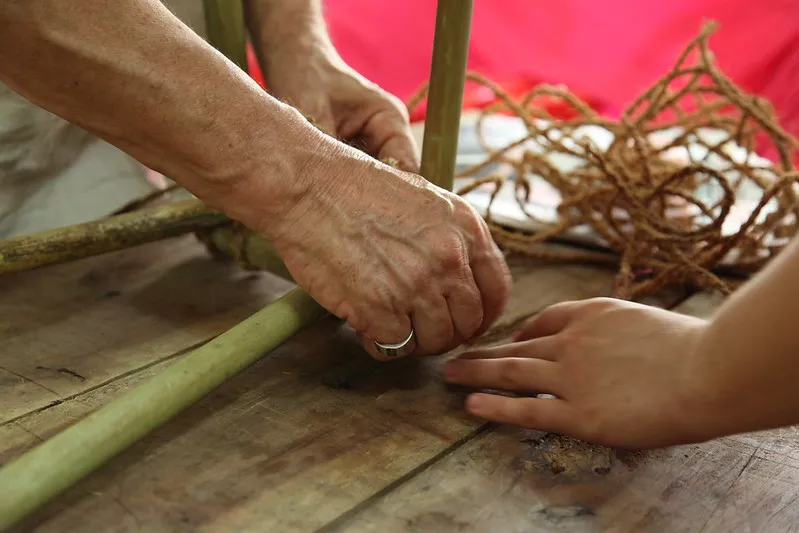
The Handstorm workshop brought together various actors from all around the world to build things that could improve the neighbourhood based on discussions with residents and with the help of local artisans


The Homegrown Street exhibition opened on 23rd September, bringing together years of work. Residents of Sangam Gully in Dharavi imagined their future homes, local contractors designed them, and artisans from across Mumbai built 17 models in leather, brass, steel, embroidery, clay and more. This article follows the builders and craftspeople at the opening as they see their skills celebrated, many for the first time. Open daily until 27th September, 10:00 am to 7:00 pm.

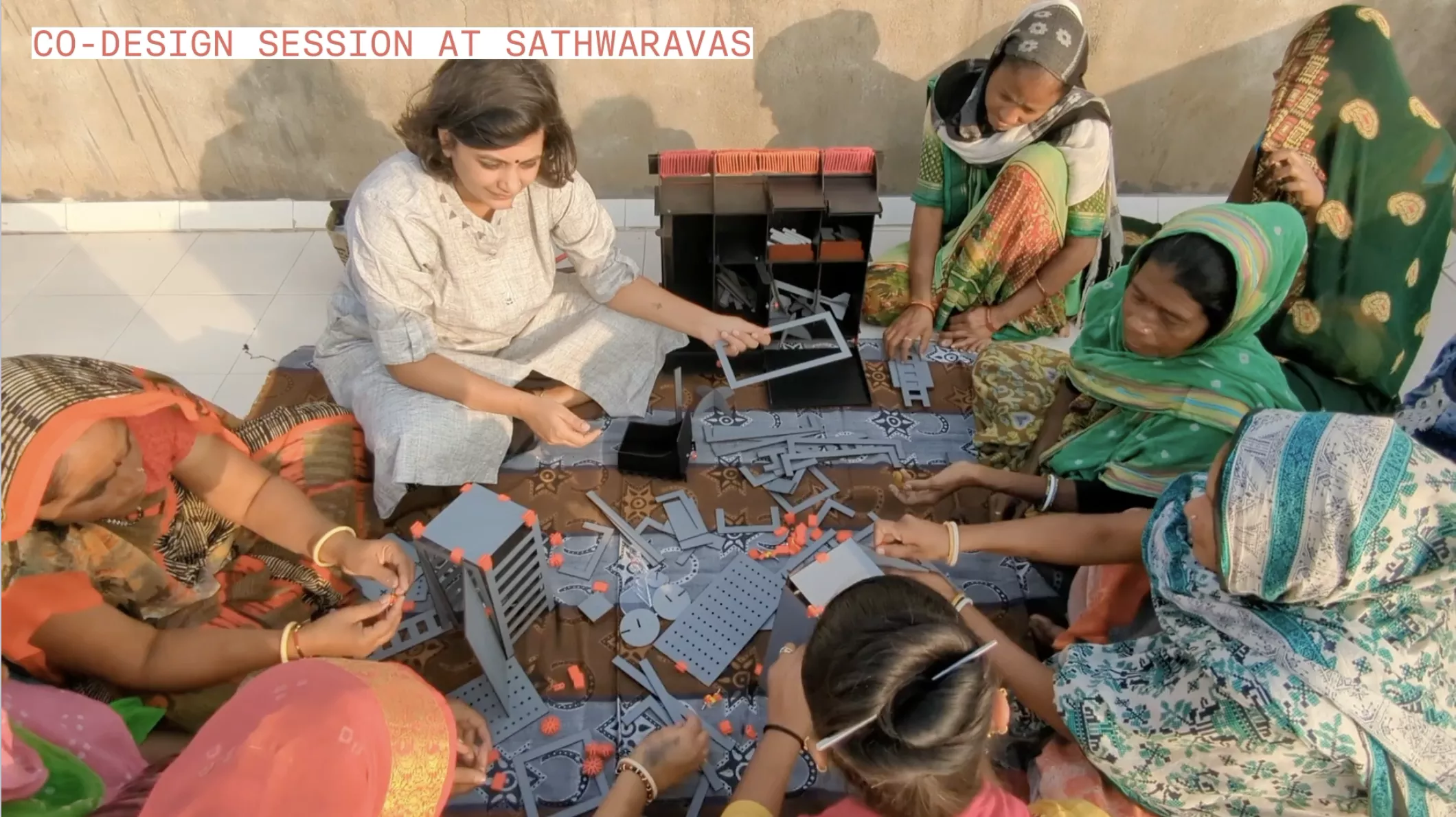
Policies can be supportive or prohibitive, depending on who they serve. A public policy student tries to understand how marginalised communities navigate urban realities from the lens of the architects and urban planners who work with them.

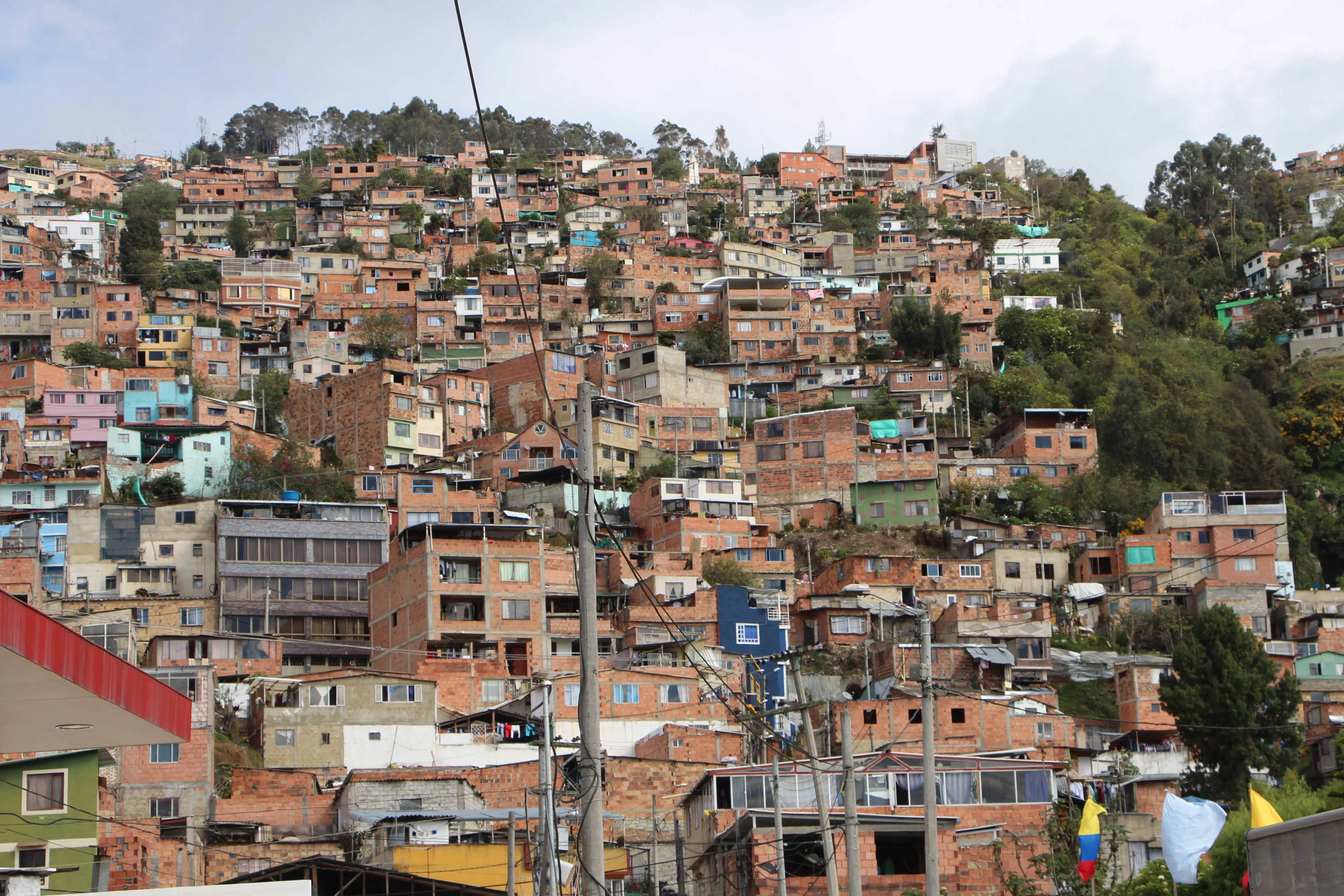
Started after a dynamic collaboration in Mumbai where team Colombia helped construct an office in Mumbai, Bogota announces itself and makes plans for the future.

An architectural and design practice that works with local builders and residents to create projects embedded in neighbourhoods’ cultural and economic fabric.

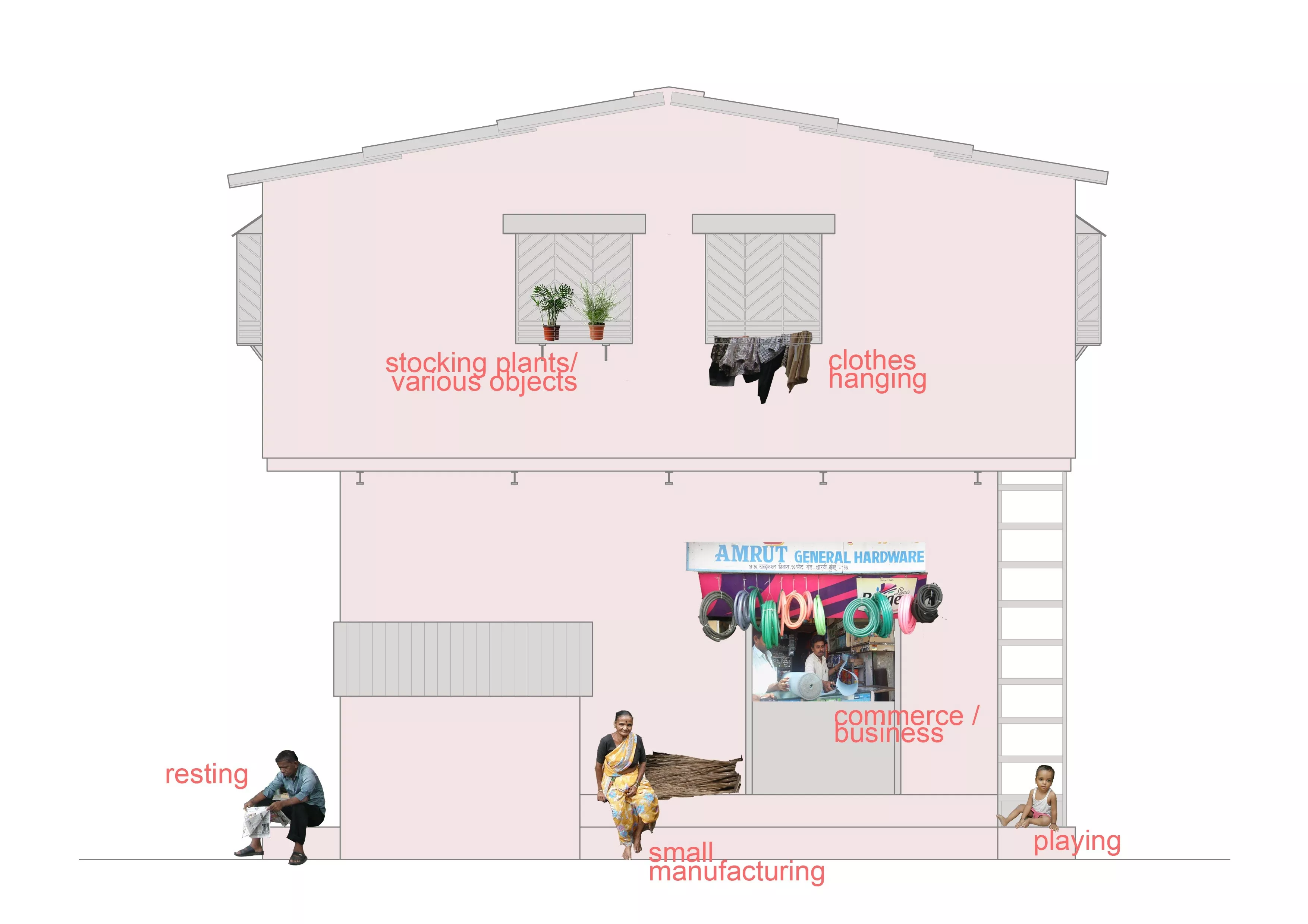
In the chaotic, overcrowded and over dynamic environment of Dharavi, space is the main resource. Every inch of space has its use and is exploited to its fullest.

For many years, the inhabitants of the San German neighbourhood (located in Usme, in the metropolitan area of Bogota) have been developing many different projects on public space improvement and infrastructure, which permitted the amelioration of living conditions. The main goal is to promote projects of community improvement on social and cultural levels of the San German community.