Sofa so good!
Authors
Authors

Sofa so good!
Authors
Authors
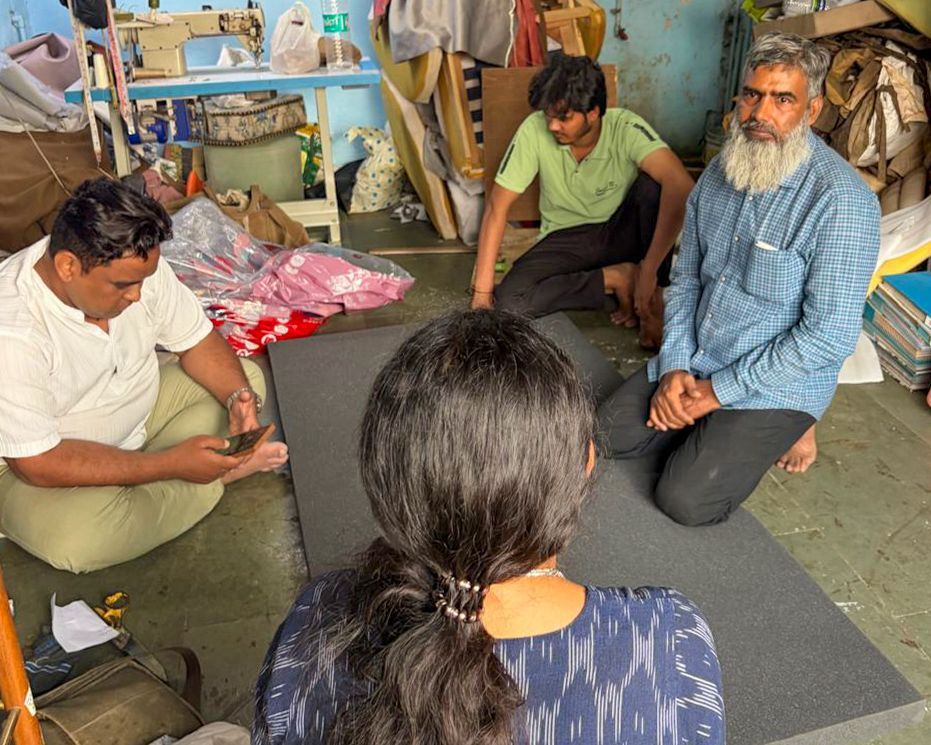
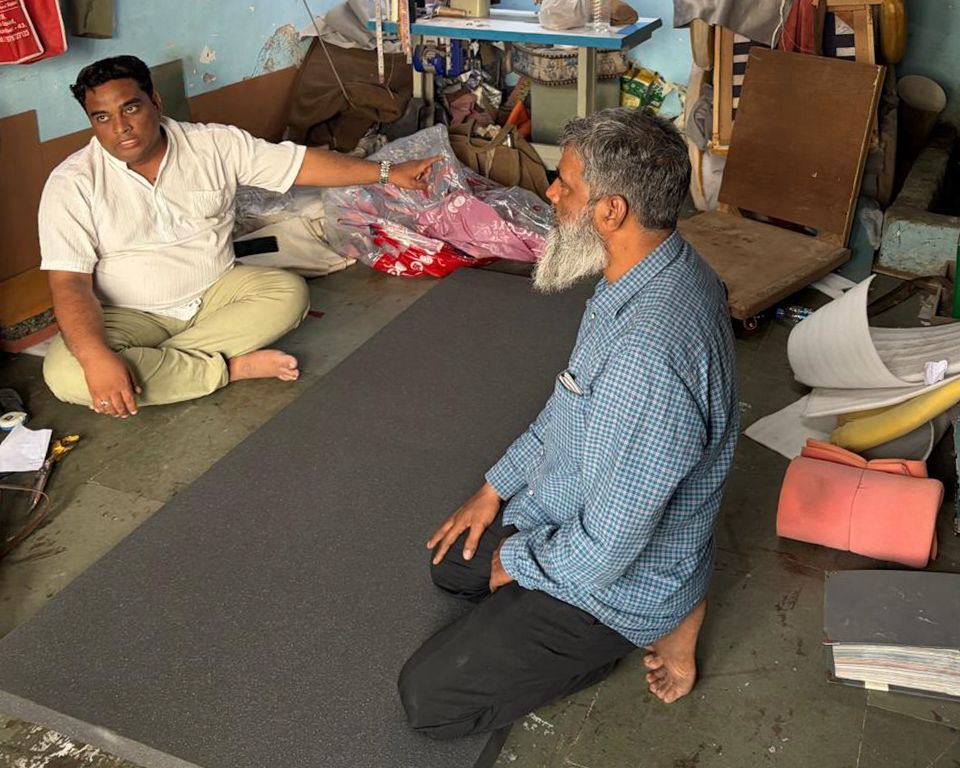
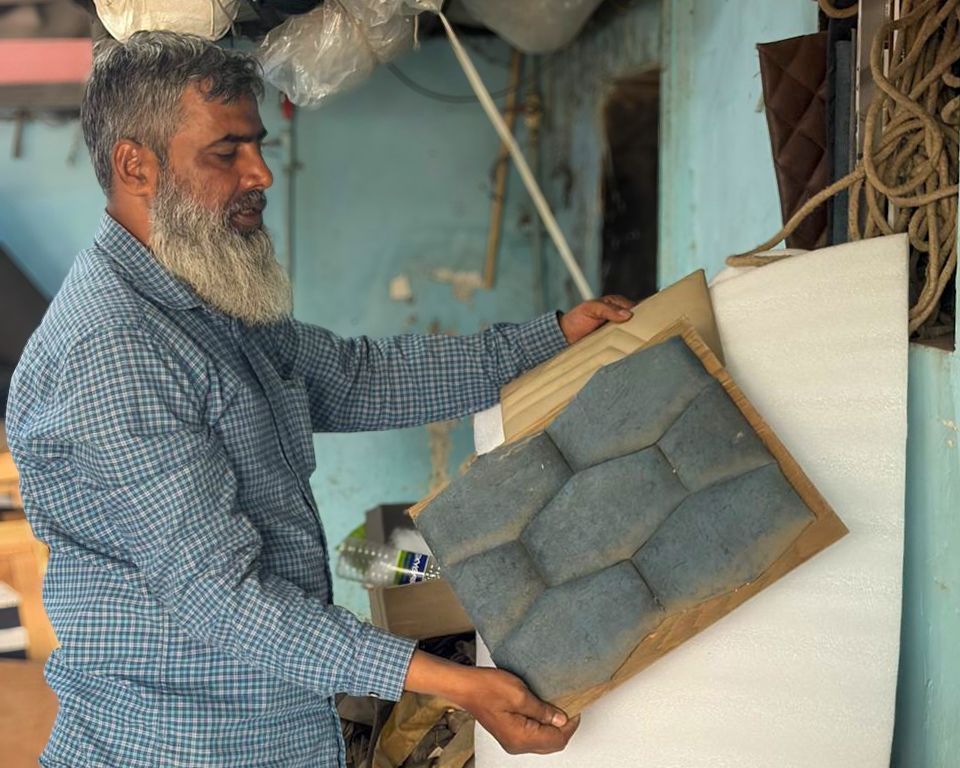
Abdul Hamid Sayyed is a sofa maker who operates a rented workshop at the edge of Dharavi Koliwada, with a frontage facing the Sion-Bandra link road. He has lived in Dharavi since 1985, having arrived when he was just seven years old. He says he has seen the area transform right before his eyes. He reminisces about a time when the land where the Bandra Kurla Complex (Mumbai’s business district) stands today was just an open ground with no buildings, and a massive open-air theatre where films were screened.
Abdul entered the furniture-making profession because he was not particularly interested in academic studies. Instead, he found designing furniture to be an engaging pursuit that challenged his mind. He spent years learning woodworking and sofa-making as an apprentice artisan at various workshops and studios across the city, including within Dharavi.
Three years ago, he started his own business. He speaks passionately about his work, noting that he does not shy away from challenges. He enjoys engaging in dialogue with clients to experiment with newer designs. Even if commissioned for a single piece of furniture, Abdul is willing to undertake design briefs that give fodder to his brain. His many years in this profession have given him the kind of experience where no challenge feels too big to handle.
Hum ghabraate nahi hai naye type ke kaam se, aapko jaisa bhi kuch banwaana ho, kuch ekdum customised banwaana ho, hum kar denge.
I don't shy away from a challenge. If you need something specific and one-of-a-kind, I’m ready for it. Consider it done.
Currently residing in Dharavi with his family, Abdul has four children, including a school-going son and a daughter in the 12th grade. His son attends the local municipality school. He reflects that just as his parents invested everything in their capacity to educate him, he is now investing everything he can to ensure his children have access to the best education. Although he suspects his children are not very interested in studying, much like he was, he remains committed to seeing them succeed in life.
Dharavi Mumbai ka dil hai.
Dharavi is the heart of Mumbai.
He explains that Dharavi has a perfect ecosystem that has grown over time to sustain small-scale industrial and workshop businesses. It is one of the few places where he can find all the required raw materials and the skills to process them. In Dharavi, whenever a primary industry takes root, it naturally fosters a surrounding cluster of auxiliary businesses that provide the essential supplies and specialised services needed for production. This concentration fosters a self-sustaining cycle, where every stage of the supply chain is within reach, enabling small-scale operations to function with high efficiency. Furthermore, the extensive network of artisans allows him to outsource tasks that cannot be done at his relatively small workshop. Since his business thrives on word of mouth, this network is vital for his growth. Geographically located in the centre of Mumbai, Dharavi also serves as a logistical centre, providing unparalleled proximity to the city’s major transport networks and many of its commercial marketplaces.
Abdul speaks very practically about the Dharavi redevelopment project. He anticipates that once the neighbourhood is redeveloped, the existing ecosystem will be disrupted. He expects overhead costs to increase and knows he may incur losses, but he views this as the part and parcel of any business and is prepared to deal with it when it happens.
However, he remains sceptical about the redevelopment project's intent, describing the redevelopment as divisive and not for the poor. While there are talks that residents will receive homes in the same locality, he refuses to believe that these homes will be permanent. He believes the aim is to create an elite urban neighbourhood, similar to the Bandra Kurla Complex, and push the poor and middle class to the peripheries of the city.
Despite these uncertainties, Abdul maintains an optimistic outlook regarding his future. When asked about moving away from the network of friends and work associates he has made over the decades, he simply states, "Wherever we go, we’ll make new friends and rebuild our business.”
Abdul’s perspective suggests an acceptance of his limitations within the social hierarchy and, to a certain degree, a resignation to his fate. While he acknowledges that some things are out of his control, he remains focused on moving forward in life without losing hope.



People involved
Related articles

A new series of Make in Dharavi focuses on the neighbourhood of Kumbharwada, famous for its pottery. Part 1 looks at the history of the area and some of the issues it's facing today.

Samsuddin, a printmaker in Dharavi, Mumbai, whose small but efficient studio reflects the spirit of local enterprise. From printing school uniforms for suburban Mumbai to receiving an order from his hometown in Uttar Pradesh, Samsuddin's journey weaves personal strength with community-rooted entrepreneurship. He exemplifies how creativity and determination shape life in Dharavi. Amidst talks of redevelopment, Samsuddin advocates for progress without displacement, preserving the soul of the community he calls home.

Originally from Ratnagiri, Ravi built his career over three decades in Dharavi’s vibrant informal economy. Despite relocating to Diva, he remains deeply rooted in the locality, valuing its close-knit support system. The piece highlights his concerns over redevelopment, the resilience of Dharavi during the pandemic, and the socio-economic networks that sustain livelihoods like his. Ravi’s journey reflects the intersection of creativity, survival, and community in urban informal settlements.
Pushpa has been living in Dharavi since she was born. Our day starts with her bright smile as she sells pulses right outside the urbz office. We recently had a little chat with her.
An interview with Liron Shalit, our filmmaker-in-residence. He is an award-winning documentary filmmaker focused on social issues, human rights, and ethical urbanism. Recently, the urbz office hosted a screening of his film Living Euljiro that traces the neglected losses of those living within a centuries-old district of maze-like alleys at the heart of Seoul (Synopsis). We speak to him about his craft, his lessons from Euljiro, and his time here in Dharavi.
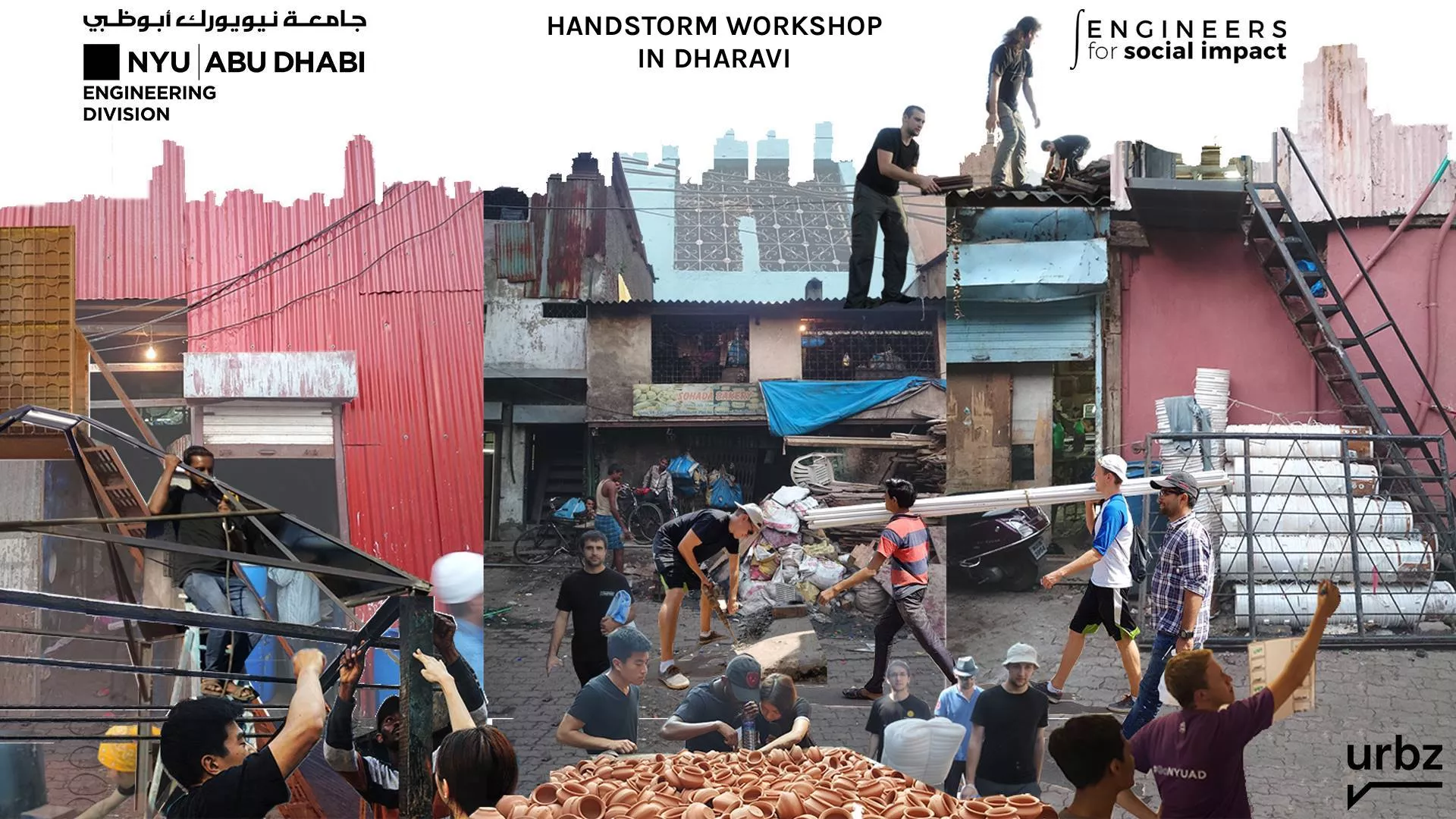
Since 2016, students of the Engineers for Social Impact studio at NYU AD (New York University's campus in Abu Dhabi) have spent one week handstorming in Dharavi, Mumbai. The idea is to research, observe, ideate and handstorm during the week-long workshop, the learning of which are further researched and developed in the studio upon their return to Abu Dhabi. These annual Handstorm workshops in Dharavi generate incremental innovations that improve the quality of life in this massive settlement.


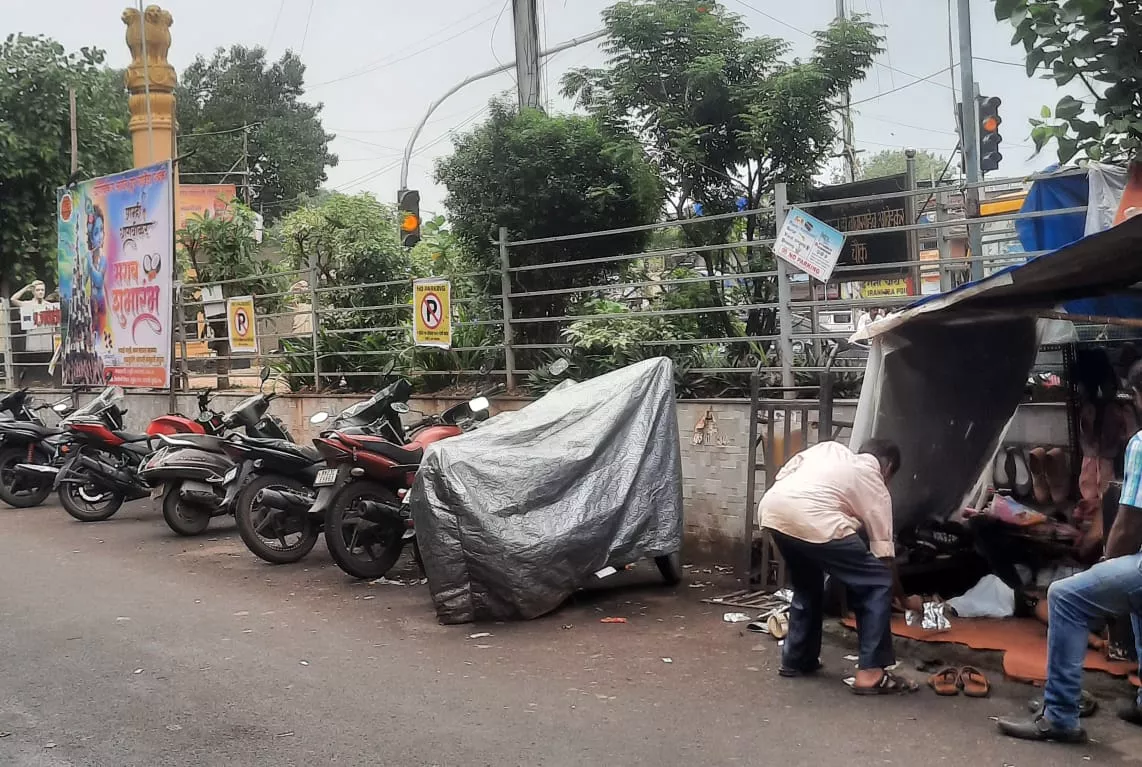
Shankar Jadhav, a 61-year-old cobbler, defies caste boundaries beneath Samvidhan Square. With calloused hands, a love for books, and quiet resilience, he mends shoes, nurtures a square, and challenges the invisibility imposed by society: one stitch, one flower, one act of dignity at a time.
Shankar Jadhav, a 61-year-old cobbler, defies caste boundaries beneath Samvidhan Square. With calloused hands, a love for books, and quiet resilience, he mends shoes, nurtures a square, and challenges the invisibility imposed by society: one stitch, one flower, one act of dignity at a time.
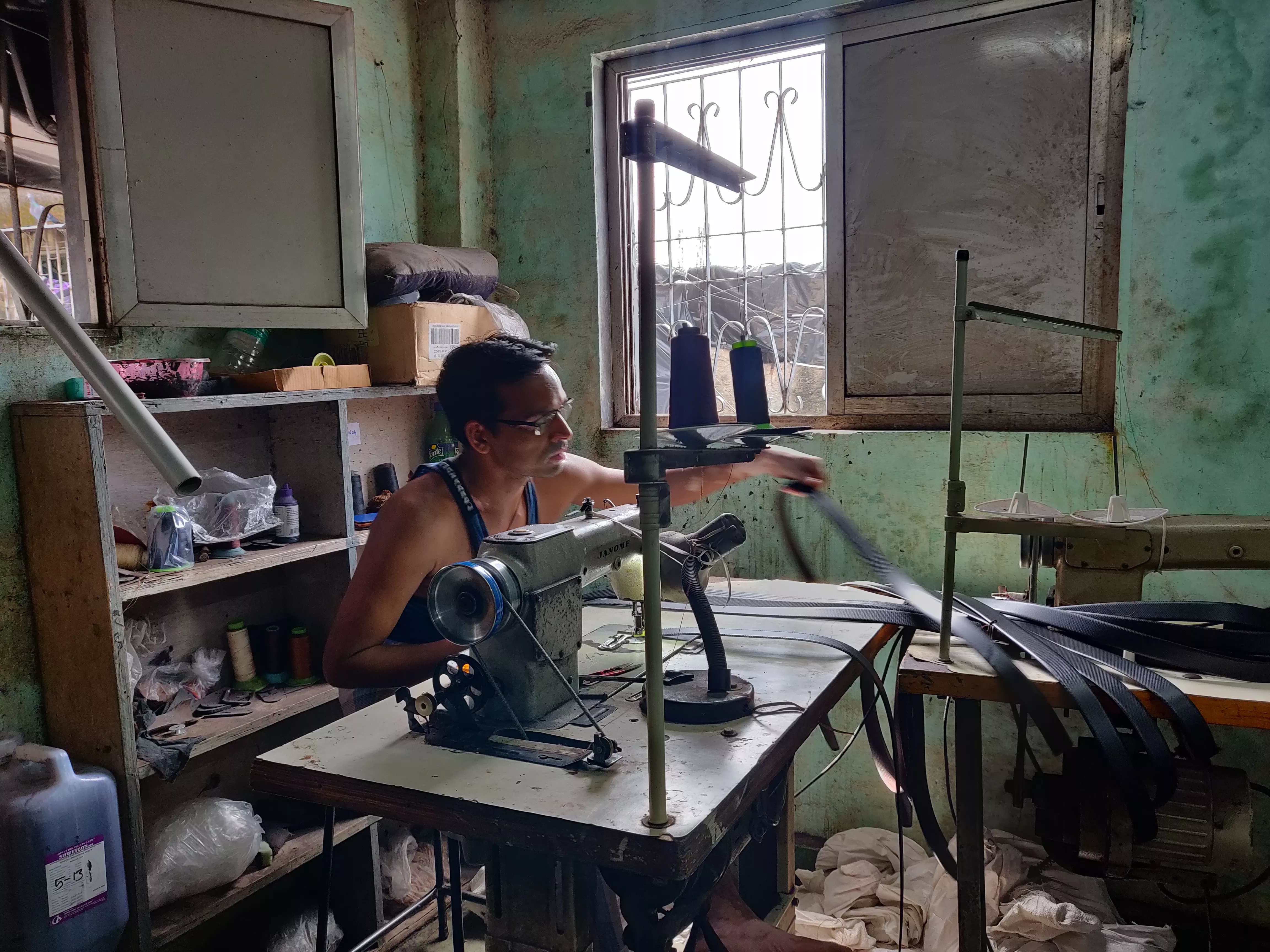
In the second part of this series, we explore two leather workshops near the 90 feet road in Dharavi, to understand where and how all processes in the creation of leather products are carried out.


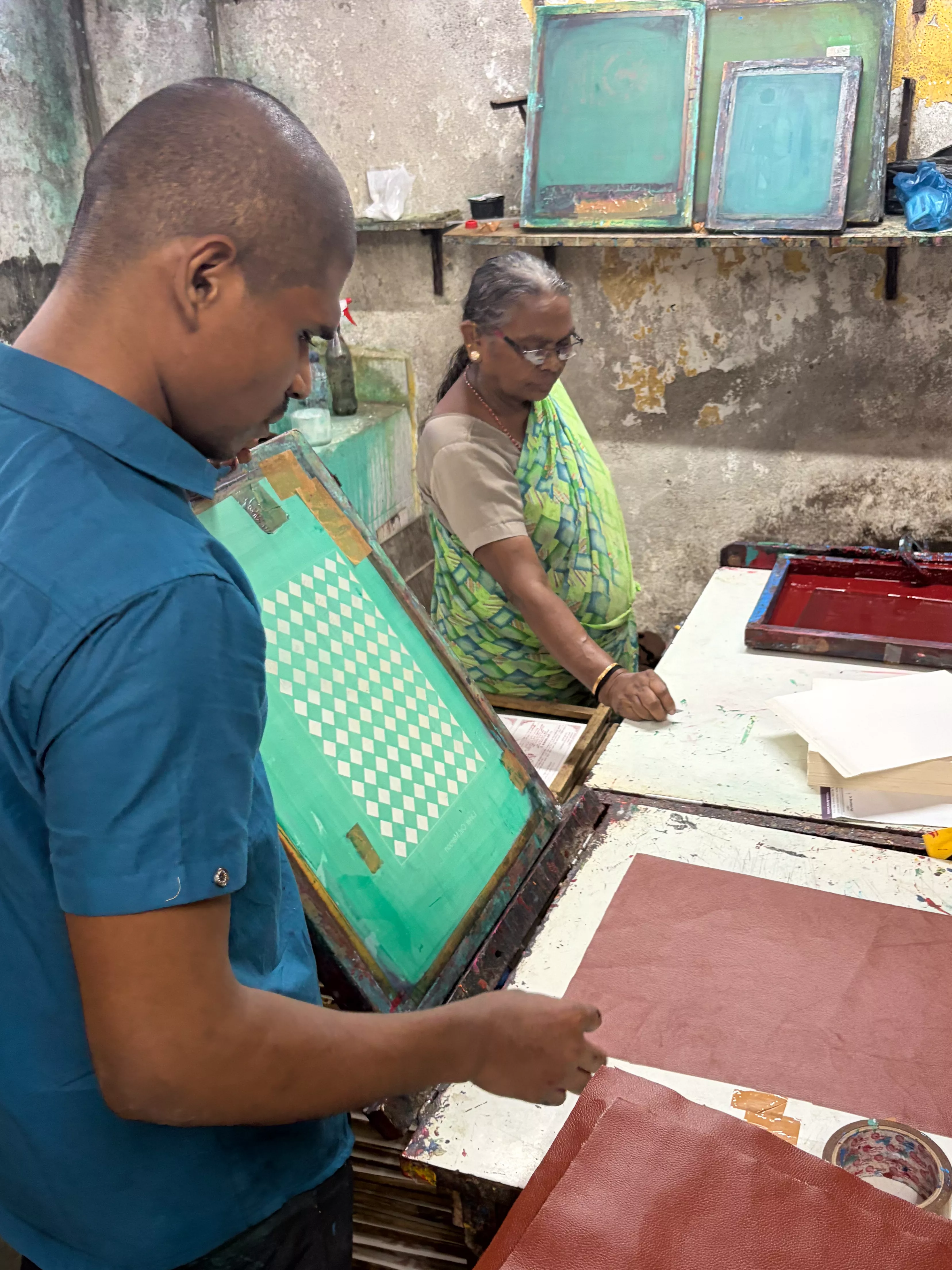
In a lane off the bustling 90 Feet Road in Dharavi, there is a tiny studio dedicated to all types of screen printing. Laxmi and Mani are an unlikely duo that expertly handle the screenprinting needs of customers across the city. They talk to us about a lifetime spent in the industry.
This article is part of the following collection
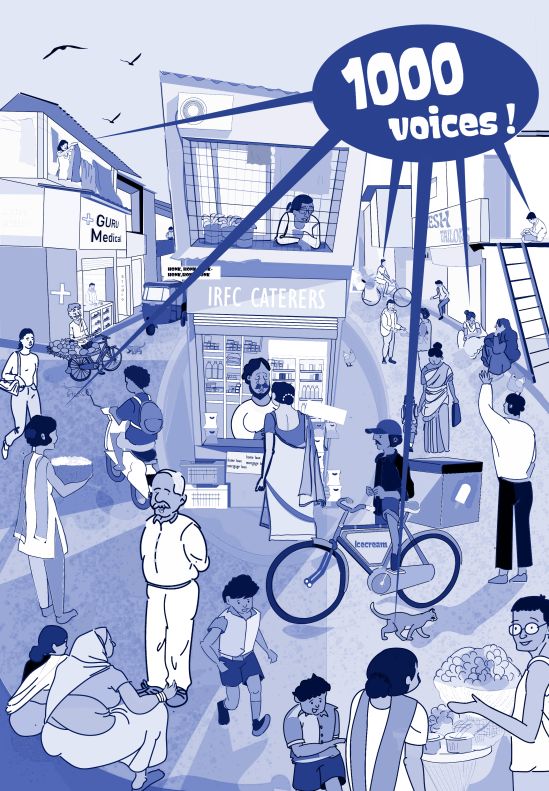
1000 Voices is a project that aims to document and understand Dharavi, Mumbai, through the perspective of people who, through their presence and activities, reproduce this fascinating homegrown neighbourhood day after day.