Pointing Upward
Authors
Authors

Pointing Upward
Authors
Authors
Satish Dalvi, a man in his late 30s, is a second-generation resident of Dharavi, where he was born and raised. His grandfather migrated to this urban enclave from the rural edges of Maharashtra, seeking better opportunities, and since then, Dharavi has been the heart of Satish’s world. His life reflects the resilience and challenges in Dharavi.
For years, Satish has been working as a caregiver for ill elderly residents in Vasai and Virar, suburbs far from his home. His daily commute is exhausting, marked by overcrowded trains that test his endurance. Packed tightly among countless commuters, Satish’s journey underscores the physical and emotional toll of earning a livelihood in a city that never slows down. Yet, he persists, driven by necessity and a commitment to supporting his modest household.
Satish’s role as a non-certified nurse and caregiver was not his first choice. Opportunities for work that aligned with personal aspirations for Satish were scarce. With few local options, Satish turned to caregiving, a demanding job that allows him to maintain his modest home in Dharavi, a small but dignified space that stands as a testament to his hard-earned stability.
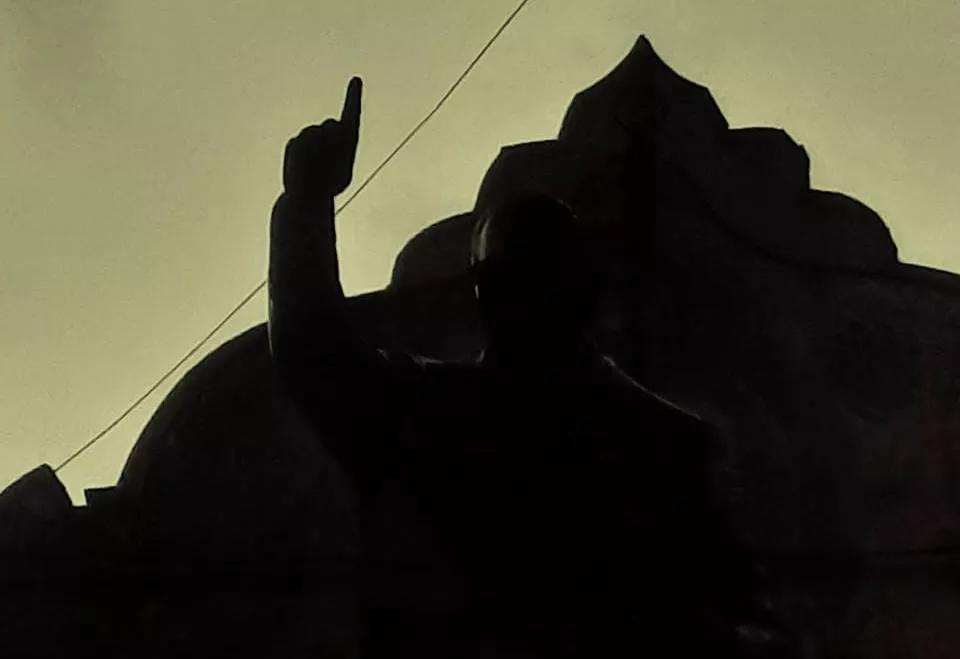
In his younger years, as a high school student, Satish worked in sanitation across Dharavi, Chembur, and Ghatkopar. As a member of the Scheduled Caste, he secured this job through a poignant gesture, pointing a finger upward, a symbol associated with Dr B.R. Ambedkar. This gesture served as a quiet but unmistakable signal to the supervisor, indicating Satish’s caste identity. This act resonated deeply, as 98% of India’s menial sanitation workers belong to Scheduled Castes, where such roles are an unspoken reservation. However, the job soon turned into manual scavenging, a dangerous and degrading practice that posed severe risks to his health and safety, forcing Satish to leave.
Satish is a passionate activist, deeply vocal about issues affecting his community. His activism extends to challenging superstitious practices, inspired by the legacies of Govind Pansare and Narendra Dabholkar, rationalist thinkers who were tragically killed for their beliefs. Satish firmly believes that, though their lives were cut short, their ideas remain untouched and will continue to flourish, inspiring him to speak out for justice and reason.
Despite the hardships, Satish finds joy in the simple rhythms of Dharavi. His favorite pastime is strolling through its lively lanes in the evenings, a ritual that allows him to unwind and connect with the pulse of his community. For Satish Dalvi, Dharavi is a home where his family’s history, his activism, and his resilience converge, shaping a life of purpose amidst the challenges of everyday existence.
Related articles
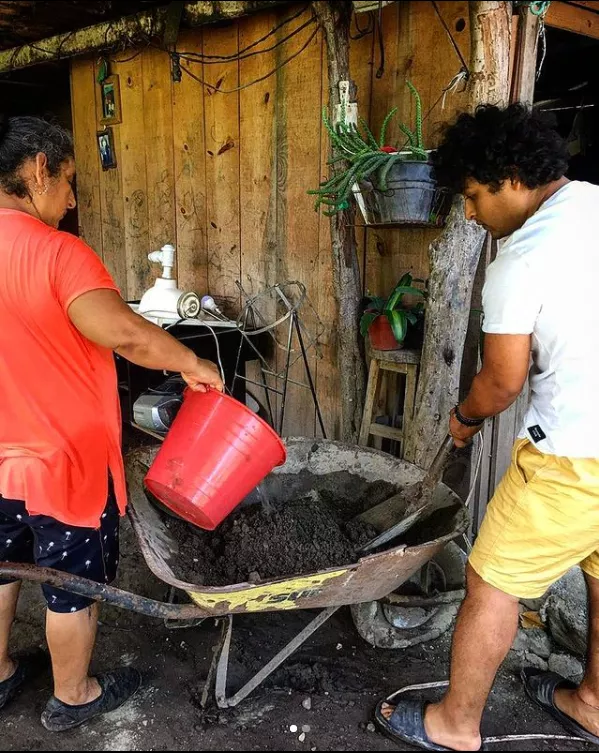
Colima city in Colima State of central-western Mexico is home to disjointed and fragmented homegrown settlements, also known as colonias. In this article, we learn from Tobias Jimenez about the origins and functioning of a colonia on the outskirts of Colima city.


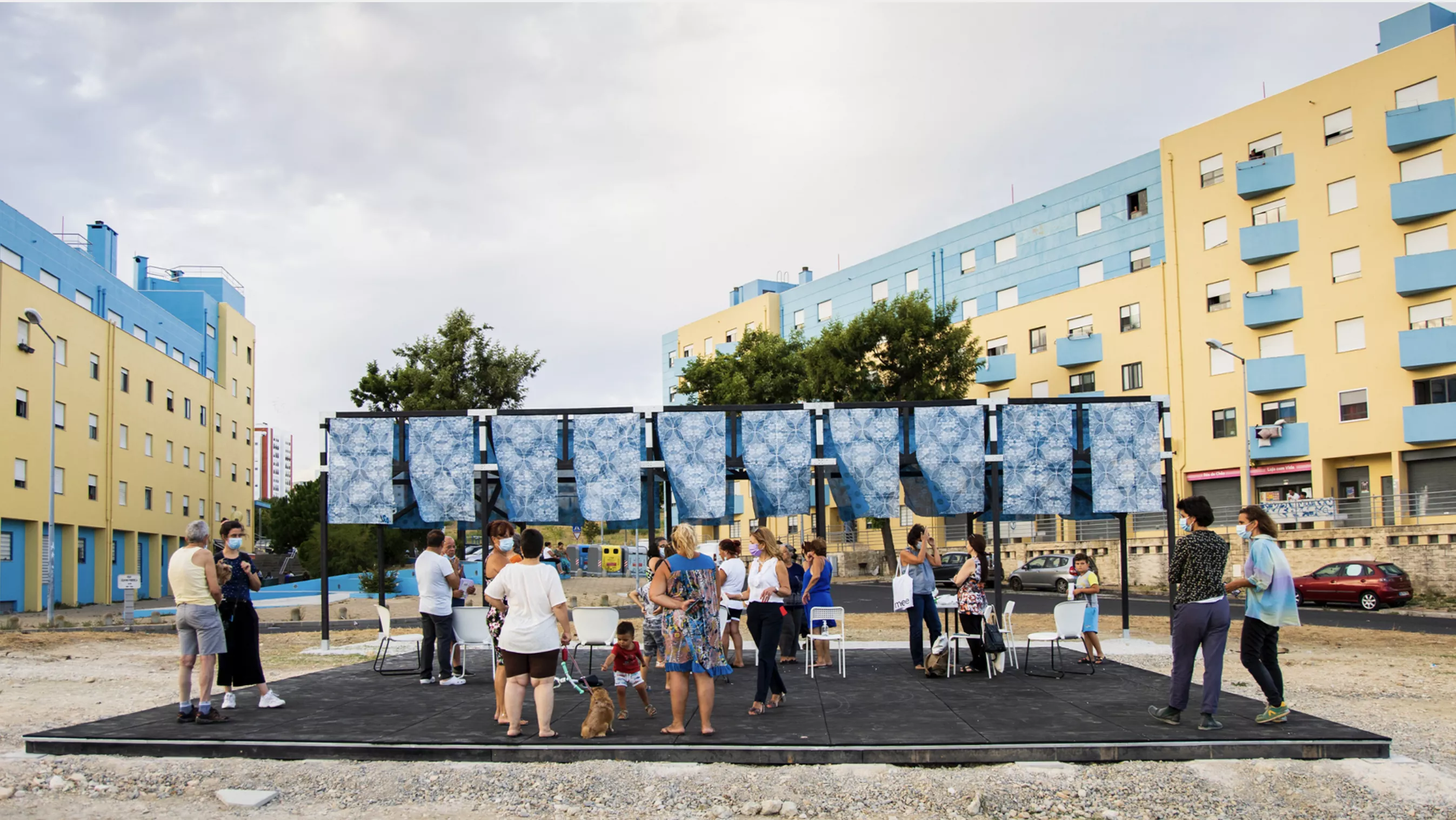
In Portugal, Architects are revolutionising participatory urban planning by actively immersing themselves in a collaborative efforts with local municipalities. Through our interaction with Mariana Licenciada, we try to understand the negotiation process, the limitations within existing frameworks and how Res Do Chao has embedded co-Design as a tool in their participatory approach.

This compilation of prose and poetry emerges from the most incredible time spent in Dharavi working with urbz Mumbai.
Abhay Narasimhan
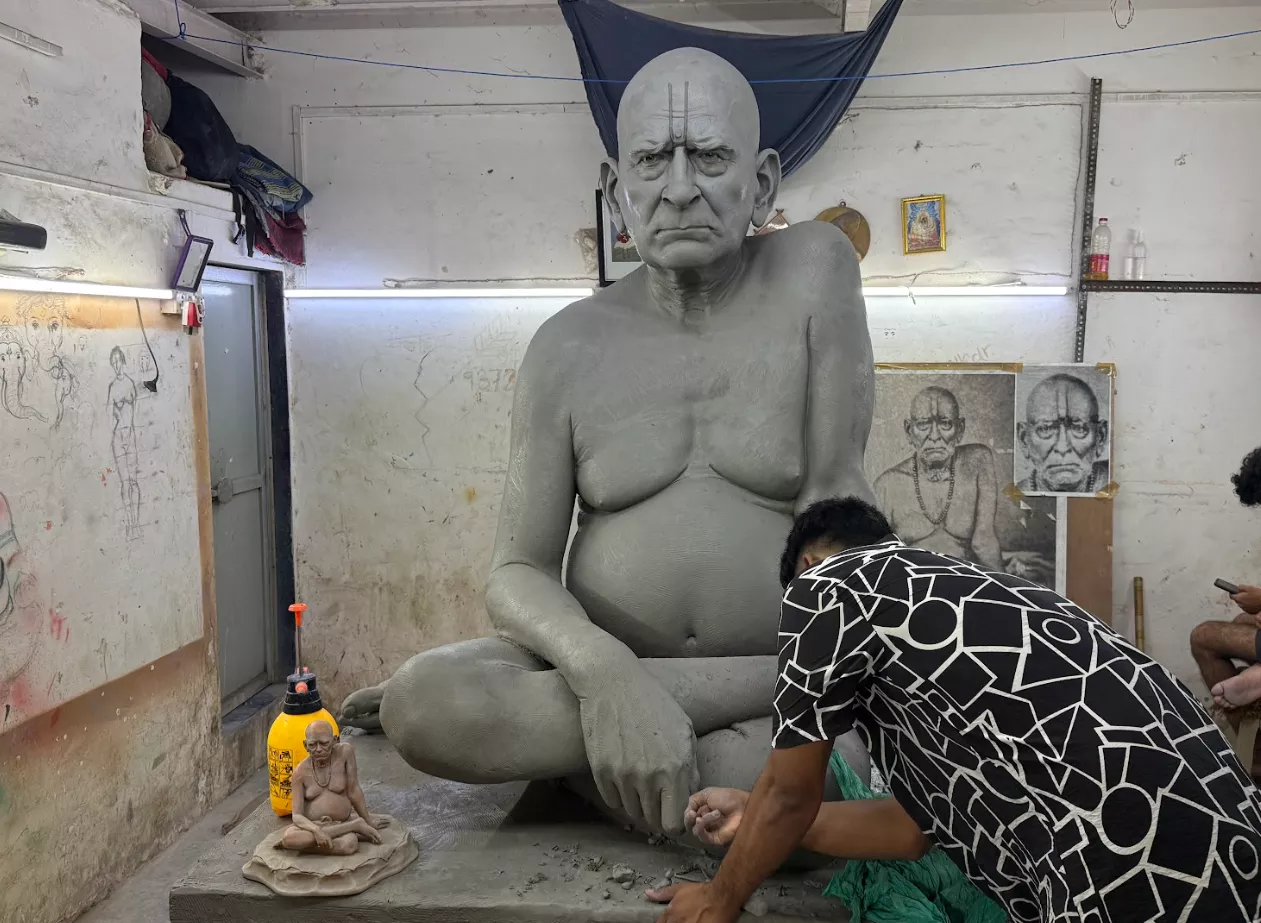
In a quiet corner of Dharavi, a small sculptor’s studio runs on tradition, patience, and mutual respect. Led by a young but deeply admired teacher, the space is both workshop and home. Here, idols are crafted slowly, shaped with care and rooted in custom. In a rapidly changing city, this studio offers stillness, a quiet commitment to craft and community.



This compilation of prose and poetry emerges from the most incredible time I spent in Dharavi working with urbz Mumbai.
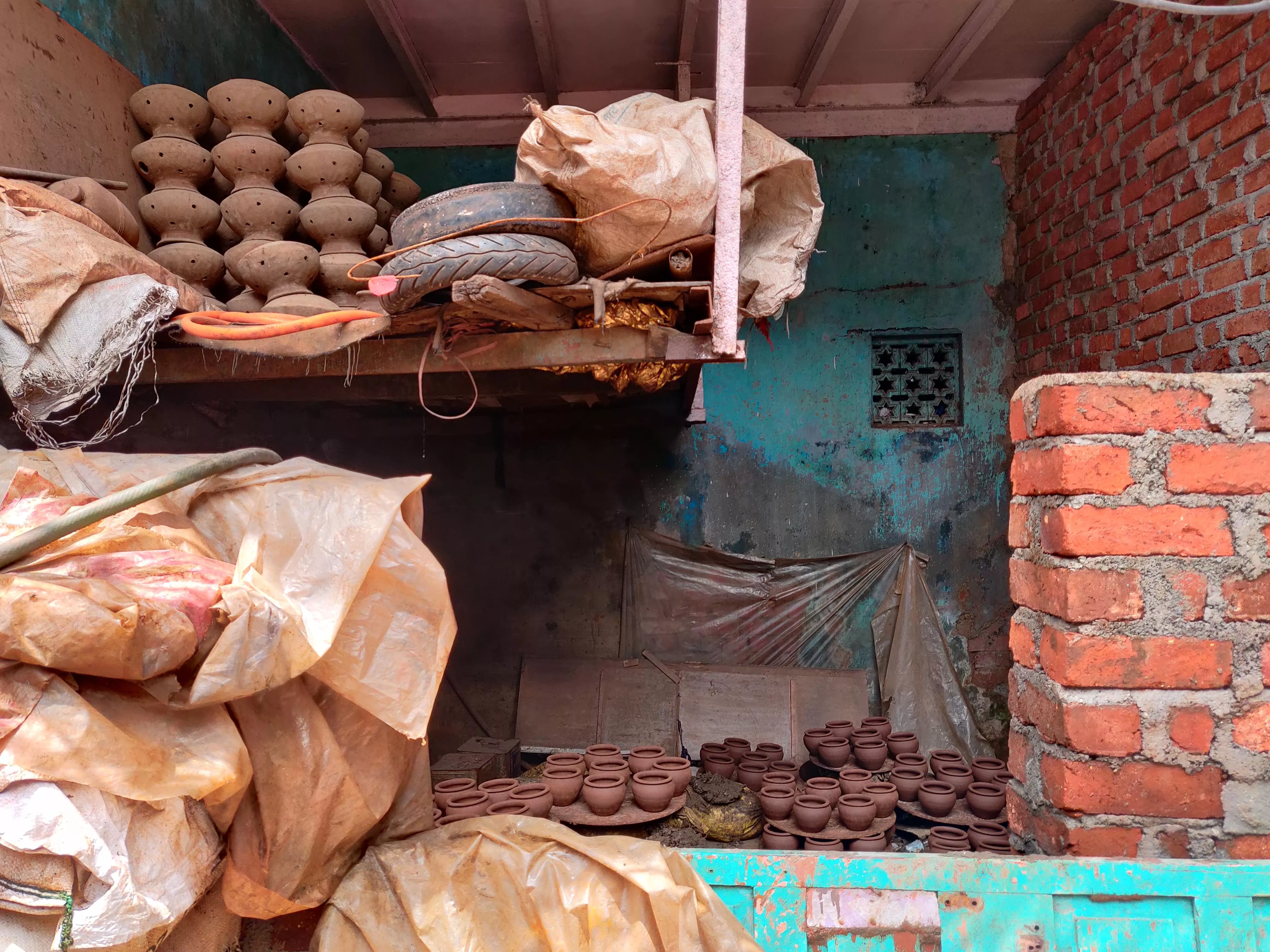
In a new series, we re-explore the homegrown streets of Dharavi in search of local arts and crafts. First in the series- Dharavi's famous Kumbharwada


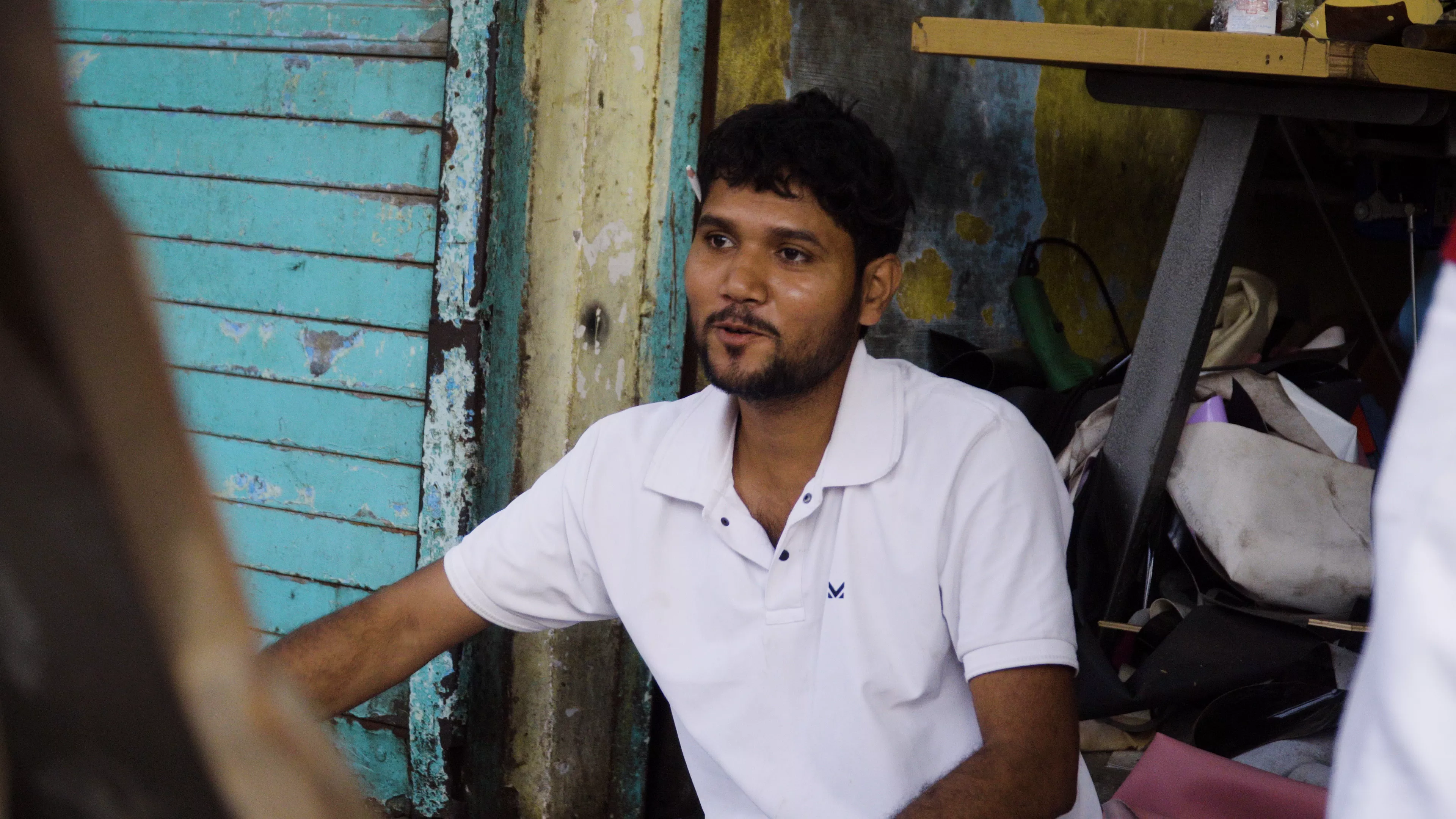
In Mumbai, autorickshaws are more than everyday transport; they’re personalised spaces on wheels. Drivers express parts of their identities through small interior details. From a tiny shop in Dharavi, Nanu Woodwallah designs and stitches these custom interiors. Carrying forward his father’s craft, he transforms standard rickshaws into distinctive, character-filled environments.



Samsuddin, a printmaker in Dharavi, Mumbai, whose small but efficient studio reflects the spirit of local enterprise. From printing school uniforms for suburban Mumbai to receiving an order from his hometown in Uttar Pradesh, Samsuddin's journey weaves personal strength with community-rooted entrepreneurship. He exemplifies how creativity and determination shape life in Dharavi. Amidst talks of redevelopment, Samsuddin advocates for progress without displacement, preserving the soul of the community he calls home.
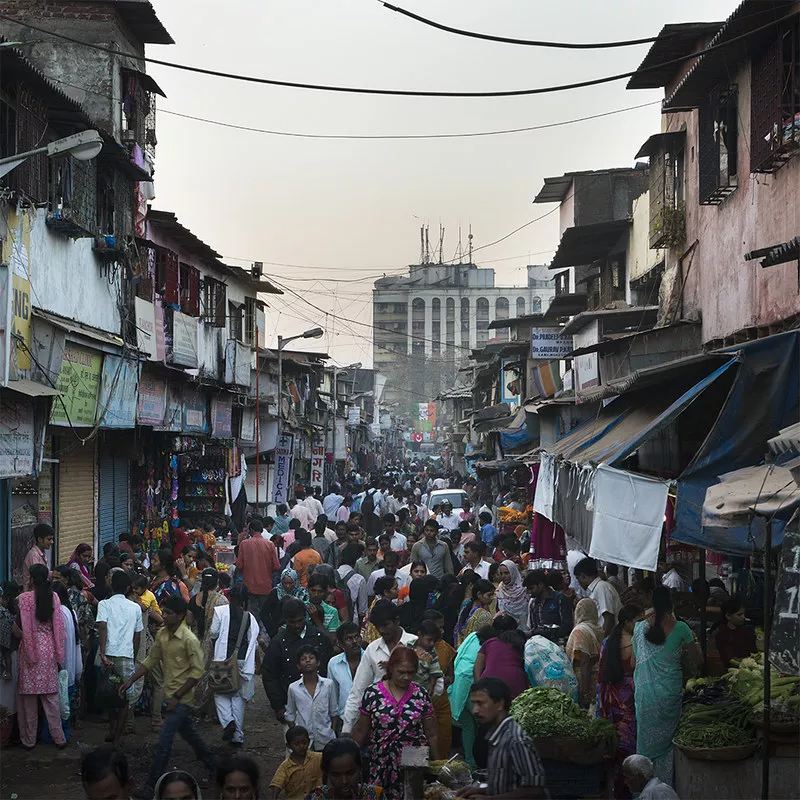
Dharavi has been an interesting setting for many Mumbai based films. This article discusses a few films from the past decades that feature Dharavi as a place central to their narratives.

This article is part of the following collection
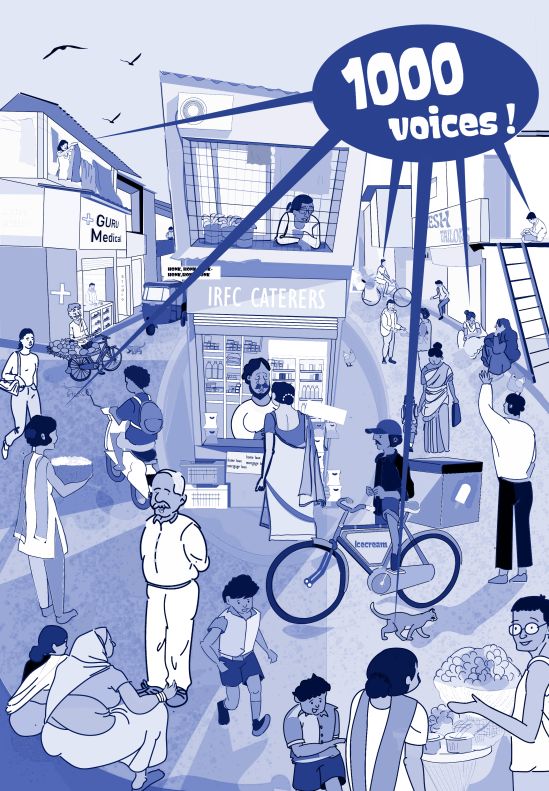
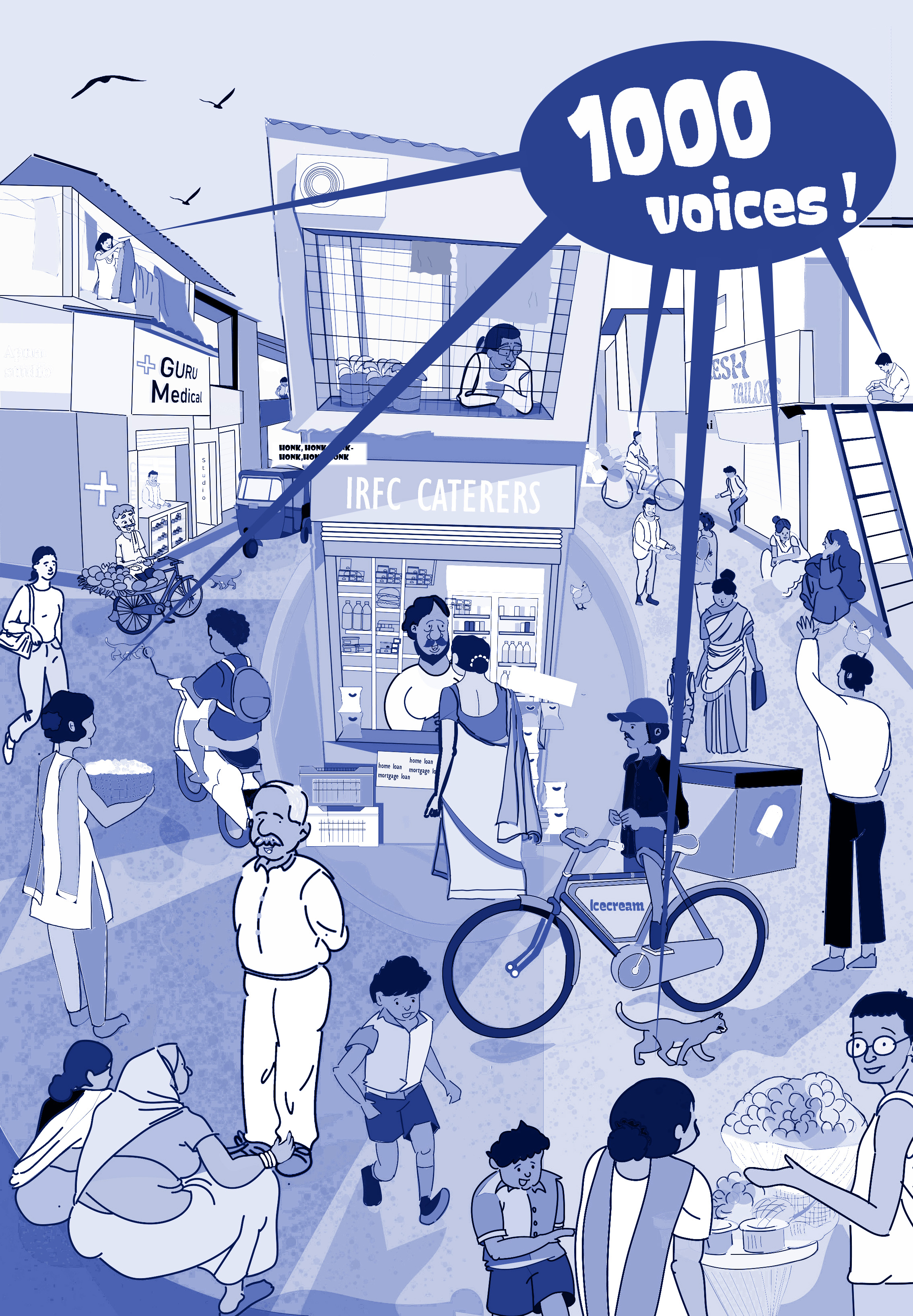
1000 Voices is a project that aims to document and understand Dharavi, Mumbai, through the perspective of people who, through their presence and activities, reproduce this fascinating homegrown neighbourhood day after day.