An interview with Liron Shalit, our filmmaker-in-residence. He is an award-winning documentary filmmaker focused on social issues, human rights, and ethical urbanism. Recently, the urbz office hosted a screening of his film Living Euljiro that traces the neglected losses of those living within a centuries-old district of maze-like alleys at the heart of Seoul (Synopsis). We speak to him about his craft, his lessons from Euljiro, and his time here in Dharavi.

Interview with Liron Shalit, Director of Living Euljiro
Synopsis:
Living Euljiro traces the neglected losses of those living within a centuries-old district of maze-like alleys at the heart of Seoul. Through intimate encounters and textured observation, it creates a mosaic of perspectives exploring memory, identity, and resistance—revealing the human cost of a relentless urban Masterplan beyond a binary narrative of gentrification.
About the Director:
Liron is a documentary filmmaker focused on social issues, human rights, and ethical urbanism. Based in Seoul since 2020, his work explores feminism, urban redevelopment, disability, and digital justice. He has directed various documentary films emphasising positive social impact through thoughtful, community-driven storytelling.
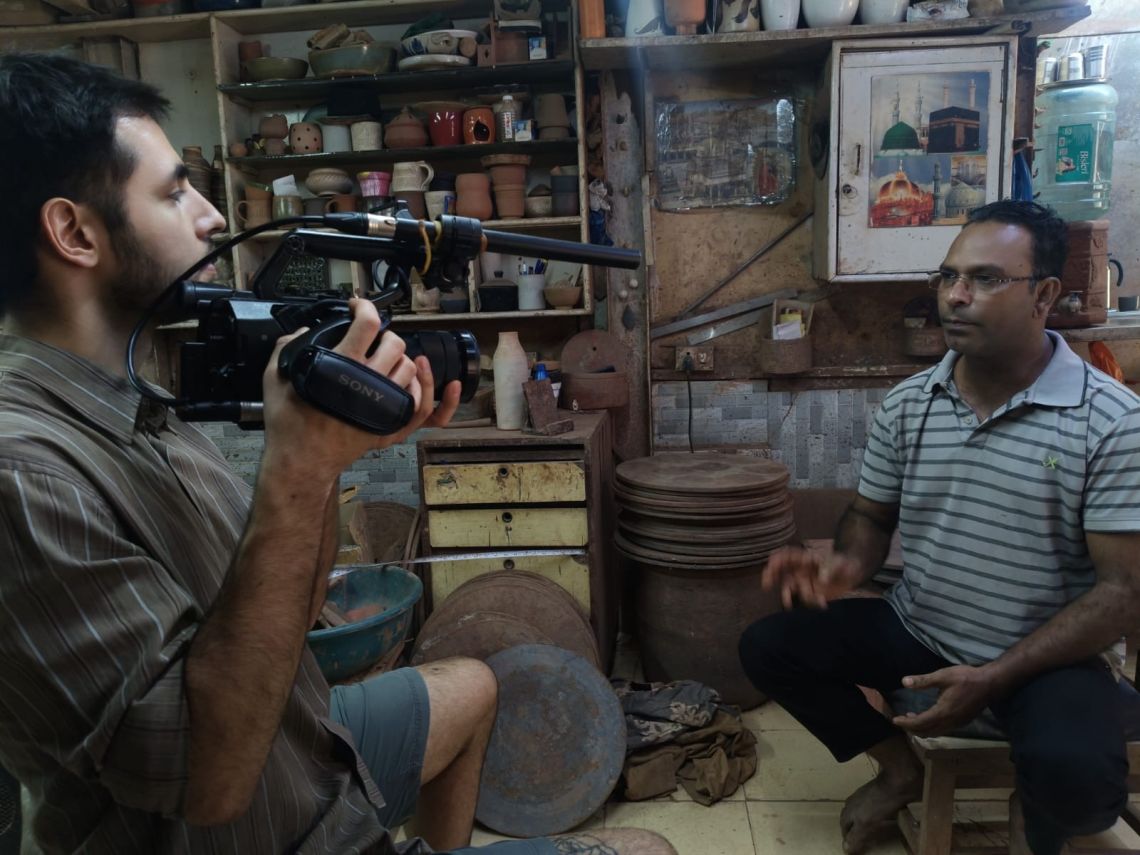

It’s been nearly two months since I began my internship with urbz, which is too little to say I know nearly enough about Dharavi. Nonetheless, from going on site visits and working on documentation projects, I’ve picked up a small sense of what this immensely complex place is like. Liron, similar to me, has been here for most of a month and has been our filmmaker-in-residence. After he showed us his film about a neighbourhood that has already experienced a fate that might befall Dharavi - demolition and redevelopment -, I became deeply curious about his ideas and experiences with urban spaces.
Liron, funnily enough, is shy about getting in front of the camera. Before we began the interview, I teased him and asked him about his major film influences, as if he were a Hollywood director on the red carpet. Interestingly, one of the films he spoke about was Tokyo Story, which he emphasised our generation had to watch. The film was shot in black-and-white, with no music and a slow narrative pace. But as one keeps watching the film, one wishes they had never left this world. As a testament to Liron's skill, I felt the same about Living Euljiro, too. I got sucked into the world of his documentary, starting to appreciate his process, and feeling for the place.
The interview begins with a reference to what he mentioned in the Q&A after the film screening.
Abhay:
You’ve spoken previously about how you’ve developed an interest and started filming urban spaces, their relationships, and social organisations. And you mention Jane Jacobs as a big driving force in the booklet. Do you want to expand more on that and what about the book resonated with you? Maybe a little on your background, and how life brought you to that moment.
Liron:
Interesting Question! So I was born in Jerusalem, and my family moved to Greece when I was 14. Since then, my family has never owned a home. Every year or two, we had to move apartments. And then, after I left for university, I also moved apartments every few months. So in my life, I moved between maybe 30 apartments and homes. And I think that in connection with Jane Jacobs, and what she was talking about, the city, how to live in the city, and what's valuable about it: I realised that, first of all, having a space like a home is very important. But also that our understanding of the city is extremely important, not only for living in the city but also for the future of humanity. All of us live in the city, or we'll live in one at some point. So we must understand what it should provide us with, our place in it, and our responsibilities towards it. Also, we should be aware of what we should be getting out of it, which is very, very important.
I felt like those two things coming together led to the Euljiro project and the Living Euljiro film. I felt like this is a place that is a home, with a lot of history and diversity for many people, and it's about to go away (because of demolition). So I think it took me a while to understand it, but the reason I cared about it so much is that I felt… Like I knew what it feels like to lose a home, to not have a home, and not have a memory. If I psychoanalyse myself, I think that's why I started this project.
Abhay:
You seem to write heavily [in a booklet about the film] about how you started becoming an active participant in the space itself, and again about connecting various people, caring for people, and really caring for the place and its people. And you go on to criticise dominant redevelopment paradigms. Why is all of this happening? You question it. What have you found? Have you found a planning methodology that might work? What worked for you? And then could it teach us, and serve as a model for other places, maybe?
Liron:
For us to understand how to frame a planning issue and model, I think it's a bit dangerous for me to discuss it, since I'm not exactly an urban planner. But I would say that, for me, the environment in Euljiro is not only for people making actual products, but also for younger people coming in and starting whatever it is they want. Be it cafes, bars, art spaces, or galleries.
Even 3D printing and AI companies had started up in Euljiro, there was even a guy making a satellite. I think the atmosphere, energy, and type of collaboration were very naturally maintained. People came there because they knew they wanted to start something new. And that environment gave them a place to start something new because everyone collaborated. And in the same way, while I was filming, I changed my perspective. Instead of just being a documentary filmmaker, I wanted to be part of the alleys and create something in collaboration with the people from the area.
And as a result, the film followed the same collaborative process. I started asking questions, and then later, when I walked down the street, someone would tell me, “Hey, the thing you mentioned to me, I found the guy who can make them for you.” And then slowly, you just become part of the community. Not only do you get what you want and achieve it, but the process is much more fun. Because every time you come to the streets, suddenly you have friends to discuss it with, and they interact with you, and it just kind of feels like you never want to leave. It's a playground for everyone.
Abhay:
I am sure, like any film and any director, there is a “style” that personifies the subject and maybe even the artist involved. We can also look at the style that emerges from a process as a link/threshold that connects you to the subject of your work. If you were to interpret your process, which probably grew in nuance through so much time spent in Euljiro, what kind of specific actions would you attribute to this time spent? How did Euljiro affect your process?
Liron:
One of the first challenges I had was a technical one: I couldn’t get a wide shot of a location (because of the narrow alleys of Euljiro). Which meant that if I wanted shots of certain places or actions, I had to be very clear. So in the film, you see a lot of reflections through windows and through mirrors. You see multiple layers within the same shot, which people watching the film term “meditative”. Because you have to linger and keep watching, and you discover different things when you look at each frame.
So when I first came to Euljiro, I was very tough on myself because I couldn't just point the camera and get information; I had to very specifically direct the camera to get certain information that I thought was useful, and then, in the same way, because it's in a very unexpected location, you can never count on the same thing happening again. So what that meant is that I just had to linger, just had to sit there and wait, wait for something to happen, wait for some movement, or even go without the camera and start observing the rhythm of the neighbourhood. And then I would know, okay, around 12 PM, people go for lunch. That means if I want to get a large group of people walking together, I have to be filming then. And the most work happens between 10 AM and 12 PM, so I should probably go into the factories then. And then you start setting rules to map out the area for filming.
I think what I really liked about filming is that when you actually went into the factory or just met with different people, they never felt self-conscious about how they looked. Because people were very proud of the things they were doing. So when I would come and say, “Can I film you?” It wasn't yes, and it wasn't no. It was kind of, “Do whatever you want.” So I think that gave me the liberty to push a little bit. So sometimes, even while technicians operated heavy machinery, I was five centimetres away from the person's hand. Because they were so into what they were doing, and I had so much time, I could just experiment.
Abhay:
Maybe more along those lines, could you tell us a little more about the Euljiro culture of making? Even making, in itself, spans a broad spectrum of processes. The culture of making here in Dharavi versus that in Euljiro is likely very different. What I could tell from the movie was that there was an industrial, machinic culture of making. So did any of these play a role in your production of the film, in the colour grading, or in how you chose to represent the objects in the film? Did the vast heaps of metal or the sharp edges affect your process?
Liron:
Yes, for example, you’d notice that the signboards had a very strong saturation. I think what I tried to do throughout the whole process was to layer up as much as possible. If you look at the film, there isn't a single straight-up shot. The only time you have nothing in the foreground is when you see the redevelopment. Which came from the same idea: that the street has people working in diversity.
It's never so clear. You can come and look at it from different angles; it's a different thing. But when you bring redevelopment into it, there's only one way to look at it, you know? Very straight ahead, very clean.

Abhay:
For anyone without context, just tell us more about what brought you to Dharavi.
Liron:
So what brought me to Dharavi, to urbz in particular, is that after the film, I was very sad because most of the original [Euljiro Neighbourhood] was demolished. And so I wanted to find a group of people doing things differently from how things were done in Seoul. And to learn from them. What it means to work within the community, what it means to build within the community. And that's how I found urbz, and I decided to come here for a month to do this exchange. My skills are documenting, being a filmmaker, and telling stories. And at the same time, I'm very interested in the subject [Dharavi]. So it was a very natural way of coming together, and for everyone to gain some value in the process.
Together, we can start sharing new stories about this incredible area as well. Of course, here is like 10 times bigger than what Euljiro ever was, and people live here, which is also slightly different because people don't live in Euljiro that much anymore.
Abhay:
And so, again, it's not been that long here in comparison with your time in Euljiro, but in some senses, you’ve become this kind of “bridge.” A bridge over time and space between these two places. You’re bridging the Feb-March of Dharavi 2026 with a whole three years in Euljiro, and so what do you see in common between these places, like if that's something that you've noticed or observed, and how might Dharavi set up for a future that may have already descended on Euljiro? By no means do I mean a solution, but even fleeting thoughts that have affected your understanding of urban space here and urban space there.
Liron:
Regarding similarities, I don't know much about Dharavi because I've seen only a small part of it, but there are similarities in how people work. Just like in Dharavi, there's a sense that you can make anything here and everything exists here. Not only material things, but kinds of people as well. So I think that's very similar, and I think, in the same way, something that restricts great potential is that here, young people and new ideas haven't seen many opportunities yet. It still has this kind of “slum” tag. And I hope that specifically changes so that people start seeing the potential of this place, just like people did in Euljiro. It will happen as soon as people start discovering this place's culture.
You know, I've been here for one month, and when I arrived, I was very scared because I was going to “the biggest slum in Asia”. But now I realize this has been one of the most comfortable stays I have had. And every day there is noise in the street, that's right. But it's kind of fun to see a wedding every day, hear music, and be part of the community. So I think that's the potential Dharavi has, and I hope its future will be different from Euljiro’s. Before it's too late, people will realize how much there is here, how much potential there is for future generations here.
And maybe, instead of just focusing on what's not working, they can take what does work and make it their own, in a respectful way. Because I think there's a very big potential for that.
Abhay:
And so you keep talking about how there's so much noise, and that there's a wedding every day, and that kind of stuff. These small phrases even reveal a great deal about one's understanding of urban spaces. Could you then maybe expand on how this understanding may have been shaped during your time here? If you want, you could frame it as a before-and-after to make your response easier to structure.
Liron:
I've always lived in residential areas, but I was very curious about places that were different. So that means, where I grew up, when you would see someone on the street, you might say good morning or hello, but that was the end of your interaction. But here, filming the streets for only a moment, I see that it's a completely different way of life. You see kids running around everywhere on their own. You see how news is going around between people and how even the people from urbz participate in the neighbourhood. It just feels like a very different way of living. And I'm sure it has something to do with the urban space.
You never feel like you're alone in a certain way. You always hear something going on. But at the same time, I always feel like if I need something or if I need some kind of support, direction, or just expressing my thoughts, there will always be someone there to listen at the same time. And this is just me. So I imagine people who might spend more time here are really living that idea.
Abhay:
Could you tell us a little bit about how you adapted your shooting and style to Dharavi, too? What about the dense landscape affected your methodology? This could come in handy for any new filmmaker here.
Liron:
So far, I’ve spent only a month in the alleys and streets of Dharavi, and it is still too early to tell what new shooting style will emerge.
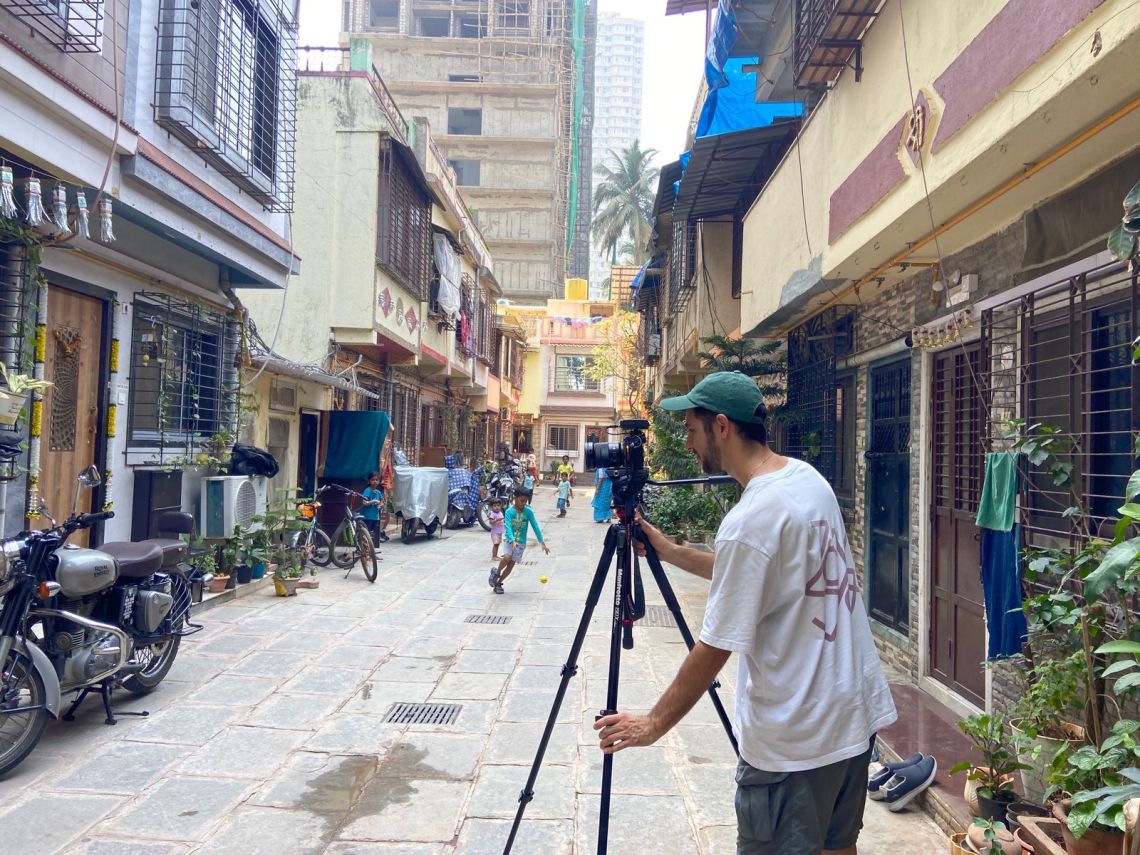
That said, one very different aspect of the streets of Dharavi, which I haven’t had to face in other locations, is the number of people on the streets. And it’s really very difficult to overcome that; I just have to move to a different location. The streets are also narrow, making it difficult to get wider shots. I noticed then that the streets are often closely connected to people's homes, and their personalities are often tied to them, too. Perhaps I would then start building stronger relationships that could allow me to reach people’s homes and capture the diversity of colour and texture I’m not able to see on the streets, due to constant movement and narrow gullies.
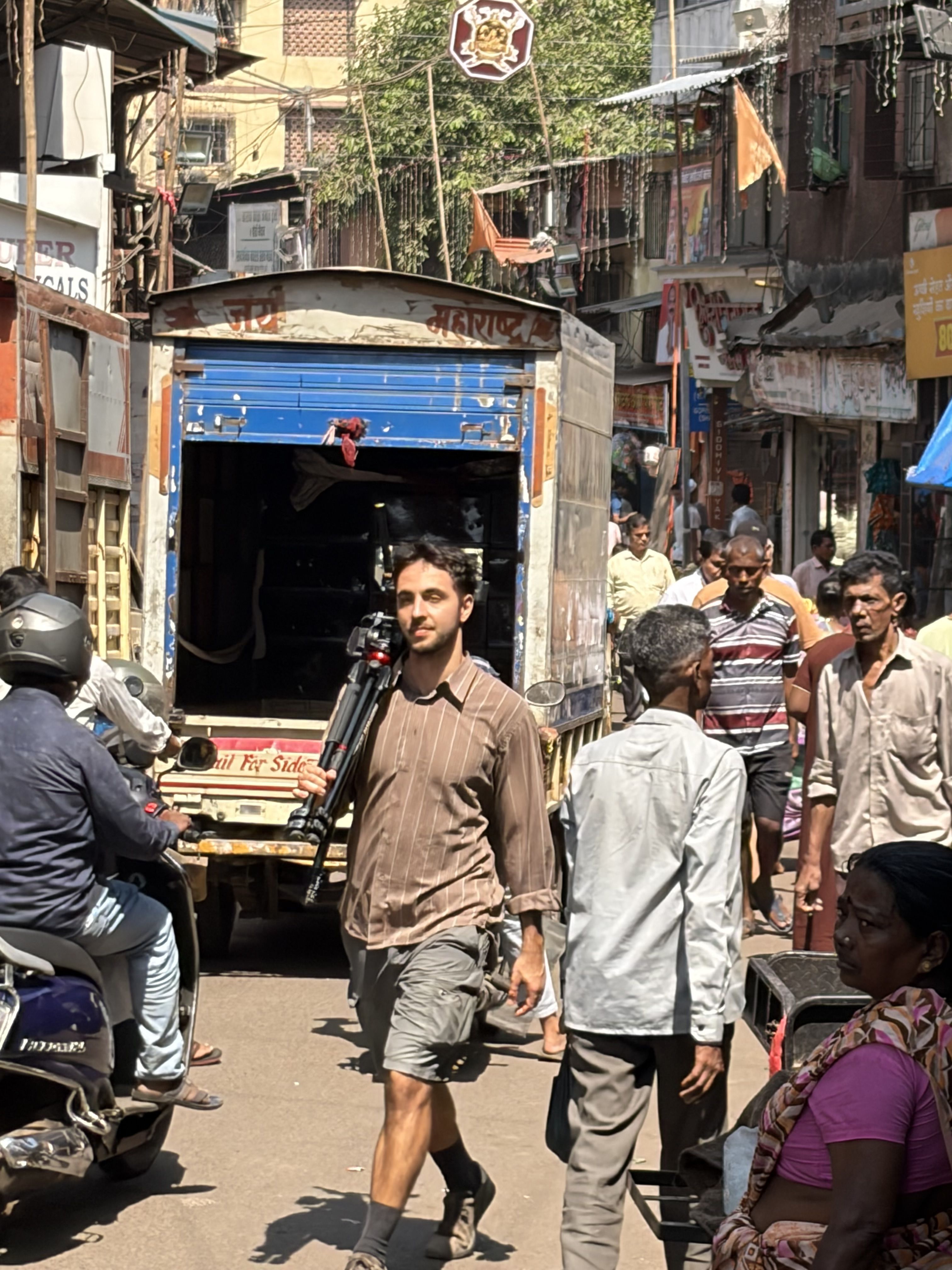
Something I also found both charming and challenging is people’s kindness and curiosity towards me. As a foreigner with a big tripod walking down the streets, people often smile at me, ask me what I’m doing, or stop in their tracks in order to make sure I am not someone who brings trouble. Although this has resulted in many pleasant street conversations and chai invitations, it also makes it harder to capture the natural movements and occurrences of a particular place.
This is an exciting challenge, as it completely changes the filming process I’ve been accustomed to in Euljiro. I think what may evolve is a collaborative approach to filming, where I will try to give the camera to people from a specific neighborhood and direct them on how to document their own lives from their point of view. I hope that, together with those who are interested, we can create a collaborative documentation process that will result in ever more authentic storytelling.
Abhay:
You've brought your film and screened it here in Dharavi. Now that you know a little bit more about Dharavi as well, do you think it might be useful for your film to reach a larger audience, maybe within Dharavi or Mumbai as a whole, or India as a whole, or the world as a whole? Maybe also that we can learn so much from it, and how there are a lot of ideas on how resilience emerges from collective efforts that you might want to share, or do you think maybe that it's a very specific message that might apply only to Euljiro?
Liron:
Yeah, I love that question, actually.
I think this film can be valuable to people because it can give them ideas about what could happen if the right people from outside Dharavi come here. To learn how to deal “collectively” with external forces that could harm the community.
At the same time, I'm kind of worried about outsiders (non-Dharavi residents), i.e, the planners and bureaucrats watching this film. They might compare Euljiro [to Dharavi] as a picture of a “slum,” but the film itself is full of older people using old methodologies, which is different from Dharavi. The film is about nostalgia, memory, and preservation. Which is totally different from the vitality that I’ve seen is so prevalent in Dharavi. Euljiro hasn't been maintained; people have moved away from it and don't live there anymore. Additionally, considering that Korea is facing a major population crisis, where most of the population is elderly, Dharavi is a totally different situation. I think people from outside Dharavi who might see and try to compare the two contexts could pose a danger; it might give them even more incentive to change what exists here.
Yeah, so I think for people from Dharavi, it could be a good inspiration on how to not let the same story happen to them, and maybe give them a little bit of energy, you know, if this random Greek guy made a film in Korea, who’s not even speaking the language what can I do here [in Dharavi] when I have all this around?
Abhay:
Now you're going back to Seoul, and I think you mentioned this a bit as well. But what would you take with you? Like, what kind of ideas would you think might apply from here to there?
Liron:
Yeah, I think most of the ideas I'll bring back will come from seeing you guys [urbz] work. And see how you interact not only in the office but also outside of it. People in Seoul consider themselves a very individualistic society. People don't have time for anything. I think they forgot the value of expressing, even sharing a meal, or just spending time doing things that might not seem productive, but actually make the work much more efficient and effective. And if I get a chance to work on a team with people, specifically creators, in Seoul, I will try to bring that mentality from here. Because here, you have interns, you have architects, you have artisans, all coming and really feeling at the same level. It never feels like the discussion is too high or too low for some, you know. From the way you guys are writing and discussing it, it's always a four- or five-person team.
In Korea, the first thing they ask you is, "What's your title?" “What did you learn?” And according to that, they fit their ideas and what they expect you to do or what you shouldn’t be doing. So I think in that case, I will try to bring your culture into a collaborative environment if I get the chance.
Abhay:
What would you do differently next time? There's also a whole emphasis and discourse on the role you play in the film, right? And that's a very deliberate thing, I think you've done. And so for your next film, maybe, or next documentary, are you gonna be like National Geographic in wildlife, with absolutely no interference? Or are you gonna be a little more autobiographical, in the sense that you're speaking about yourself through your lens and participating in shaping the environment and so on?
Liron:
The first year of making this documentary was a very depressing time because I witnessed a lot of sad things, and at the time, I felt like the only thing I could do was make a film. So these people suffered very painful things, but my work was of no help to them. I felt very guilty about that.
So the first thing I would change is to focus less on the bigger picture. You know, I have this skill: I can document and edit things. So the first thing I will change is to not just focus on making a single finished product, but instead start producing and publishing content alongside the documentation stage, and getting to know an area or a community. Content that gives something back to the people involved in the film and helps those outside get to know the subject, and hopefully become curious. I learnt that this also helps the filmmaking process, not only giving meaning to the people involved. Because with each thing I produce, I learn a little bit about the process itself and what the project should be. That's number one.
And secondly, about my involvement in the scenes, like I told you guys, I hate myself on camera. I really wish I had never been on camera. But I think this is a process of getting to know people and the area, and of discovering it for myself, which I think gives it a very authentic touch. And although it’s uncomfortable, I will try as much as possible to cultivate that even more. You know, because at the end, if there's just a narrator or like an expert talking about things, it's very removed. And I feel uncomfortable with being removed in that way.
So even if it affects the style itself, I hope to make people see my own experiences and involvement as much as possible.
Abhay:
In that sense, how do you plan to continue that effort? What are your plans?
Liron:
That's a good question. I'll need time to figure that out. But I think even within Euljiro, at the moment, I am simply a filmmaker within it. But I hope to make Living Euljiro, a message about community building. Sharing what I learned here will definitely enhance those efforts.
First of all, I hope to keep coming back here and keep developing with the team. But even with the little learning I’ve done this month, I hope to bring it back to Euljiro and start our own community to revive what is still there. That's really my hope, to start leading a “Euljiro Academy”, maybe leading Euljiro Urban Design, leading a “Euljiro community”, whatever it might shape up to be. I hope I can do that with a team of people that already exists. You might see me as the only one involved in this effort,” the director”, but really, about 100 people are involved in this film. Not only the people who were interviewed. There are those who helped momentarily; some people took time off from work to come and translate with me, and there was a model-maker who made the figurines. There are all these different people who have even just met me and had a discussion. I can operate the camera and edit, but this is a hundred-person film.
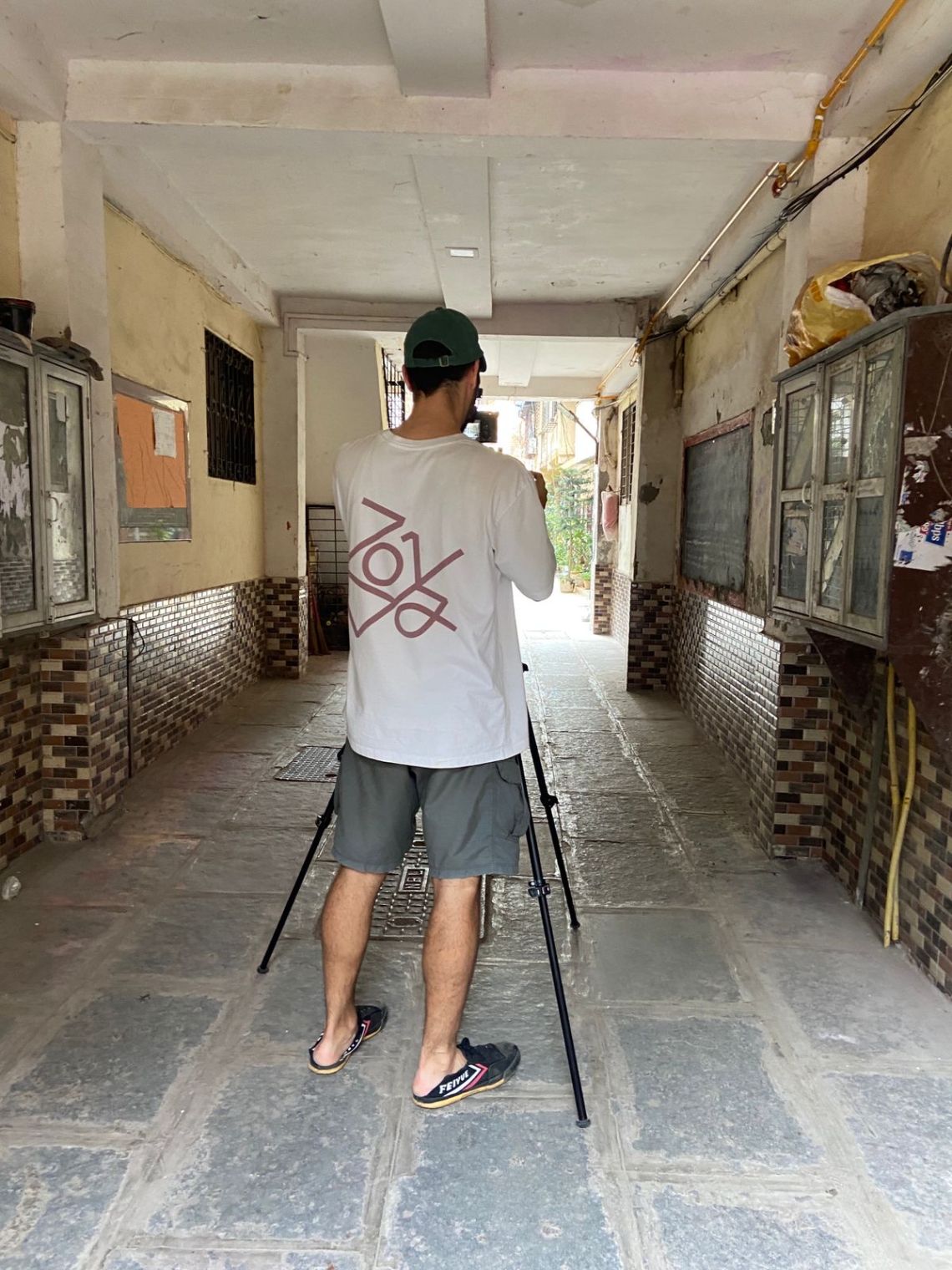


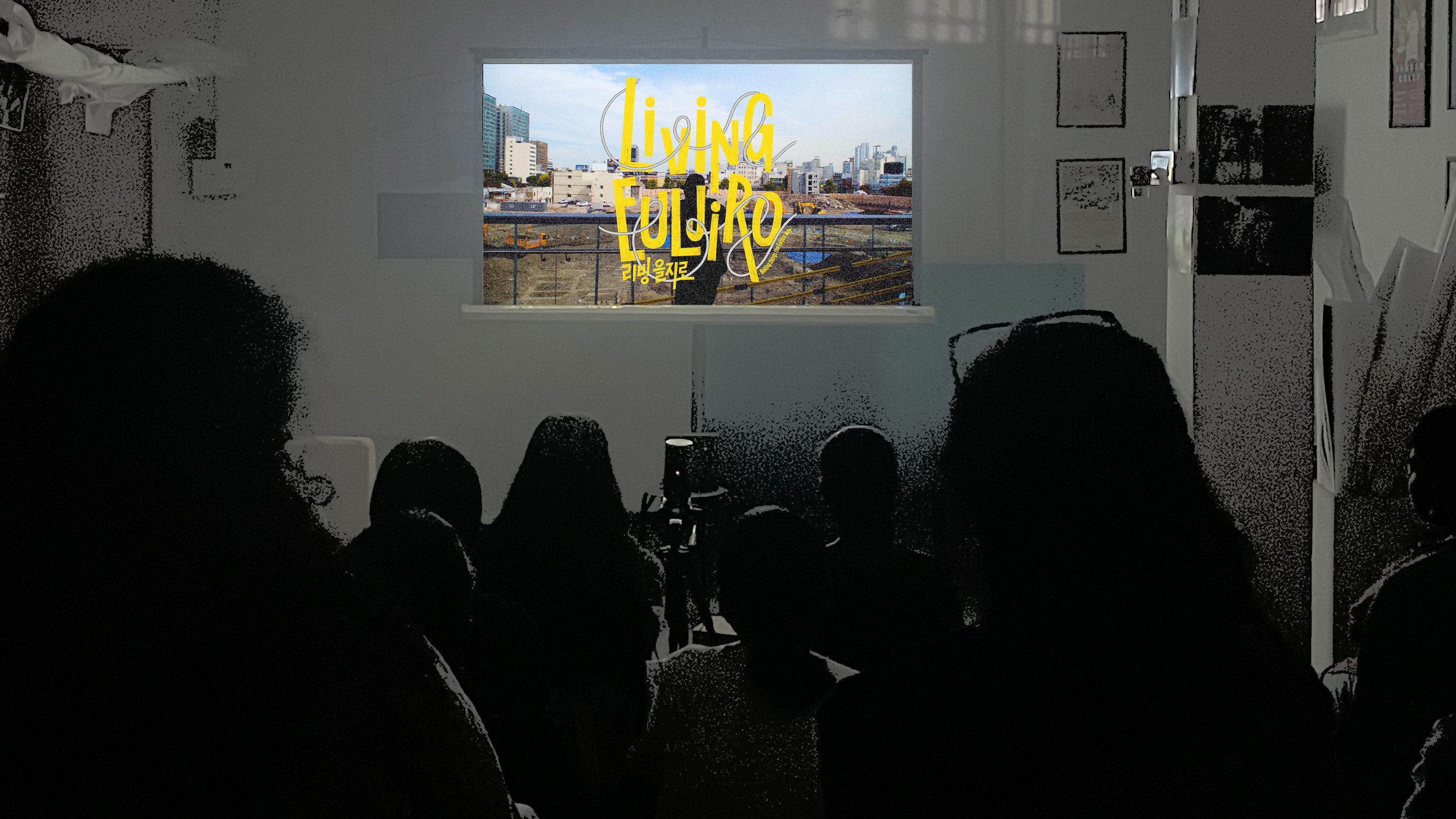
Living Euljiro is a film directed by Liron Shalit. Liron has been creating award-winning short documentaries since 2017, exploring themes such as social issues, human rights, disability, natural disasters, and urban life. Since relocating to Seoul in 2022, he has focused on documenting disappearing spaces and communities, capturing the distinctive culture of Euljiro and the stories of the people who live and work there.
A Screening of Living Euljiro by Liron Shalit in the urbz Office
For most of a hot and sticky Friday, the AC-cooled urbz office was turned upside down for a public screening. This was no “massy”, overacted Bollywood flick that characterises films today. Instead, it was a damning diagnosis of prevailing urban tropes mixed in with love, belonging, and melancholy, as the best films do. What’s more? We had the film's director present the film and engage in a Q&A with the audience afterwards.
The film, Living Euljiro, directed by Liron Shalit, explores the hidden losses faced by the people of Euljiro as they undergo massive redevelopment. Located in the heart of Seoul, Euljiro’s alleys have over 600 years of history dating back to the Joseon Dynasty, when it developed near key commercial and administrative quarters of the capital. In the modern era, it became a dense manufacturing hub, home to tightly knit networks of printing presses, metal workshops, tool merchants, and small-scale fabricators that powered Korea’s industrial growth. Over the past decade, its gritty alleyways have gradually attracted artists, café owners, and entrepreneurs who’ve repurposed old buildings into creative venues for new ideas while still coexisting with the factories and shops that remain.
As part of the Seoul master plan, close to 50,000 people in Euljiro are expected to lose their livelihoods, with thousands of people who have already had to relocate since the start of demolition in 2018.
Through the eyes of Liron, an international filmmaker drawn to its charm, the film captures the beauty of the century-old alleys and the deep relationships formed with residents whose lives are being upended. Through a mosaic of voices, the film moves beyond a simple story of gentrification, capturing the tensions between progress and erasure. It becomes a meditation on memory, identity, and the quiet acts of those determined to survive.
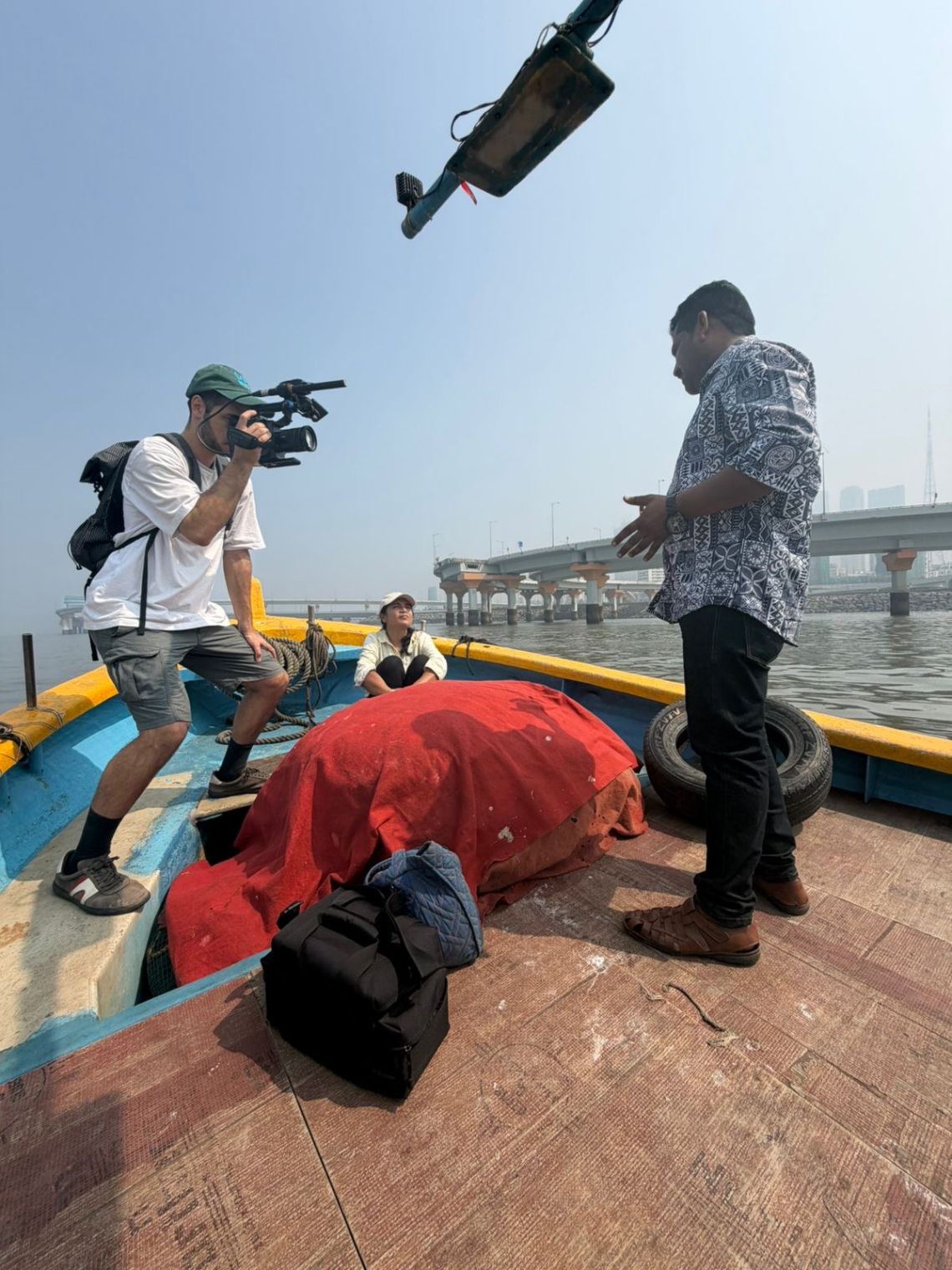
So what is Liron doing here? Why here? He has been our filmmaker-in-residence and has spent nearly a month in Dharavi, Koliwada. During his time here, he has been documenting the participatory urbanism process that urbz specializes in. And through this, he has captured the making process of a variety of artisans - welders, leatherworkers, metalworkers, blockprinters, etc. Furthermore, he has followed the livelihoods of Koli fishermen in Worli. I asked Liron a little more about why he came to Dharavi, and this is what he had to say -
So what brought me to Dharavi, to urbz in particular, is that after the film, I was very sad because most of the original [Euljiro Neighbourhood] was demolished. And so I wanted to search for maybe a group of people who are doing things differently from how things were done in Seoul. And to learn from them. What it means to work within the community, what it means to build within the community. And that's how I found urbz, and I decided to come here for a month to do this exchange. My skills are documenting, being a filmmaker, and telling stories. And at the same time, I'm very interested in the subject. So it was a very natural way of coming together, and for everyone to gain some value in the process.
Together, we can start sharing new stories about this incredible area as well. Of course, here is like 10 times bigger than what Euljiro ever was, and people live here, which is also slightly different because people don't live in Euljiro that much anymore.
The film, in many ways, felt like a mirror held up to Dharavi. The demolitions, the displaced livelihoods, the planner's cold arithmetic applied to living, breathing neighbourhoods, these were not uniquely Korean stories. They were uncomfortably familiar. Foreshadowing the soon-to-be upheavel of Dharavi, even. And yet, the film quietly insists that these places do not simply wait to be planned. They evolve. The "live, work, play" framework, so neatly packaged in some consultant's presentation, already exists here, not as a design prescription, but as something that has been arrived at organically. It happened over generations, through necessity and ingenuity. The architect who parachutes in with a master plan risks erasing what took a century to grow. Liron's methodology offers a different posture: surrender to the neighbourhood first. Document. Listen. Let the place speak before you presume to reshape it.
The film ended with contemplative silence, but soon Liron brought the group back to life by initiating a round of questions. What followed was a fascinating discourse bringing together the two worlds of Euljiro and Dharavi. The audience was a mix of architects, urban planners, fashion designers, students, and school-goers.


Henry Skupniewicz, head of the design lab at Godrej, noticed that the stakeholders [workers] were well organised and connected among themselves, but there was no apparent connection with the planners and city administrators. And questioned whether the people themselves were unaware of what was going on? Liron told us that it was anything but. That the people understood the role of Euljiro within the city's workings. The workers weren't particularly opposed to development, but they were opposed to the redevelopment process. They were not given proper prior notification, and the centuries' worth of troves of knowledge weren’t being accommodated in the future.
Kareena, of urbz, added, jokingly, that, from knowing him for the past few weeks, Liron was otherwise funnily camera-shy, and questioned his choice to insert himself into the documentary. Liron told us that he felt like he needed something to “tie it all together”, a stakeholder whose observations joined to create a continuous narrative. I found this to be an interesting potential framework, as someone pursuing architecture. I wondered if there was a way for architects and urban planners to situate themselves within projects, in a way similar to Liron's methodology, which focuses on surrendering and then collecting and documenting stories. That may be that the “designed” was only a different medium to express those same stories.
Kareena urged Rohan, the founder of Dharavi’s homegrown designer brand, DFC, to consider whether he could relate to the stories shown in the documentary. Rohan emphasised that “people on the outside don’t usually value neighbourhoods like Dharavi” and that before attempting to form solutions right off the bat, they should come and see, try to understand.


Samidha, of urbz, asked: What did Liron feel when the planner imposed a vision on the people he was starting to become friends with? His role was to be objective. But on the inside, he told us he was upset. His expressions in the film even changed. They morphed into some sort of anger, and the planner, in response, was only superficially apologetic. Some of us were confused by this expression: that someone responsible for so much destruction was saying sorry so meekly and didn't seem to feel anything. How casually was this planner referring to the destruction on such a large scale? He was making plans for 2040 and 2050, but with no consideration for the people of today and the next.
Paarth, an intern at urbz, was curious about a sequence in the film that makes use of toys, custom-made action figures of some sort, to tell the story of a space that was an important part of this documentary. “The realization and treatment of the idea feels very different, tonally, to the rest of the documentary, and it tells the story beautifully. I just wanted to know what sparked the idea to use that specific approach, and why it felt like the right way to capture that space and its stories.”
Liron shared that the figures were made from scrap and discarded metals found in nearby alleys, and that they were created by an artist based in Euljiro. This helped tell the story of a bar, Eulji Ob Beer, which was difficult to film due to limited space. The space, however, was significant to the story, and some magic was required to make the storytelling's impact felt. This led Liron to collaborate with local Euljiro workshops to craft custom figures, recreating the bar in miniature. “This approach allowed us to weave a touch of 'documentary magic' into the film, using a fantastical lens to reclaim and tell the story of a space that no longer exists in the physical world."


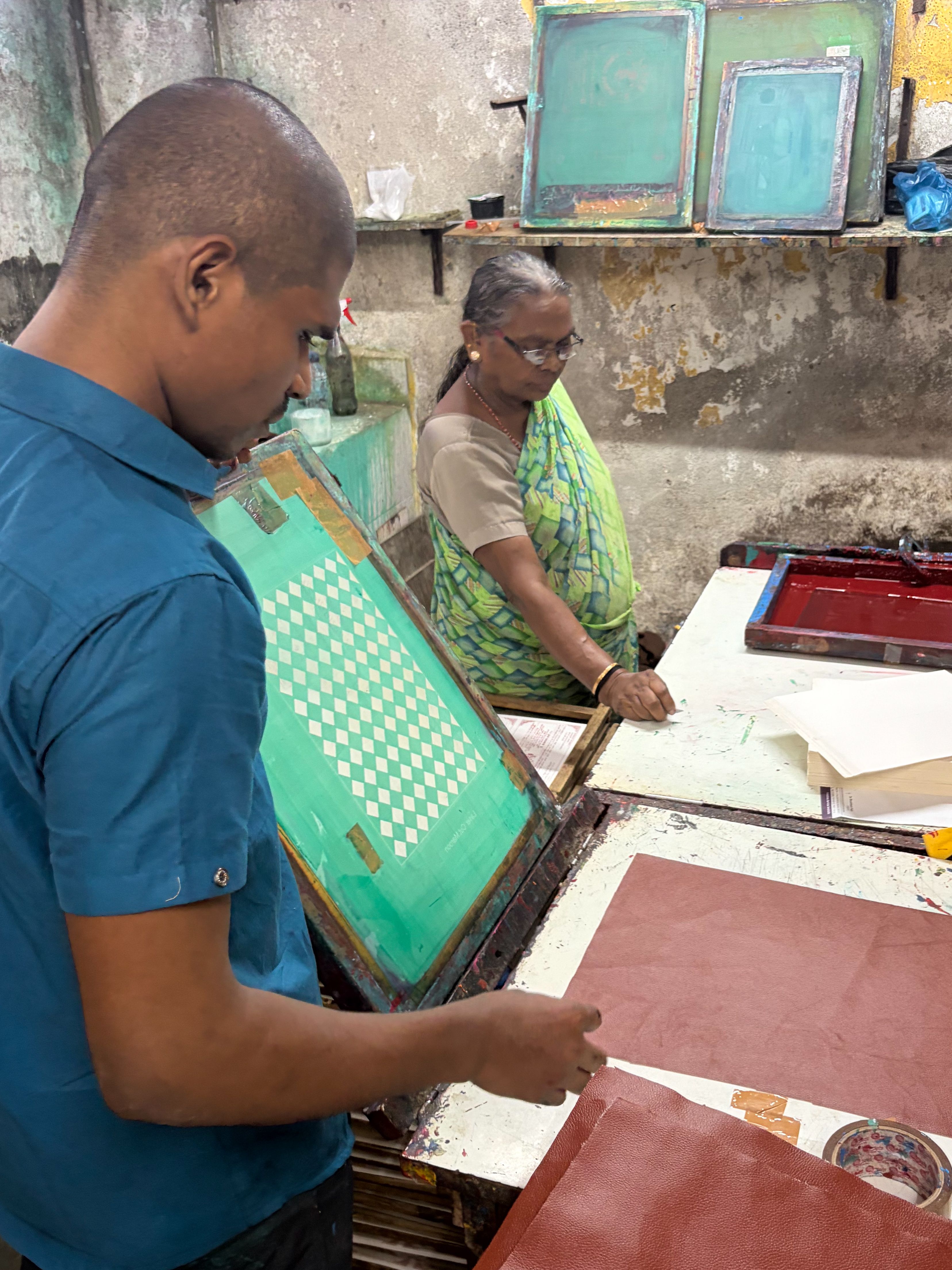
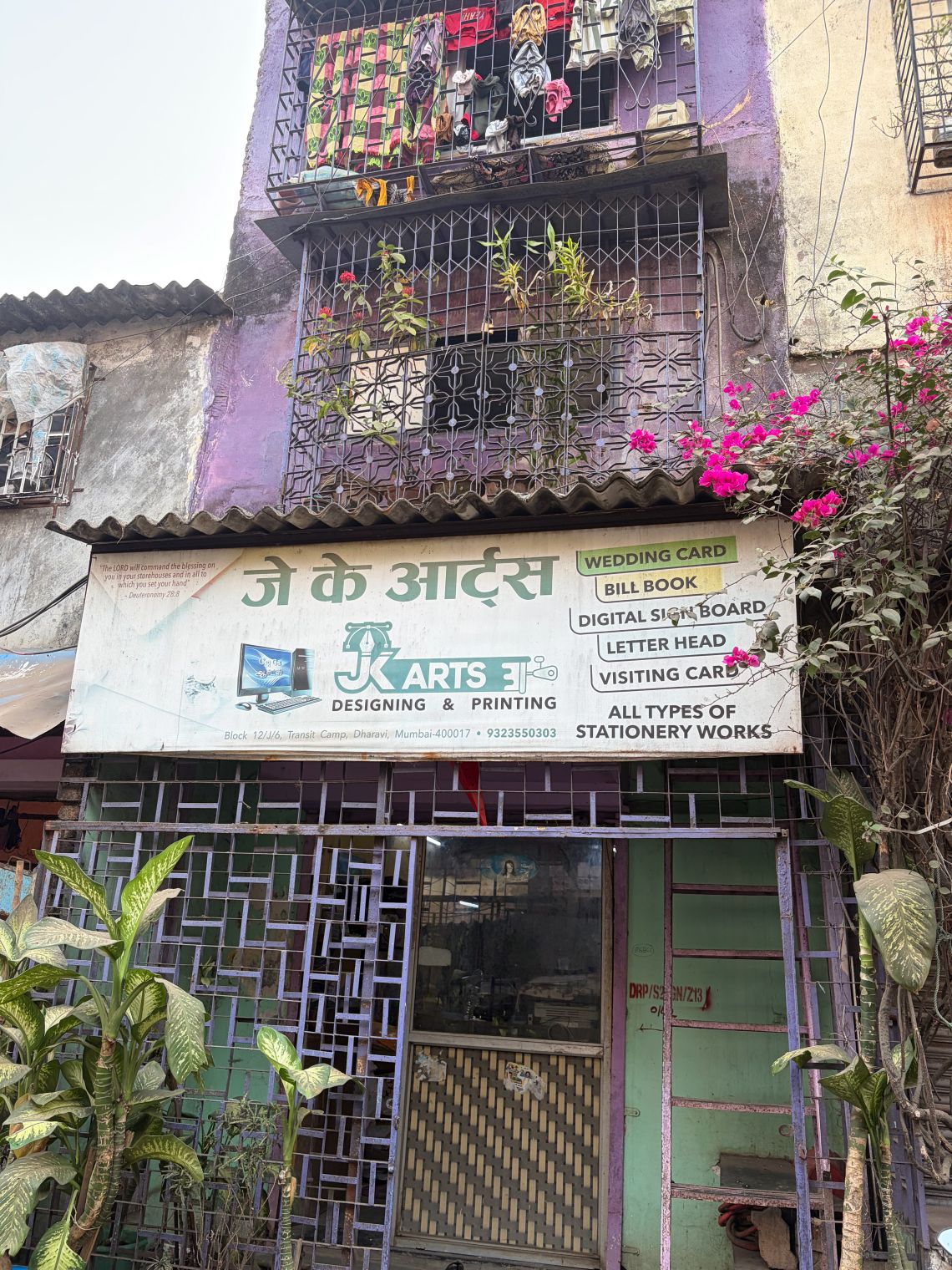
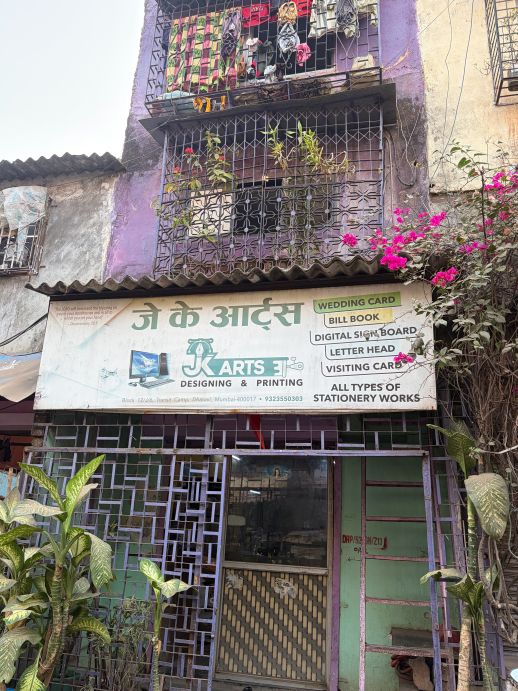
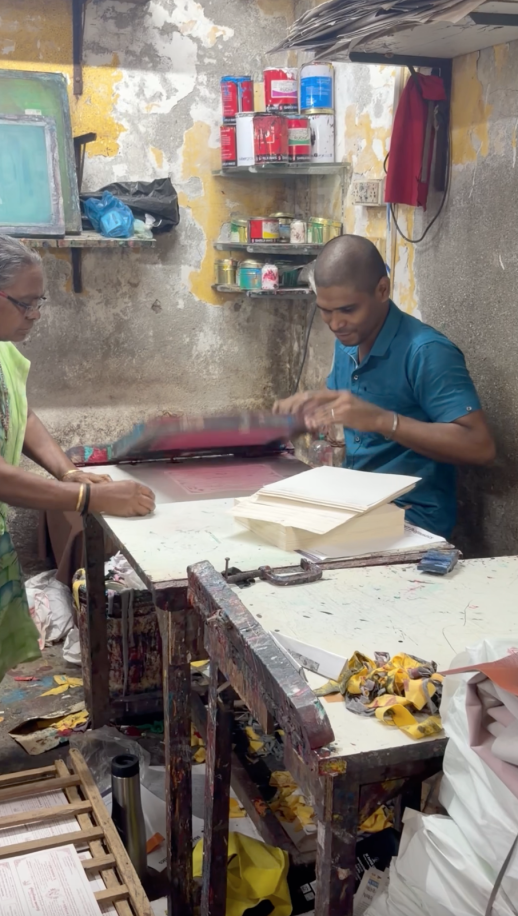
In a lane off the bustling 90 Feet Road in Dharavi, there is a tiny studio dedicated to all types of screen printing. Laxmi and Mani are an unlikely duo that expertly handle the screenprinting needs of customers across the city. They talk to us about a lifetime spent in the industry.

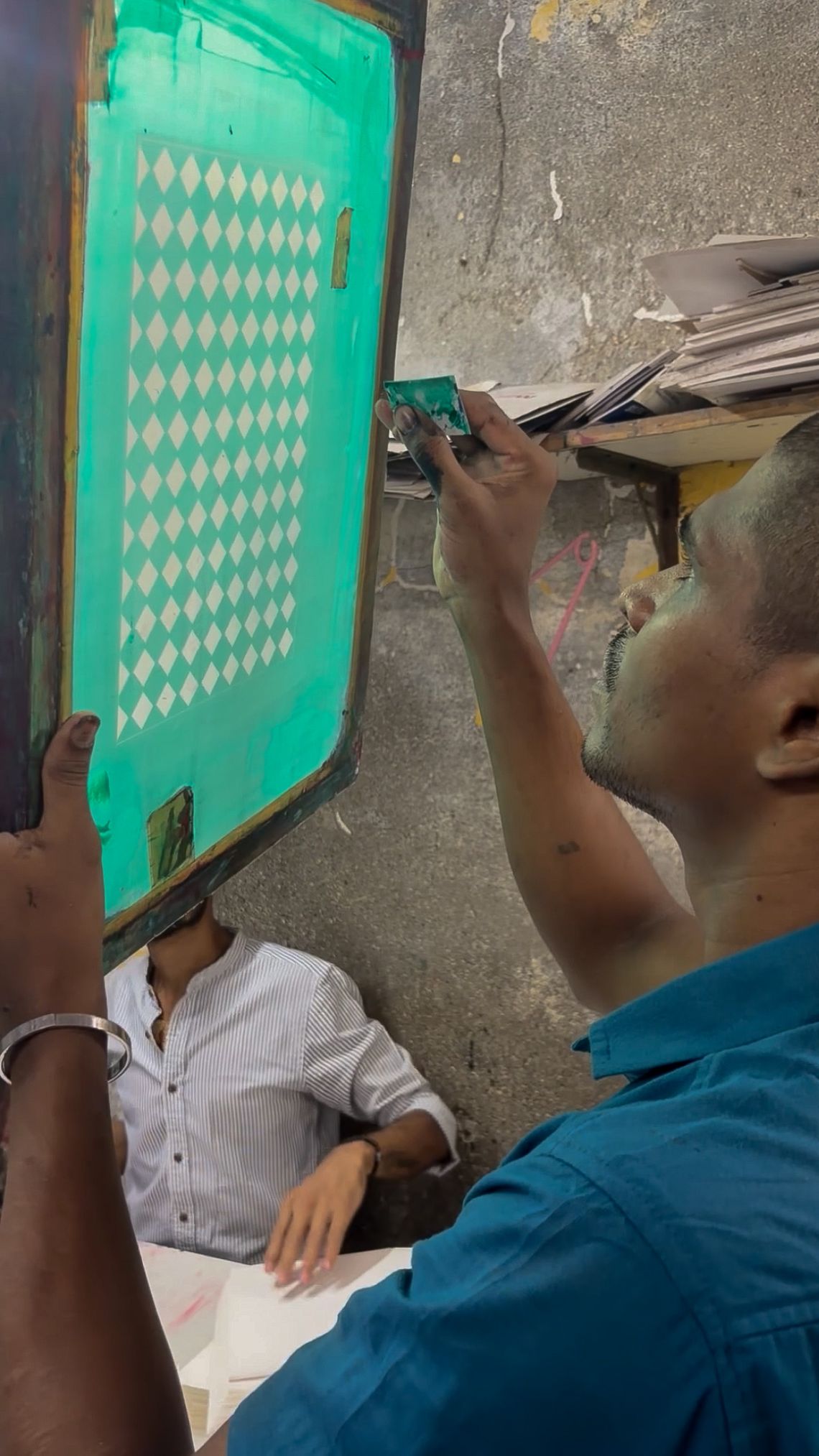
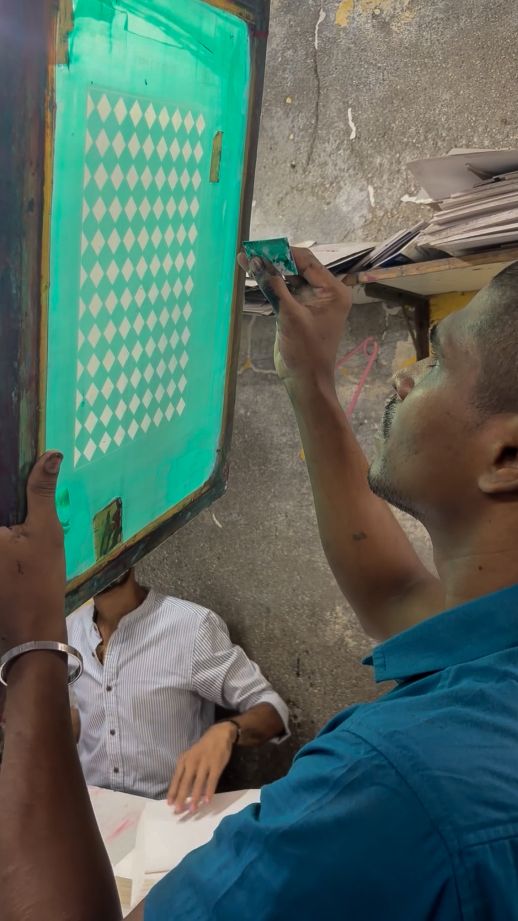
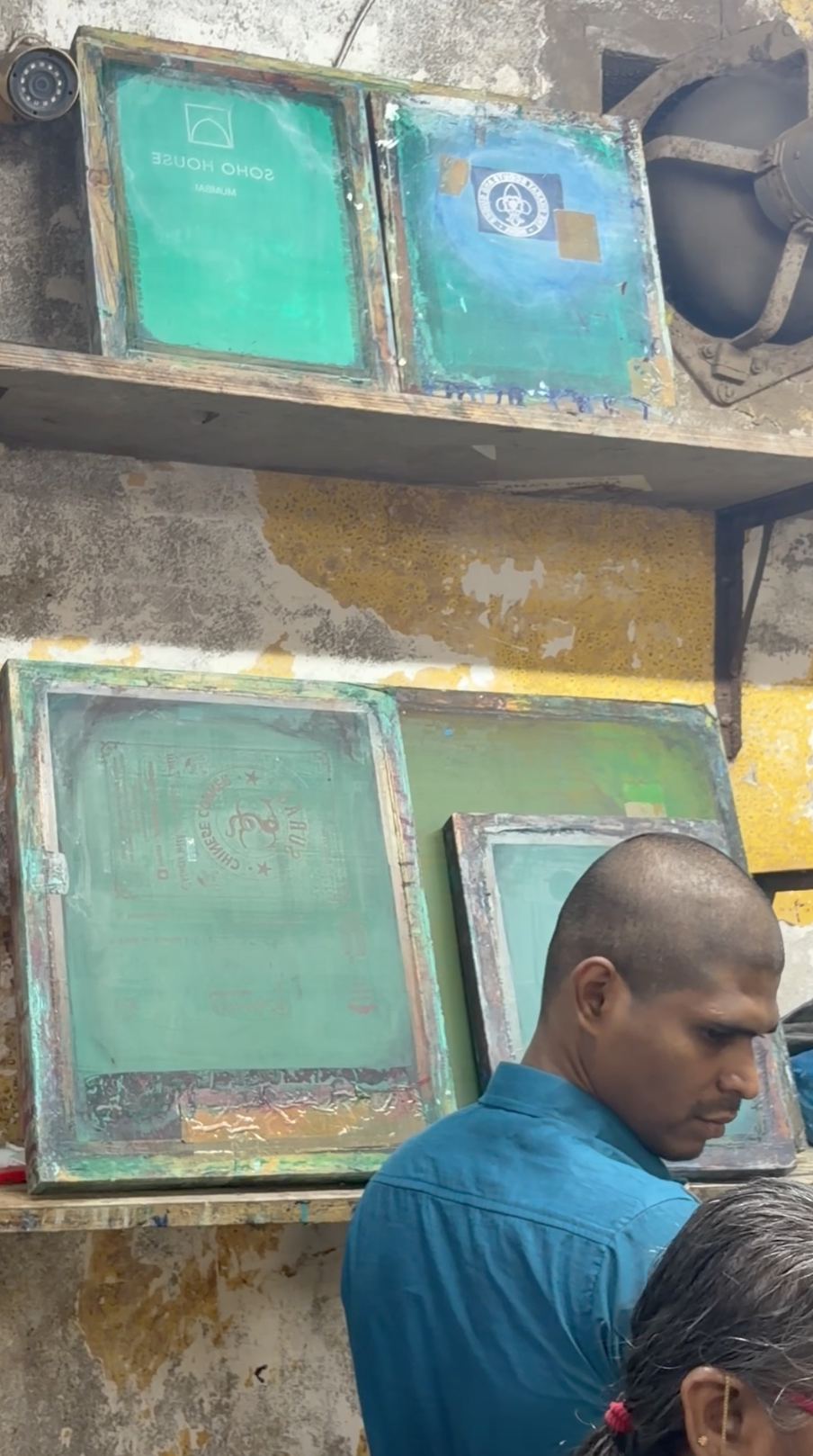
In a lane off the bustling 90 Feet Road in Dharavi, there is a tiny studio dedicated to all types of screen printing. A row of potted plants points to the entrance of JK Arts, and in a corner of the porch lies a pile of freshly printed papers waiting to be picked up. Inside, hugging the walls, are more stacks of paper with just enough room to manoeuvre to the back of the space, where Mani and Laxmi expertly handle the screenprinting needs of customers looking to print invitation cards for weddings, restaurant menus, company logos on canvas tote bags and all sorts of things too unwieldy for a digital printer.
Both Mani and Laxmi hail from a small town near Kanyakumari, Tamil Nadu, that specialises in printing technology. They claim that all the printing businesses in Dharavi have some connection to their town. The owner of JK Arts, Raju Anna, who pops in and out of the studio, also hails from the same place. Although Laxmi and Mani are not relatives, a craft associated with their hometown at the southernmost tip of India ties them together in Dharavi.
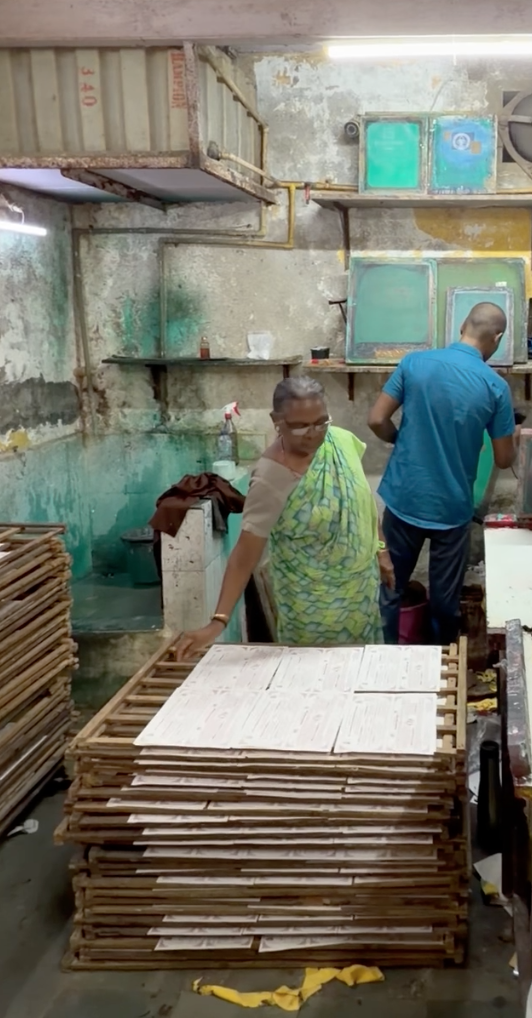
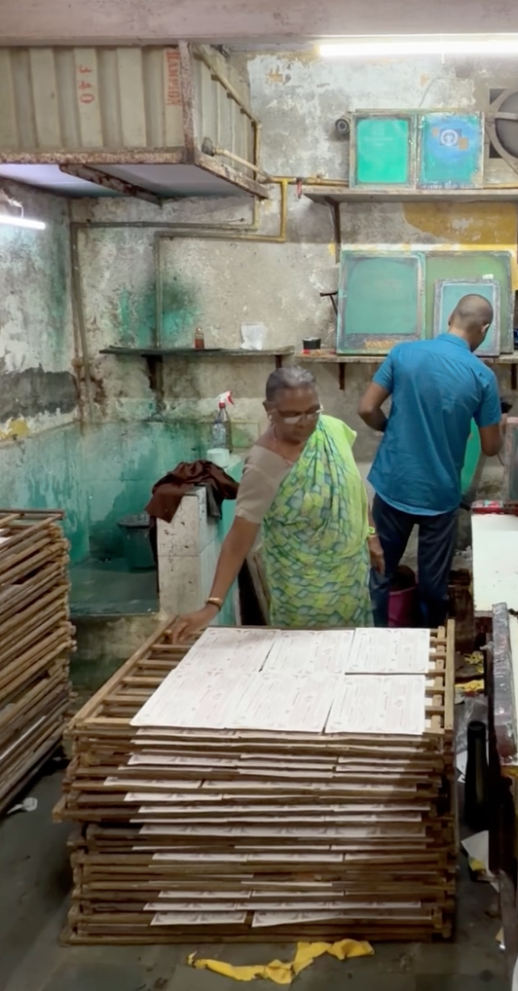
Laxmi does not speak much Hindi and relies on Mani to help her communicate with us. An arranged marriage to a man from her hometown, based in Dharavi, brought her here. Not long after their wedding, at the age of 28, Laxmi was tragically widowed and had to fend for herself. Through connections from back home, she found employment at JK Arts and has been in the screenprinting industry ever since. She is now 70 years old. A quiet poise and a warm, toothy smile characterise her presence. Her enduring career has exposed her to every step of the screenprinting process. In her younger days, she would press out the prints. She doesn’t have the strength for this anymore. Her task now is to place the prints on light wooden drying racks, which she carefully stacks one on top of the other.
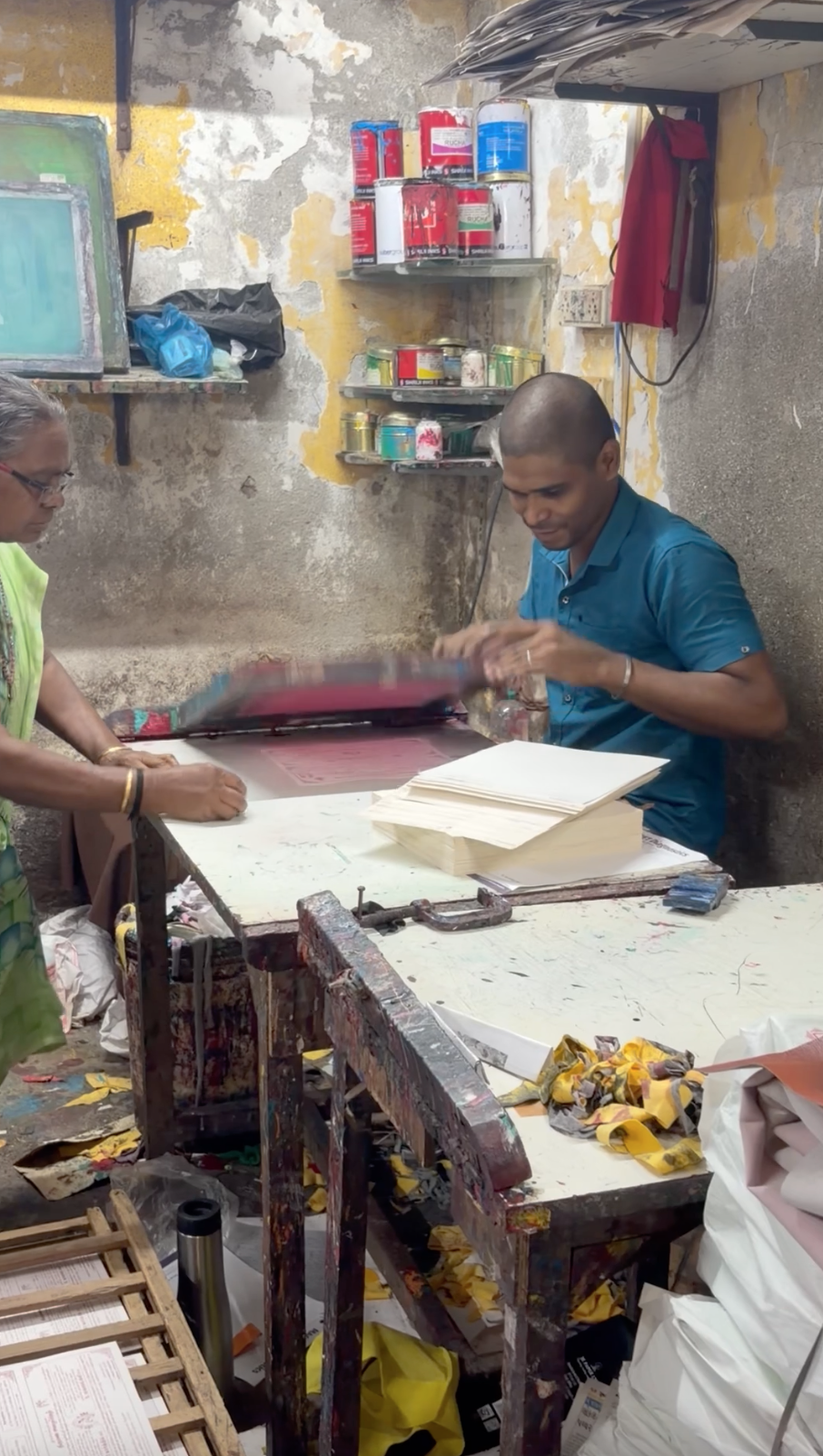
Mani is a witty, well-built man in his thirties, energetically attuned to the steady staccato of the printing press. Born and raised in Dharavi, he began his apprenticeship in the industry at the impressionable age of eight. 23 years later, he has developed the ability to have an unerring focus on the task at hand, from preparing and washing screens to pressing out prints, all while carrying on an engagingly humorous conversation. He sits up a little taller when he talks about his wife, who is highly educated and works as a nurse. He tells us that it was love at first sight, and jokes about his predicament after marriage. His wife’s long working hours meant that it was up to him to run the household. He manages all the chores, including cooking and cleaning. Jokes aside, he gives the impression of someone unbothered by the swapping of traditional gender roles. He proudly states that out of the 30 days in a month, he cooks on 20, and his wife cooks on 10.
It is ironic that while Mani is adept at printing hundreds of invitations, announcements and banners, he cannot read or write. He relies on a strong visual sense to make sure that not a single letter is misprinted. He credits Dharavi with the skill he has acquired and the ease with which he can monetise it within her web of artisanal industries. When the conversation turns towards the Dharavi Redevelopment Project, he simply shrugs and says that if it comes to pass, he will escape to Chennai to avoid entrapment in Dharavi’s new avatar. A contemplative silence dawns as each one imagines what this would be like.
The overpowering smell of ink and thinner brings us back to the studio, back to Laxmi and Mani ceaselessly printing 600 wedding invitations as a Tamil evangelist sermonises in a YouTube video playing in the background. A young customer comes in to collect his order of brown paper bags, closely inspecting each one to ensure the logo of his new restaurant is printed perfectly. Satisfied, he stuffs them into a plastic gunny bag, pays up and leaves, promising to return with more orders for a new venture he plans to launch in a month. Mani assures him that as long as Dharavi exists, he will find the duo at the studio, ready to help, their printing paraphernalia and humour at hand.
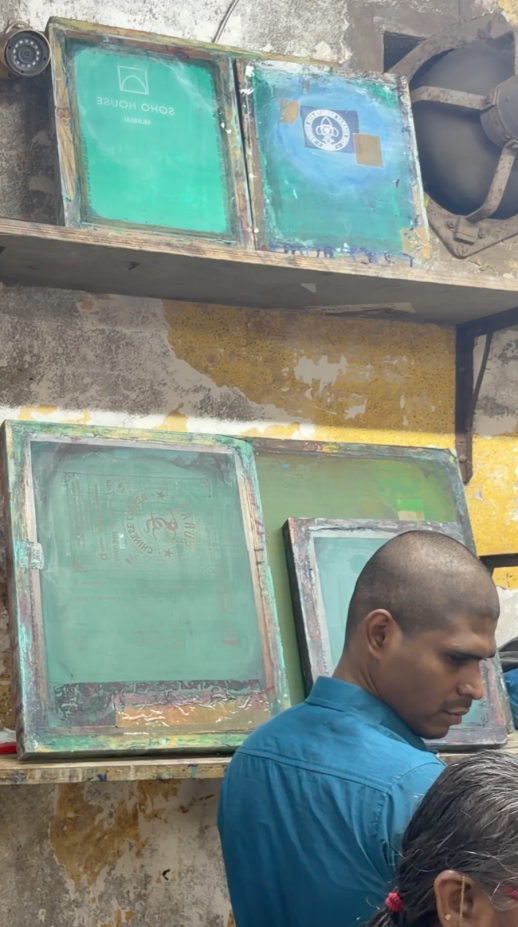
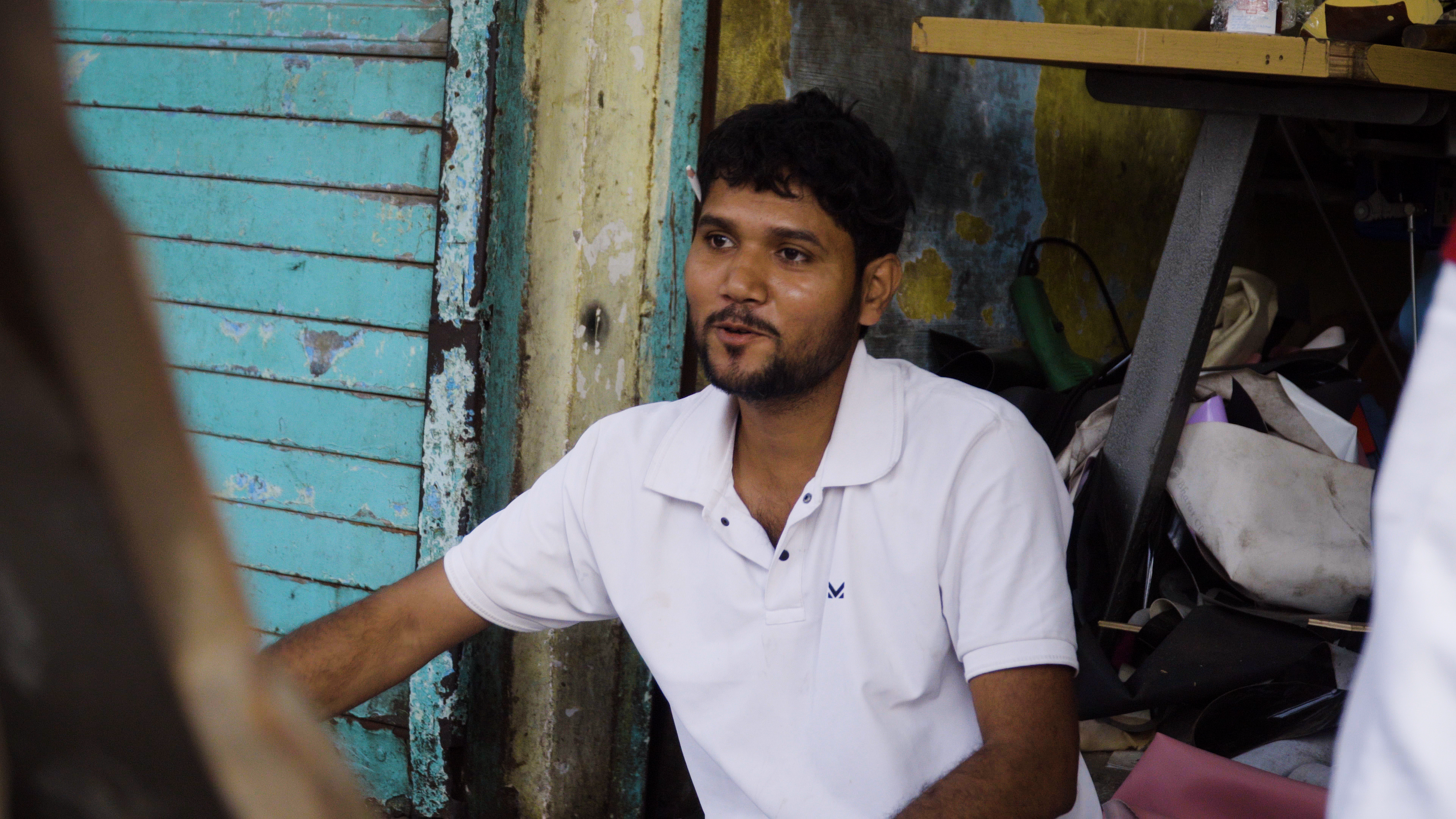
In Mumbai, autorickshaws are more than everyday transport; they’re personalised spaces on wheels. Drivers express parts of their identities through small interior details. From a tiny shop in Dharavi, Nanu Woodwallah designs and stitches these custom interiors.

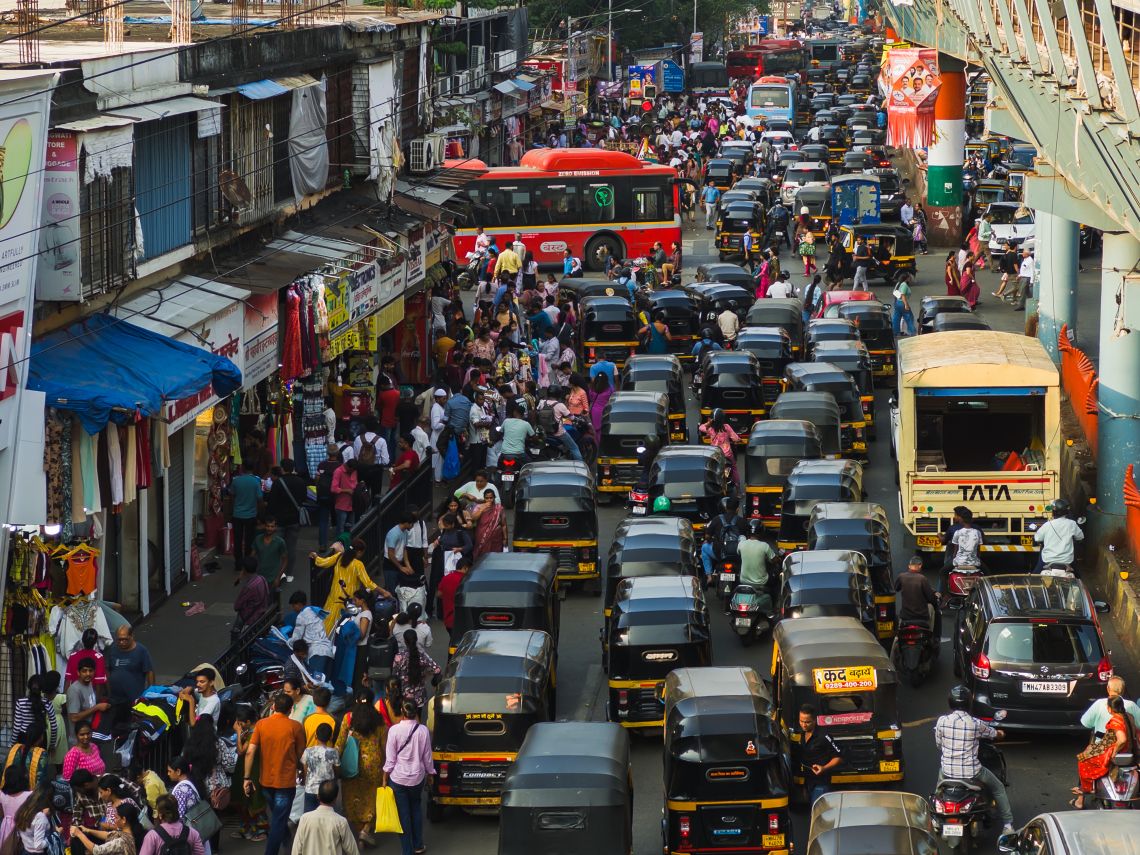
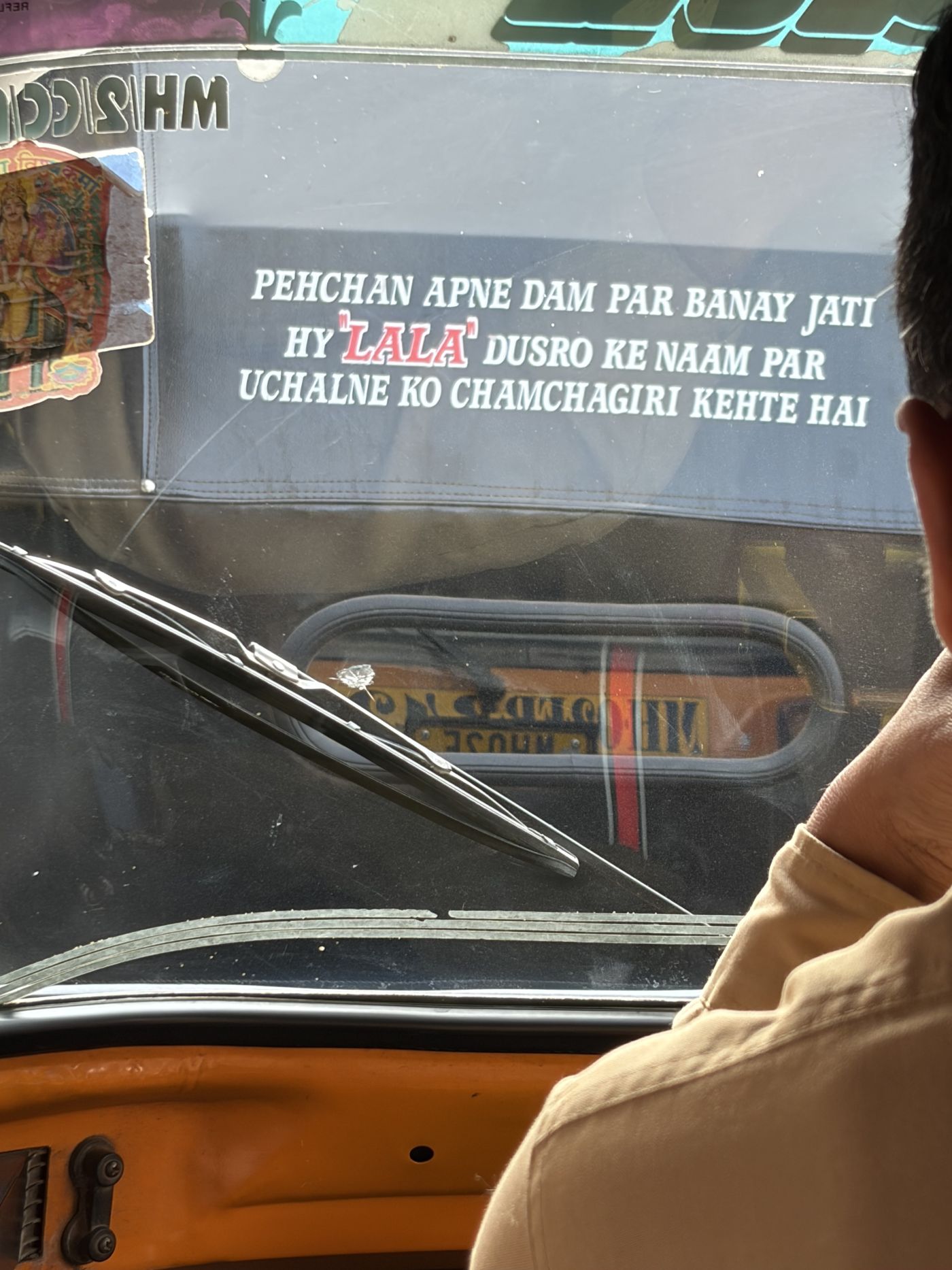
In Mumbai, autorickshaws are ubiquitous on the city’s streets. They provide comfortable, quick mobility and are especially useful for last-mile connectivity. The black and yellow three-wheelers race and manoeuvre through the city’s streets and highways. At first glance, they appear as a purely industrial object, a utilitarian mode of transport. If you look closely, you will begin to see some forms of personal expression - the names of loved ones or a popular dialogue from a Bollywood film. A few rickshaw rides later, you begin to appreciate their uniquely vibrant interiors. You might spot a hidden Rolls-Royce logo, a makeshift newspaper rack, a candy jar, or even a small fan tucked into a corner. The space becomes an assemblage of patterns, materials, found objects, and whimsical topographies. Every autorickshaw features a distinct interior, shaped by the driver’s personality, aspirations, philosophy, politics and love for their loved ones. These spaces are decorated with a variety of colours, materials, and motifs that reflect the driver’s imagination and personal history. While drivers often have a vision for their autorickshaws, they need a craftsperson to turn those ideas into something tangible. That’s where someone like ‘Nanu’ comes in.
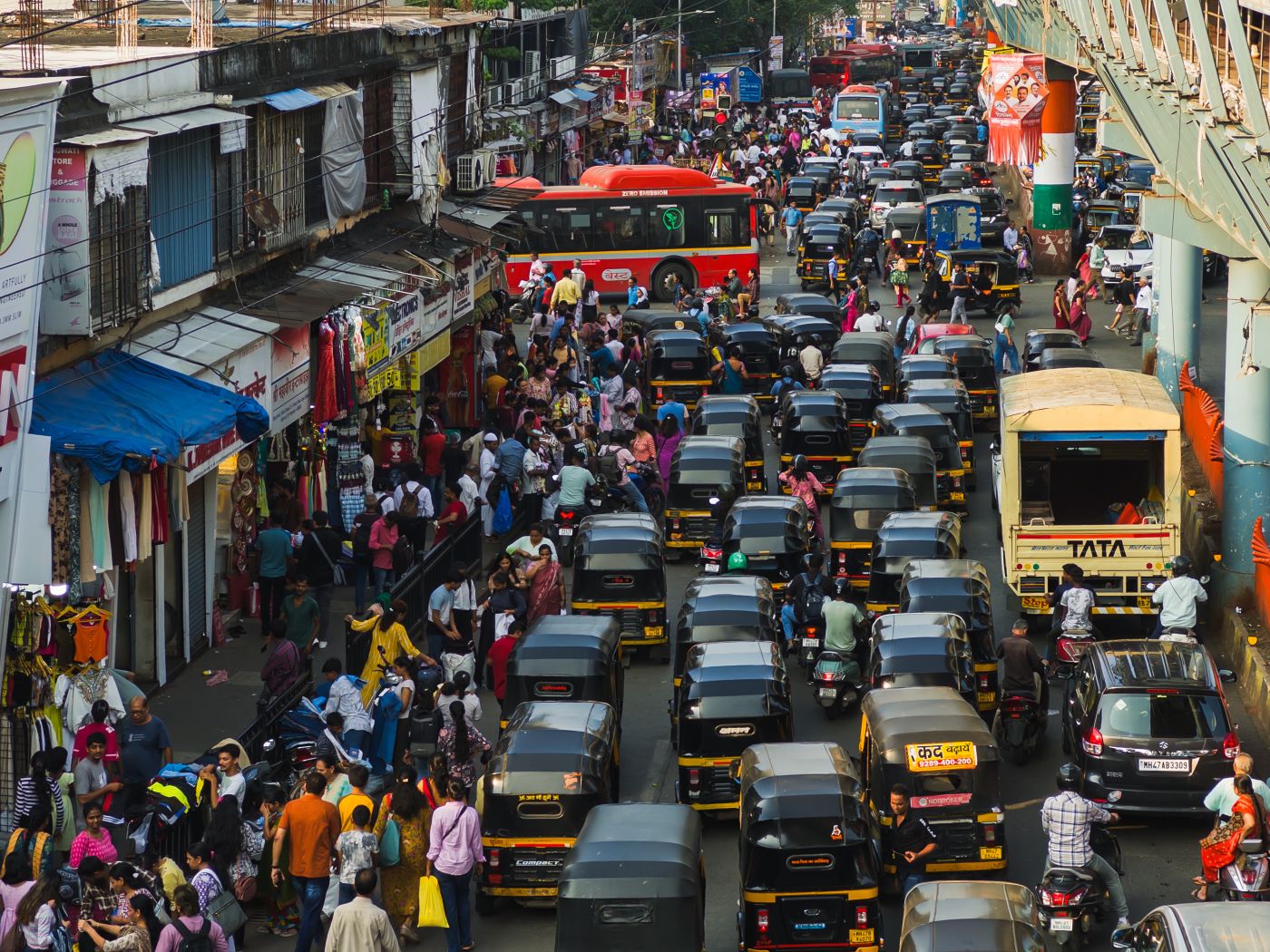
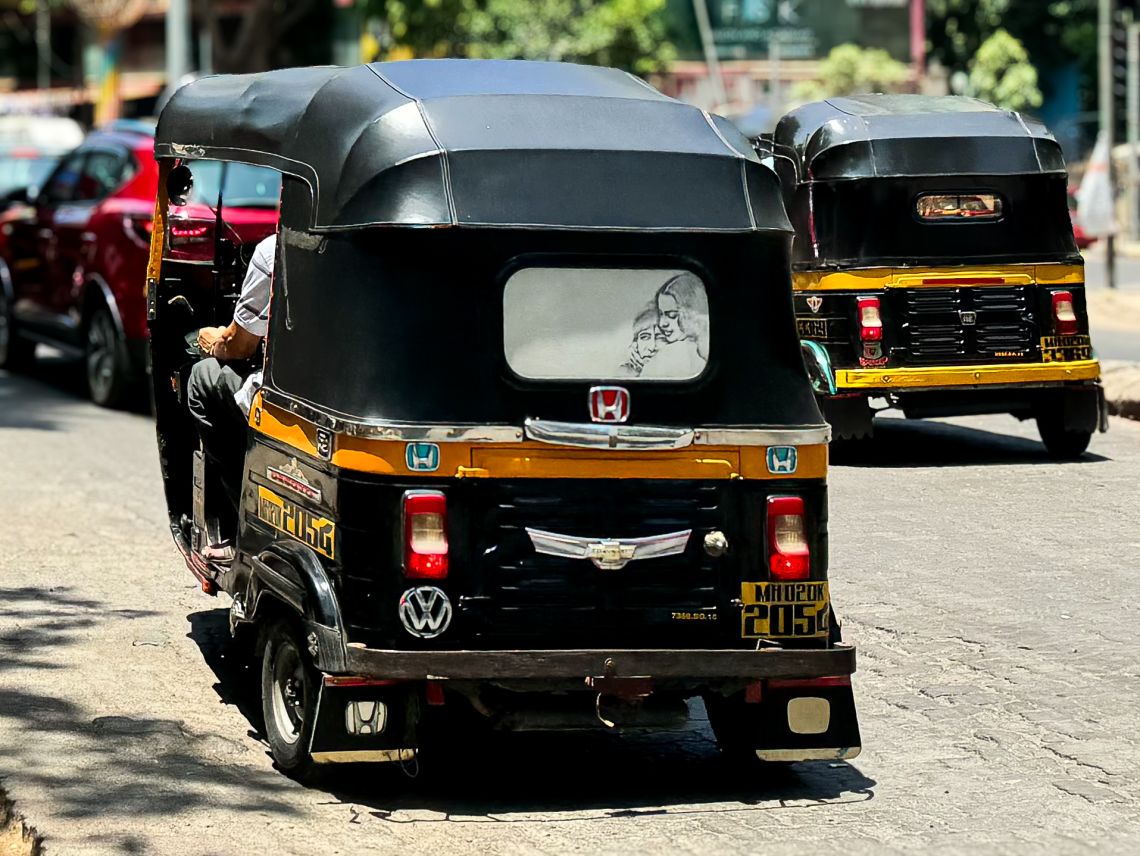
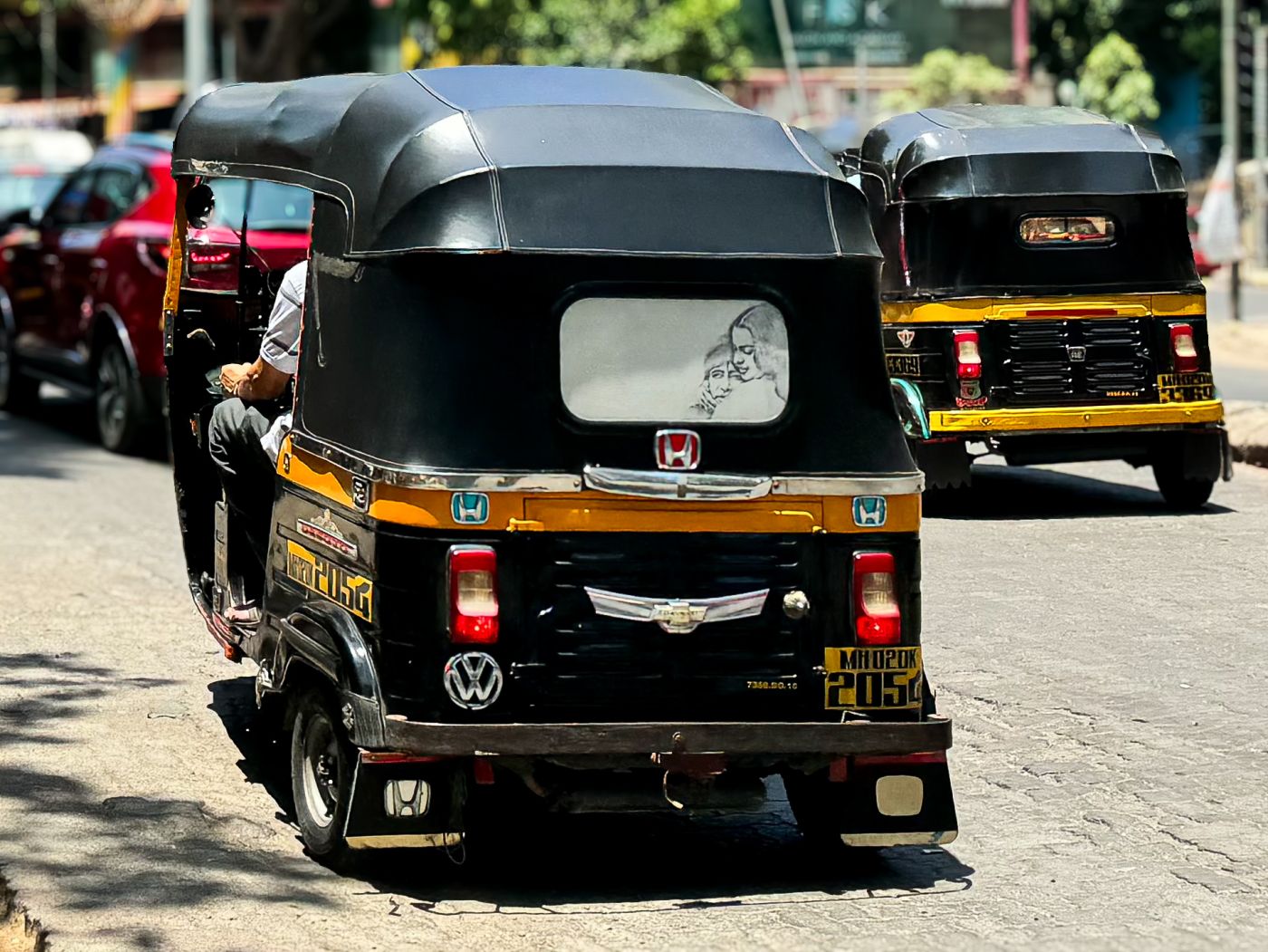
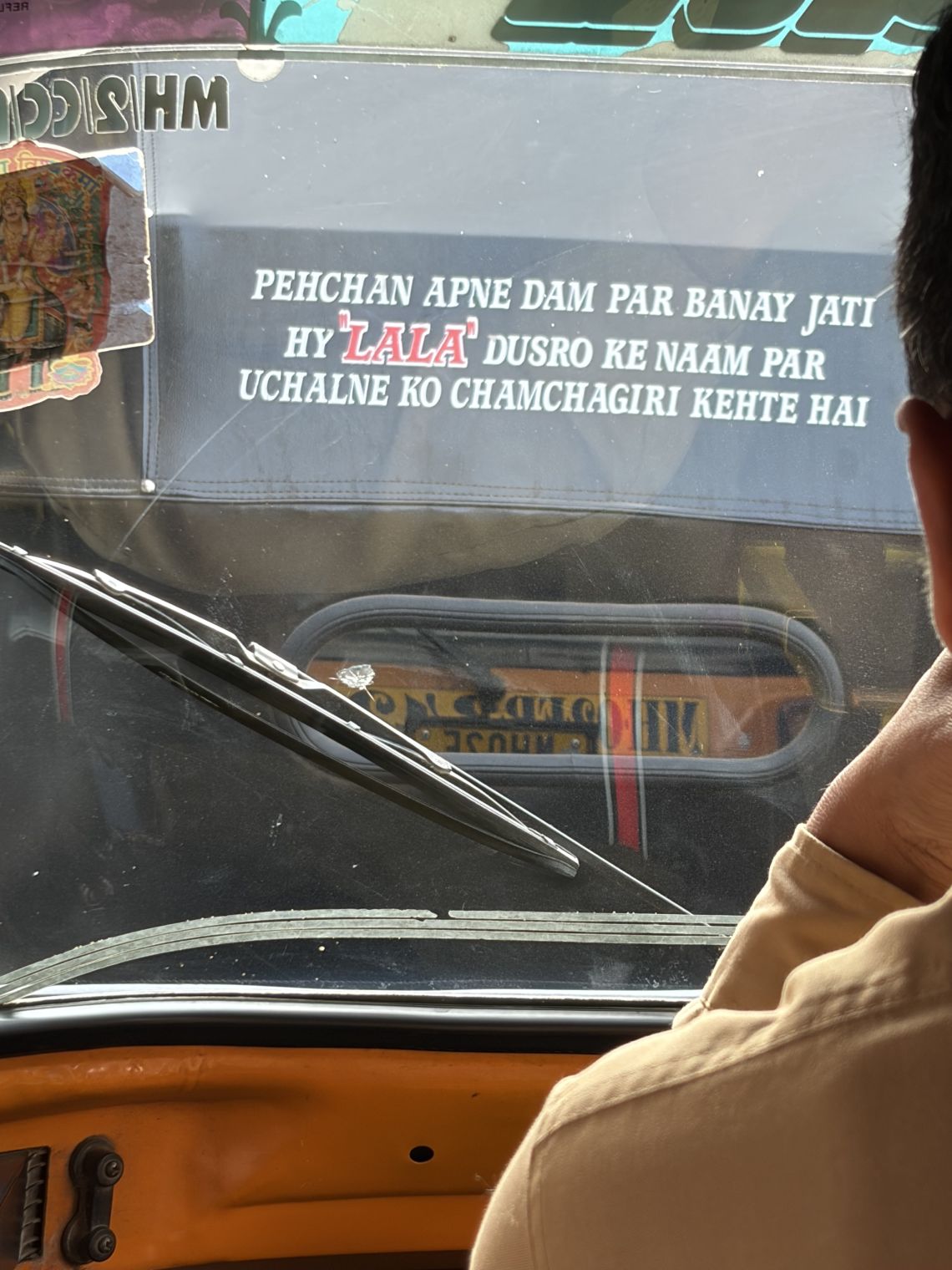
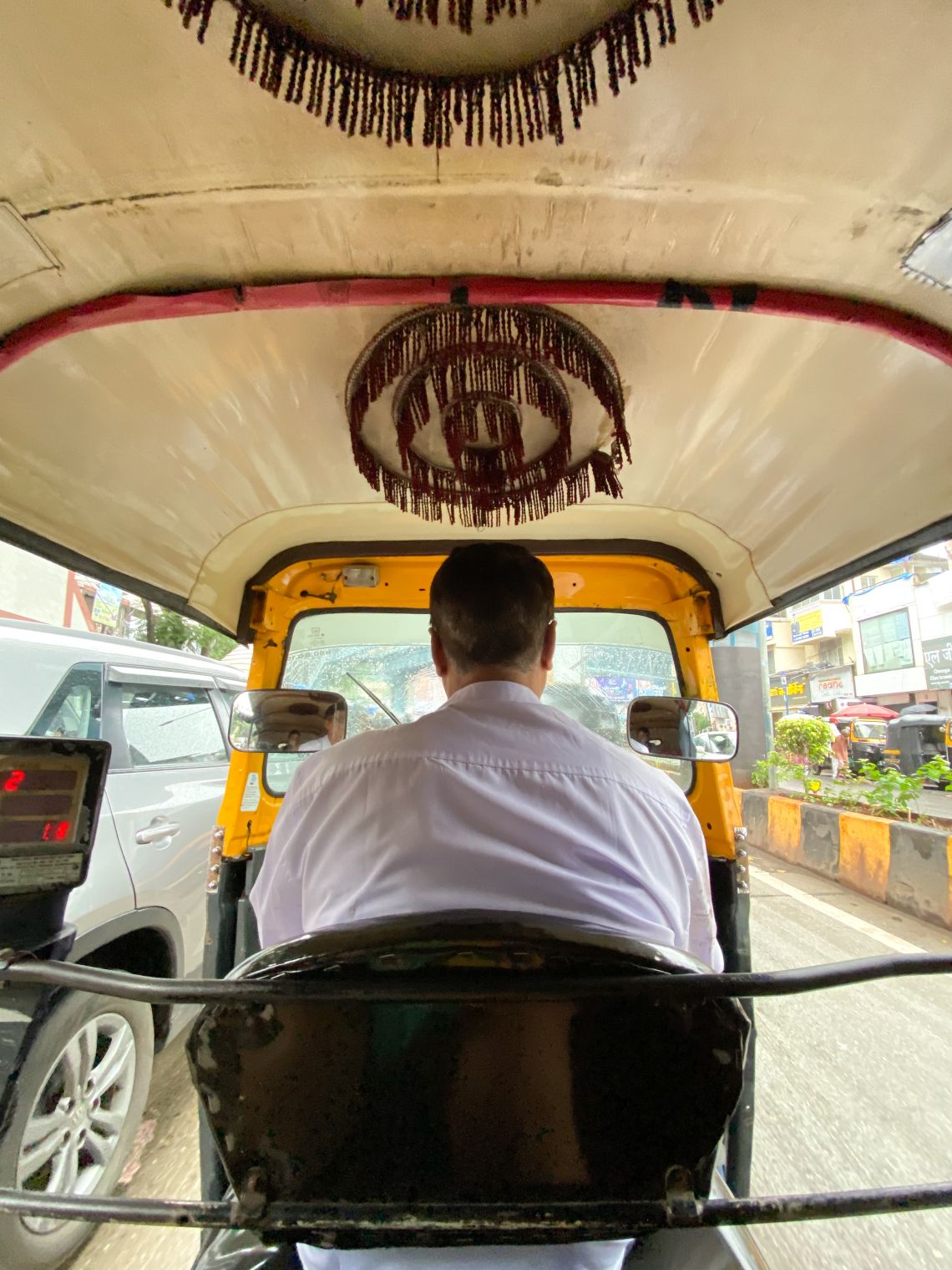
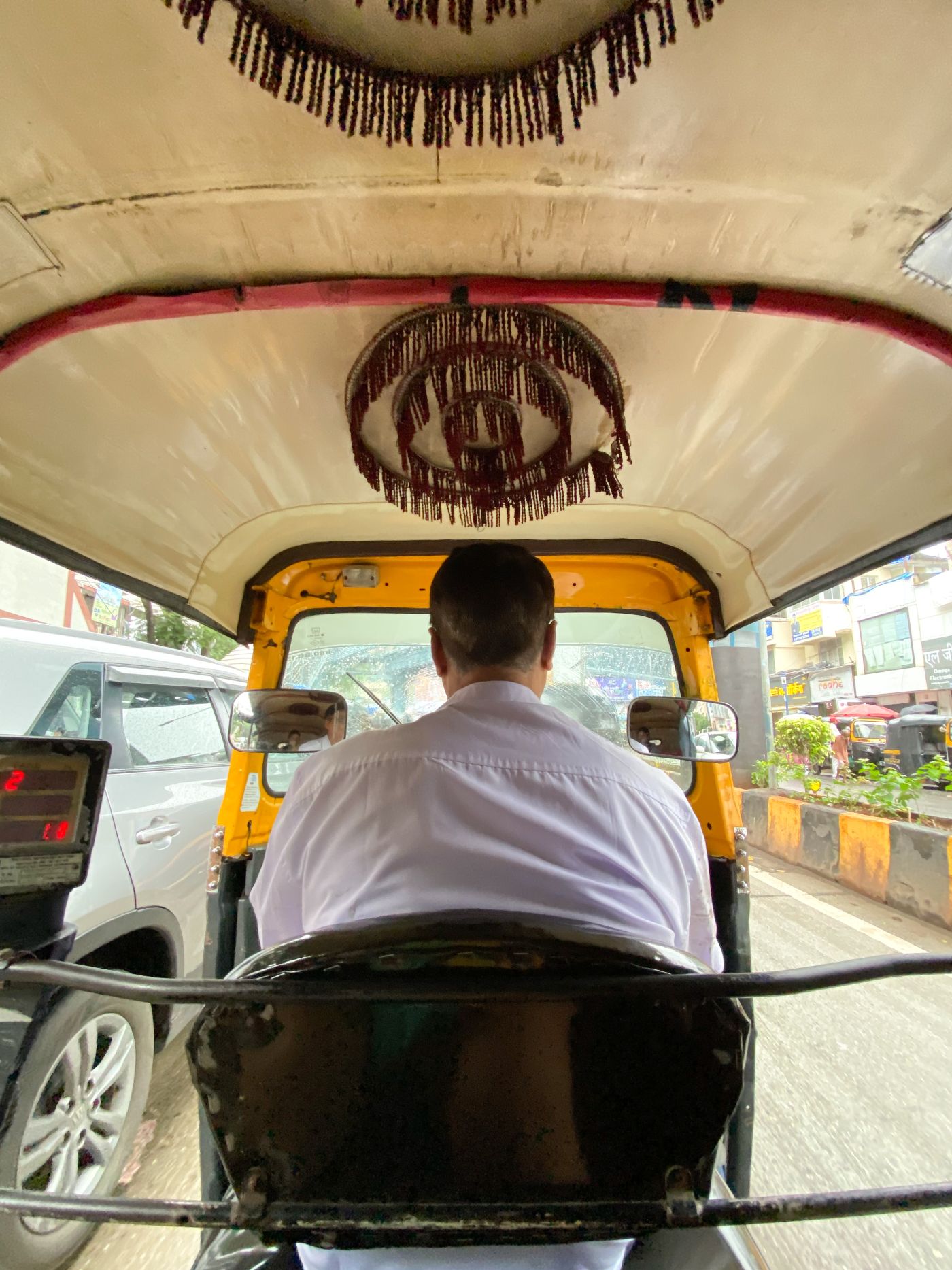
Inzamam-ul-Haq Farooqi, widely known as “Nanu” or “Nanu Woodwallah,” is one such autorickshaw interior designer in Mumbai. Born and raised in Dharavi, Nanu has spent his entire life in the neighbourhood, growing up, living, and working there, as well as across the city.
Nanu works from a three-foot-deep shop along the Bandra-Sion Link Road in Dharavi. One can find this typology in different homegrown neighbourhoods across Mumbai, providing space for micro-scale businesses. This specific location makes sense strategically, as his clientele frequently park their autorickshaws along the road directly across from his shop. As a result, the edge where Nanu’s shop is situated is populated with autorickshaw-related services like mechanics, garages, and wash and service kiosks.
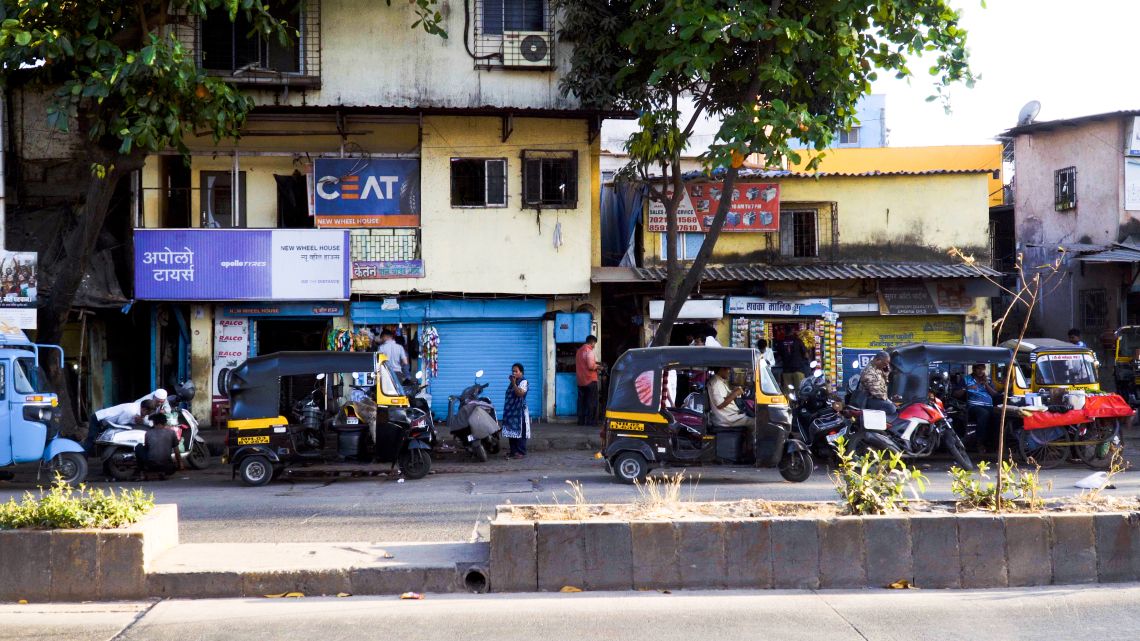
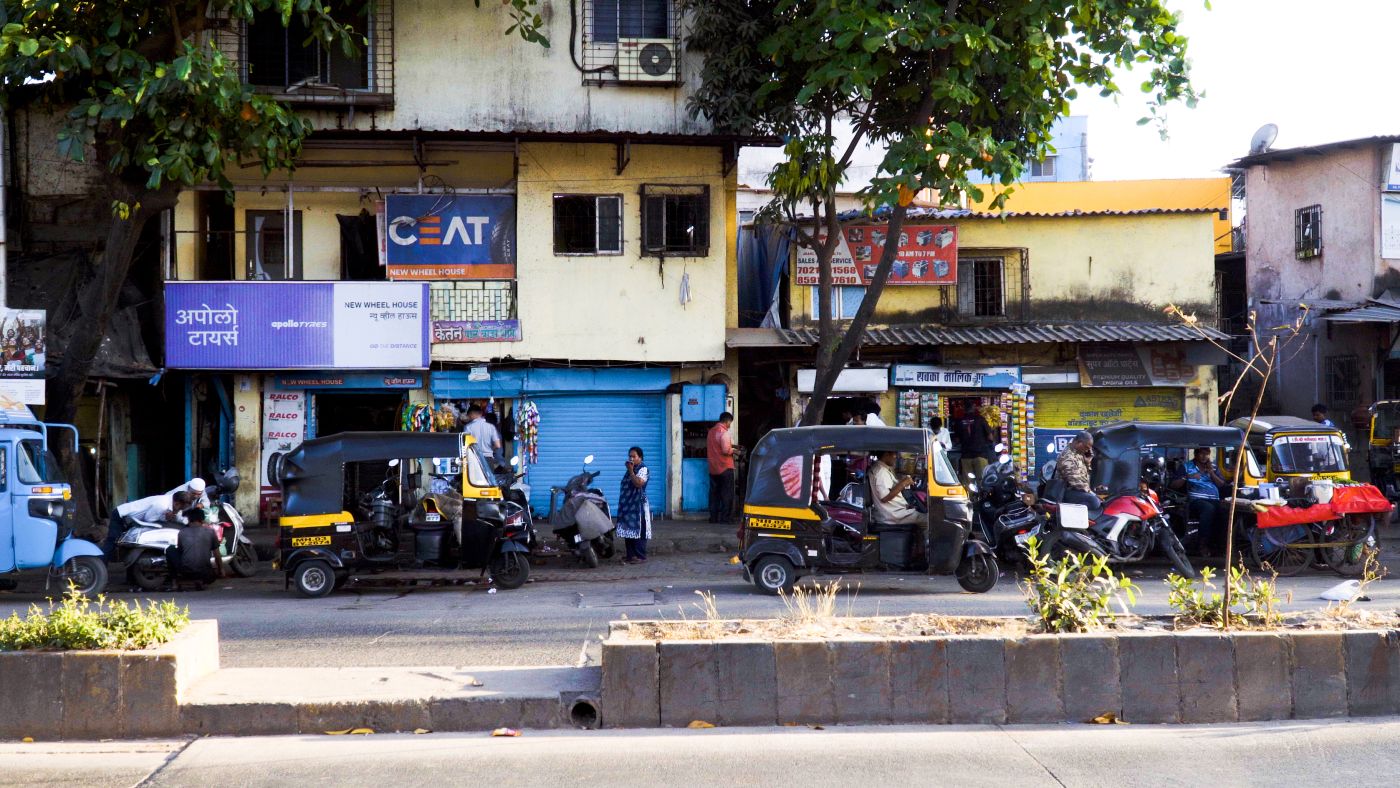
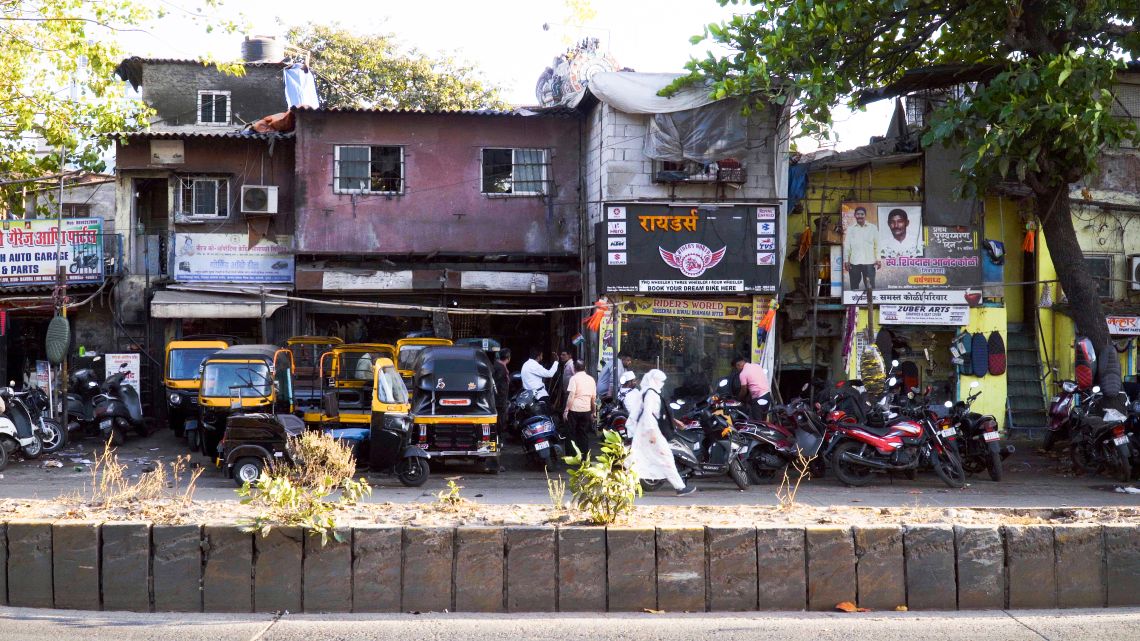
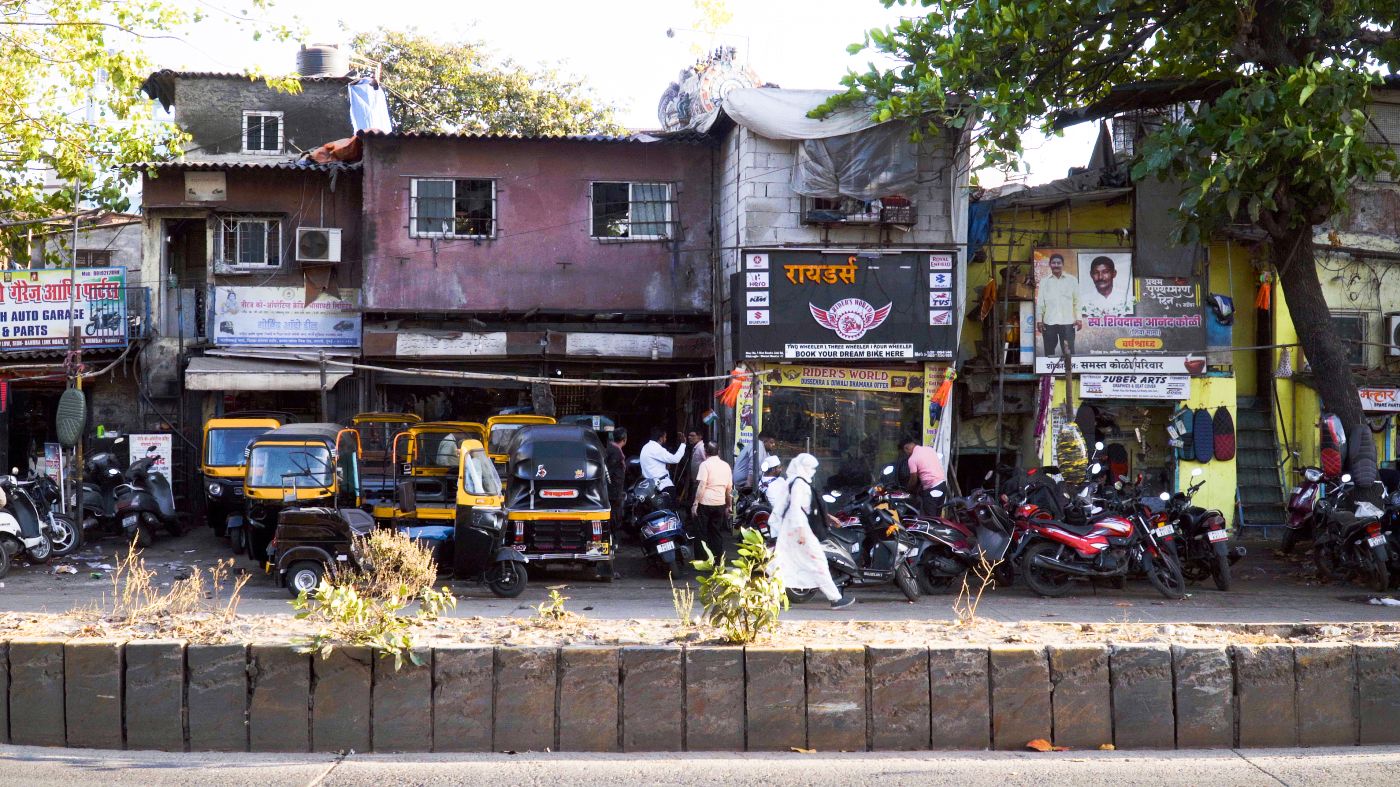
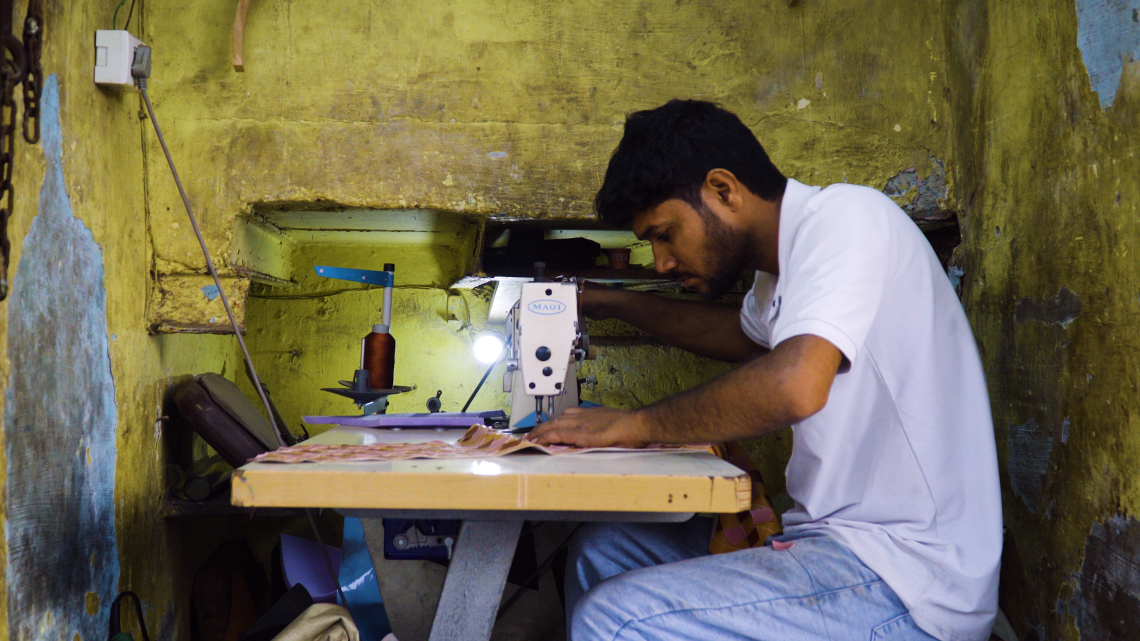
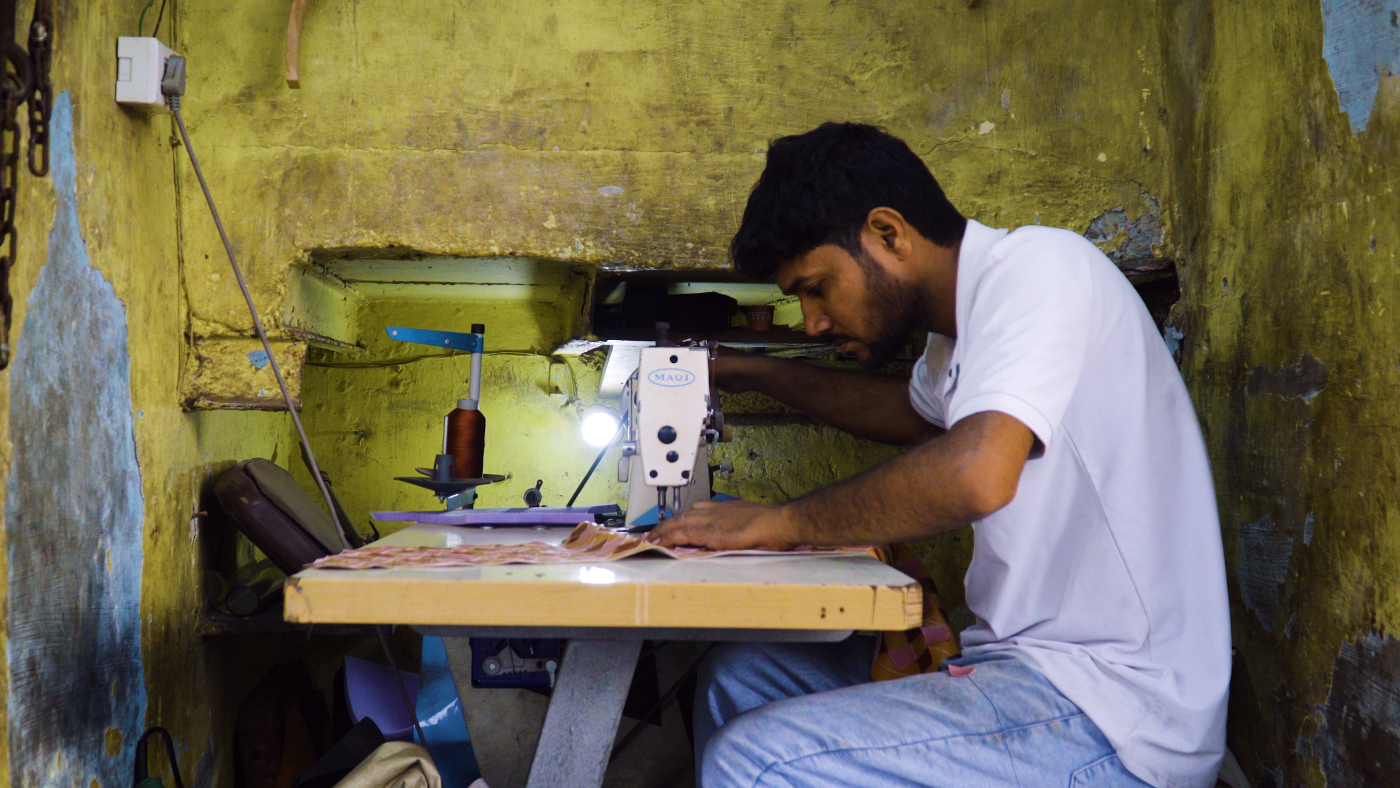
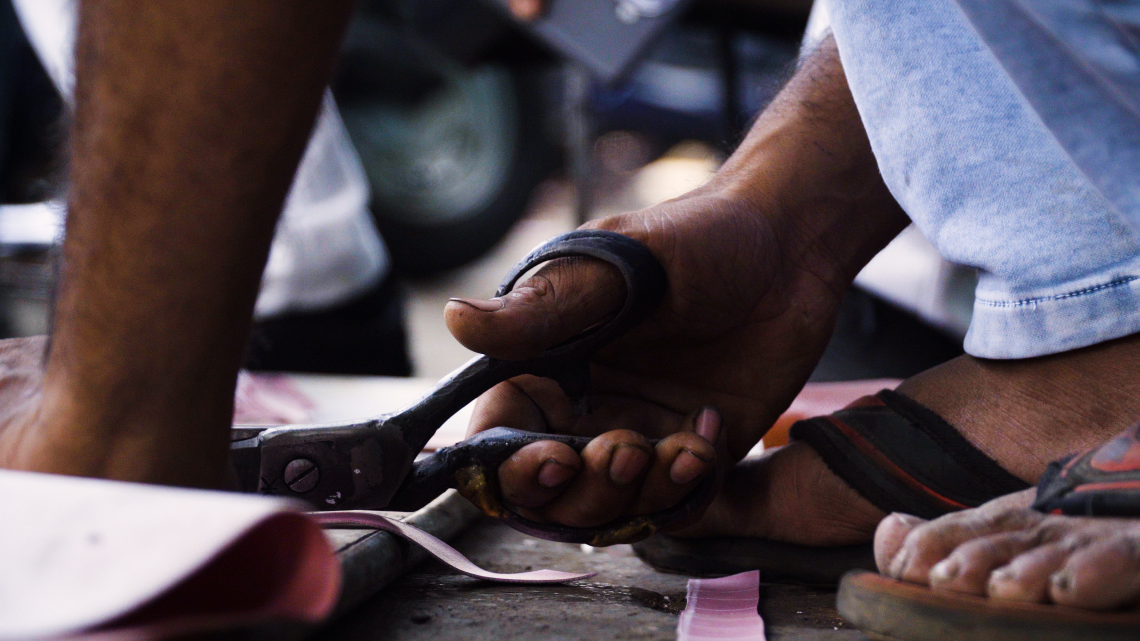
Within this footprint of roughly 12 square feet, he cuts and stitches long lengths of fabric to design entire rickshaw interiors; projects that are often three times the size of his shop itself. Because of the nature of his craft and the constraints of his space, Nanu’s work naturally spills onto the footpath and road. Similar to the neighbouring garages, his business turns the edge of the road into one continuous workshop.
Over years of practice, Nanu has developed a distinctive way of designing rickshaws. His process involves creating different motifs. He then experiments by repeating and altering these motifs, by arranging them radially, mirroring them, or combining them to generate entirely new patterns. At times, he assesses the drivers based on their conduct and then creates designs tailored to each specific driver.
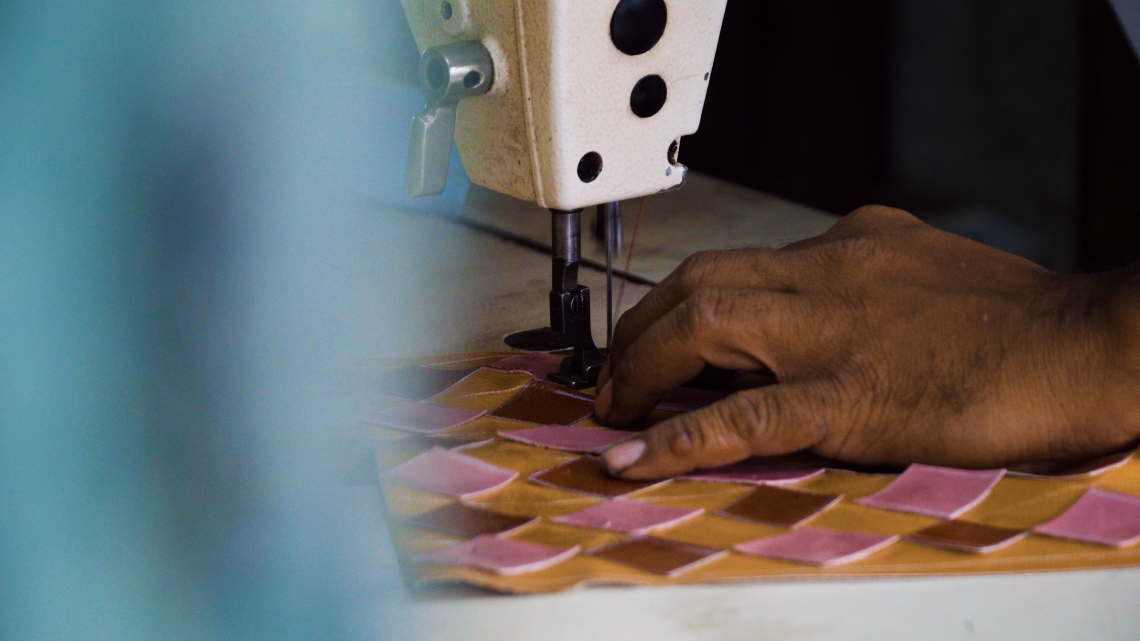
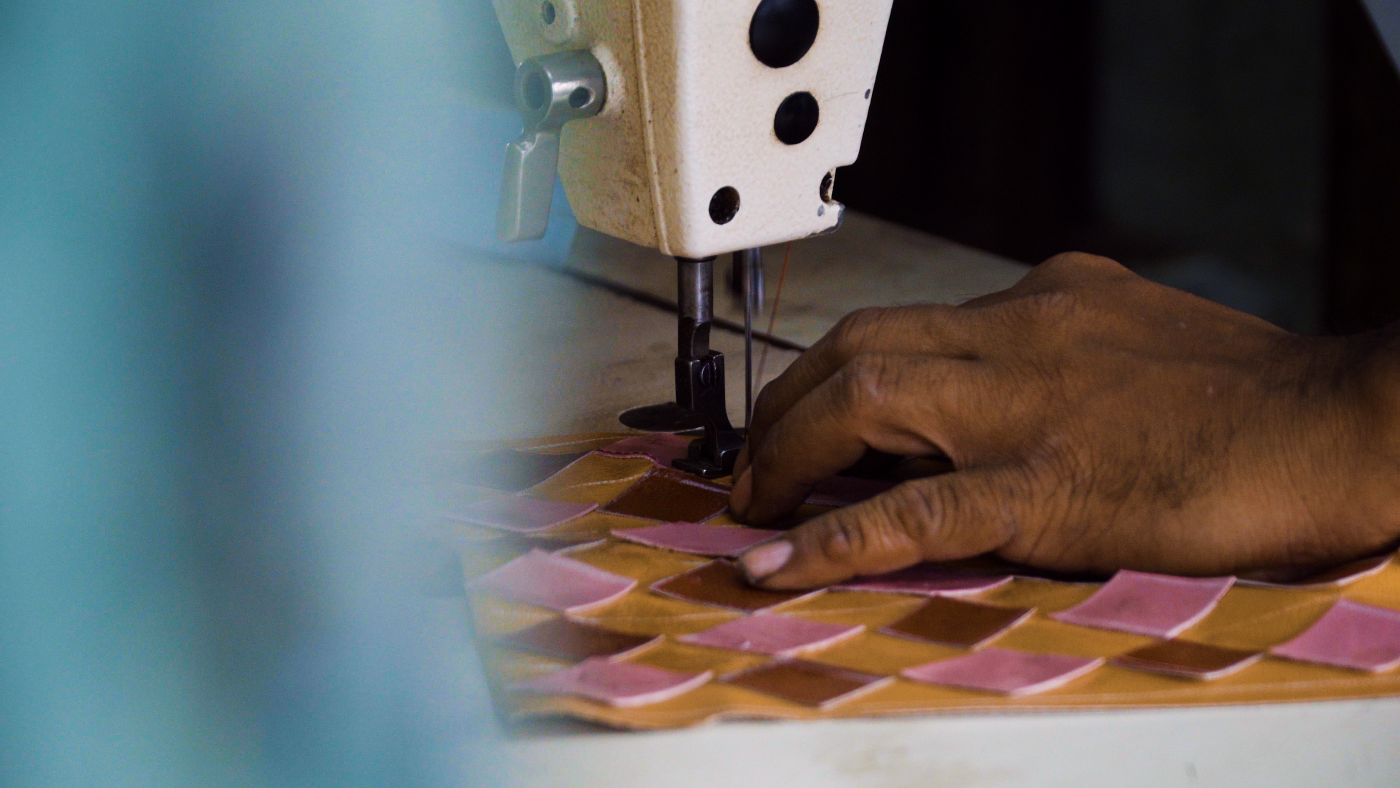
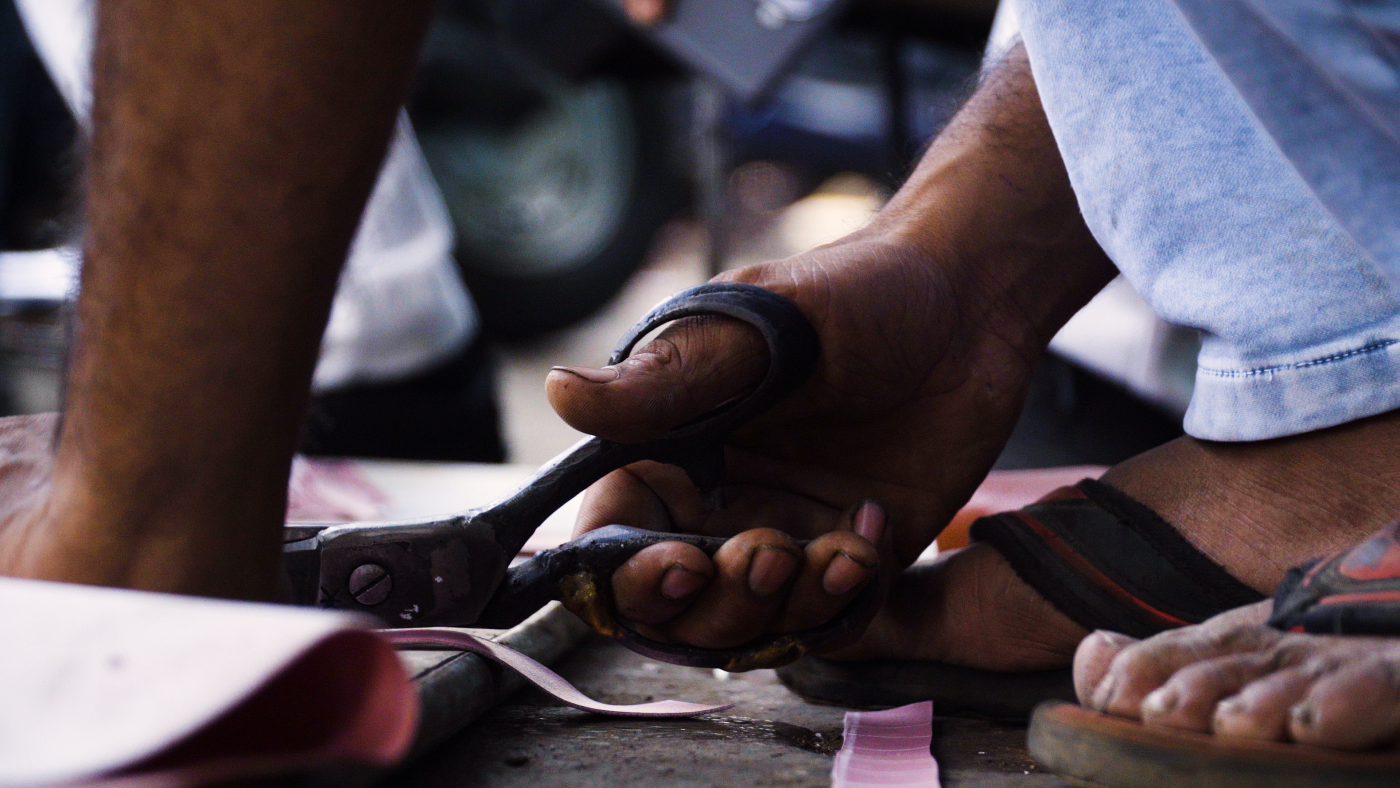
His creative prowess is highlighted by the fact that he secured second prize in an annual autorickshaw exhibition once, where he designed the interiors for four different entries. Although the prize money was awarded to the owner, to reiterate his personal achievements, Nanu says that work is fulfilling when it gets the validation it deserves. In the early years of his career, he spent long days searching for work; however, today, people travel from Pune and New Mumbai to have their rickshaws designed by him. When we asked him about how he advertises himself now or if he even does it, he replied, saying, ‘Just the name ‘Nanu’ is enough.
Nanu reflects on the spatial realities of Dharavi: the density, the overlap of home and work, and the constant pressure of limited space. While living in an apartment in Aakash Tower, a newly redeveloped building, these constraints became even more apparent when both Nanu and his brother started their own families, marrying around the same time. To accommodate the needs of their growing families, Nanu bought another home for his brother in a homegrown neighbourhood within Dharavi.
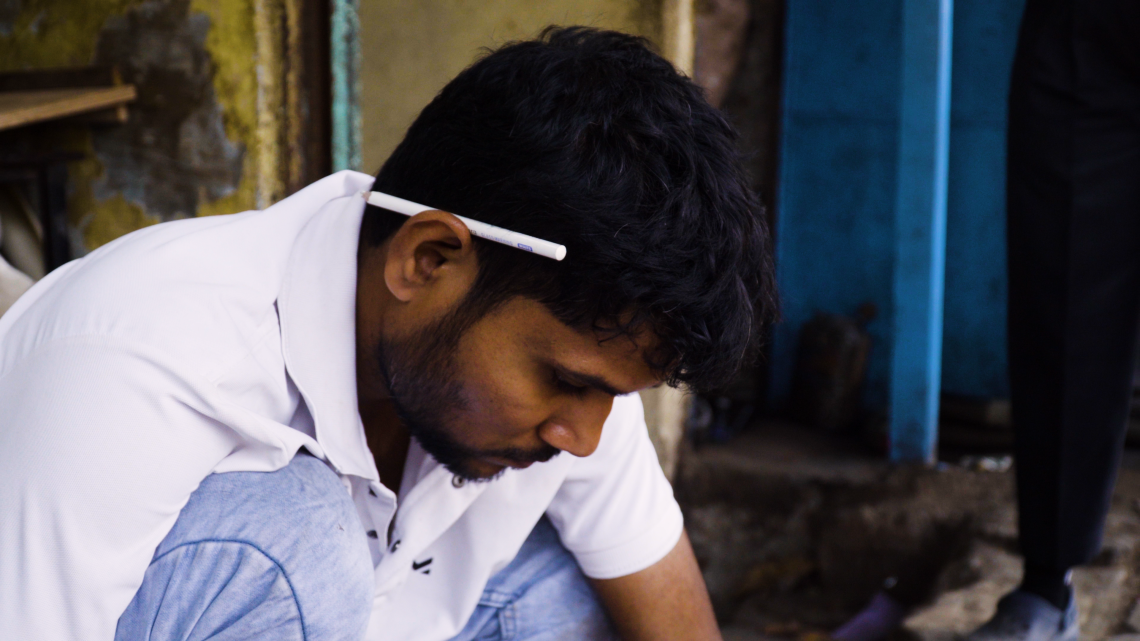
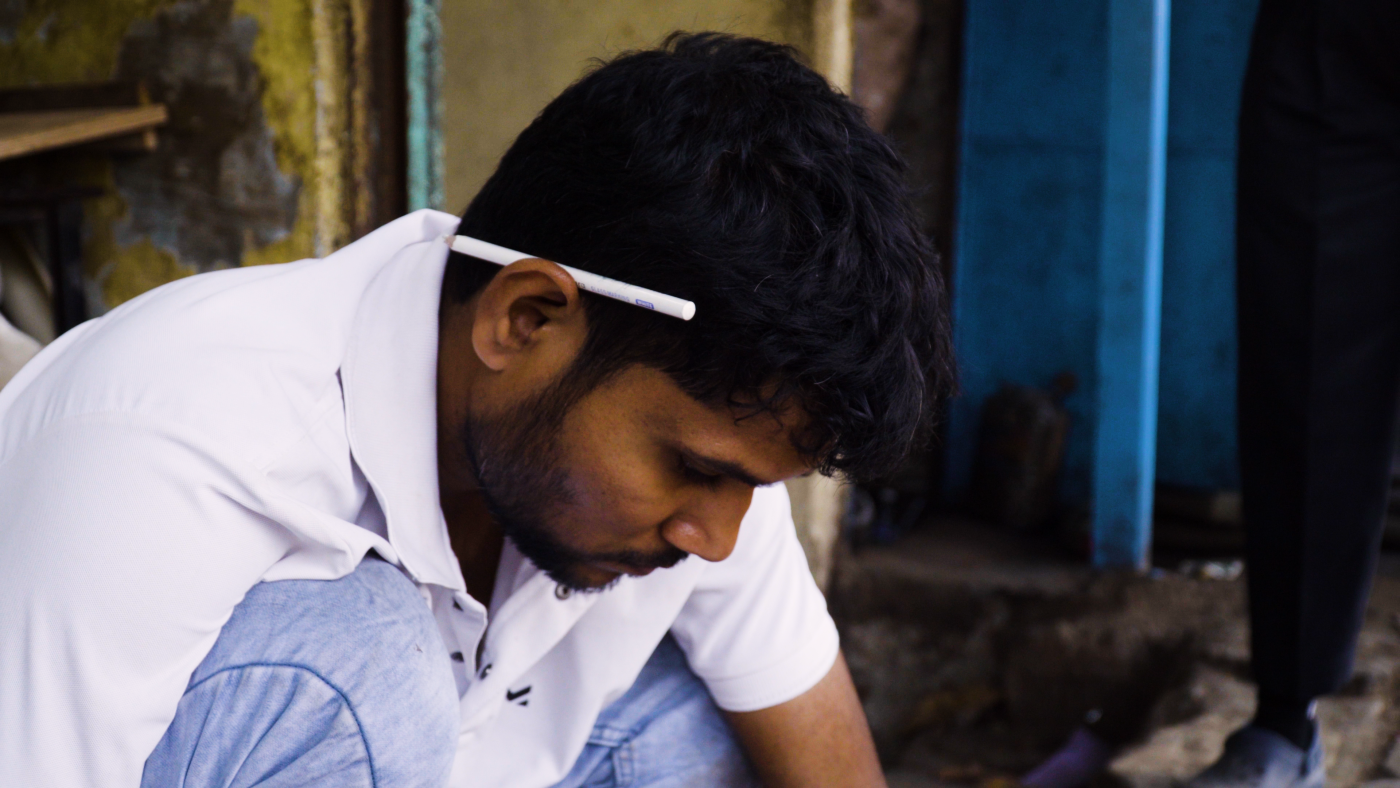
This move brings about a sense of shifting impermanence, where ‘moving on’ often means simply moving to a different coordinate within the same boundary. His pattern of adapting to new spaces while staying rooted in place mirrors his connection to the city’s mobile infrastructures; Ultimately, for Nanu, these constant shifts, both personal and urban, reaffirm that change is a natural part of life that one must learn to adapt to.
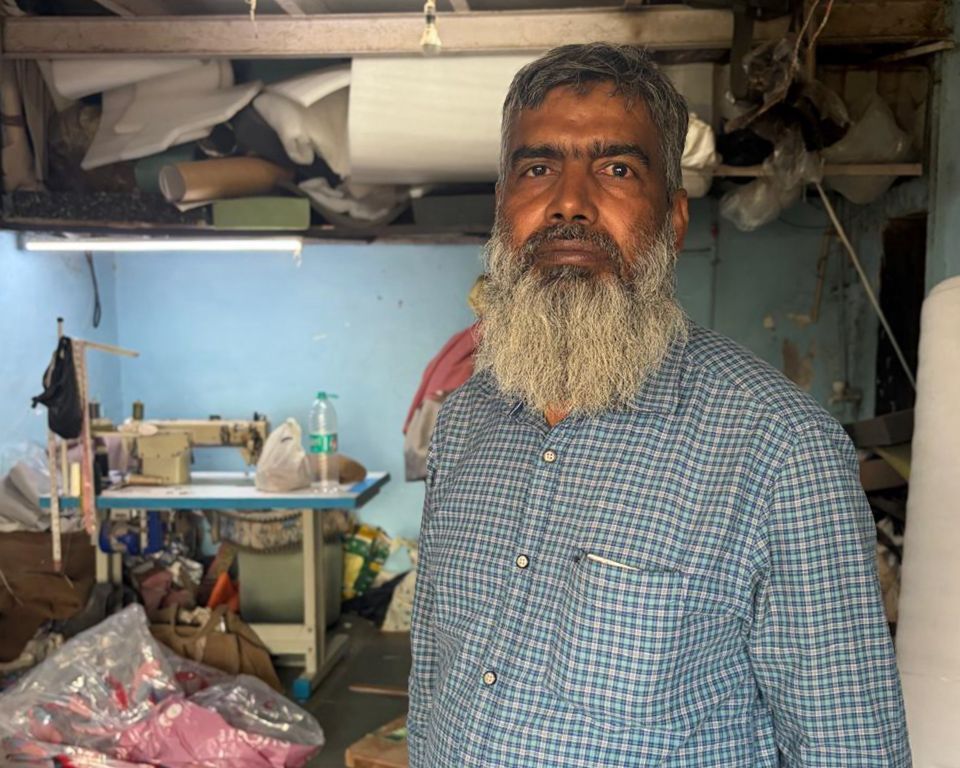
Abdul is a sofa maker who has spent decades cultivating a network of friends and work associates in Dharavi. Open to new challenges and willing to experiment with his craft, his perspective suggests an acknowledgement of his current social standing and external constraints, balanced by a focus on moving forward and maintaining a pragmatic approach to his future.
Abdul Hamid Sayyed is a sofa maker who operates a rented workshop at the edge of Dharavi Koliwada, with a frontage facing the Sion-Bandra link road. He has lived in Dharavi since 1985, having arrived when he was just seven years old. He says he has seen the area transform right before his eyes. He reminisces about a time when the land where the Bandra Kurla Complex (Mumbai’s business district) stands today was just an open ground with no buildings, and a massive open-air theatre where films were screened.
Abdul entered the furniture-making profession because he was not particularly interested in academic studies. Instead, he found designing furniture to be an engaging pursuit that challenged his mind. He spent years learning woodworking and sofa-making as an apprentice artisan at various workshops and studios across the city, including within Dharavi.
Three years ago, he started his own business. He speaks passionately about his work, noting that he does not shy away from challenges. He enjoys engaging in dialogue with clients to experiment with newer designs. Even if commissioned for a single piece of furniture, Abdul is willing to undertake design briefs that give fodder to his brain. His many years in this profession have given him the kind of experience where no challenge feels too big to handle.
Hum ghabraate nahi hai naye type ke kaam se, aapko jaisa bhi kuch banwaana ho, kuch ekdum customised banwaana ho, hum kar denge.
I don't shy away from a challenge. If you need something specific and one-of-a-kind, I’m ready for it. Consider it done.
Currently residing in Dharavi with his family, Abdul has four children, including a school-going son and a daughter in the 12th grade. His son attends the local municipality school. He reflects that just as his parents invested everything in their capacity to educate him, he is now investing everything he can to ensure his children have access to the best education. Although he suspects his children are not very interested in studying, much like he was, he remains committed to seeing them succeed in life.
Dharavi Mumbai ka dil hai.
Dharavi is the heart of Mumbai.
He explains that Dharavi has a perfect ecosystem that has grown over time to sustain small-scale industrial and workshop businesses. It is one of the few places where he can find all the required raw materials and the skills to process them. In Dharavi, whenever a primary industry takes root, it naturally fosters a surrounding cluster of auxiliary businesses that provide the essential supplies and specialised services needed for production. This concentration fosters a self-sustaining cycle, where every stage of the supply chain is within reach, enabling small-scale operations to function with high efficiency. Furthermore, the extensive network of artisans allows him to outsource tasks that cannot be done at his relatively small workshop. Since his business thrives on word of mouth, this network is vital for his growth. Geographically located in the centre of Mumbai, Dharavi also serves as a logistical centre, providing unparalleled proximity to the city’s major transport networks and many of its commercial marketplaces.
Abdul speaks very practically about the Dharavi redevelopment project. He anticipates that once the neighbourhood is redeveloped, the existing ecosystem will be disrupted. He expects overhead costs to increase and knows he may incur losses, but he views this as the part and parcel of any business and is prepared to deal with it when it happens.
However, he remains sceptical about the redevelopment project's intent, describing the redevelopment as divisive and not for the poor. While there are talks that residents will receive homes in the same locality, he refuses to believe that these homes will be permanent. He believes the aim is to create an elite urban neighbourhood, similar to the Bandra Kurla Complex, and push the poor and middle class to the peripheries of the city.
Despite these uncertainties, Abdul maintains an optimistic outlook regarding his future. When asked about moving away from the network of friends and work associates he has made over the decades, he simply states, "Wherever we go, we’ll make new friends and rebuild our business.”
Abdul’s perspective suggests an acceptance of his limitations within the social hierarchy and, to a certain degree, a resignation to his fate. While he acknowledges that some things are out of his control, he remains focused on moving forward in life without losing hope.
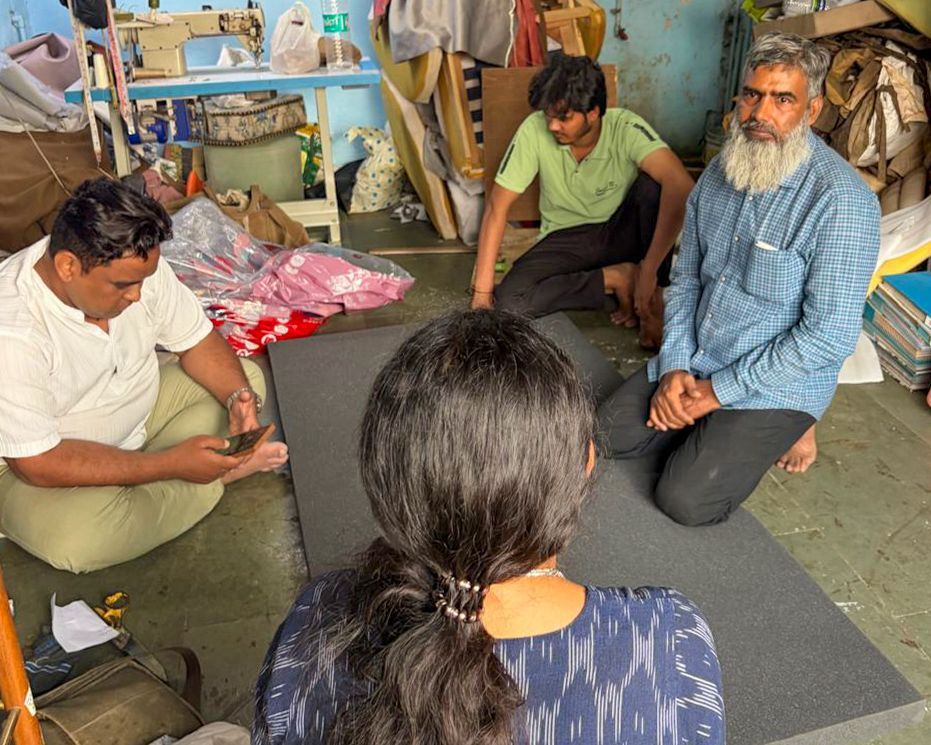

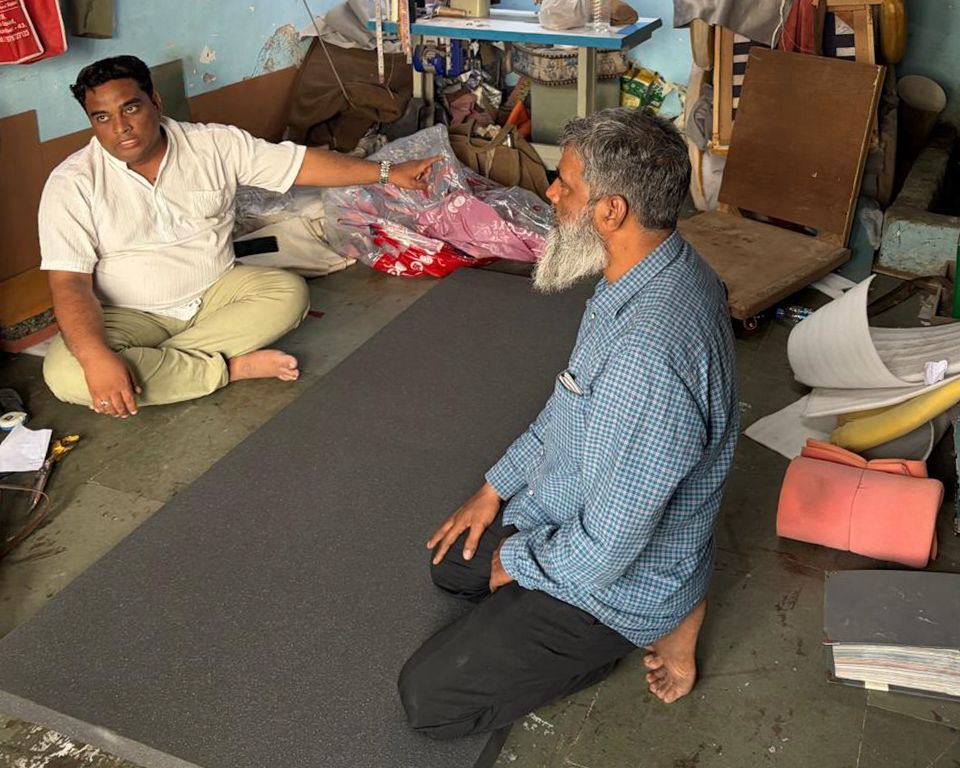

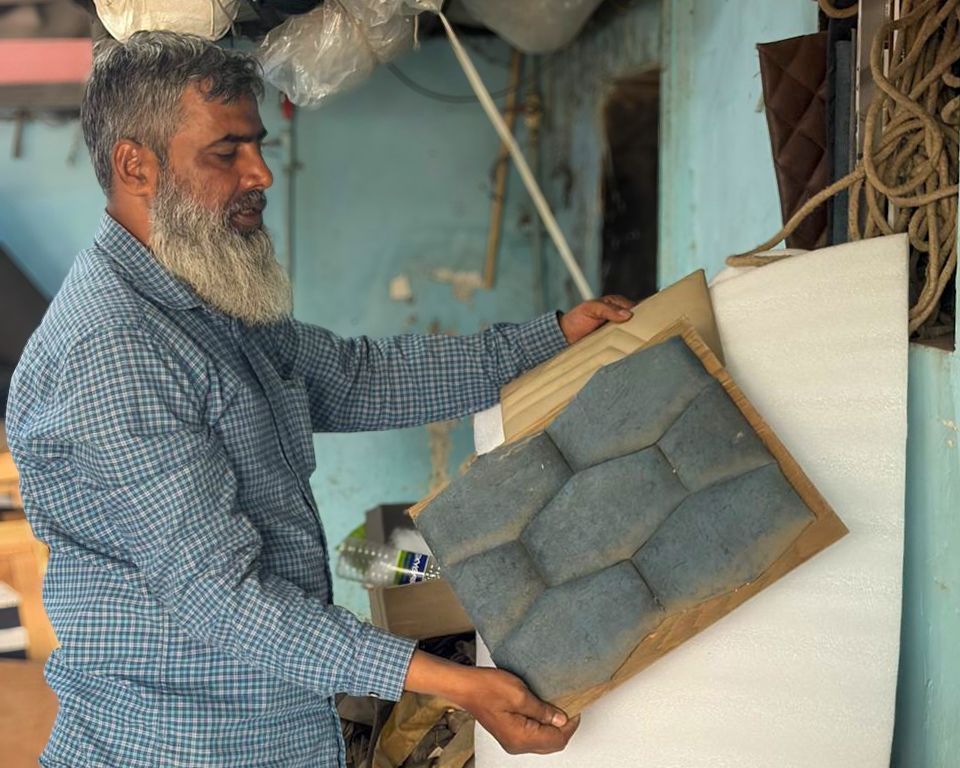

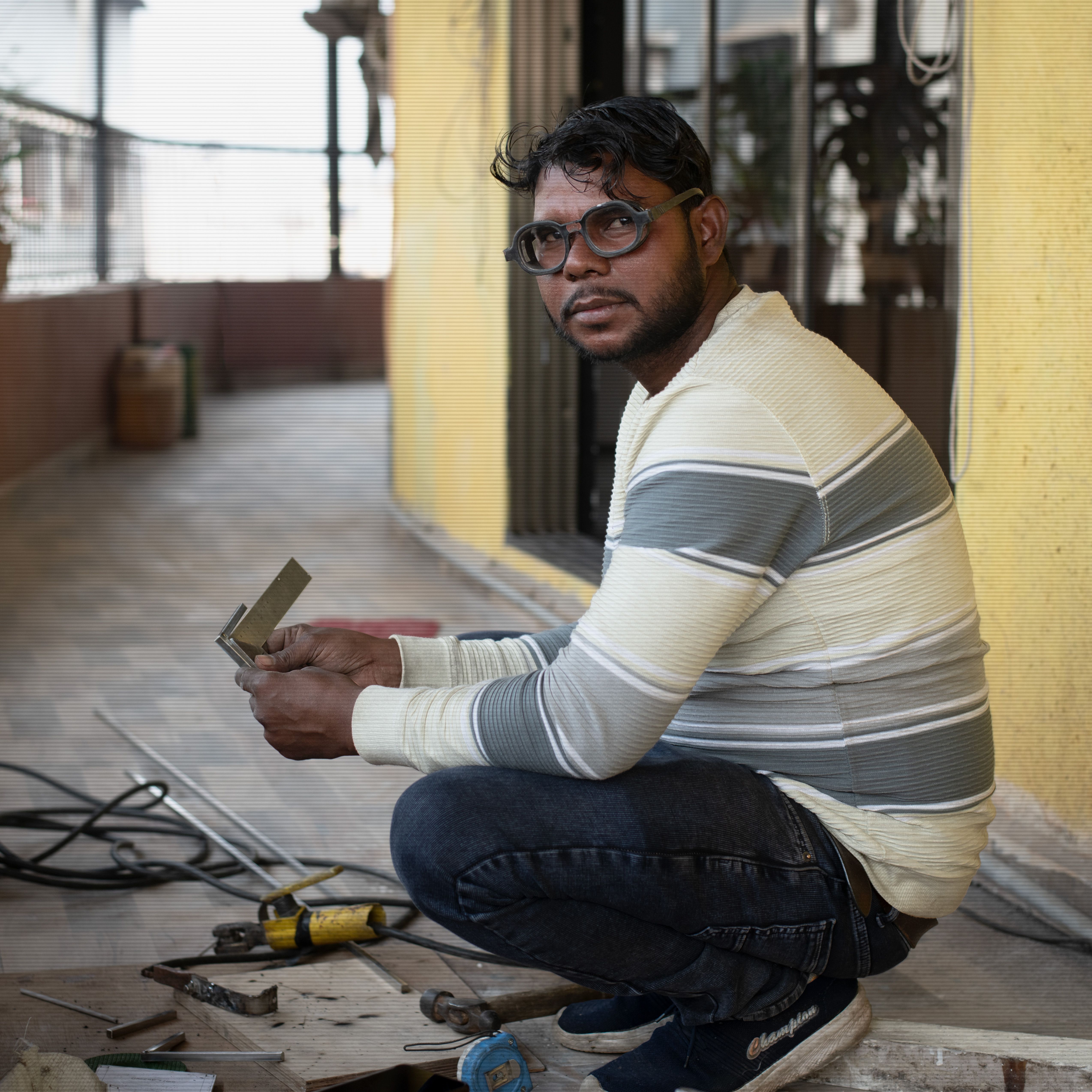
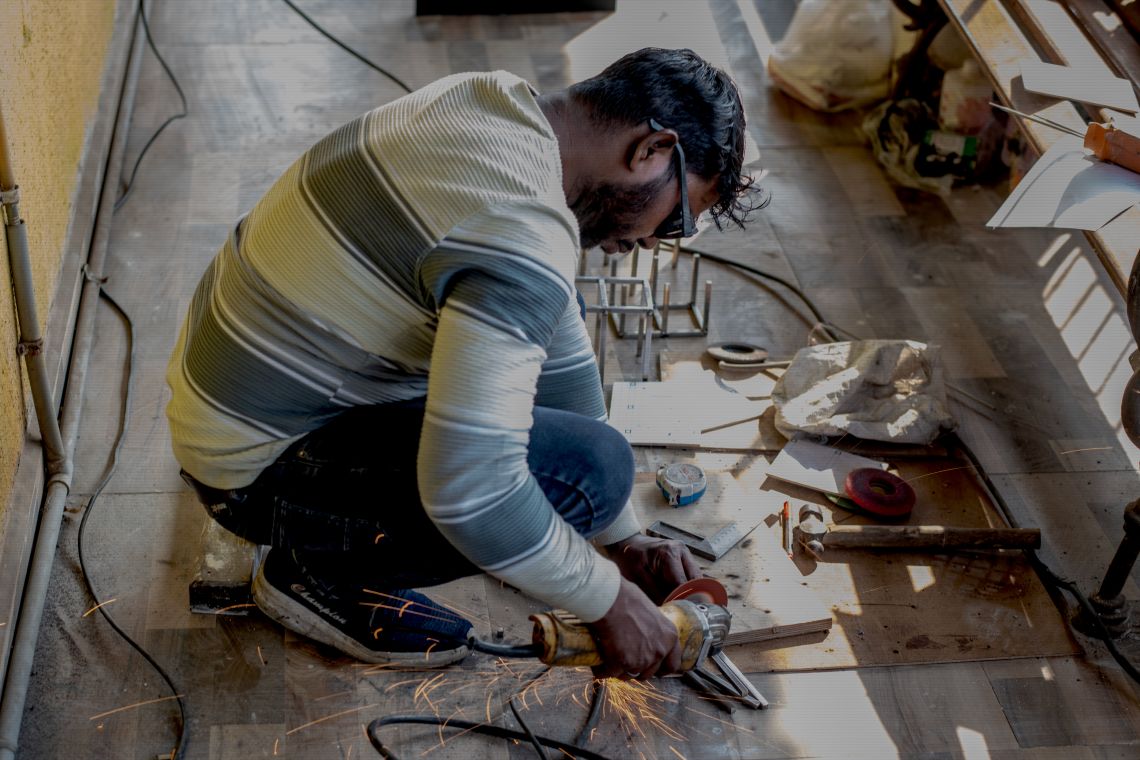
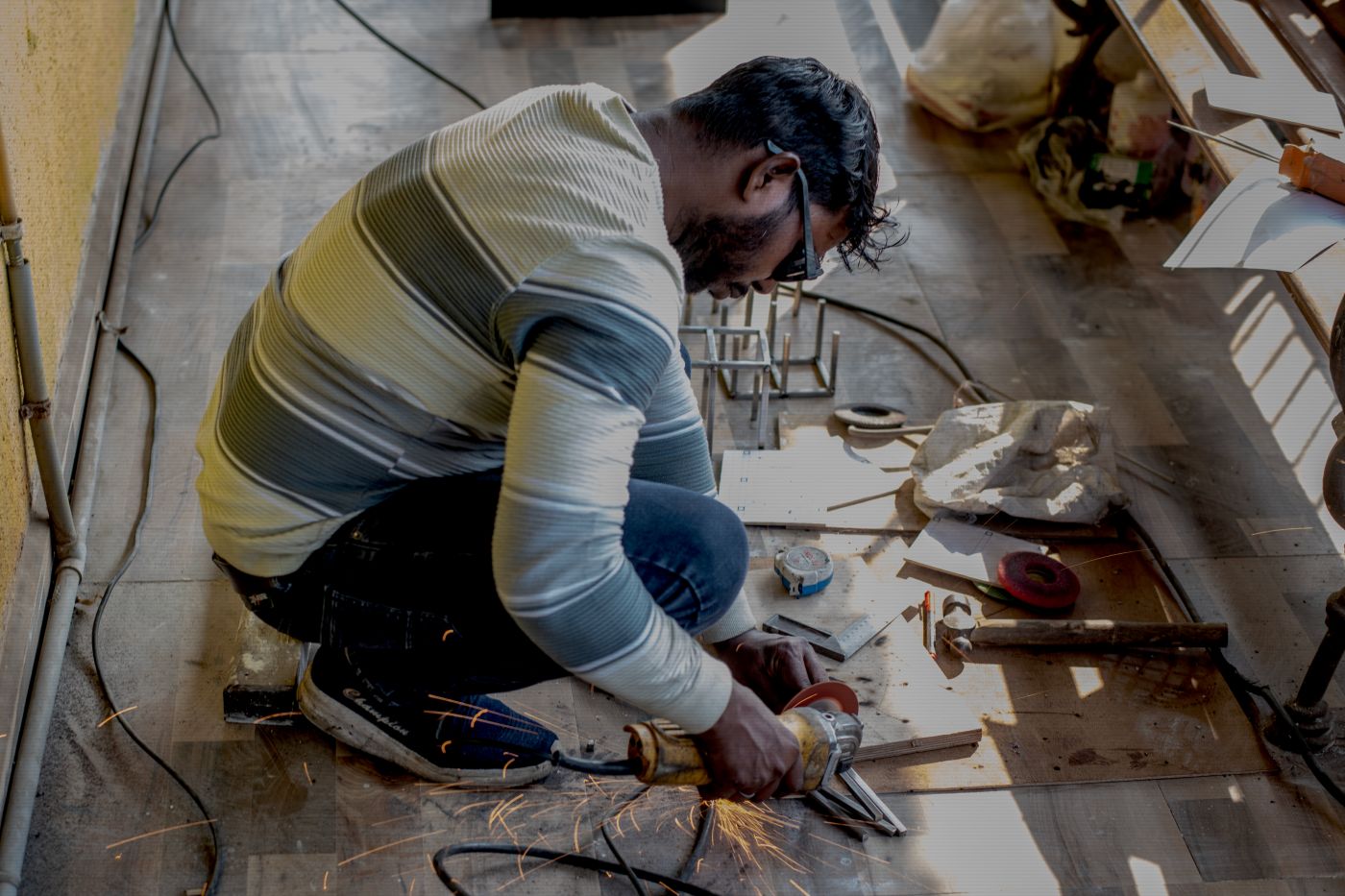
Kamlesh is an itinerant welder who has lived and worked in different parts of the country. Kamlesh represents the skilled workforce that quietly underpins the city’s built environment. This is his story...
Mithilesh Kumar, aka “Kamlesh,” sat squat, handling with ease the metal members urbz needed for the Homegrown Street model series. He’d been working almost continuously for more than a few hours, stopping only for a short lunch and some chai. Luckily, it was a pleasant day, and the balcony's shade offered him a relatively comfortable environment to work in.
Kamlesh is a 29-year-old welder from Mau, a district in eastern Uttar Pradesh (U.P.), a state in northern India. He speaks Hindi and Bhojpuri at home. His wife, a homemaker, lives in UP with their two children. He visits them for four months in the year. Currently, he lives near Grant Road, having moved to Mumbai in 2018. His portfolio includes metal fabrication work for large commercial projects such as the Breach Candy Hospital and the Trident Hotel (Bandra-Kurla).
While he didn’t touch upon why he’d moved to Mumbai, he spoke extensively about his history of welding work across India and how he got into the profession.
He completed his schooling through 9th grade (in U.P.), where English was his favourite subject. After leaving school, one of his friends told him that he could learn to weld in Kerala. He was taught in Kerala by a “Raju Bhai”, who even inspired him with a love for the craft. He boasted that, by 2015, he had worked in Gujarat, Goa, Maharashtra, Tamil Nadu, Chhattisgarh, and Odisha. After that, he moved to Bengaluru for a 2-year stint, which led to a conversation on our shared love for the city’s incredible food scene - Chitranna (lemon rice) and Khuska Kebab (grilled meat) were his favourites. He added that for welding, one must eat meat for the protein, as the work is intense. His workdays begin with food, some jogging, and then long hours of work.
He is also an ardent cricket fanatic and a Royal Challengers Bangalore fan. He exclaimed that Virat Kohli was his favourite cricketer. Later, he confessed shyly that his love for cricket often interferes with work, in that he takes off to go and watch his favourite teams play.
While not a Dharavi resident, his work brought him to Dharavi Koliwada. Before coming to Dharavi, he had a perception that it was filled with ‘mob activity’. But now, after having worked here, he doesn’t think that anymore. While working on a project in Dharavi Koliwada, he spoke about how he often left expensive welding equipment lying around during his breaks, and none of the equipment got stolen, not even a single screw. He found that his everyday living expenses reduced during his stint in Dharavi, noting that his fancy for sugar cane juice could be quenched with less money.
I inquired further about what he hopes for his future.
He sprang to say that he’d like to work in a business that would allow him to raise his family in a nice house. Unfortunately, welding is an unstable profession, and if he works for 20 days in a month, the other 10 days “hum ko ghoomne padega.” He admitted that his network is weak right now and that, to grow his network and improve his chances of opening his own store, he should move to Pune. He has already done some work there, including the construction of a Military camp in Pune. While unsure of which city he’d like to be in, he said that if it were Mumbai, he would like to stay in Bandra, as he loves spending his free time there.

For the uninitiated, Koliwada is a mystical labyrinth. I assumed I could take it on, find my way. How little I know...
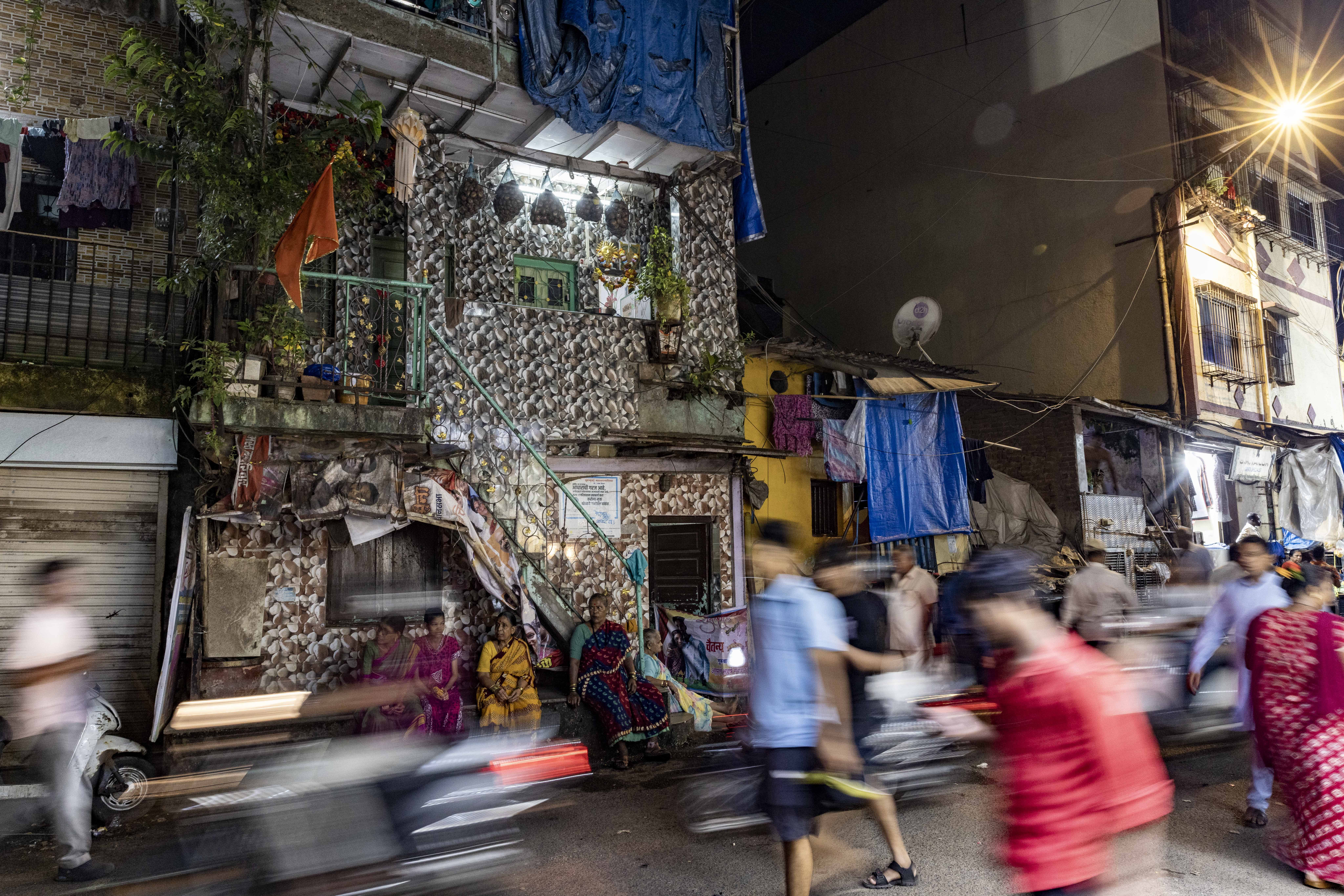
I began my internship with urbz in the second week of the New Year, and by the end of the third week, I was given my first solo mission. I left the urbz office a quarter past noon to submit measurements of a chair to Dutta Koli, a fisherman turned metal fabricator. The chair itself was for a study space in Koliwada. I’d been to his workshop before, albeit not alone, but I was sure I could find it. Alone this time. My [over]confidence soared, and I embarked with the fury of an empire. If “England knows Egypt; Egypt is what England knows” (Said 1978, 32), then Koliwada was what I must know. I didn’t allow myself any crutches, no phones, nothing. Why not? After all, I’ve been taught to think like an architect. Easy! The mystery of this ‘maze’ must surely dissolve when conceived simply as figure and ground. I’d remembered studying Koliwada’s survey drawings on my first day. It was possible to memorise a key - left, right, right, left, keep straight, and so on. Anyway, no need of all this overcomplicating. My ability to visualise space as orthographic drawing should make this a cakewalk.
I crossed the main road into the gully that I knew would take me to the workshop. I heard a hiss and the following splatter of oil, pausing momentarily in caution. A square portal finished with a white marble veneer framed snacks being fried in large cauldrons. I took another step, and was engulfed by a thick cloud of grey fumes that smelled like they were “porchifying” (deep-frying) Vadas, and guessed that this was likely a Tamil-run shop. I squinted, and through the inky haze were the makings of thick, golden-brown rings of delight. Only the very next instant, I was exposed to another intoxicating, yet pungent smell, of very many onions and spices. My uninitiated nose retreated to ignorance and only identified this as some “Marathi” light-bite. “Pay no heed to these, I know the way,” I thought to myself, remaining steadfast. I followed the meanderings of this gully for a while; my body’s compass urged me to follow my cartesian 10 o’clock. Left, right, keep left. Along the way, I’d see many people watching me - amused. I don’t think they were really bothered by how I looked or dressed; it was more the nature of my stride, I think. “This guy must be lost”, and there was always a softness that followed, making it only easier to ask for directions, and relieving me of the social burden of interrupting someone’s day. For whatever reason, I resisted these well-intentioned social cues and carried on. I came upon an open square, surrounded on all four sides by homes of many sizes, with brilliant colour and texture. A melange of metals, cement, and earth; of beams, walls, and wire. To the furthest-right corner of the square, a half-white, half-brown cat sat perched on a metal step ladder. He looked at me curiously, “Why is this foolish young man with a loosely-tucked checked shirt and charcoal pants wandering like so?” he must’ve thought, and so must’ve everybody else who saw me. But a cat’s interest is lost quickly, and he looked away to his right, probably toward one of those rodents that dart through the drains and pipes.


I took the gully to my near-left, and entered increasingly unfamiliar territory. Even my ego began to relinquish its control over my mind. I felt faintly the urge to use the map on my phone. Once again, I made a confused turn into a gully with wires drooping to knee-height like the roots of a banyan tree. At the end of this gully, a portal of blinding white light struck me. My eyes adjusted themselves, and identified traces of a few metal frames and members, and I heard also the faint buzz of machinic movements. Surely, this must be it. And as I got closer, the whining and whirring of metalwork and motors grew formidably. Aha, I’ve done it. As usual. I stepped through this imaginary doorway with my chest out. Phthew, I was spat out onto the Dharavi main road like a stuck-in-your-mouth fly.
I had yearned to know Koliwada’s spatial lingo, but even a fool knows that knowing a language takes time and necessitates a surrendering to its will. I was an intruder in its midst. I shook my head from side to side, acting out my frustration. I had somewhere to be and lunch to get back in time for. I turned back with renewed vigour, only increasing my pace. I walked past the cat this time; he looked at me with the same curiosity, but this time there was also disdain and an “I told you so” embedded in those protruding, oversized spheroids. Suddenly, the entire place became yellow, with light bouncing, dancing even, across each of the brightly painted walls, perhaps produced with such an effect in mind. It’s beautiful and surreal to see. The brilliant shade of amber even colours the insides of your eyes, if there is such a place. And there is an amber-filter one is left with, long after they leave the yellow place. This is a kind of thing that is only reminiscent of Goa or some other faraway place that lies along the Mediterranean Sea (such are the recollections of my urban-elite mind). Anyway, I recognised this place, I’d crossed this on the way to the welders’ workshop last time. How can one forget a place like this?
Soon, the practicality of remembrance was set in stone. I circled back in annoyance at least a handful of times to set my way out from there. My arrogance had been blown to bits. I remembered only 30 minutes before I’d said, “Don’t worry, I can go myself.”
I found myself in one of the many dimly-lit gullies feeding into a square courtyard, cooled by the water running along the open drains. I stood silently, my face likely conveying a pathetic defeat. A woman holding her baby paced near her home, waiting for me to ask for help. “Welder kidhar hai?” I said in a humiliation-worthy pronunciation of Hindi. There was also an attempt to overlay my recent exposure to Marathi pronunciations, but the ‘W’ failed to even leave my lips. She understood nonetheless, and gestured “Udhar” to what looked like a dead-end in the darkness. I walked to the end to see a small opening to its right with gusts of hot air spilling into this intersection from an exhaust fan. I hopped away, which began a tip-toeing frenzy that saw me skate across the rocking drain covers. The momentary jig filled me with a childish thrill. And soon, I started to give in to the swaying and swinging of my body. Which of the many rights or lefts to take, my knees would momentarily brace and pivot, my hips would shear impulsively because my nose remembered these smells, my eyes the objects and light-patterns, and my ears the sounds. The ego-ridden part of me was laid to rest in an euphoria-inducing sleep, and I surrendered to the rhythms of things, the qualities of the place, and its textures also. It felt like the initiation I had been waiting for, even when really I had moved only a hair’s breadth away from when I had arrived on my first day.
I will spare the reader the - I finally found the workshop, etc., no one was there, etc., no one told me, etc., they’d probably gone for lunch, etc. - and say that I began a half hour earlier with the intention of experiencing the place through “divine eyes,” with total knowledge. Through that ignorance, my god-given gifts were rendered useless. And yet, in all that vulnerability, getting lost in Koliwada was forgiving on my body; I was not forced to walk kilometre after kilometre to recover from wrong turns. I was only ever a few turns away from where I wanted to be. There is a comfort in knowing that.
Rahul Srivastava, was awarded the Inlaks Scholarship in 1993. He went on to co-found urbz and the Institute of Urbanology with Matias Echanove. This article features an interview with Rahul by the Inlaks Shivdasani Foundation as part of their Scholar Update series.
Rahul completed his MPhil in Anthropology from Churchill College, University of Cambridge. He has co-authored an upcoming book with urbz co-founder Matias Echanove, titled ‘The Homegrown City: Reclaiming the Metropolis for its Users’, which is about how cities develop and evolve through the actions of those who use it.
How did your interest in anthropology lead to a focus on urban spaces?
Anthropology continues to stimulate curiosity about all aspects of human life and provides ways of understanding that avoid being trapped in categories. Anthropologist Anthony Leeds specifically questioned the classification of habitat as rural and urban in simplistic ways and I have found much merit in such questioning. Over the last three decades I have worked in so-called tribal villages, rural contexts and neighbourhoods such as Dharavi in Mumbai, which defy classification. I have seen more points of connections between all of them rather than differences.
Tell us a bit about urbz. What are its goals?
Urbz was founded in 2008 in Dharavi, Mumbai, by Matias Echanove, Geeta Mehta and me. It is a collective that focuses on practice and engagement. Dharavi in Mumbai is a unique neighbourhood that tells stories about India, encompassing themes of caste, enterprise, collective ownership, state responsibility, and much more. It inspires all of urbz projects, including participatory planning, design, architecture, anthropology, urban policy and much more. Today, urbz has offices in Mumbai, Geneva, Paris and Bogota.
Congratulations on the upcoming book. Could you tell us about the inspiration and the idea behind it?
Thank you! The book, co-authored by Matias Echanove, covers 16 years of our activities in urbz. The book is energised more by our practice and conviction rather than scholarship and rhetoric. It believes that dominant urban policy and practice are shaped by a vision that overlooks the vast majority of urban life that falls outside planning strategies. A substantial part of the world’s urban population lives off local, collective capital, based on internal resources. These experiences offer a glimpse of possibilities that exist beyond the dominant economic logic, which may seem invincible, but may not actually be so.
What do you find interesting about urban development in general, and how does it differ in India from what you see abroad?
Urban development is interconnected organically with all kinds of human experiences. I don’t see it in isolation. More than ever before, our world is faced with issues that make us confront the fundamentals of living, including the production and consumption of quality food or the materiality of the construction of homes. These take us away from the realm of the purely urban space. Today, what we refer to as urban development has become quite standardized all over the world. It has become synonymous with real estate value and investment in a certain type of infrastructure.
What ideas would you like to work on in the near future?
Urbz takes me quite organically to thinking about the economy. Anthropology has a great deal to say about the human scale as the most appropriate one for thinking about the economy. For me, working out the nitty-gritty of local interconnected systems, even when addressing a global network, is something to think about for our next project. We also need to reevaluate the role of institutions in modern life. Today, institutions have become synonymous with bureaucracies, and these need to be sharply distinguished. Institutions today need to be more decentralised, responsive and flexible than ever before, and that is not the case.
What are your other interests, and how have you nurtured them alongside your work in urban planning?
I am a screenwriter for films and have been collaborating with filmmakers from India and Europe over the last five years on various projects, including short and feature-length fiction films and documentaries. I also co-own a small artisanal business that produces an Indian alcoholic beverage called Mahua in France, where the company was established in 2019. My Urbz team encourages me to keep innovating and experimenting with all my passions, and they are the ones who help me nurture these other interests!
Cover photo of Dharavi main road by Ishan Tankha

As the title suggests, Life Got Better with Coconuts for Kausar Shaikh. He came to Mumbai 15 years ago, leaving his family farm in Jharkhand, because he was not keen on agriculture and was seeking a different path. Seeing other migrants from his region successfully start small businesses gave him the confidence to leave years of unstable work in Mumbai behind and become a thriving coconut vendor in Dharavi.
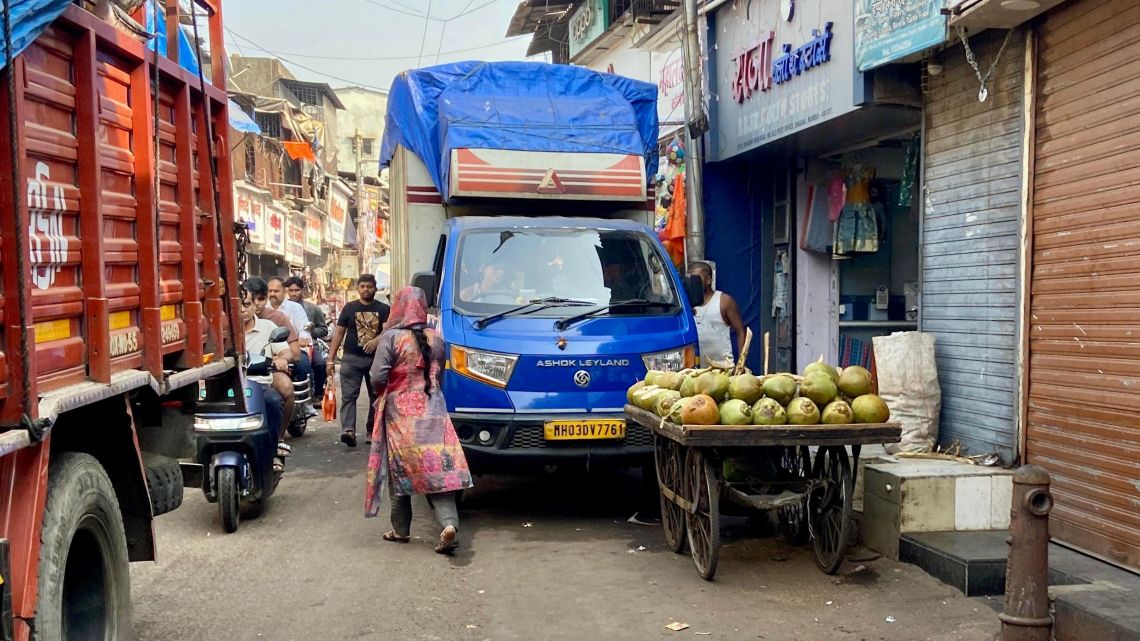
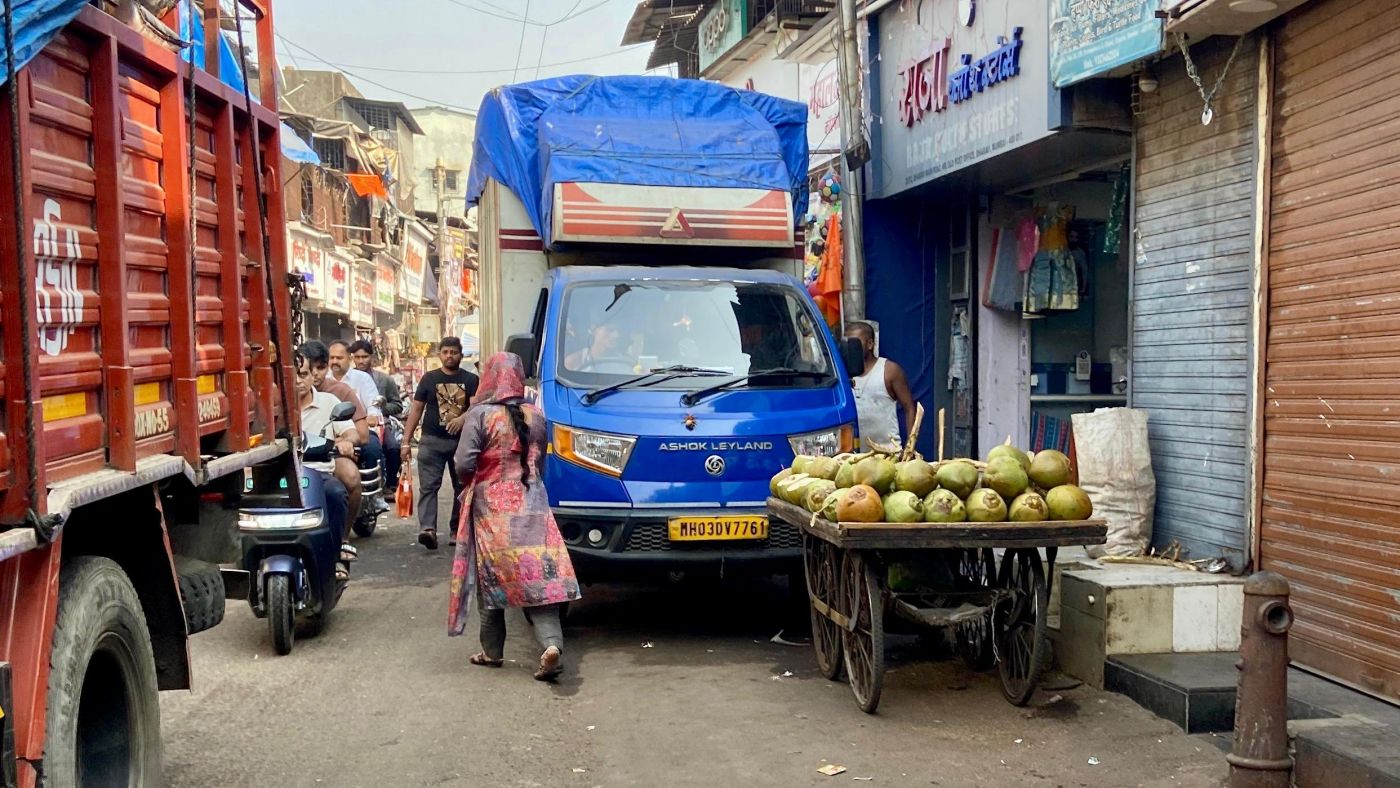
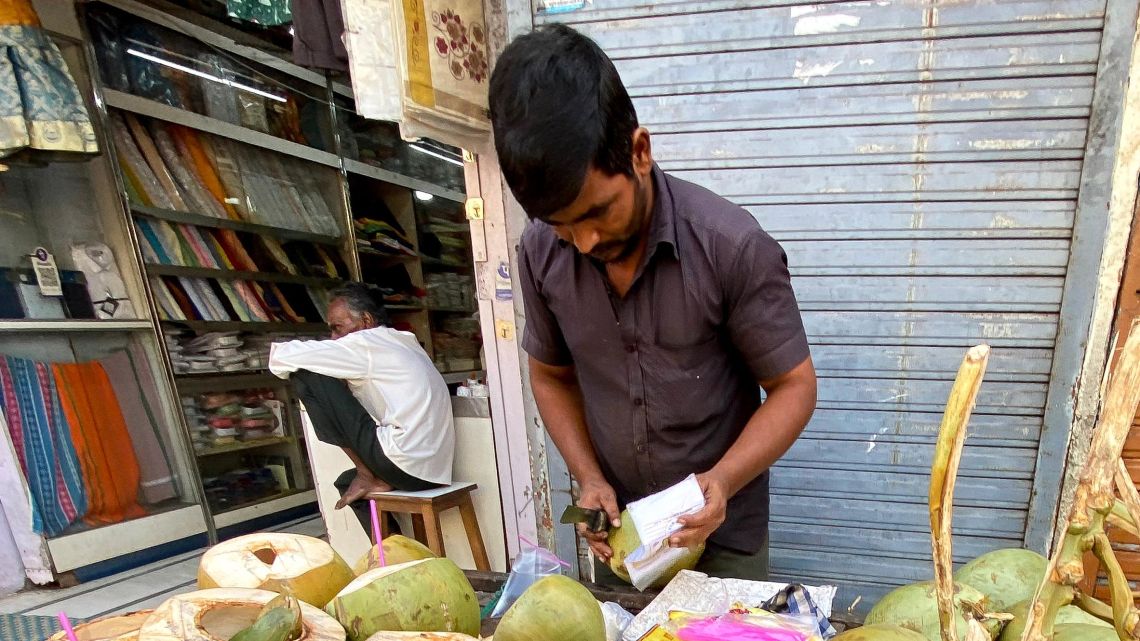
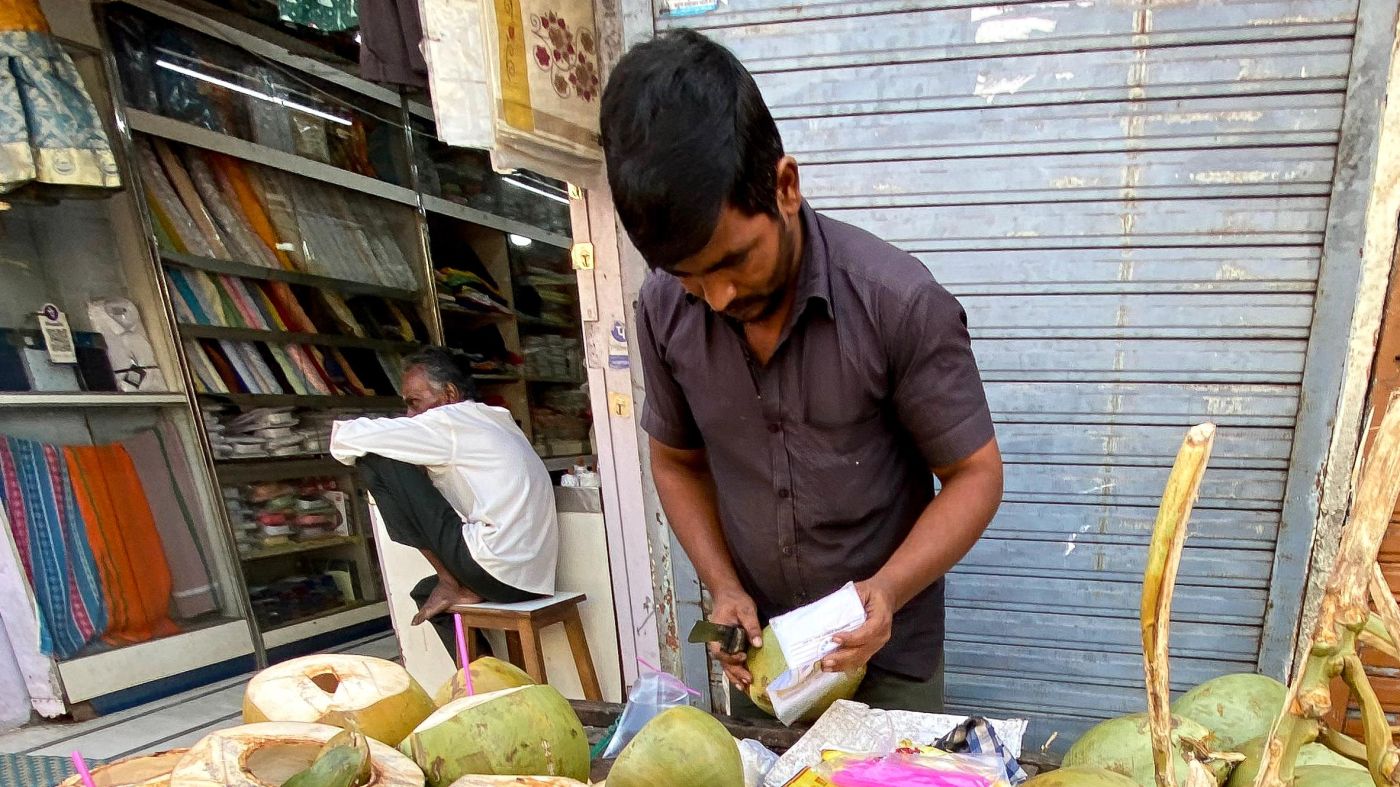
Every day, a coconut vendor can be seen on the Dharavi Main Road in Koliwada. He is one of many vendors who operate in the precinct. His Name is Kausar, Kausar Shaikh. He’s a native of Sahibganj, Jharkhand, where he has a loving family with two little sons. He came to Mumbai along with his younger brother Kareem around 15 years ago, when he was just 21. He grew up in a farmer’s household, but he said he was bored with farming. He wanted to do something different with his life.
Ab har kisi ko sab cheez me mazaa to nahi aata na, waise hi mujhe Kheti baadi me mazaa nahi aata tha.
Look, not everyone can like every single thing, you know? I just didn’t get any pleasure out of farming.
He starts his day at 2:00 AM, gets up, splashes water on his face, steps out of his King’s Circle room, and takes a fifteen-minute walk to a nearby park where he usually secures his cart at night. He then pushes his cart towards Sion Hospital, where he waits for the coconut-carrying truck arriving from Mysore, Karnataka, to stock up his cart. After stocking up his coconuts, he again takes the cart to the park and chains it to the fence of the footpath on the periphery of the park, trusting that his stock will be safe until he returns. In his six years of business, his cart hasn’t been stolen once; however, the police had confiscated his cart a few times, and he had to pay a fine to get it back.
He returns to his apartment to get ready for the day, after which he walks back to the park to retrieve his cart, and then pushes it about two and a half kilometres to Dharavi Koliwada, where he sets up for the day.
On most days, customers gather at Kausar’s cart throughout the morning and afternoon. He serves them efficiently while maintaining friendly but professional relationships. He has built connections with regular customers and fellow vendors over the years, but says he prefers to mind his own business quietly.
Abhi tumhare aane ke pehle ek ladka aaya tha, vo hafte me do teen baar aata hai nariyal paani peene ke liye, mujhe ek ladki ka photo dikhaya, uske girlfriend ka photo tha, kehta hai , agar ise dekha yaha se jaate hue, toh mujhe phone mila dena. Abhi aise daily customer bolega, toh hum unki madad kar dete hai, sab achhe log hai, roz yahi se guzarte hai. Par phir bhi mai iss sab me itna padta nahi.
See that young man? He’s a regular, just left. He showed me his girlfriend’s photo and asked me to call him if I saw her passing by. When a daily customer asks for such a trivial favour, even if I feel reluctant, I oblige; they are good people, people I see every day. But still, I prefer not to get too involved in all these personal matters.
He says that despite the time that has passed, the longing for home is constant. Since becoming a father a few years ago, he has felt a persistent homesickness, intensely missing his children. He consciously chose not to bring his family to the city, firmly believing they were better off staying in Jharkhand, where life is perhaps simpler. His work cycle here is not continuous; he operates on a rotational basis. He works diligently for about four months, after which his brother, Kareem, travels to the city to take his place, stepping into the same demanding schedule and lifestyle. This four-month break is the only time he gets an opportunity to be reunited with his family.
This arrangement exists because he recognises a potential market here; the financial opportunity outweighs the personal cost. Before this current business, he spent almost nine years doing all kinds of odd jobs, including a relatively stable stint decorating for weddings, but none of those provided a sufficient or secure income. Seeing others around him, people who had lived similar lives of unstable work, successfully start small businesses, gave him the confidence to try something of his own.
“Dhandha Chaalu karne tak toh mujhe laga ki Bambai aana aur itni mehnat karna bekaar tha.”
“Until I started this business, I felt that coming to Mumbai and doing so much hard work was useless.”
He explained that the almost perennial humid weather makes selling coconut water successful anywhere in Mumbai. But the Dharavi Main Road is a good location strategically to conduct his business, especially on Sundays, with several churches nearby, people leaving church after mass who use the road, see his cart and stop for a quick, refreshing coconut. Business is so good, he often sells out before noon on Sundays.
When asked more about Dharavi, He says, like many others, his story of landing up in Dharavi was guided by community ties and economic logic. He explained that a lot of people from his own village work in the informal industries here, so he essentially just followed their lead. He set up his cart nearby, not necessarily among friends, but among familiar faces who reinforce that subtle, comforting sense of regional unity and fraternity that’s vital for migrants in a huge city like Mumbai. His decision paid off, and he's doing better now than he ever did in those years of shifting from one job to another.
His sense of humour and warmth with customers reflect the relationships he has built over six years in Dharavi, a place that has allowed him to earn a steady living and offered the support of familiar people, embracing him so completely that he doesn't intend to move out anytime soon.

A new book by urbz co-founders, Matias Echanove and Rahul Srivastava, drawing on their learning from Mumbai, Tokyo and other cities where they have been active for over 15 years.

Written by urbz co-founders Matias Echanove and Rahul Srivastava, the book makes the case for a radically new path to urban development based on collective initiative, local knowledge and use value. It reframes the city as a place where people are creators of their habitats and agents of their own evolution. Rather than offering a list of wishes for how the city ought to be, Rahul and Matias base their vision on years of work in some of the most complex and diverse urban environments on the planet.
Their collaboration began in 2008 in Dharavi, a large settlement in the heart of Mumbai, India. This neighbourhood was developed by its inhabitants without architects, engineers or planners, against all odds. It was here that Matias, Rahul and their colleagues shaped urbz’s unique approach—one that places residents at the center of the process and actively supports local initiatives.
The 240-page book is published by Verso in London, a publishing house known for its engagement for social justice and progressive collection, which includes such classics as David Harvey’s Rebel Cities and Mike Davis’ City of Quartz. The Homegrown City has received endorsements from Amitav Ghosh, Susan Fainstein, Neil Brenner and Arjun Appadurai.
The book was officially released in January 2026 and it is currently available for order worldwide in paper and digital formats. A series of book launches and presentations will be held in Paris, Mumbai and London in the first semester 2026. Order now on Verso!


