
I spent 6 months interning with urbz—three months in Mumbai, where I explored how residents feel about the Dharavi Redevelopment Project and the broader trend of neoliberal urban development. Then I headed to Paris for another three months, delving into the connections between contemporary neoliberal urban governance and Haussmann’s interventions in the 19th century.
Articles
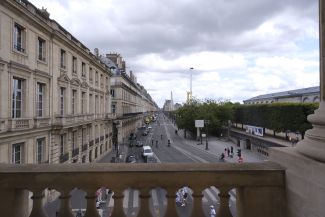
Haussmann's Paris as a Blueprint for Speculative Urbanism
This article argues that Haussmann’s transformation of 19th-century Paris was driven by speculative strategies — both political and financial — to reshape the city for elite interests under the guise of modernization. The piece frames Haussmann’s Paris as a blueprint for today’s neoliberal urban projects, like the Dharavi Redevelopment Project (DRP), highlighting how large-scale urban interventions often prioritize investment and control over genuine social improvement, and lead to the depoliticization of public space.
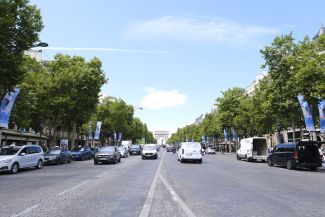
From Haussmann to the DRP: past, present and future of neoliberal urbanism
This article draws parallels between the Dharavi Redevelopment Project (DRP) in Mumbai and Haussmann’s 19th-century transformation of Paris, arguing that both are examples of neoliberal urbanism—where large-scale city projects are driven by investment interests and state power, often at the expense of the local urban fabric. Both projects use narratives of modernization, hygiene, and public order to justify top-down interventions, but ultimately serve elite and capitalist interests by turning urban space into a site for profit.

Redevelopment and Exclusion in Dharavi: Doubts, Projections and Subjectivities of Residents
This article explores the subjectivities of Dharavi’s residents within the framework of the Dharavi Redevelopment Project (DRP), highlighting how marginalized communities navigate the social and spatial changes imposed by neoliberal urban projects. Through interviews with 20 residents, it examines the DRP’s promises of modernization, which often result in exclusion and displacement. While residents support redevelopment, they stress the need for in situ relocation and preserving community cohesion.

Best of both worlds, the inescapable dual belonging of Mumbai's artisans
Pramod Vishwakarma, a carpenter working with the urbz team, talks to us about his connection to the dual places or worlds he belongs to and his indecisiveness over what 'home' truly means to him.


Dharavi, a world-grown neighborhood
Dharavi’s massive redevelopment project aims to turn it into a ‘world-class’ neighborhood, but this vision risks erasing its unique identity and thriving homegrown economy. Instead of replacing it with glass towers and luxury spaces, Dharavi could be a model for a ‘world-grown city’—one that values its community-driven development while staying connected to the global economy.