Leather works: The challenging journey of a leather artisan transforming local craftsmanship for a global brand
Authors
Authors

Leather works: The challenging journey of a leather artisan transforming local craftsmanship for a global brand
Authors
Authors
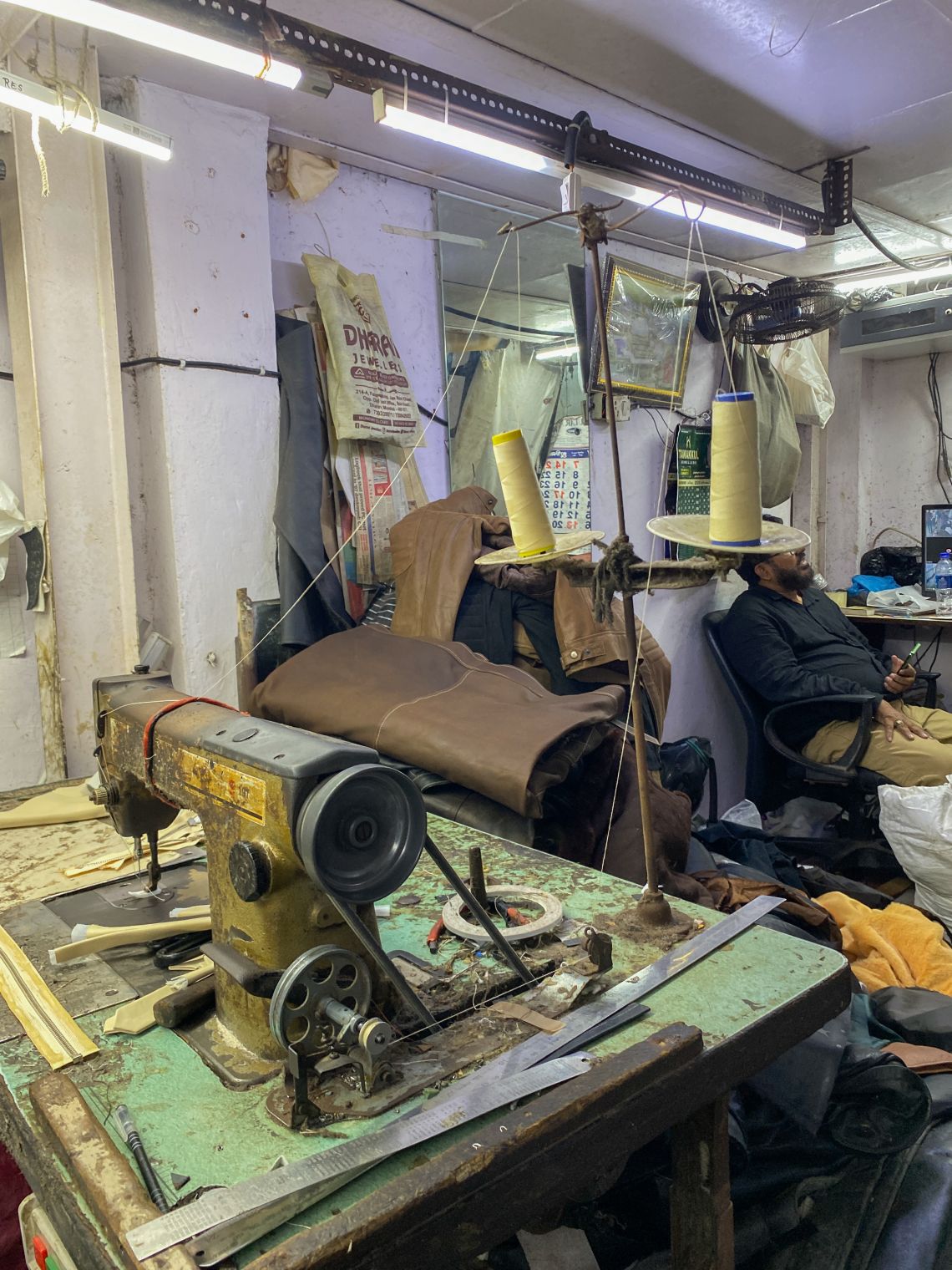
As soon as I walked into Khurshid Bhai’s shop, my senses heightened. I could smell the earthy smell of leather and adhesives, the sound of machines spinning in perfect synchrony, the sight of clothes of differing hues and shades stacked one next to the other, and the sweet taste of chai, which Khurshid bhai generously offered.
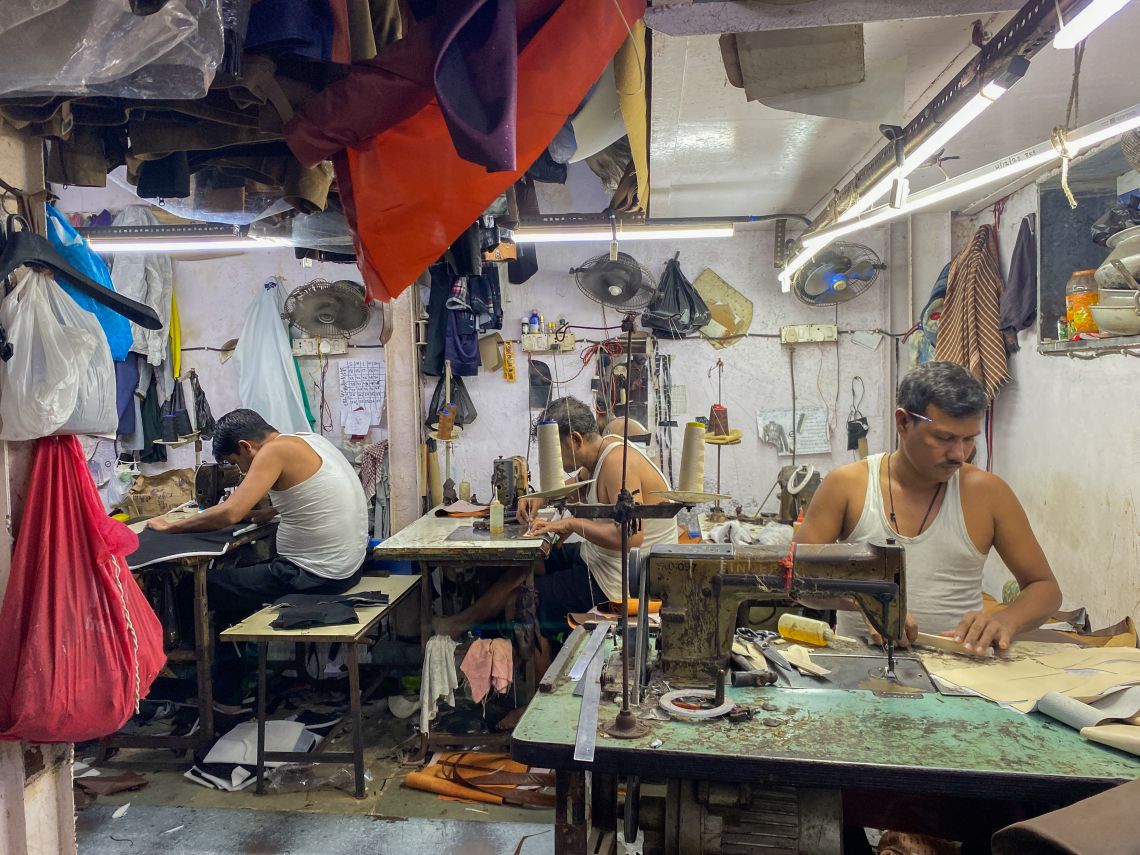

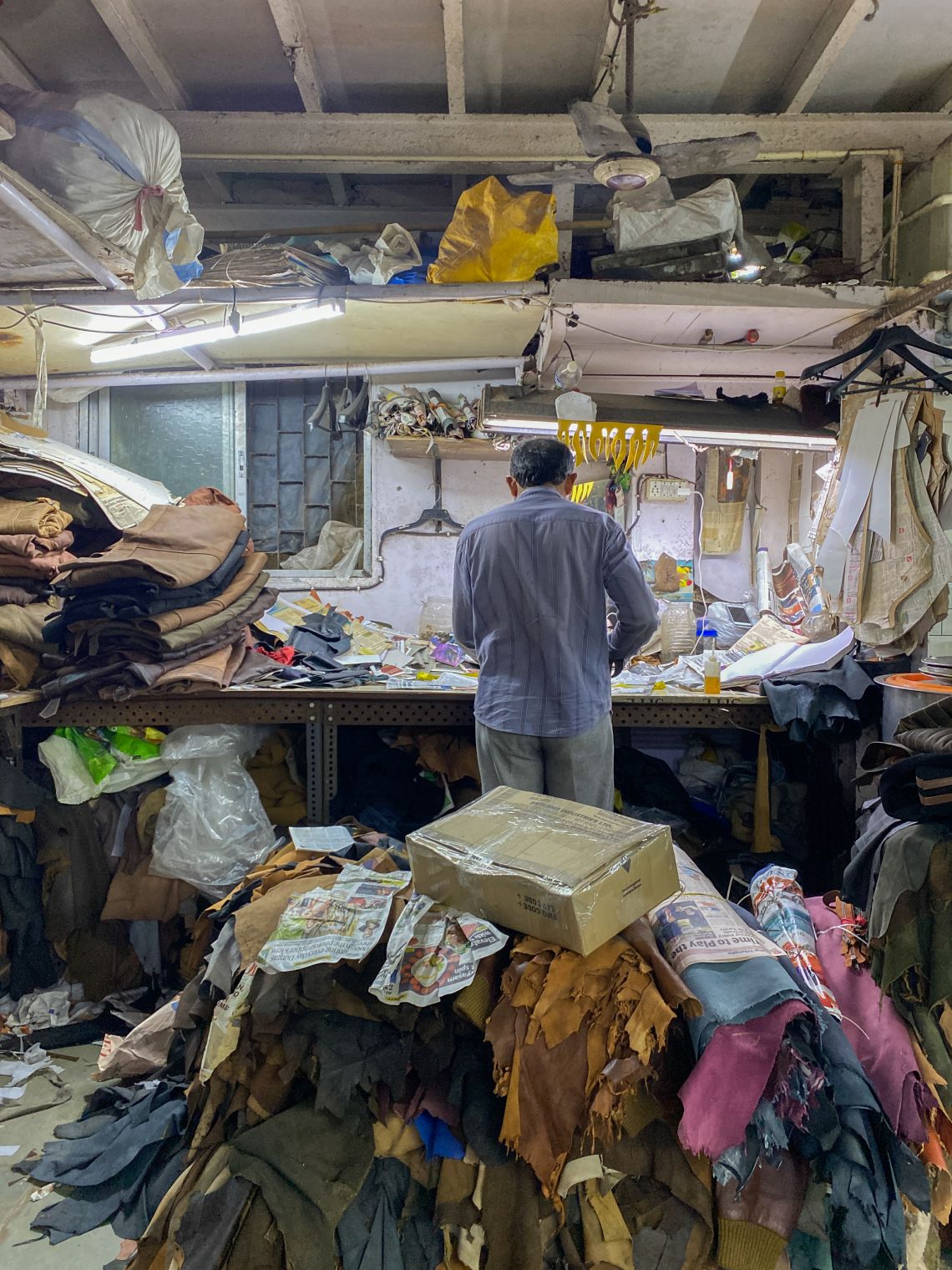

Muhammad Khurshid Sheikh, or Khurshid Bhai as his dear ones affectionately call him, is a native of a small village in Uttar Pradesh, specifically Pratapgarh. Although his roots are from UP, he and his family have been living in Dharavi since before independence. He recalls that his grandfather and father used to sell fruits and malai (Coconut cream) on a redi (small cart) next to what now stands as T Junction in Dharavi. Today, mere metres away from the place, Khurshid Bhai runs his leather production shop in Rajiv Gandhi Nagar, supplying premium leather products to major multinational companies, like the Royal Enfield Bullet and many others.
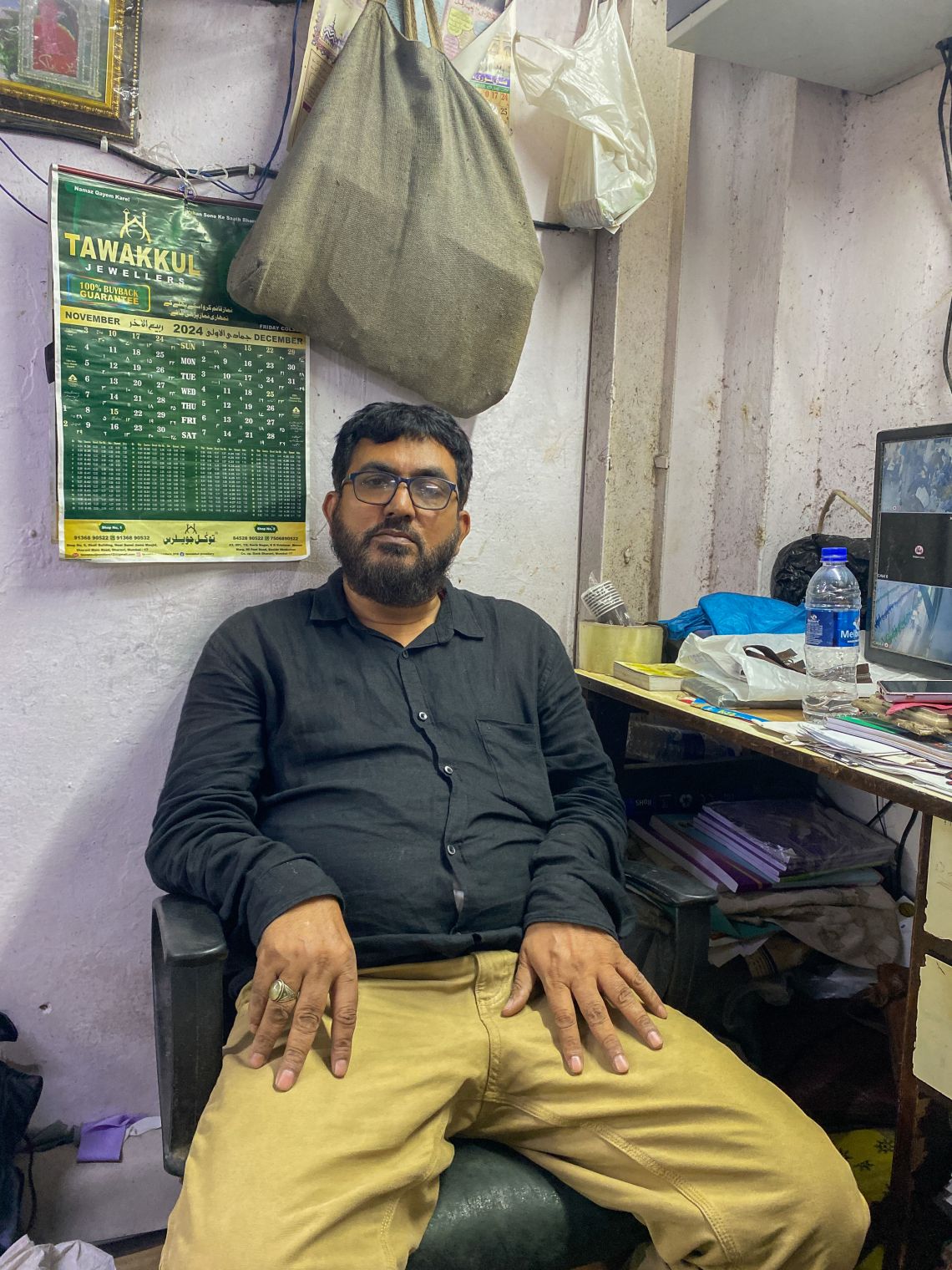

Khurshid Bhai learned the craft of leather production through his brother, who was already involved in the business. He used to accompany his brother to meet high-level clients at posh localities like Colaba and Bandra. He was mesmerised and inspired by the affluence that this business brought with it. Little did he know that he was in for a thrilling experience when he eventually started his own business. Before starting his venture, Khurshid Bhai worked as a Master in a leather company, earning a monthly salary of 5000 rupees. Necessity changes circumstances, and he was quick to realise this when a close acquaintance duped him of his hard-earned money.
The person involved had promised to deliver 80000 rupees worth of leather supplies after taking a lump sum of 1 lakh rupees as debt from Khurshid Bhai. Struck by dismay and helplessness, Khurshid Bhai decided that he would pay off his debt by starting a small-scale business producing leather products out of a tiny store in Rajiv Gandhi Nagar. The incident left a mark on Khurshid Bhai, but he brushes it off by claiming that the experience was his first lesson in business.
He went on to expand his shop in Rajiv Gandhi Nagar and proudly proclaimed that his house was the first Pakka Makaan (Solid House) in the entire neighbourhood. In recent years, though, living in Rajiv Gandhi Nagar hasn't been easy. There have been constant struggles between BMC (Bombay Municipal Corporation) and residents, with the former constantly sending bulldozers to evict them from the space due to the informal status of the settlement.
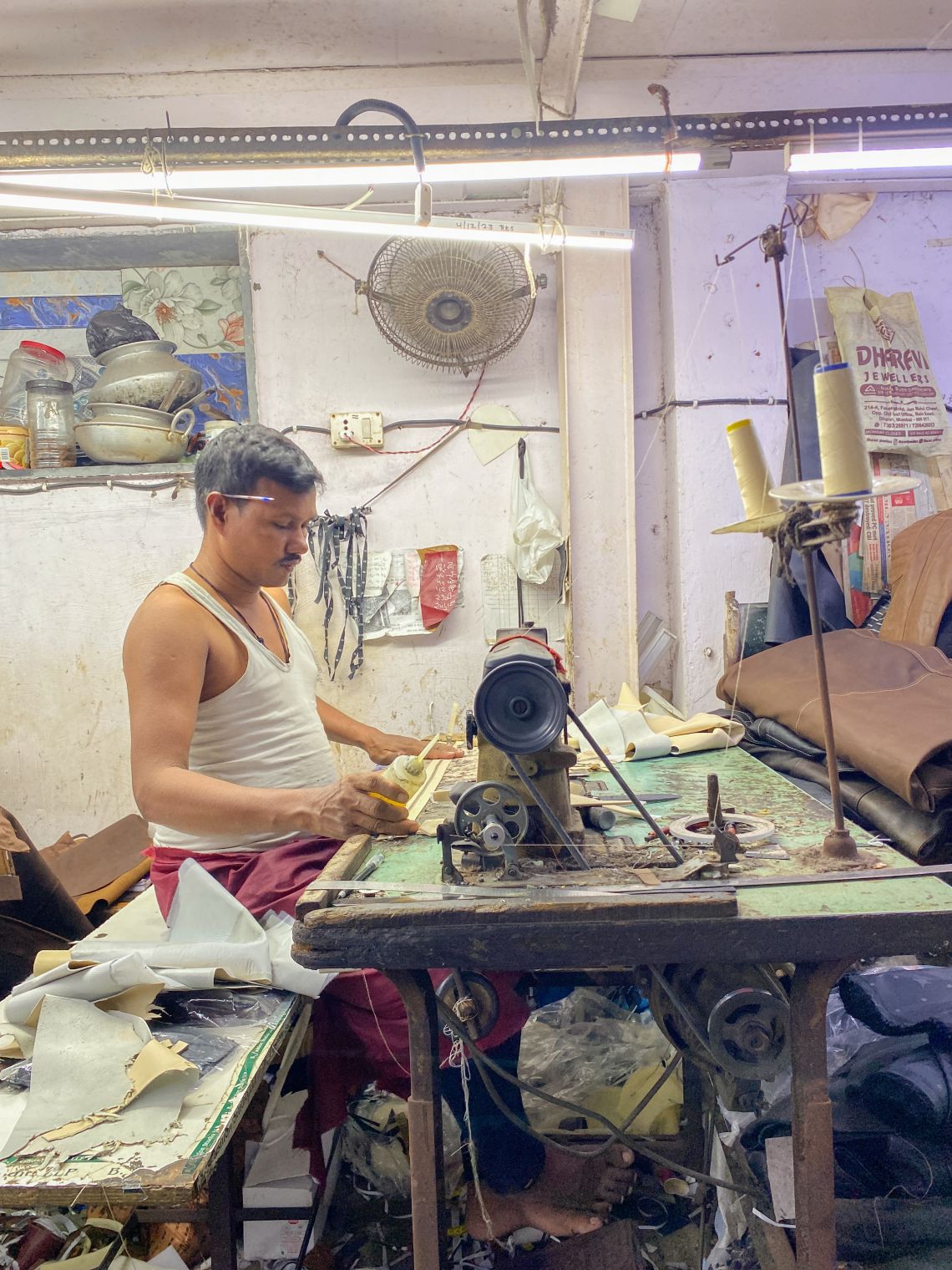


Bulldozers have now become a weapon and a political tool to silence the masses. “It isn't easy living in fear,” says Khurshid Bhai, “the fear of bulldozers barging through your house at any given time, the fear of being displaced and cast out of the place you have forever called home.” Yet, when confronted with the threat, Khurshid Bhai finds hope, not in the empty promises of the state but in the resilience of people in Dharavi who believe in a collective dream of self-development. Khurshid Bhai recalls how, when efforts to demolish Rajiv Gandhi Nagar were underway, he stood his ground and dissented against the prejudiced stance of the government. His resilience rose from the gruesome truth that if he, as a community leader, gave up, then the people of Rajiv Gandhi Nagar would eventually get demoralised.
Khurshid Bhai’s role as a community leader stems from his active engagement in the political sphere. He has served as the President of the Chawl committee and was an active member of the Mohalla Committee Movement Trust, which was started after the 1992 Riots to build community cohesion amongst religious groups in Dharavi. He actively immerses himself in conversations concerning the people of the community and has voiced his concerns over challenges, including the rise of drug cartels in Dharavi and the youth being pushed into this narrative, at times risking his own life for the sake of the community's betterment.
“It isn't easy living in fear, the fear of bulldozers barging through your house at any given time, the fear of being displaced and cast out of the place you have forever called home.”
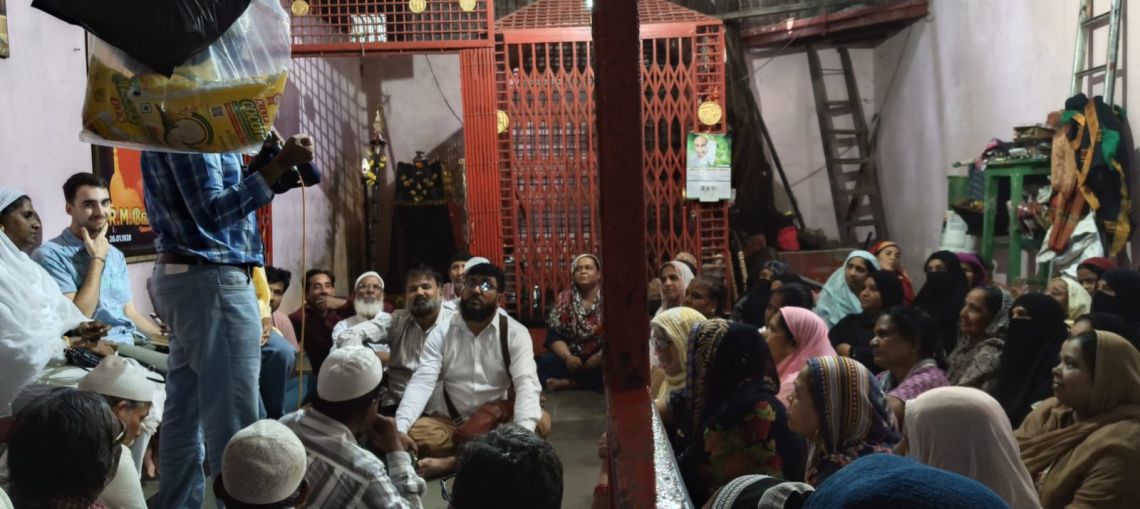

On being asked about the future of Dharavi, he shakes his head in dismay and says, “This is where I built my life. If they ask me to leave on a random day, where will I go? Khurshid Bhai has seen the city and Dharavi grow in congruence. From riots to demonetisation, he has witnessed and experienced harsh realities that have come along his journey. He claims that demonetisation was particularly devastating because it built a network of distrust between vendors who usually thrive on the virtue of trust. He takes us back to a time when the leather business was flourishing in Dharavi. You could see trucks loaded with raw materials lined up one next to the other, and people from different social backgrounds involved in the processes, including salting, drying and washing of the raw hides. What once used to be a sight of production and labour, sadly, doesn't exist anymore.
For Khurshid Bhai, development is an empty word that doesn't necessarily signify the inclusive growth of people. Without batting an eye, he talks about how the rise in prices of commodities post-redevelopment will hurt the people of Dharavi. Where a person could live and spend the entire day on 60 rupees, would then have to accommodate the inflation that such a regressive idea of development brings with it.
Khurshid Bhai insists that his commitment to the society and people of Dharavi will remain untethered in the face of challenges. Much like the sewing machine in Khurshid Bhai’s store, his activism and advocacy keep running in the hopes of seeing a better tomorrow for people in Dharavi.
“This is where I built my life. If they ask me to leave on a random day, where will I go?"

People involved
Related articles
An interview with Liron Shalit, our filmmaker-in-residence. He is an award-winning documentary filmmaker focused on social issues, human rights, and ethical urbanism. Recently, the urbz office hosted a screening of his film Living Euljiro that traces the neglected losses of those living within a centuries-old district of maze-like alleys at the heart of Seoul (Synopsis). We speak to him about his craft, his lessons from Euljiro, and his time here in Dharavi.

Hubert, Eloise, Lucie and Chloé have all moved to Bordeaux from different parts of France and live there currently. But what's 'home' for them?


From his humble beginnings and early struggles to becoming a respected contractor and political voice, Arunlal’s journey reflects the strength, grit, and deep-rooted commitment to his neighbourhood. Known for his signature white attire and heartfelt leadership, he stands as a symbol of hope and perseverance in challenging times for Dharavi.

Anil Chawda, owner of Khushi Tailor, is a friendly, multilingual man, who enjoys his work-life balance, cricket, and the occasional beer!



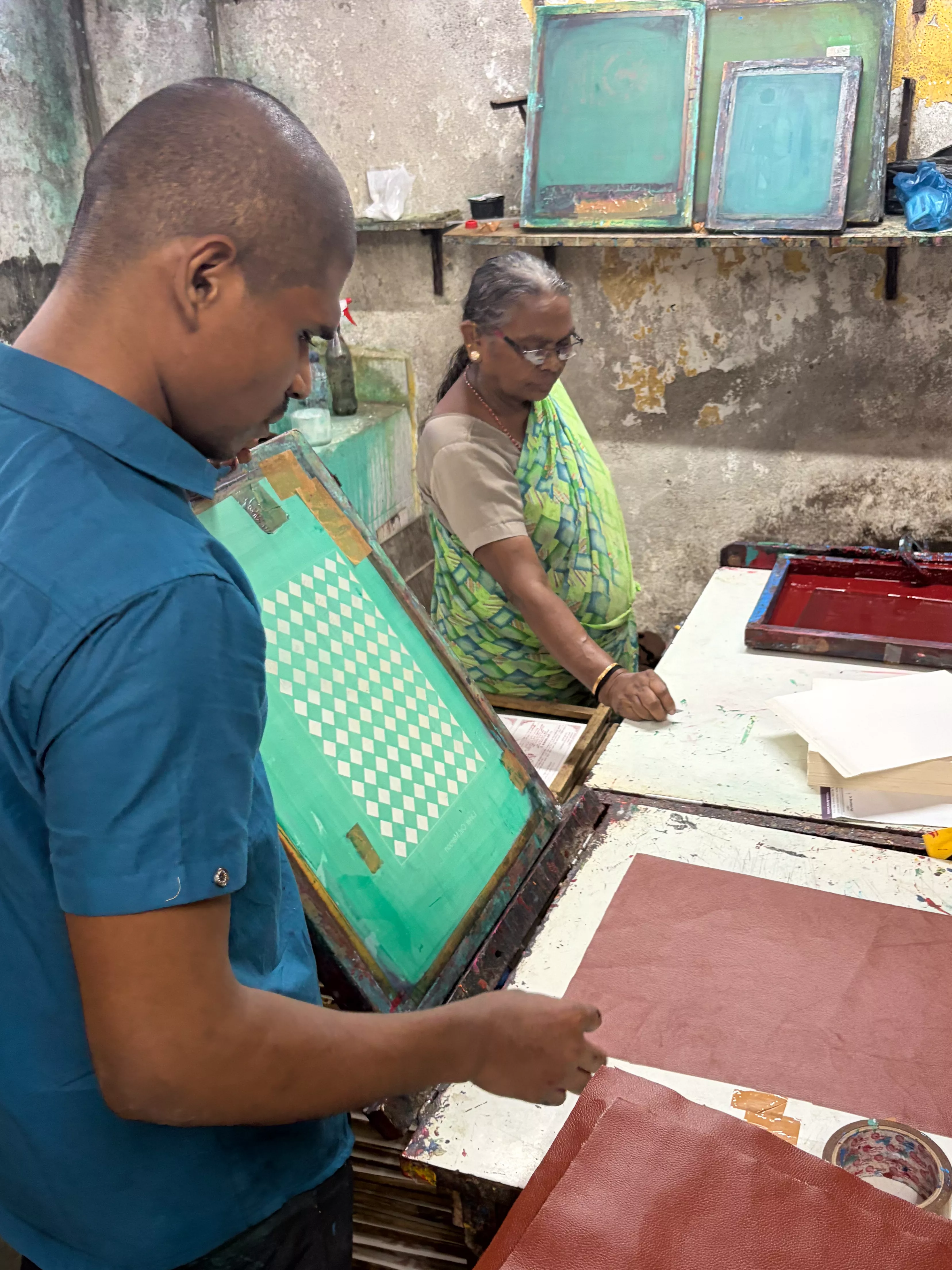
In a lane off the bustling 90 Feet Road in Dharavi, there is a tiny studio dedicated to all types of screen printing. Laxmi and Mani are an unlikely duo that expertly handle the screenprinting needs of customers across the city. They talk to us about a lifetime spent in the industry.
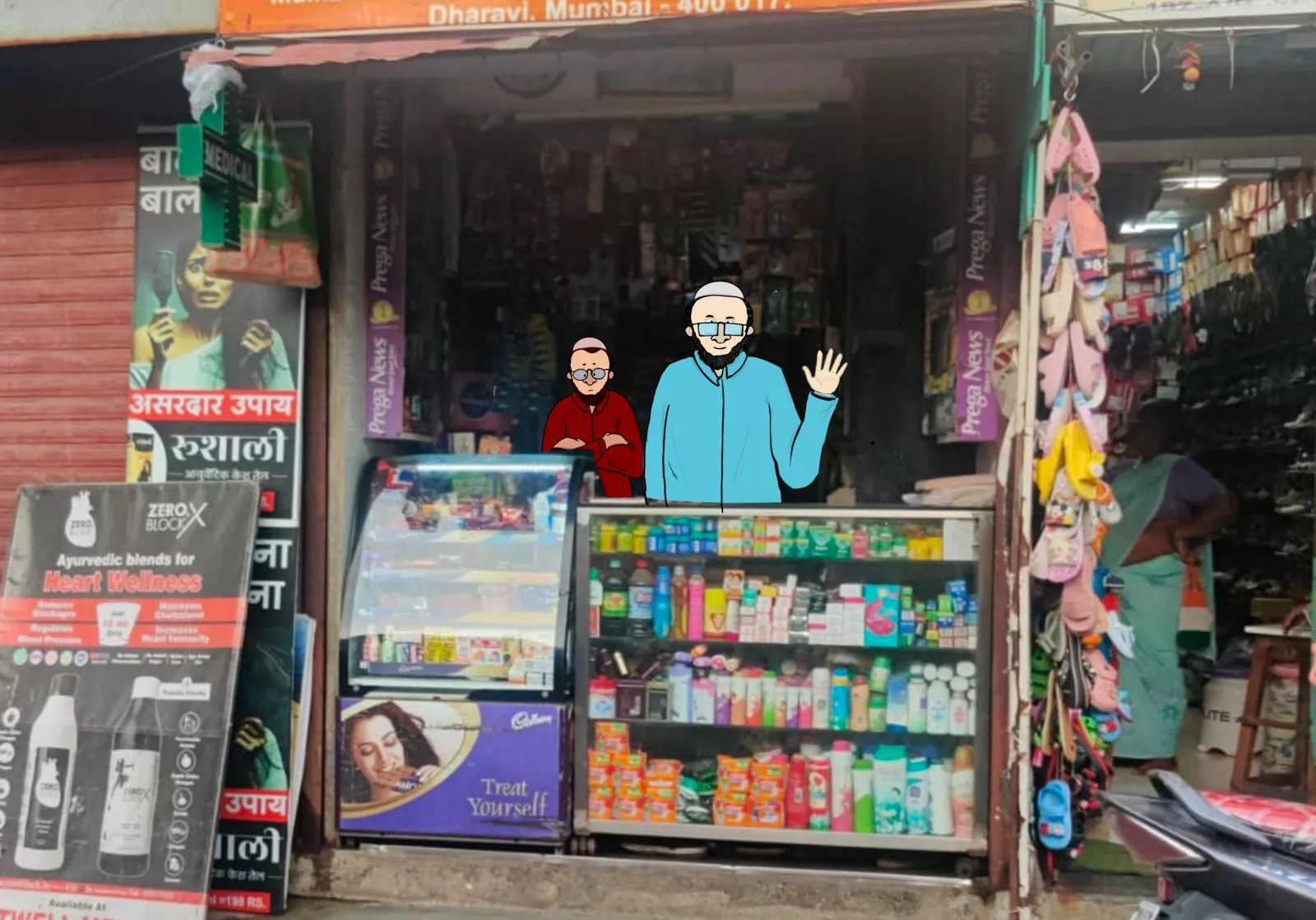
Two brothers behind a pharmacy counter tell us a story of resilience and adaptability, ranging from spreading wares in Bandra to spinning rakhis on an umbrella in the rains.


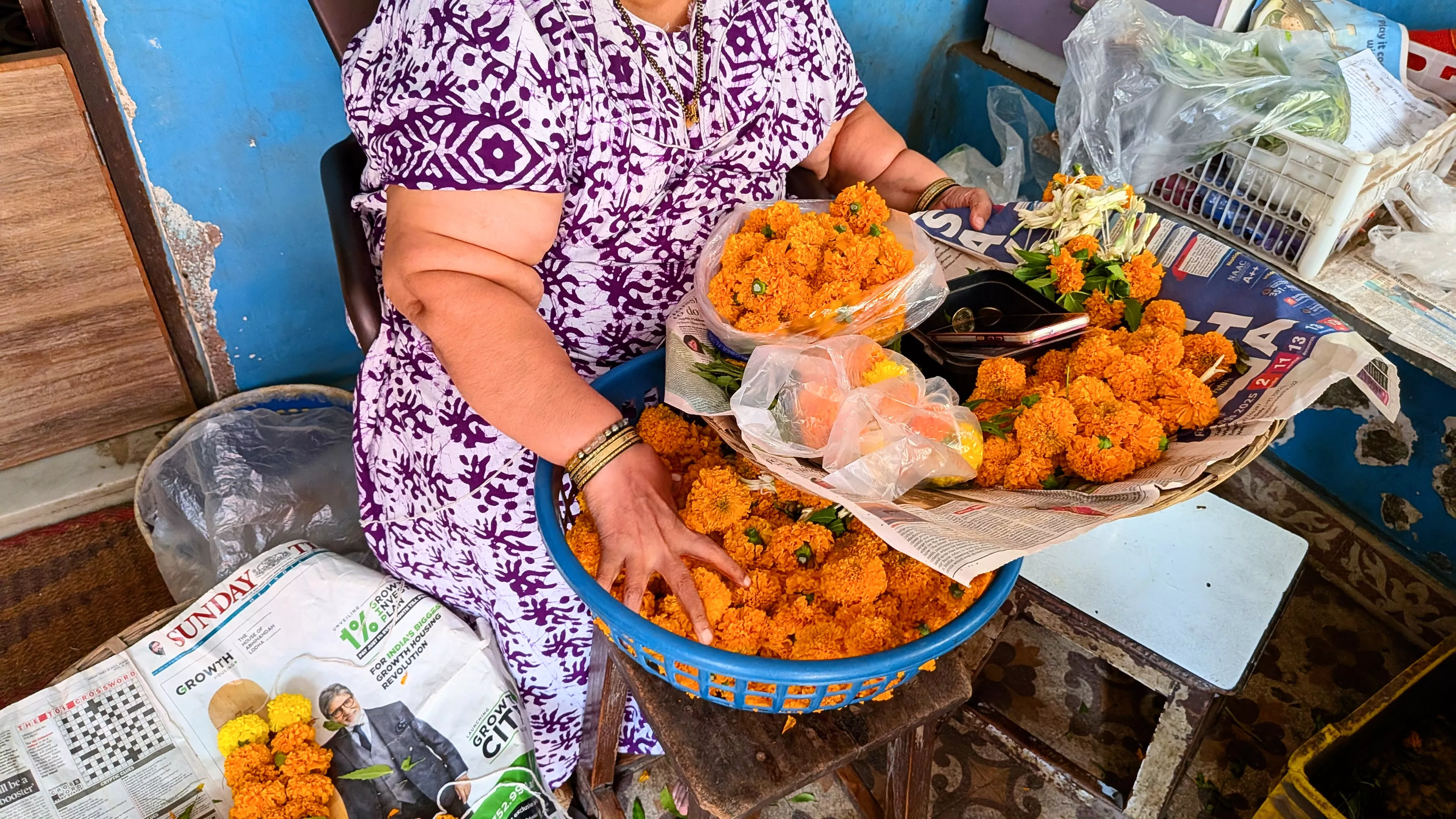
From a small porch in Koliwada, Laxmi Vaity strings flowers, shares conversations, and nurtures the relationships that shape her everyday life. A glimpse into a community where home extends far beyond four walls.
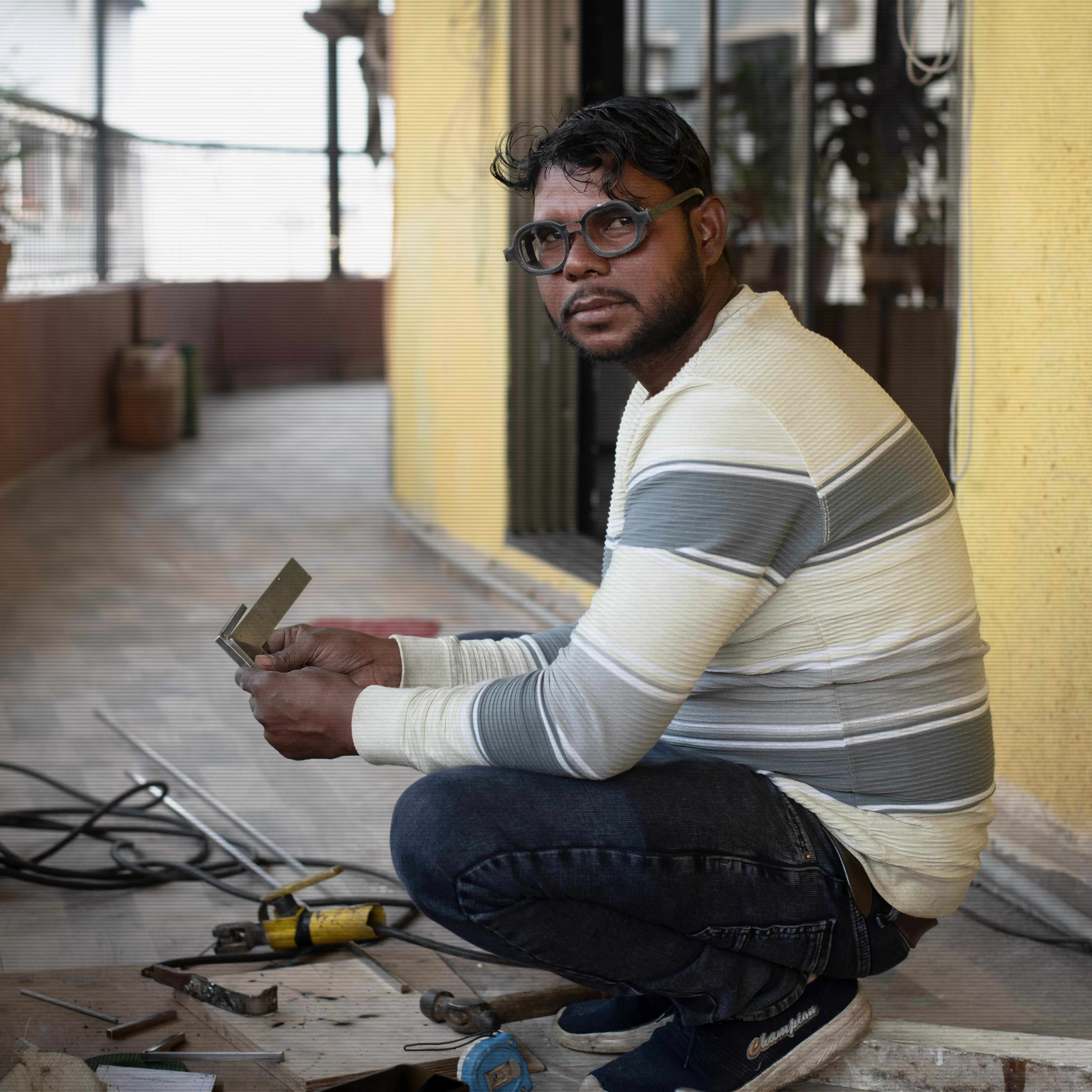
Kamlesh is an itinerant welder who has lived and worked in different parts of the country. Kamlesh represents the skilled workforce that quietly underpins the city’s built environment. This is his story...