The Door, The Table and The Model: Structures for Collaborative Practice
Authors
Authors

The Door, The Table and The Model: Structures for Collaborative Practice
Authors
Authors
In the UK, my home country, the built environment is designed to separate us. Beyond the growing privatisation of our commons, subtle design choices, such as the construction of schools without play areas, or benches replaced by individual seats, mean the built environment governs us to be individual, not collective.
This trend toward individualisation is partly a product of a professionalised and siloed design and construction process. Before I arrived at urbz, I had recently conducted a scoping review related to cross-industry collaboration in urban design in the UK. I found that although it was clear that collaboration was essential for sustainable and equitable urban change, there were barriers to actualisation. There were divergent sectoral behaviours and fundamental differences in belief on what it means to collaborate. I came to consider that bridging this gap between rhetoric and practice might be insurmountable.
My experience at urbz Mumbai, however, gave me a new narrative. In Dharavi, and in the urbz office, separation is not possible, nor is it sought after. Collaborative practice, and design, are found in, and fostered through, everyday materialities. While collaboration is never separate from geometries of power, small and simple practices persist through them. This article explores three of these materialities: the door, the table and the model.
The Door
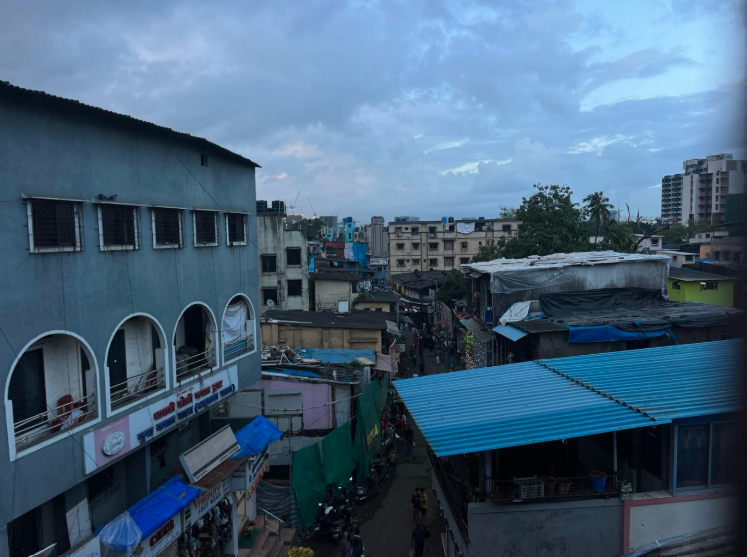
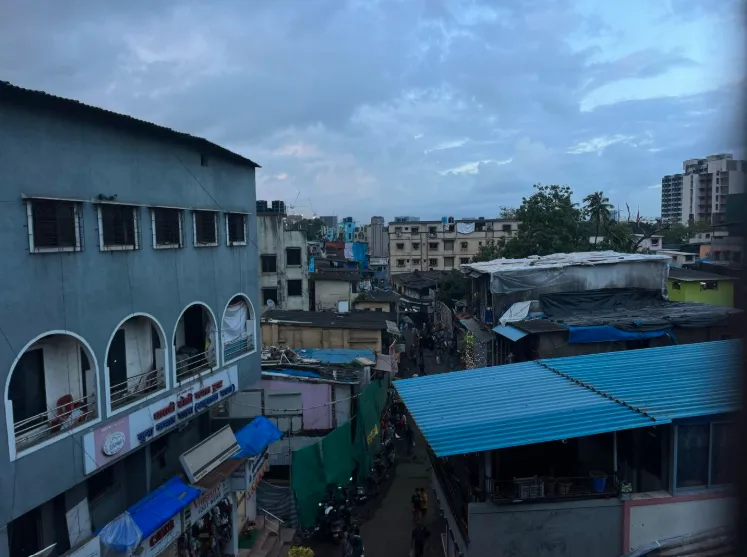
The urbz office is unassuming. On the first day of my internship, I saw no signs of the office despite my map indicating that I had arrived. Naturally, I asked someone in a shop facing the street. After not a half second's pause, he pointed across the road and exclaimed “architects!”. I crossed the road and the woman selling pulses on the steps of the building, after overhearing, directed me up the stairs. I climbed three flights and was met with a large white door, decorated simply with the urbz logo. I knocked and, as I did, I realised it was unlocked and pushed it open. I was greeted by the team.
As the week went on, the door became a busy portal. Coming in one way, urbz receives guests from local NGOs, architecture students, past interns and artisans. Going out the other way, the urbz team ventures out and connects with the local community. When walking with the team through the local area, we could barely make it 100 meters out of the office without a warm hello to one of their neighbourhood friends.
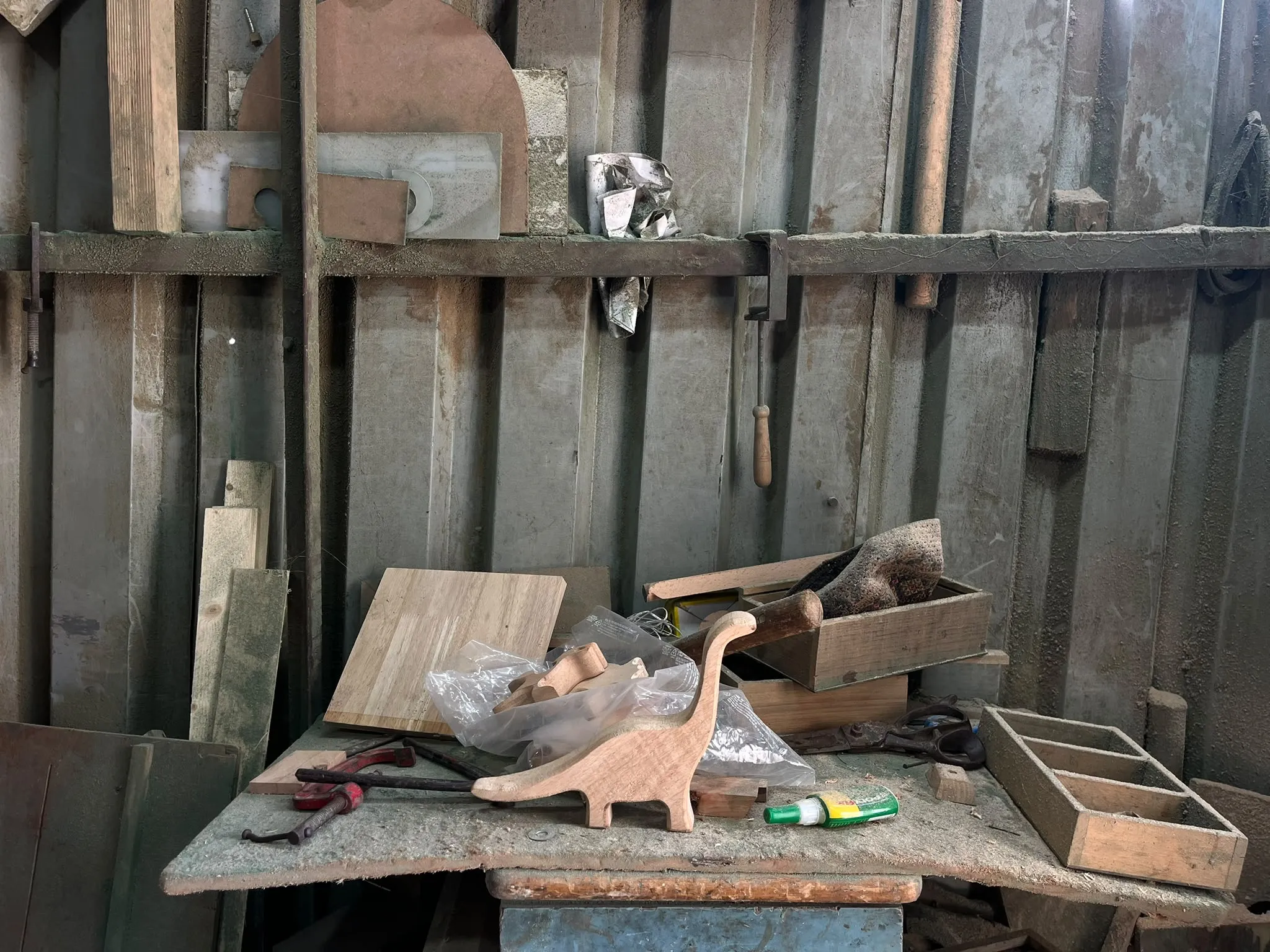
In its simplicity, this reflection illustrates the core ethos of the firm; an ethos of embedded collaboration. The bidirectional opening of the urbz door means that while the firm is not materially imposing, it is known by, part of and continuous with its community.
The Table
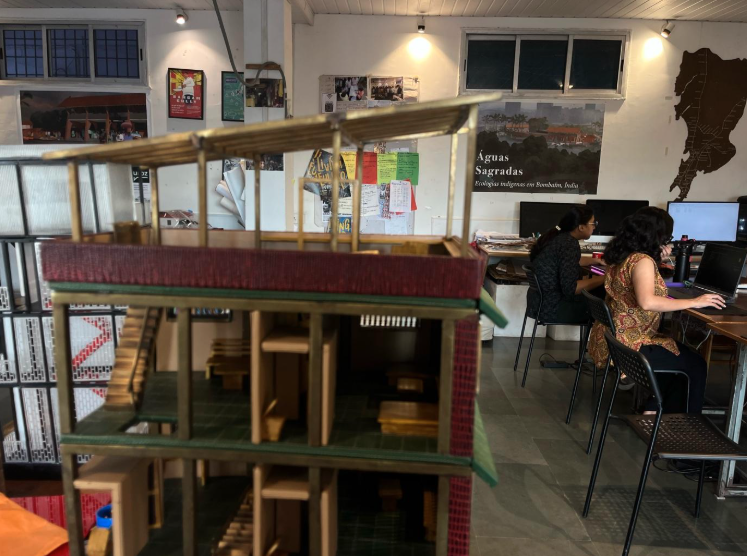
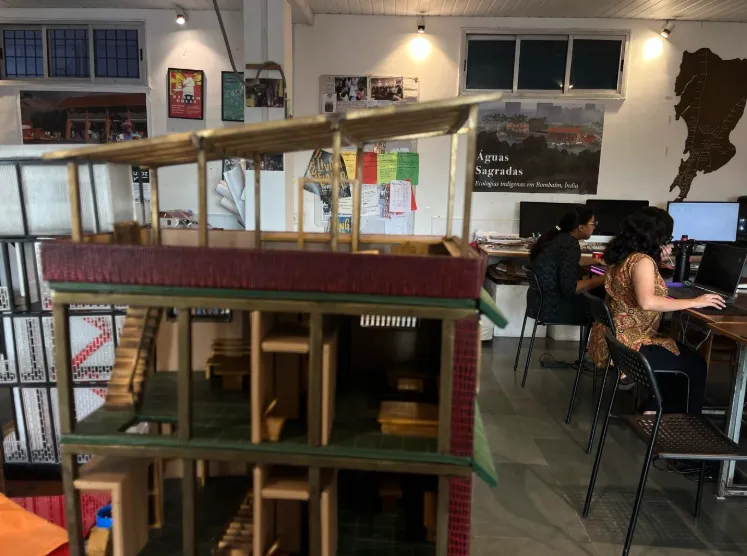
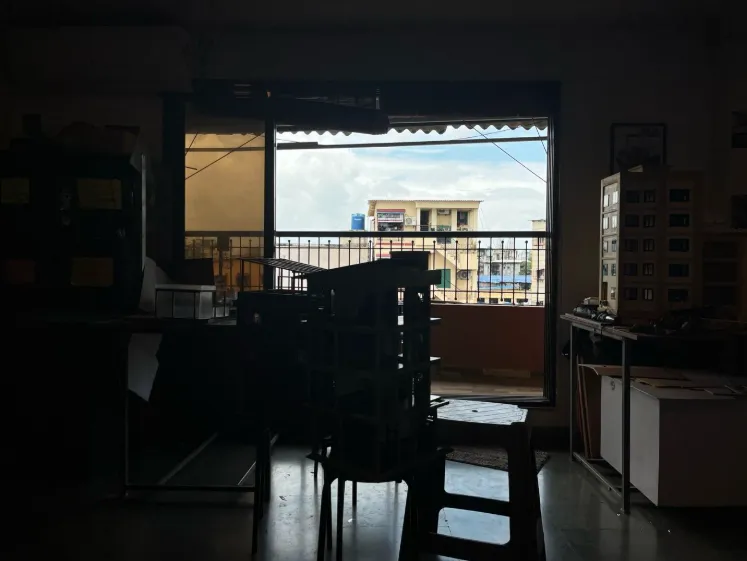
When you walk into the urbz office you are greeted by a space that centres around a long rectangular table. While doing work, this table acts as a desk. Each seat is not separated by a wall of monitor screens or facing out to an aspirational skyline; instead, work is undertaken facing your colleagues.
On my first day, I arrived back from a visit to a local artisan to a transformation of the space I had not anticipated. The table was laden with silver plates with food neatly served on them and half-full tiffin boxes in the centre. Around it, the urbz team was eating lunch. What had been a desk, had become a dining table.
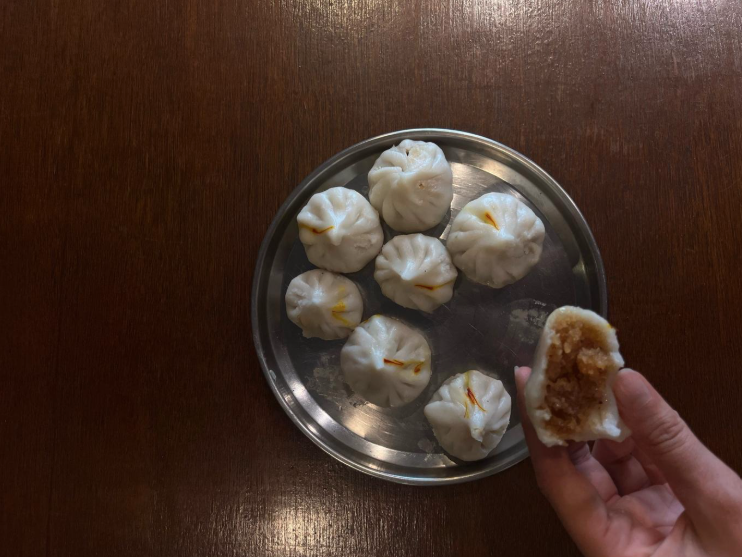
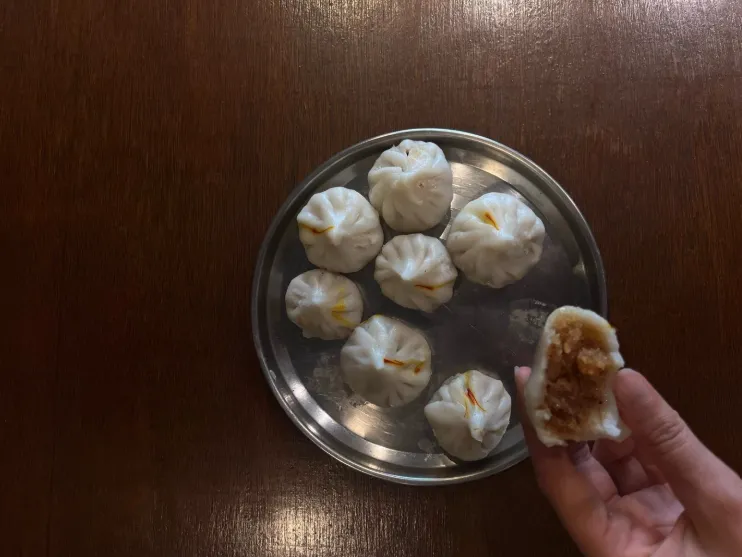
The next day I was in the office when the food arrived from a local “auntie”. I realised I had missed a major step in the dining table appearing; the set-up. We all huddled around the tiffin boxes and plated the food for one another. One person folding the roti, one person scooping the chaana. Samidha explained to me that the dining table was an alternative way for the urbz team to meet new people and exchange ideas. Instead of inviting people for a formal meeting, tucked away in a side office, people were invited to dine. This is a central metaphor for how things get done at urbz.
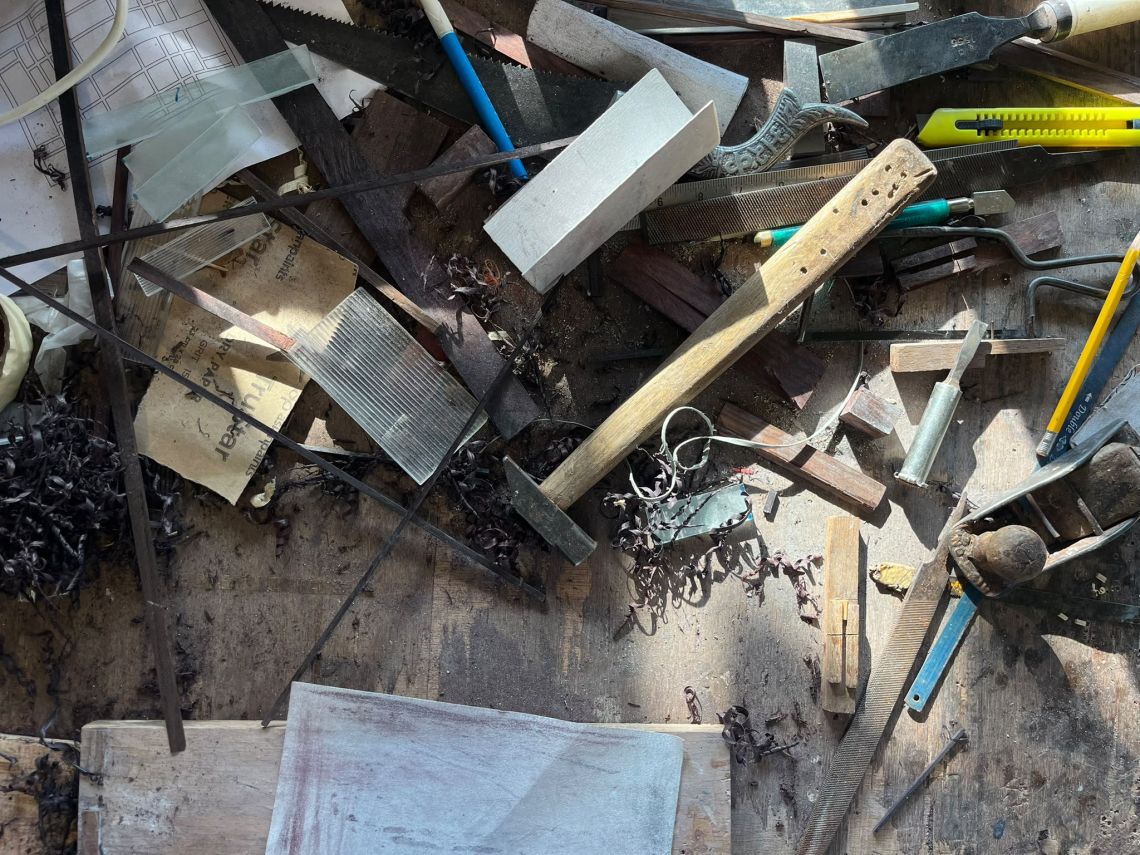
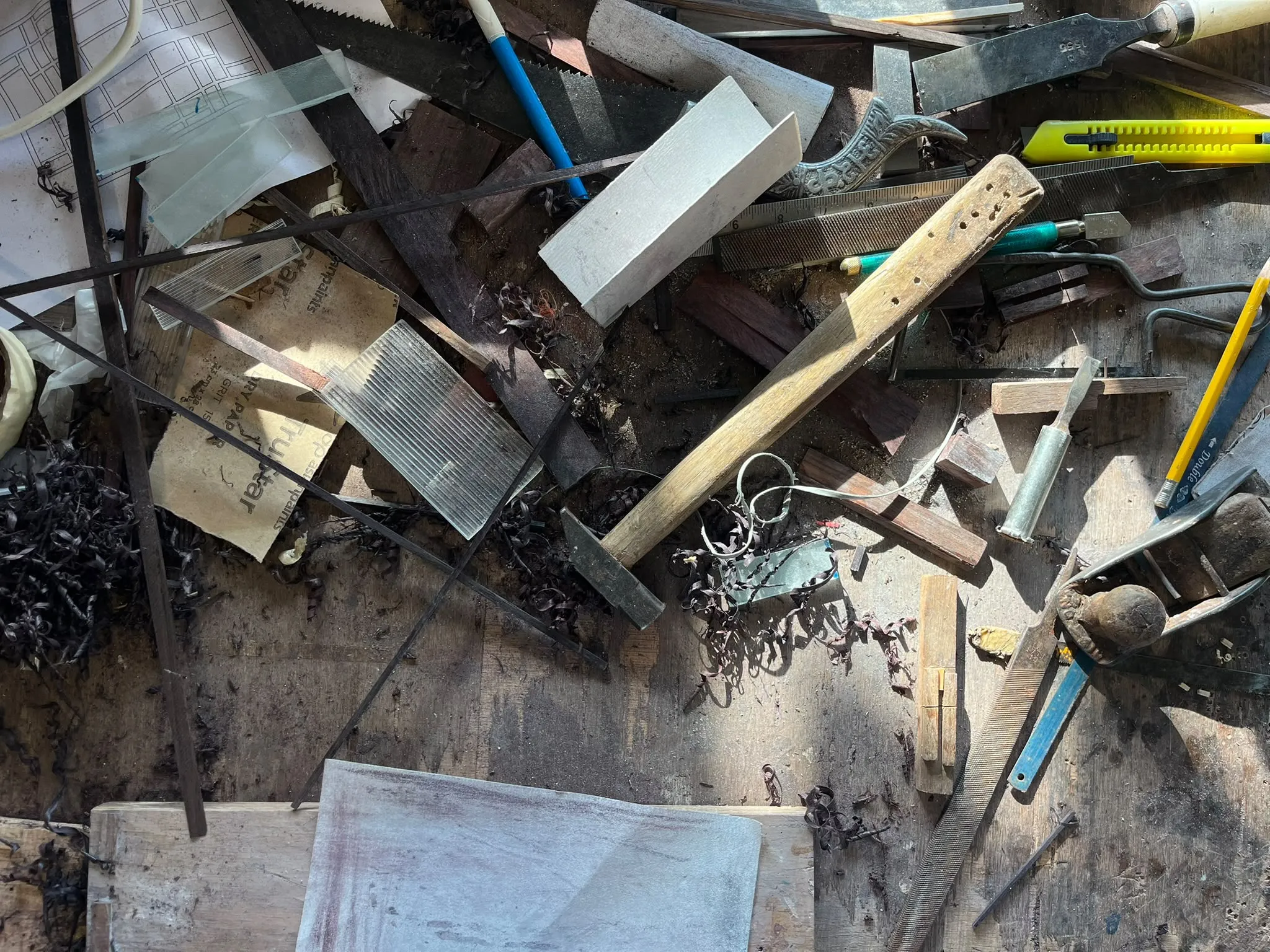
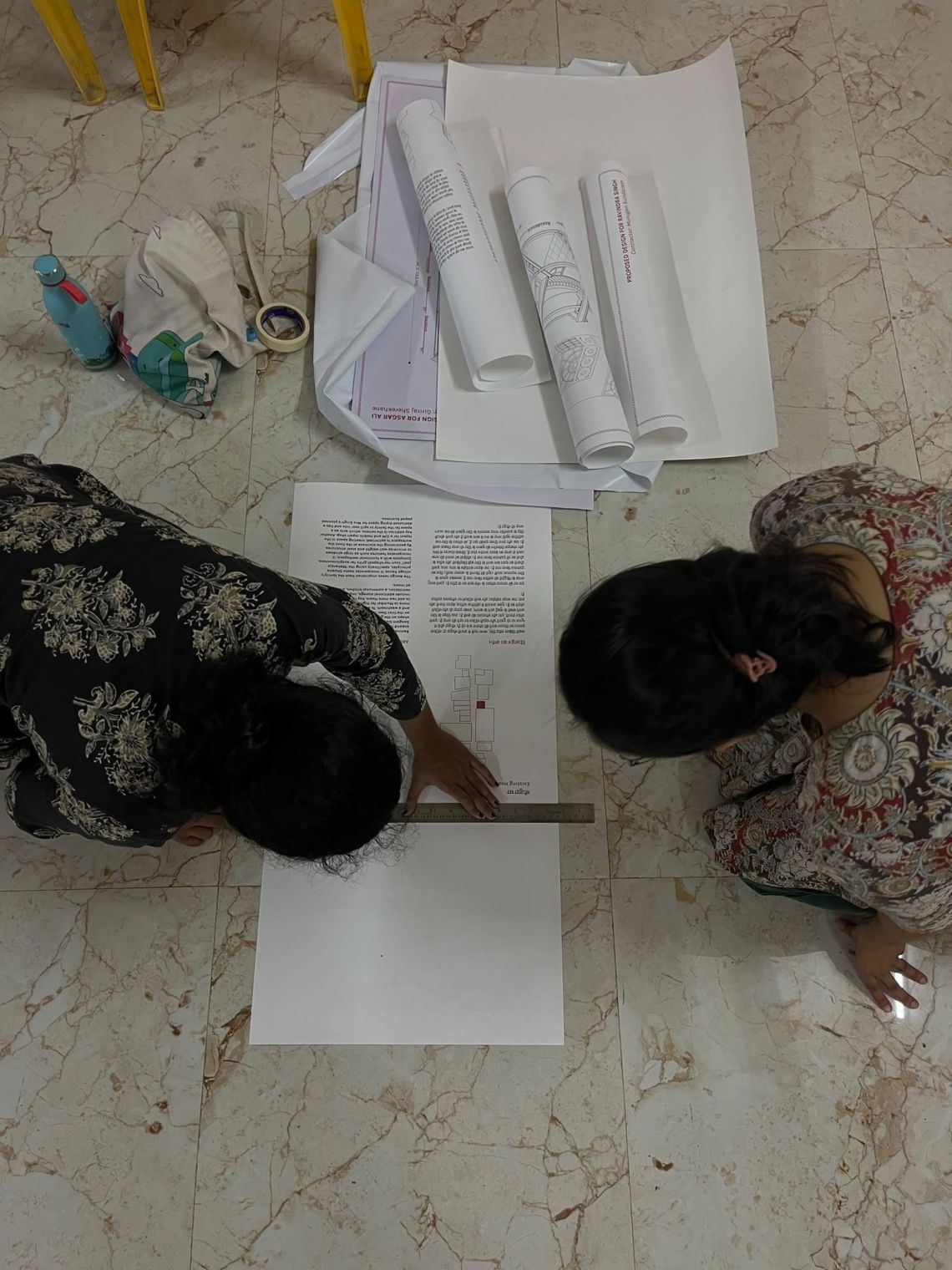
As we approached the first day of the upcoming Homegrown Street Exhibition, the table transformed once more. Covered with house models undergoing their final touches of sticking, dusting and packing, the table became the centre for operational coordination. As the table’s function came to serve a different need, it enabled a whole new form of collaboration.
The Model
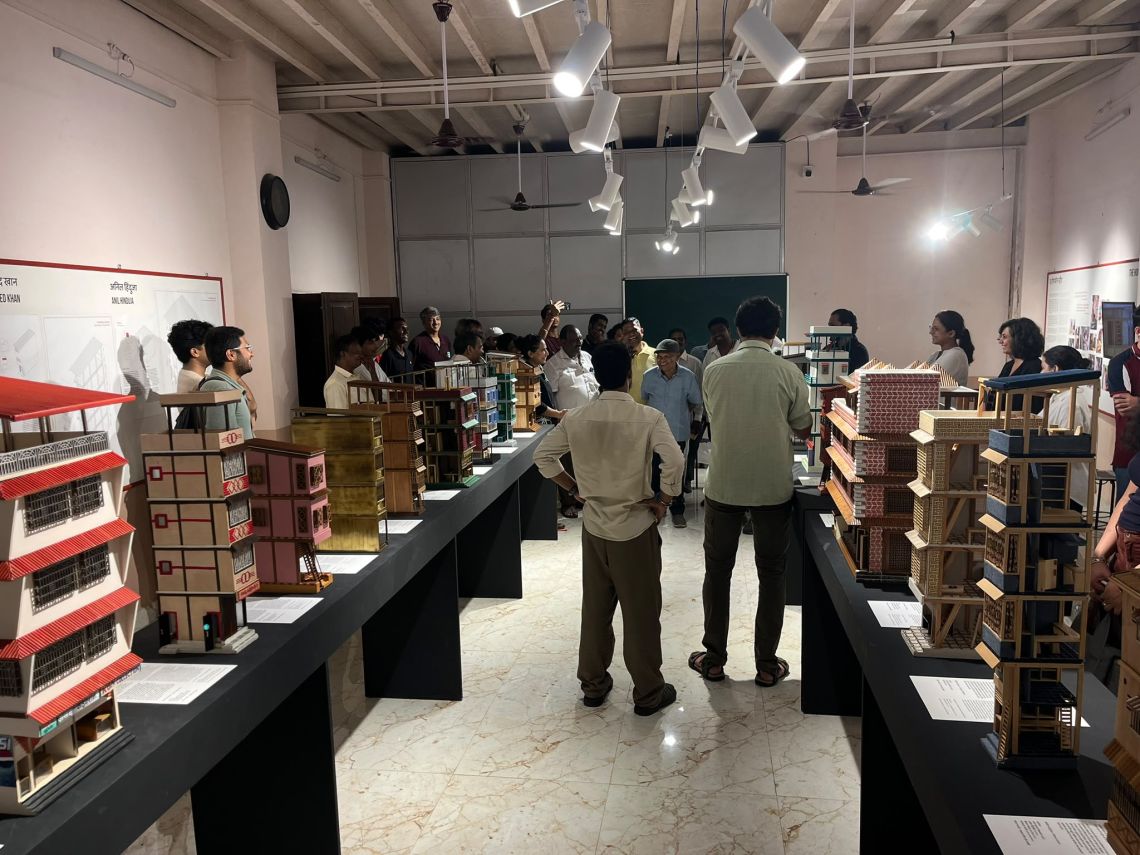
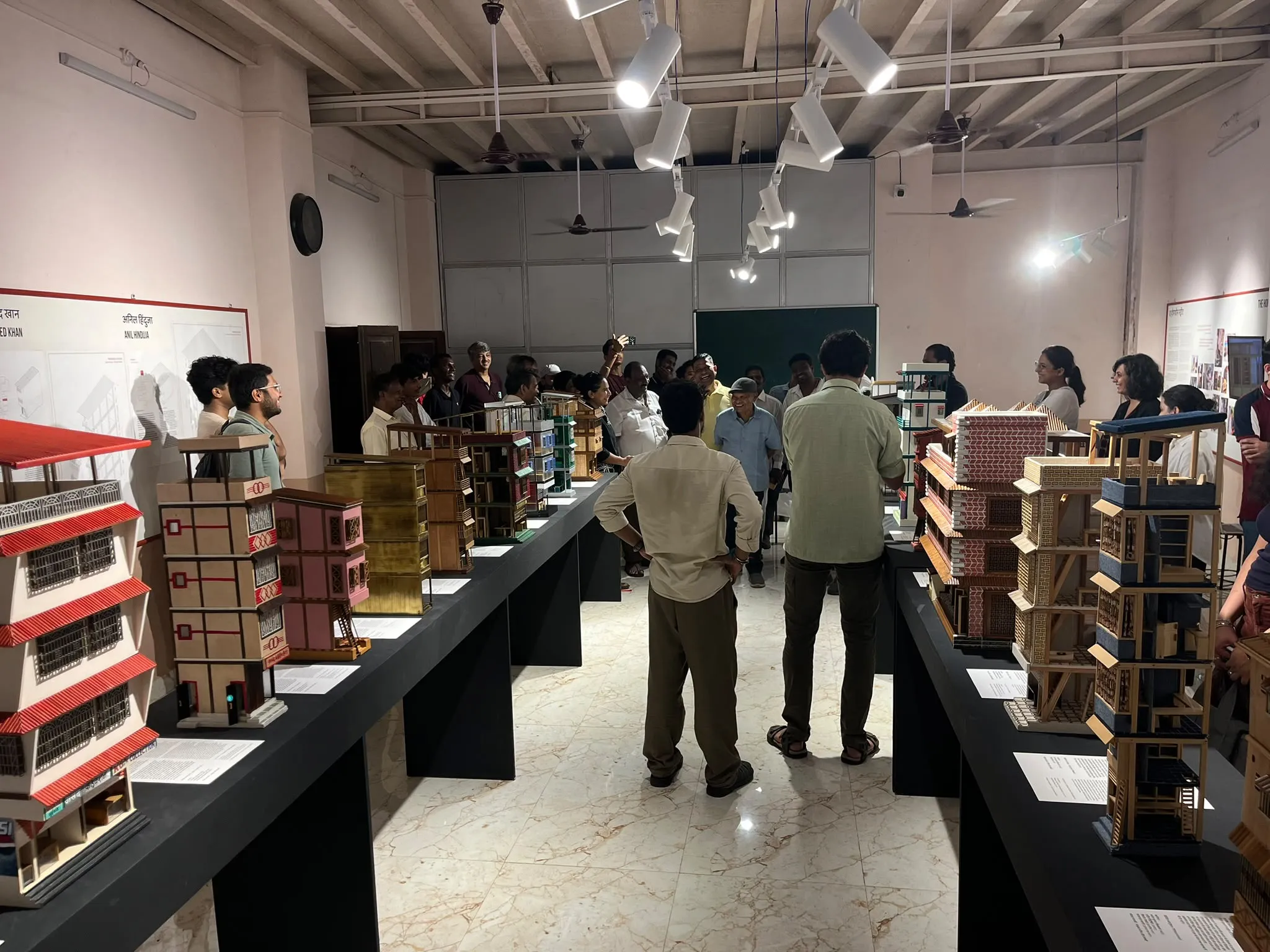
Blue, green, grey, glass, denim, electronic waste, steel, wood, ceramic, embroidery, and beads. My internship with urbz coincided with the Homegrown Street Exhibition, showcasing 17 miniature models created by the residents of Sangum Gully who had been invited to re-imagine their homes to better meet their needs.
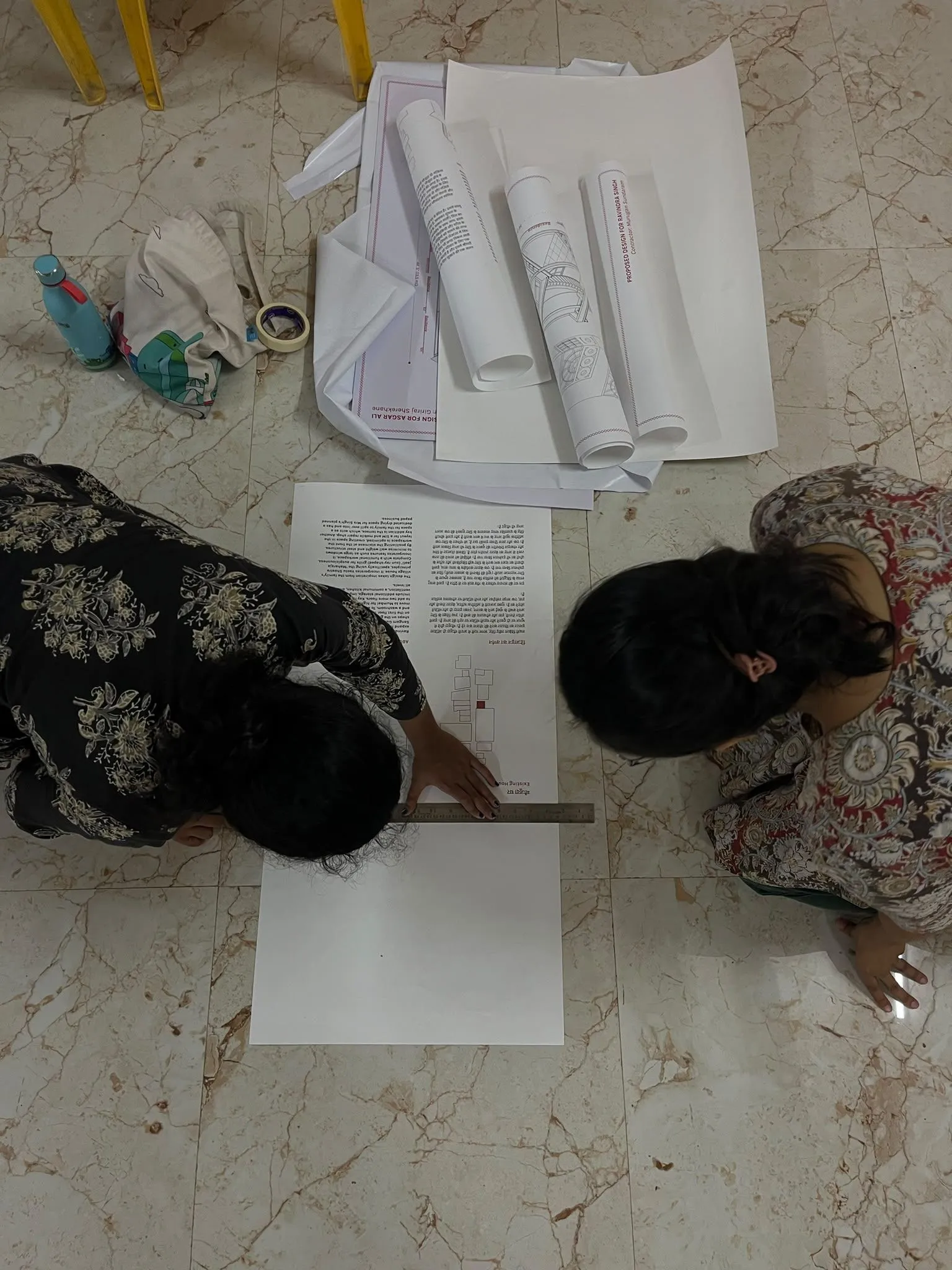
Over the course of the exhibition days, I began to disentangle the threads of collaboration that these models had helped to interweave over the six-year project. Beyond the urbz core team, people visited who had contributed in their own way to these models; previous interns who made sketches on Rhino and like-minded friends and designers who supported the urbz team with friendship and ideas throughout the course of project development.
On exhibition days, one after another more people stepped into the Dharavi primary school where the models were displayed. People from the community, the artisans, Mumbai creatives, filmmakers, family and friends. As they did, they added to the webs of collaboration fostered through these models. Through their life course, from planning to exhibition, they served as a powerful nexus of bringing new groups together.
A Note for Home
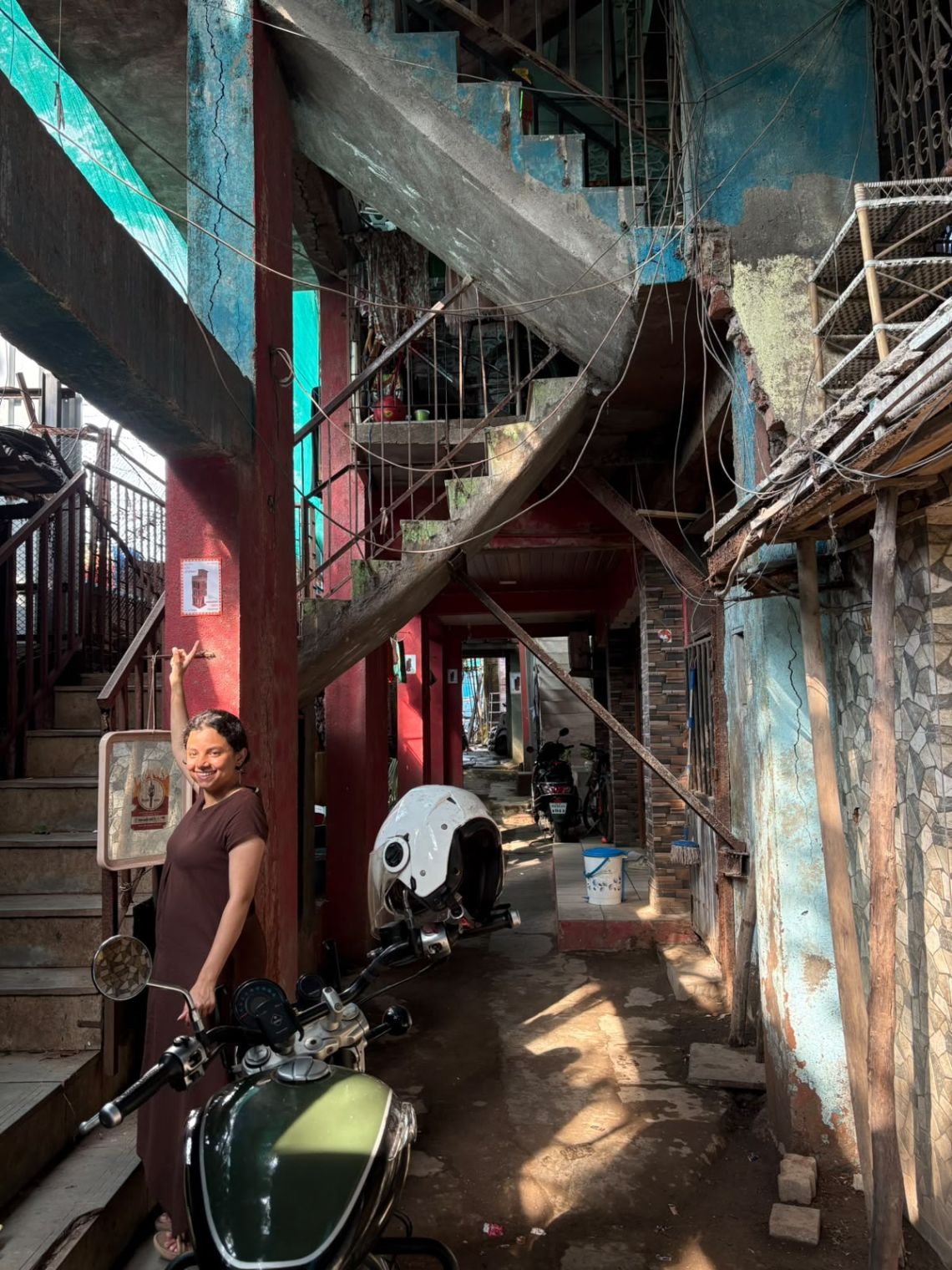
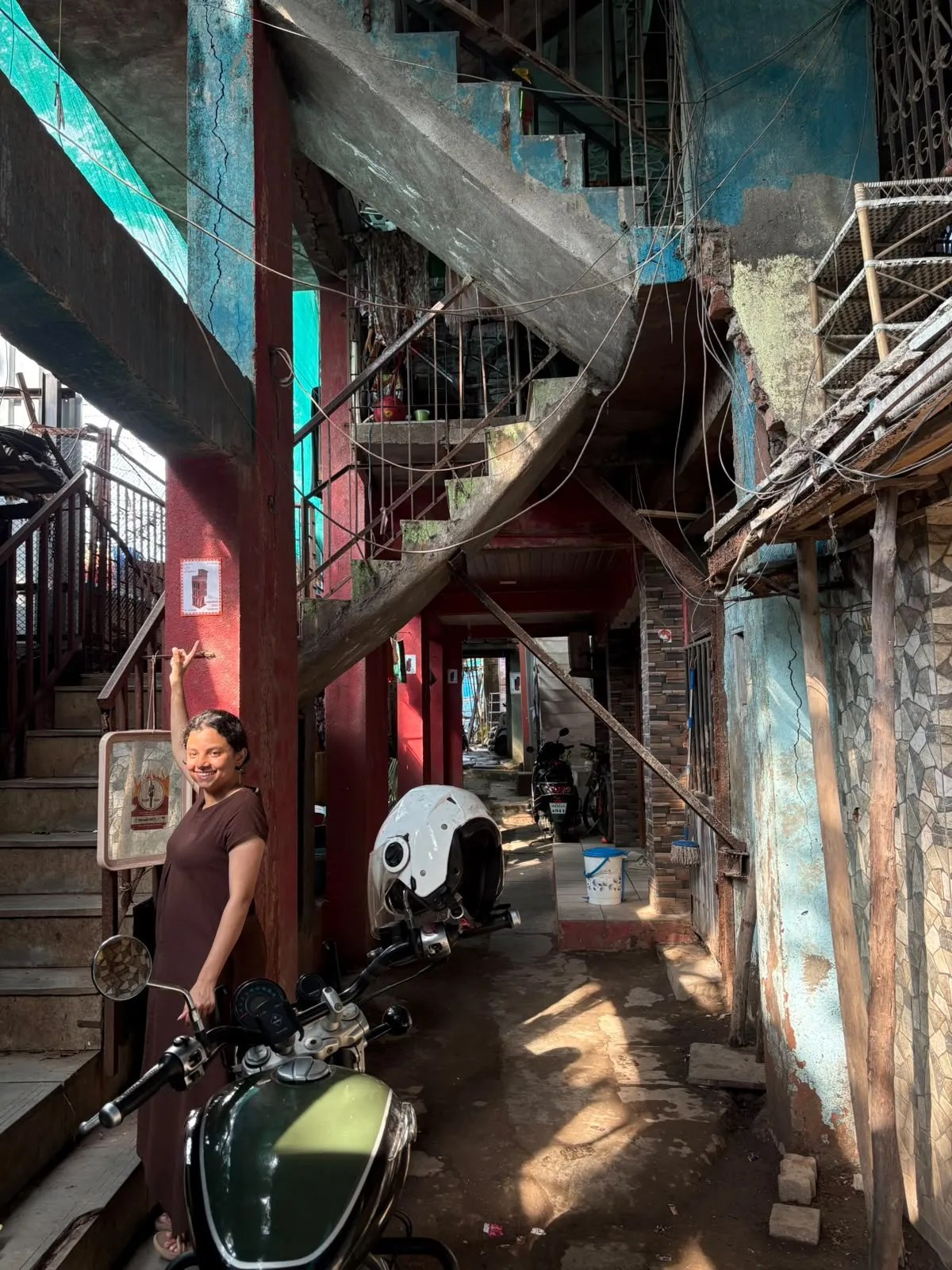
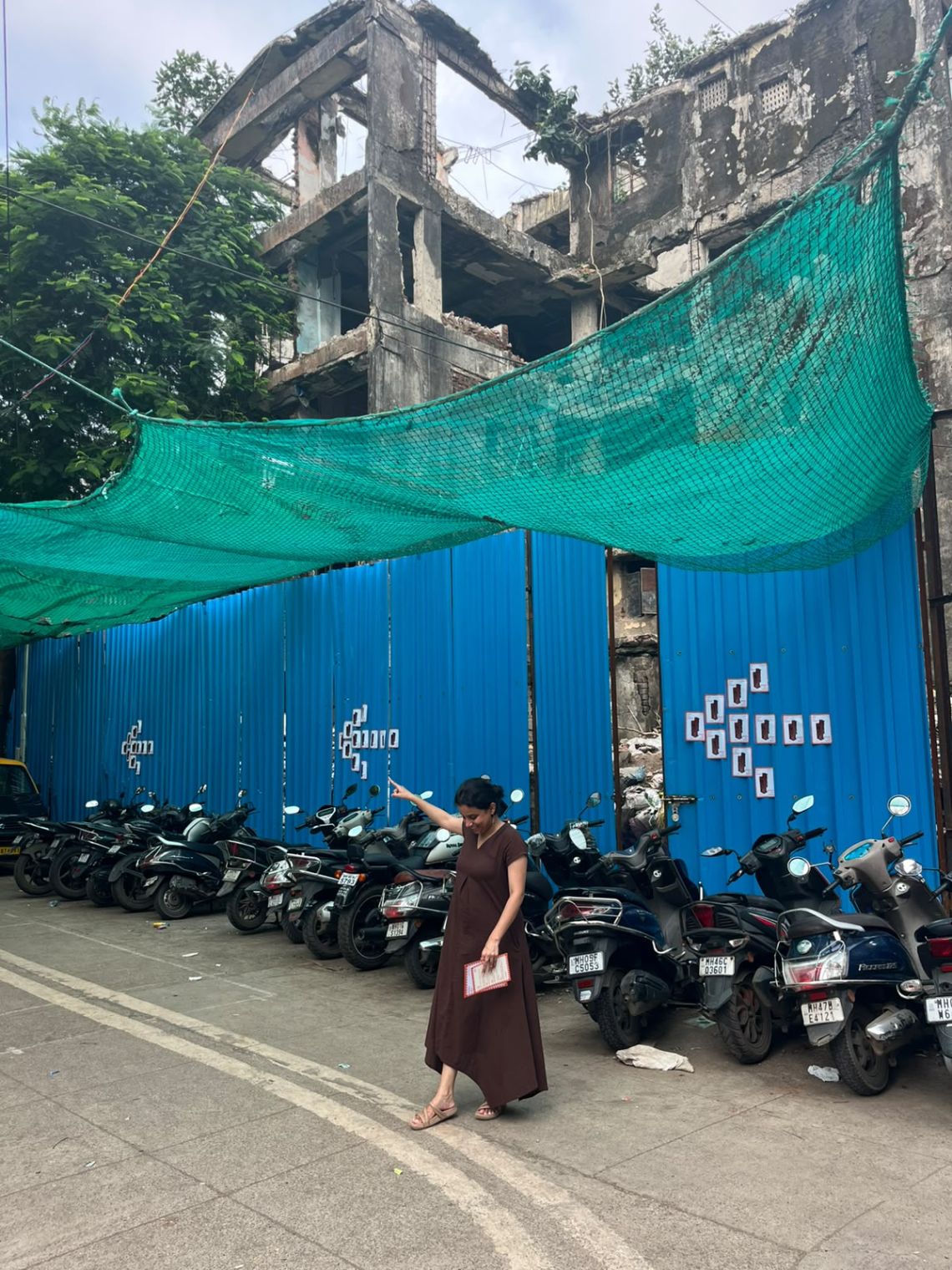
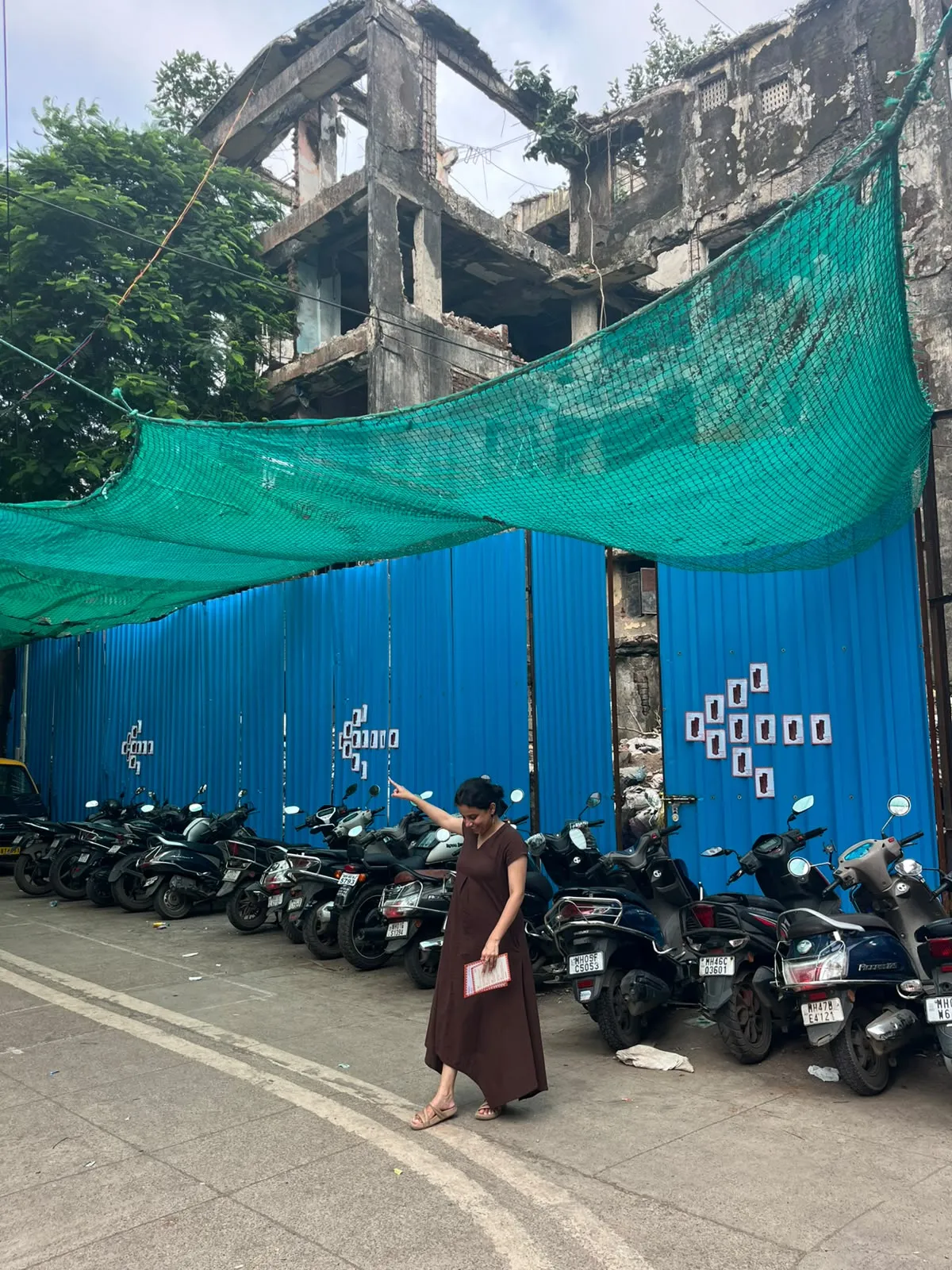
The materialities that enable collaborative practice are not unique to Dharavi. Anywhere that you may find an open door, a communal table or a model, one will find moments of collaboration that transcend “sectoral”, “disciplinary” or “behavioural” silos. While enacting collaboration through these materialities can begin to fill the gap between rhetorical and practical applications of collaboration, a missing element persists; an element of expectation.
Samidha told me, in what I am sure she thought was a passing comment, that “…most structures in India are not designed by a professional architect - they are designed by those who inhabit the space…”. In the UK, after centuries of professionalisation of design and the marginalisation of lay participation, we have lost the expectation that our built environment be “homegrown” or constructed by its citizens.
In response to my own questions as to how we can better enact collaborative design in practice, beyond rhetoric, what became clear is that we need both materiality and a change of expectation. On one hand, I encourage designers to push their office tables together, unlock their office door and reclaim the “model” not as a symbol of professional status but as an architectural tool through which people can be brought together. At the same time, I encourage citizens to dare, demand and expect to be included in our built environment. Building this mutual expectation into common practice will not occur overnight, but exemplars of inclusion, as demonstrated in the everyday ethos at urbz surely help to set the course in a better direction of embodied design.
People involved
Related articles

On a rainy afternoon, we visited Irfan’s workshop, somehow quieter than the surroundings. We assisted and watched him while he worked, and he narrated his story to us.

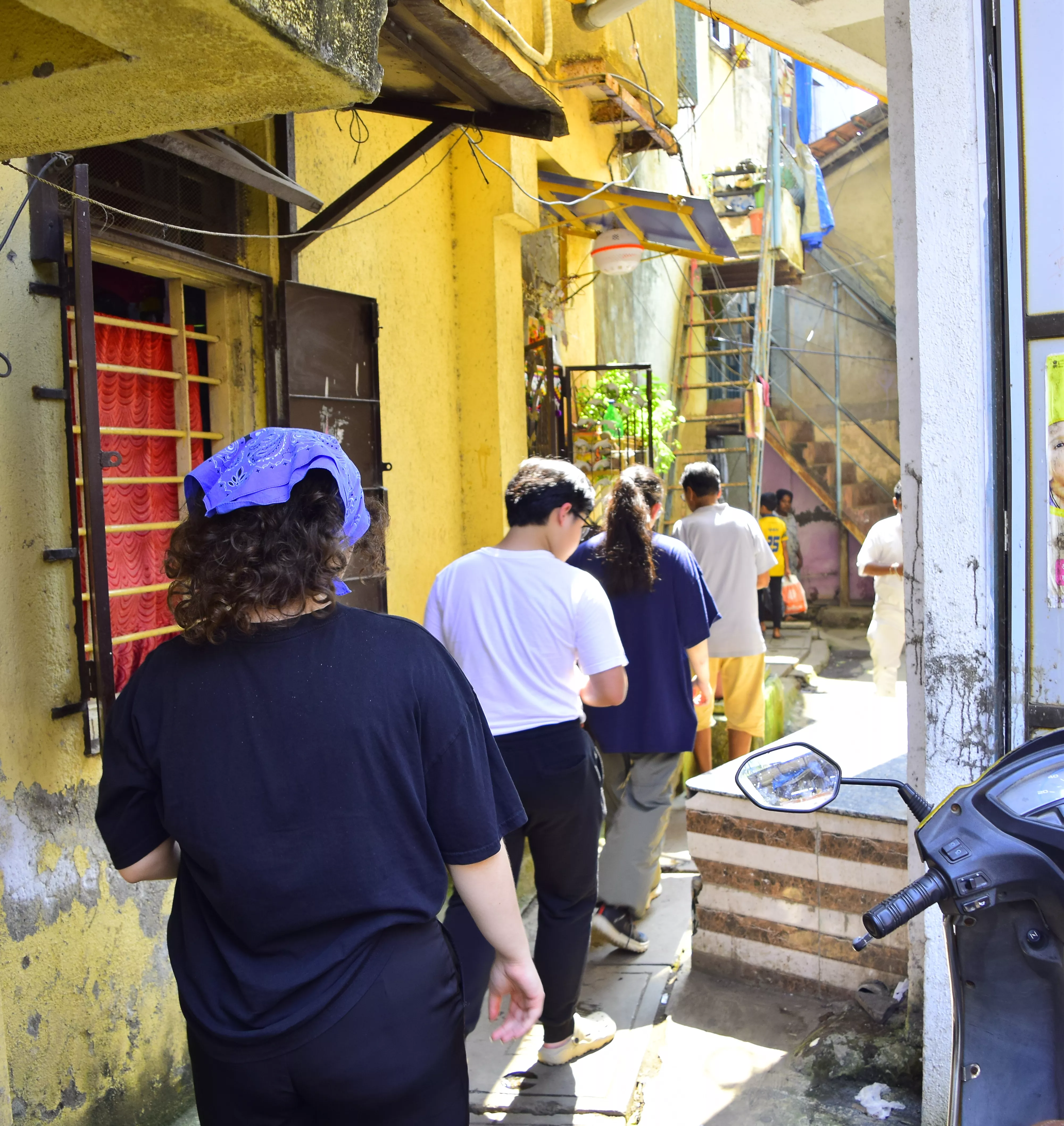
The Handstorm workshop in Dharavi, with the Engineers for Social Impact from NYU, Abu Dhabi took place for the second time this year in October, 2025. We walked through the lanes of Dharavi Koliwada, observing Water in the diverse and unexpected paths that it took to and from people’s homes. Students diligently followed the water, listening carefully to the stories it had to tell.

Samsuddin, a printmaker in Dharavi, Mumbai, whose small but efficient studio reflects the spirit of local enterprise. From printing school uniforms for suburban Mumbai to receiving an order from his hometown in Uttar Pradesh, Samsuddin's journey weaves personal strength with community-rooted entrepreneurship. He exemplifies how creativity and determination shape life in Dharavi. Amidst talks of redevelopment, Samsuddin advocates for progress without displacement, preserving the soul of the community he calls home.
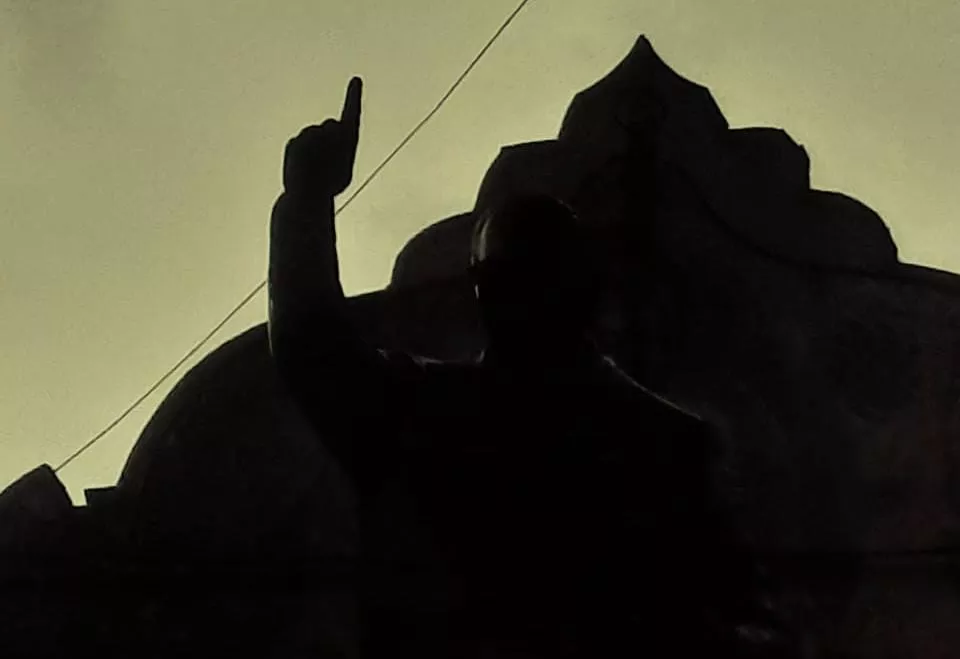
Satish Dalvi, a second-generation Dharavi resident whose journey from sanitation work to caregiving exposes the layered realities of caste, labor, and survival in Mumbai. As an outspoken activist and rationalist, his quiet rebellion against exploitation and superstition carves space for dignity and resistance in the city.
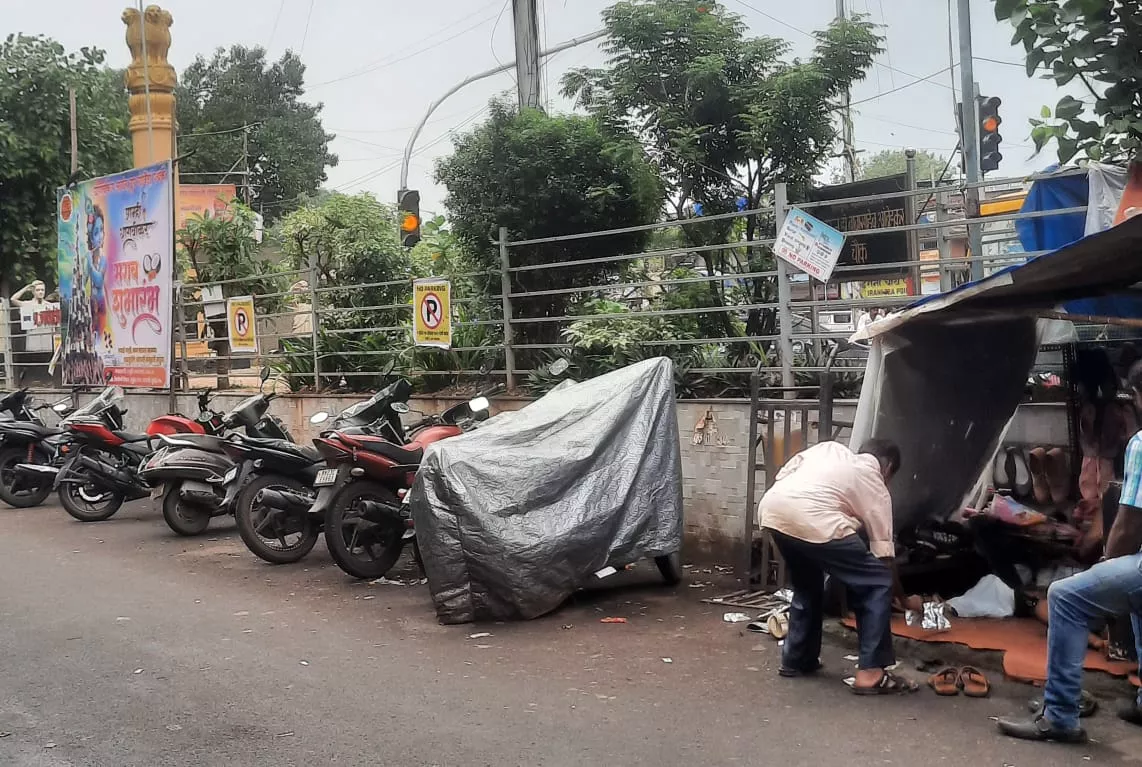
Shankar Jadhav, a 61-year-old cobbler, defies caste boundaries beneath Samvidhan Square. With calloused hands, a love for books, and quiet resilience, he mends shoes, nurtures a square, and challenges the invisibility imposed by society: one stitch, one flower, one act of dignity at a time.
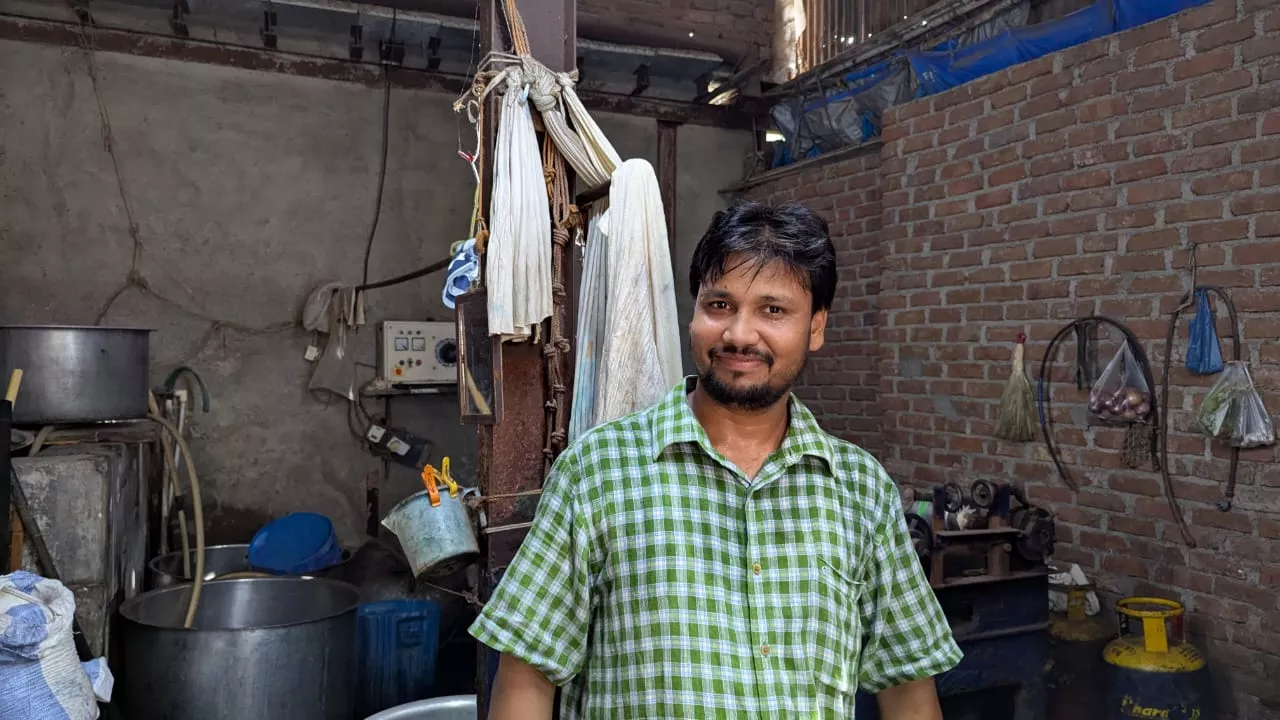
Shahid Sheikh’s dyeing unit in Dharavi may be small, but it’s full of colour, care, and quiet skill. His story is one of patience, pride, and the kind of work that speaks for itself.