Dharavi Weekly 02
Authors
Authors


Dharavi Weekly 02
Authors
Authors
Related articles

The Handstorm workshop in Dharavi, with the Engineers for Social Impact from NYU, Abu Dhabi took place for the second time this year in October, 2025. We walked through the lanes of Dharavi Koliwada, observing Water in the diverse and unexpected paths that it took to and from people’s homes. Students diligently followed the water, listening carefully to the stories it had to tell.

Every kaccha house transforming into a pukka house is a story worth telling – one which is extremely significant to residents and the development of the city at large.


Local newspapers doubled, tripled and eventually quadrupled with classifieds about the shiny, affordable, chic new buildings with swimming pools coming up in every empty corner.

Not all is worthy of the bin! Our latest column in The Hindu explores features of Indian urbanism that could inspire cities around the world. (The Hindu 24.09.2017)

Cities around the world are acknowledging that local expertise, knowledge and skills are an effective mechanism to generate ideas, plans and strategies that can be implemented by themselves or by civic authorities and planning agencies. Earlier this year, urbz was part of such an endeavour where we conducted Urban Typhoon workshops in Kochi, India. It was an enriching process working with local people to generate programmes and plans for the improvement , transformation and preservation of neighbourhoods. People’s energies and collective capacities came together to become a powerful force that is promising for the future of Kochi.

Inviting contractors from all over Mumbai to collaborate on designs for homes in Dharavi with residents, architects, and artisans.




In a global context, populations marginalized because of race, class, gender, creed, etc. are those most incessantly stripped of this right to design the city in their own image within formalized constraints. In this way, the “informal” urban process of self-construction is inherently a product of this same marginality that excludes these groups from “formalized” city-making.
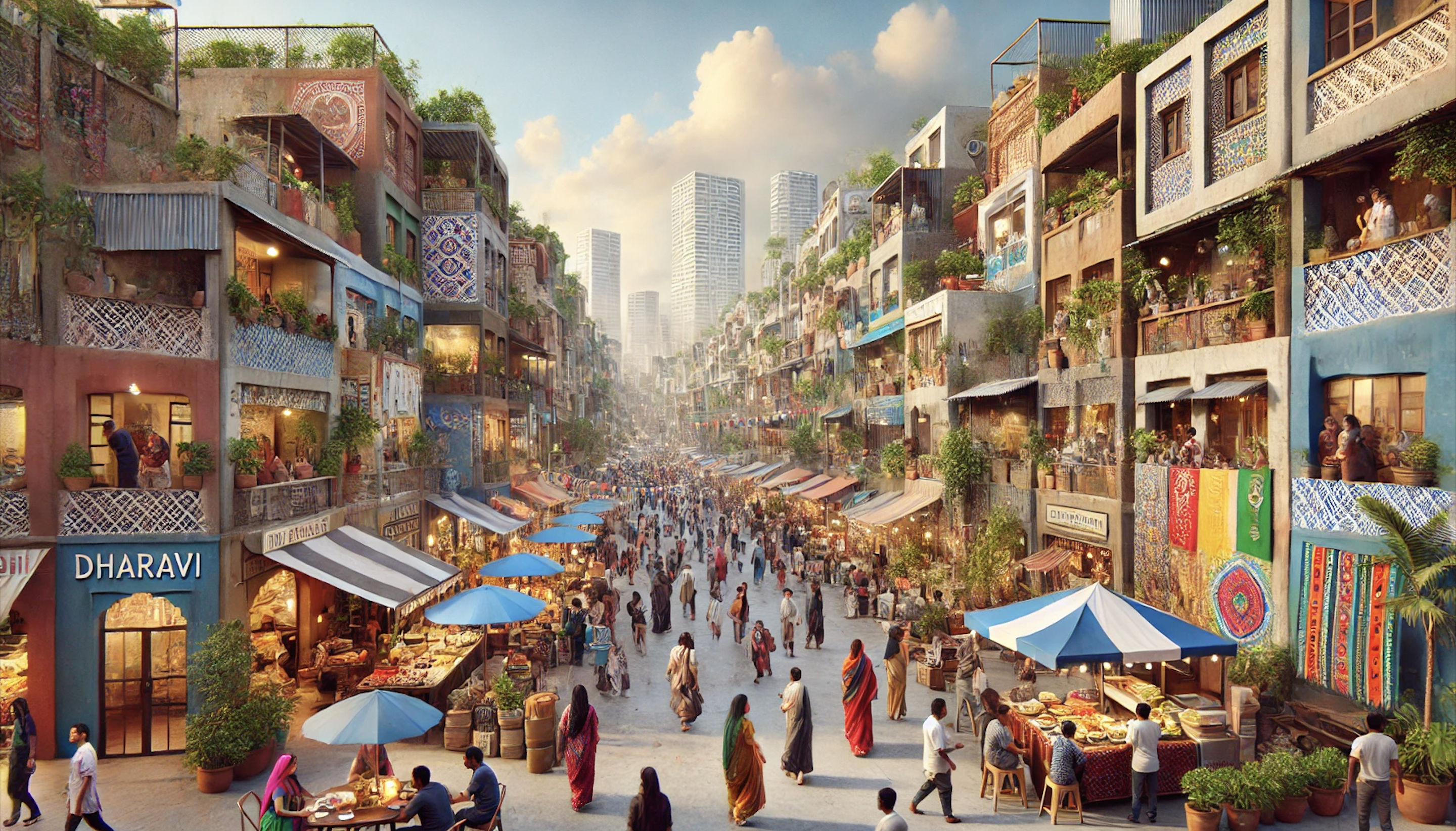
Dharavi’s massive redevelopment project aims to turn it into a ‘world-class’ neighborhood, but this vision risks erasing its unique identity and thriving homegrown economy. Instead of replacing it with glass towers and luxury spaces, Dharavi could be a model for a ‘world-grown city’—one that values its community-driven development while staying connected to the global economy.


Living Euljiro is a film directed by Liron Shalit. Liron has been creating award-winning short documentaries since 2017, exploring themes such as social issues, human rights, disability, natural disasters, and urban life. Since relocating to Seoul in 2022, he has focused on documenting disappearing spaces and communities, capturing the distinctive culture of Euljiro and the stories of the people who live and work there.

The Handstorm workshop brought together various actors from all around the world to build things that could improve the neighbourhood based on discussions with residents and with the help of local artisans