
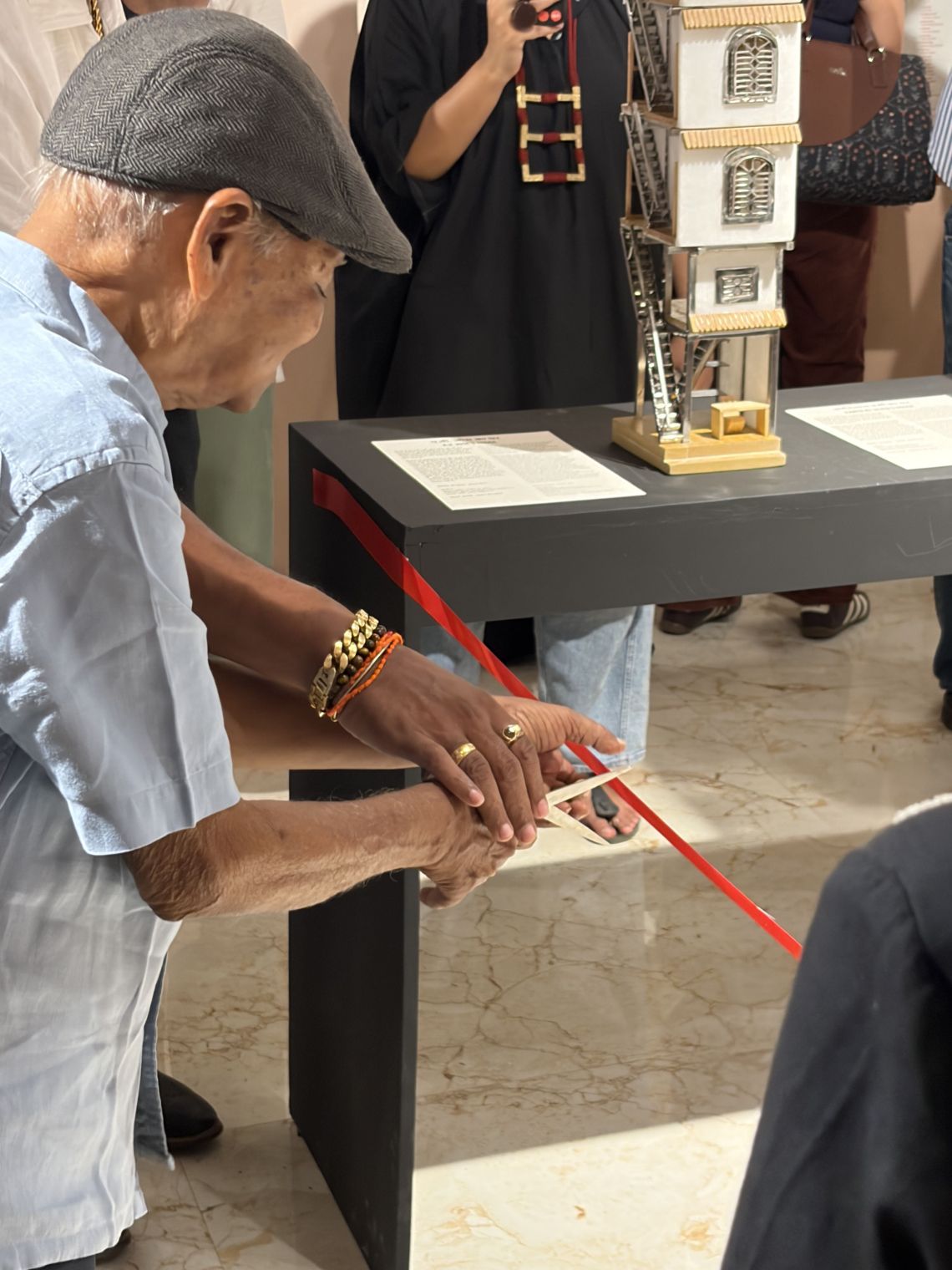
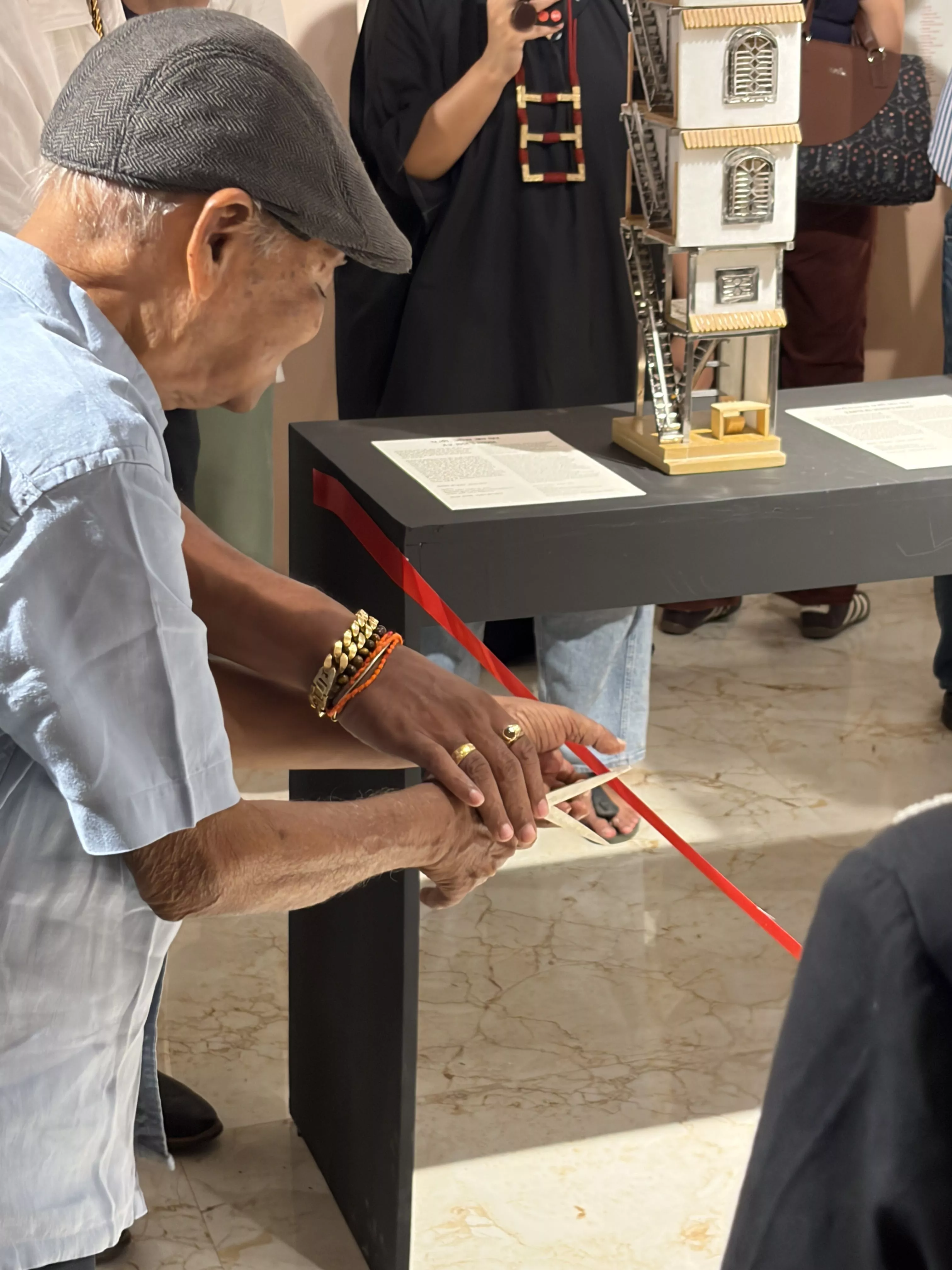
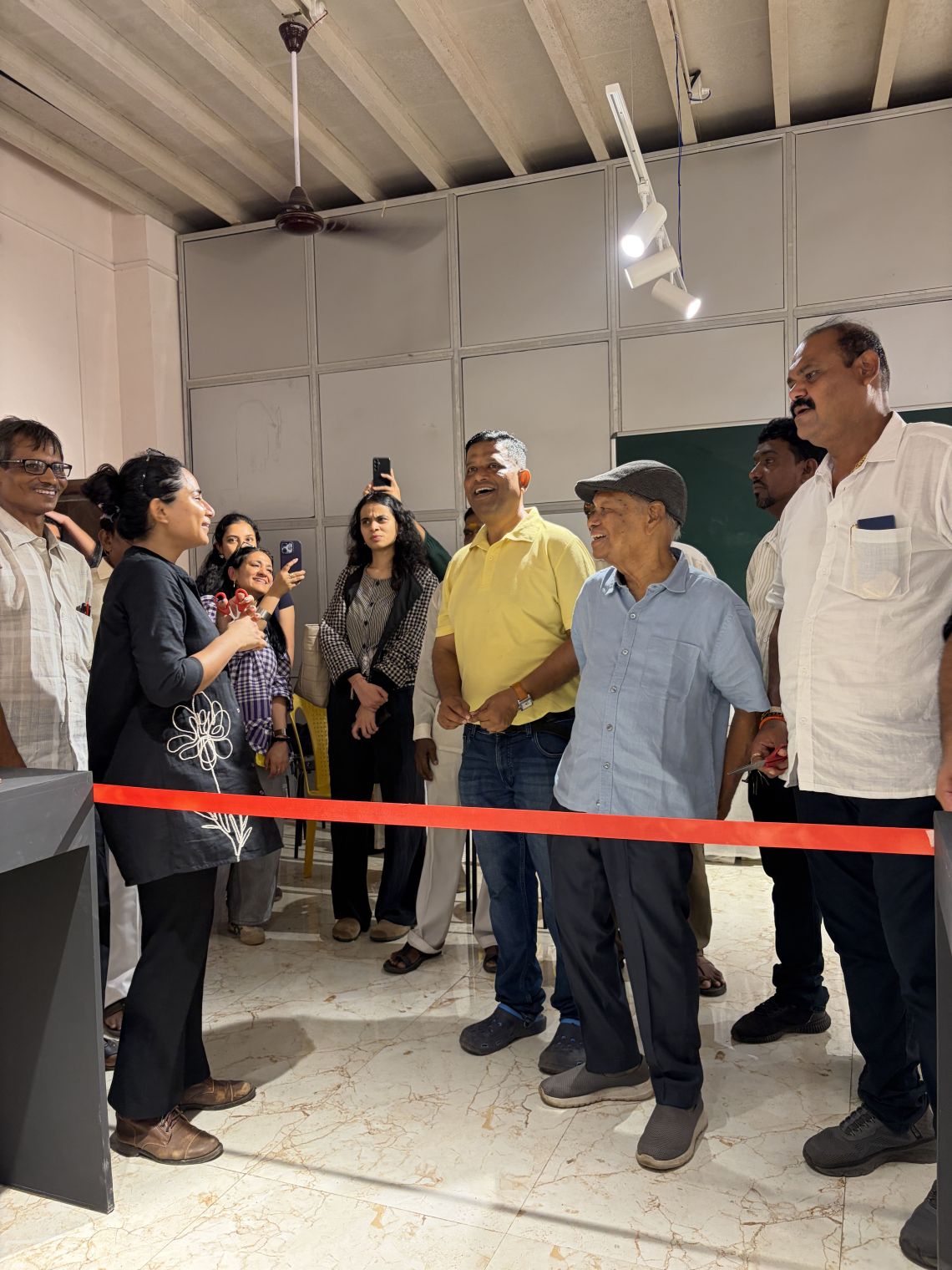
The Homegrown Street exhibition opened on 23rd September, bringing together years of work. Residents of Sangam Gully in Dharavi imagined their future homes, local contractors designed them, and artisans from across Mumbai built 17 models in leather, brass, steel, embroidery, clay and more. This article follows the builders and craftspeople at the opening as they see their skills celebrated, many for the first time. Open daily until 27th September, 10:00 am to 7:00 pm.
Minutes before 6:00 pm on 23rd September, the last models were assembled, the final dabs of paint dried, the floors were swept and the lights angled into place. Years of work, involving more than 100 people, were ready to be seen by the city.
The opening was a moving moment for every contractor and artisan who has worked with the urbz team since the Homegrown Street Project began in 2019. Now completing its first phase, the project has produced 17 multimedia models designed and crafted by builders and artisans from Dharavi and other neighbourhoods of Mumbai.
Over the course of the project, the urbz team met residents and shopkeepers in Sangam Gully, a busy street in Dharavi, and asked how they imagined their homes 5 to 10 years from now. These visions were shared with local contractors, each of whom proposed a design for a particular house. Craftspeople then built the models in the materials they have mastered: leather, glass, steel, wood, brass, plastic, cane, embroidery and clay.
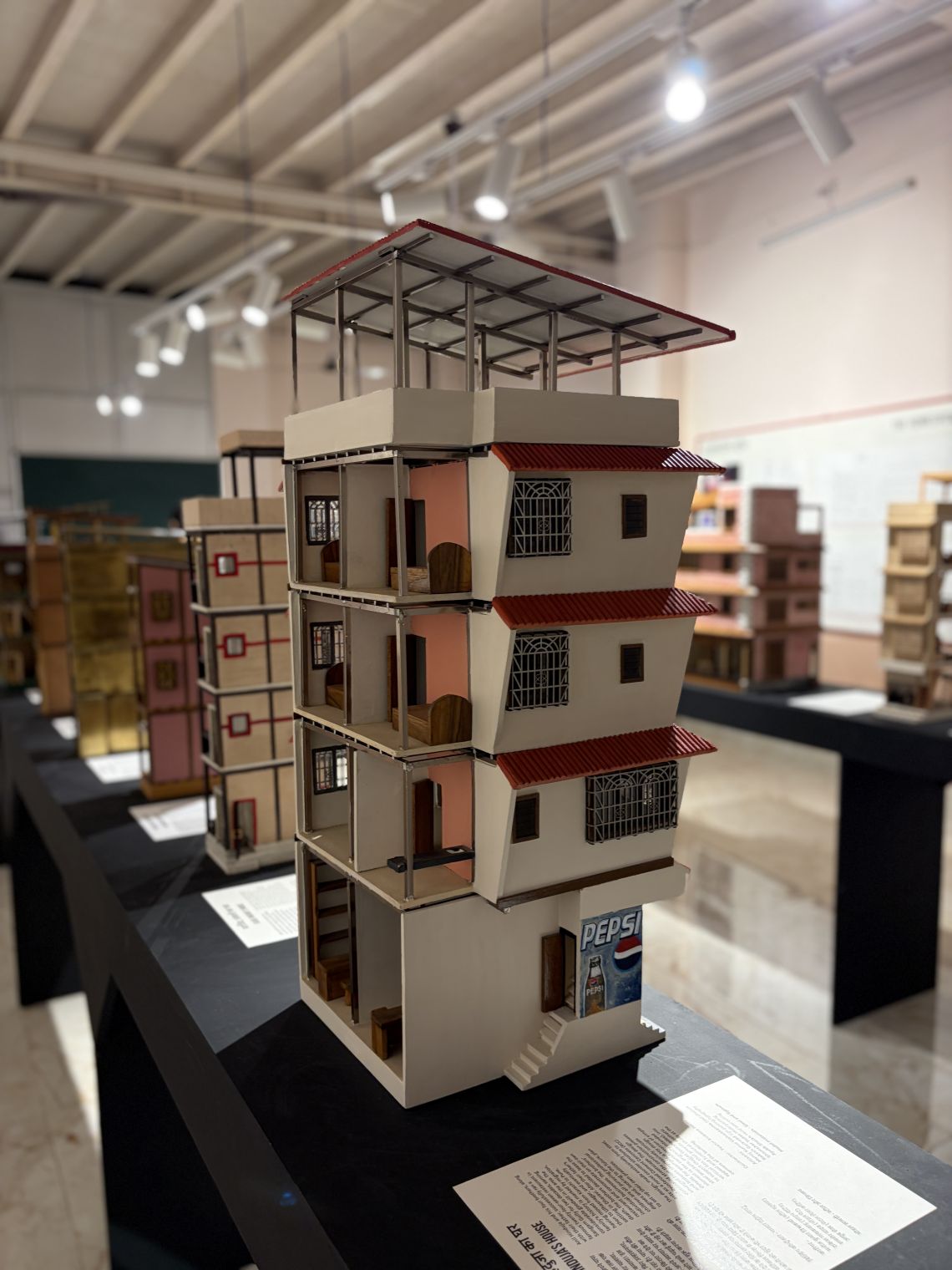
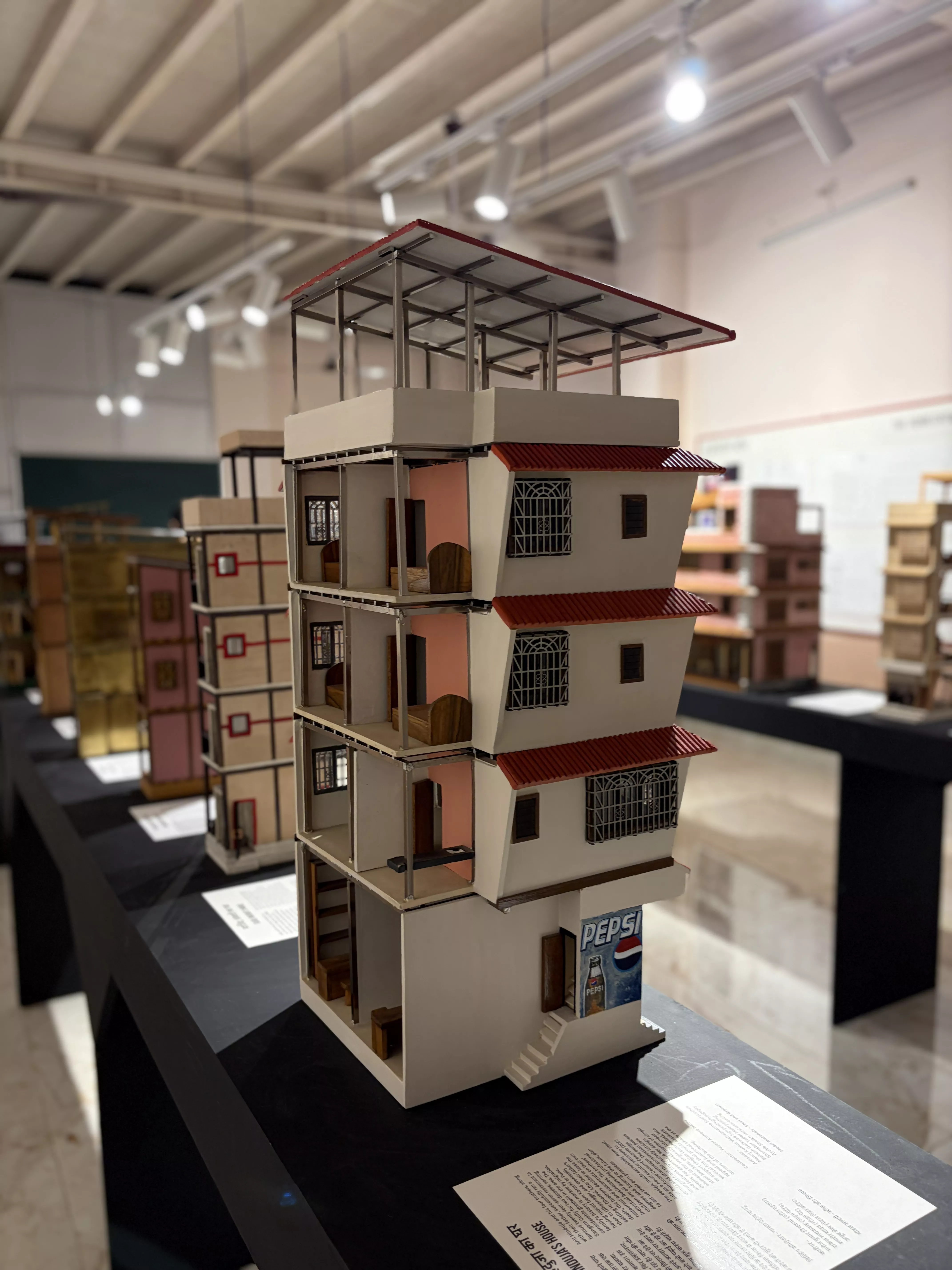
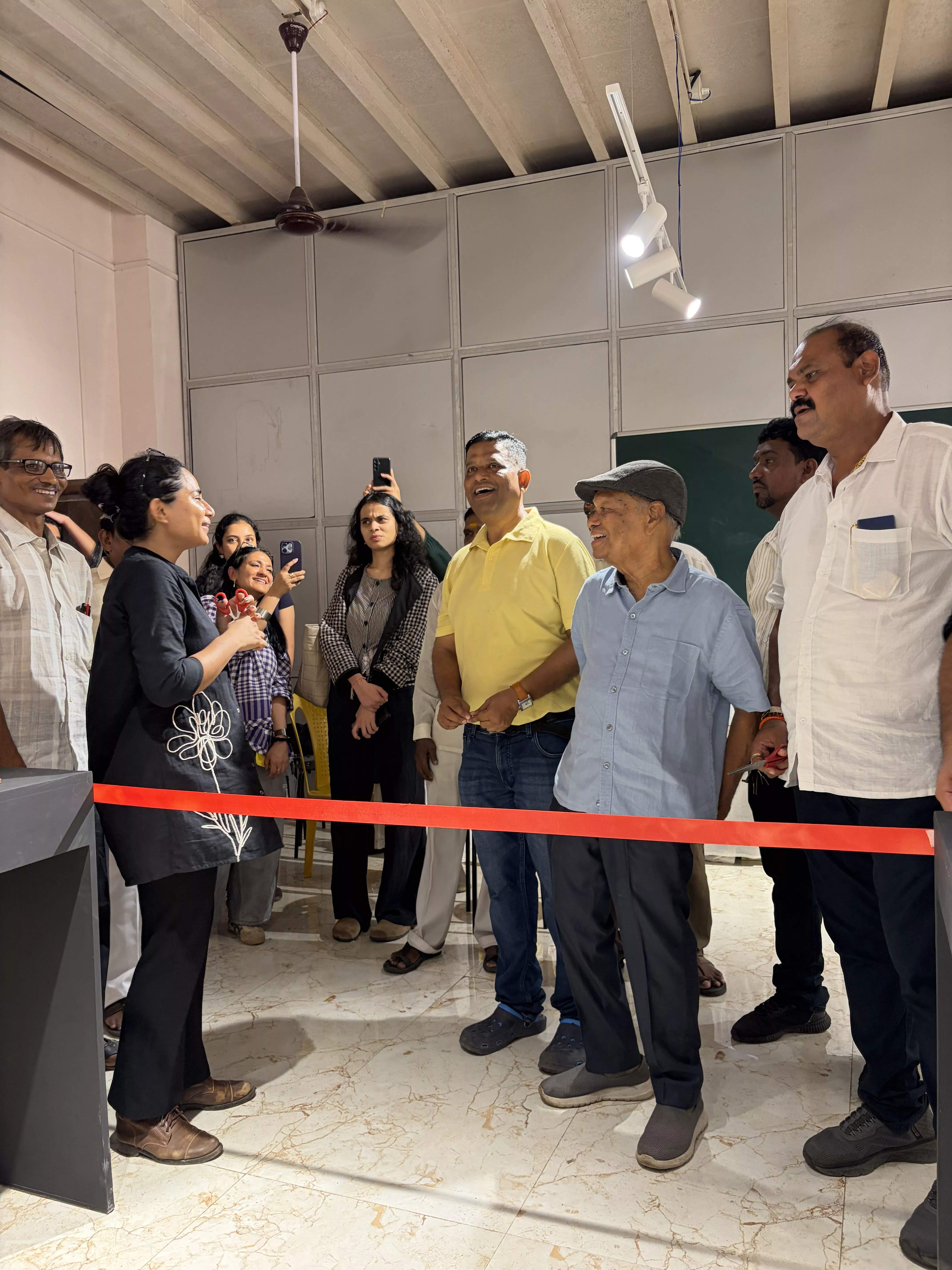
The models show the talent alive in Dharavi, and what could happen if Dharavi and other homegrown neighbourhoods were allowed to design and develop themselves. This collective work recasts urbanists and architects as facilitators in a process driven first and foremost by the people who live there.
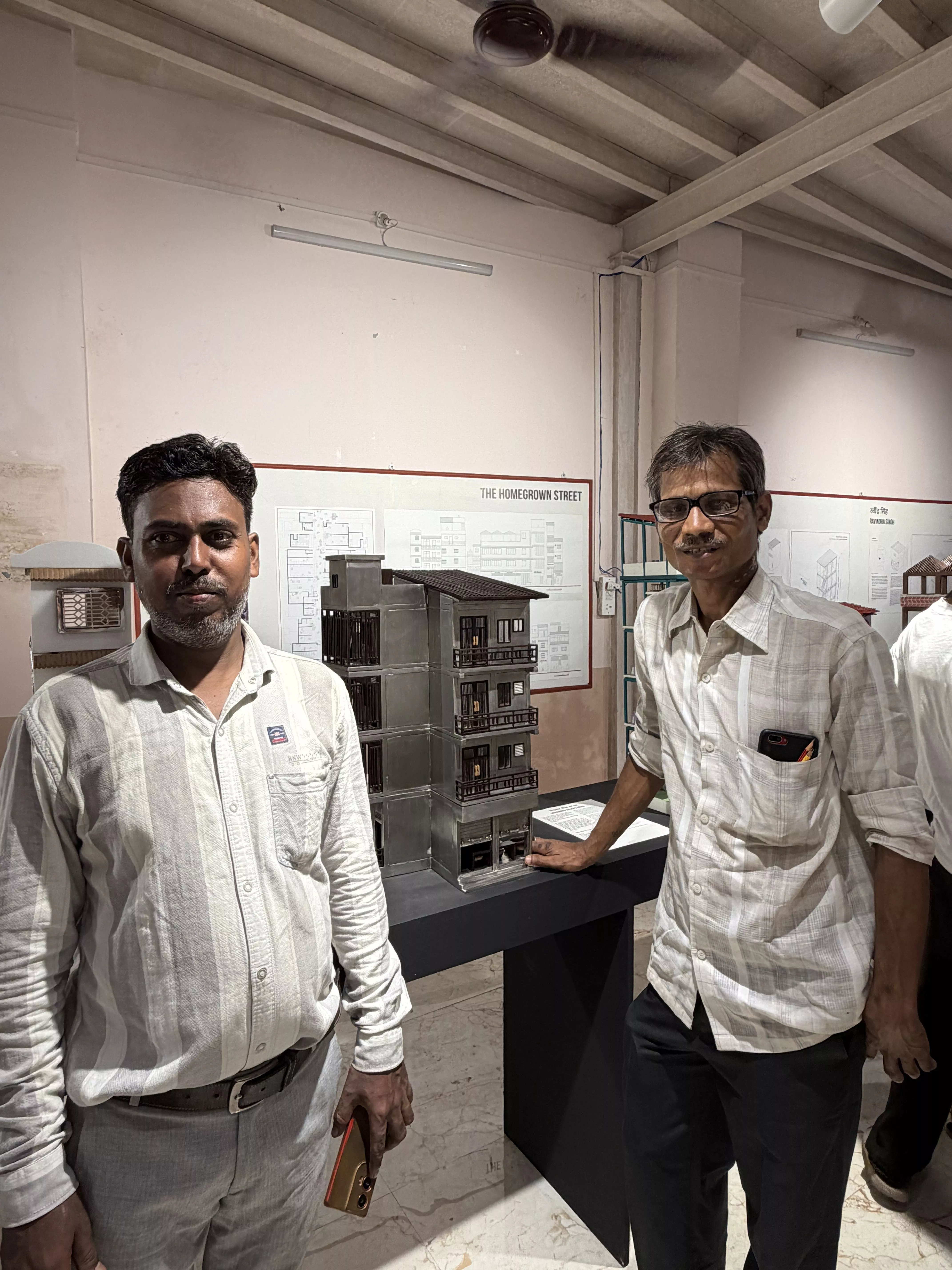
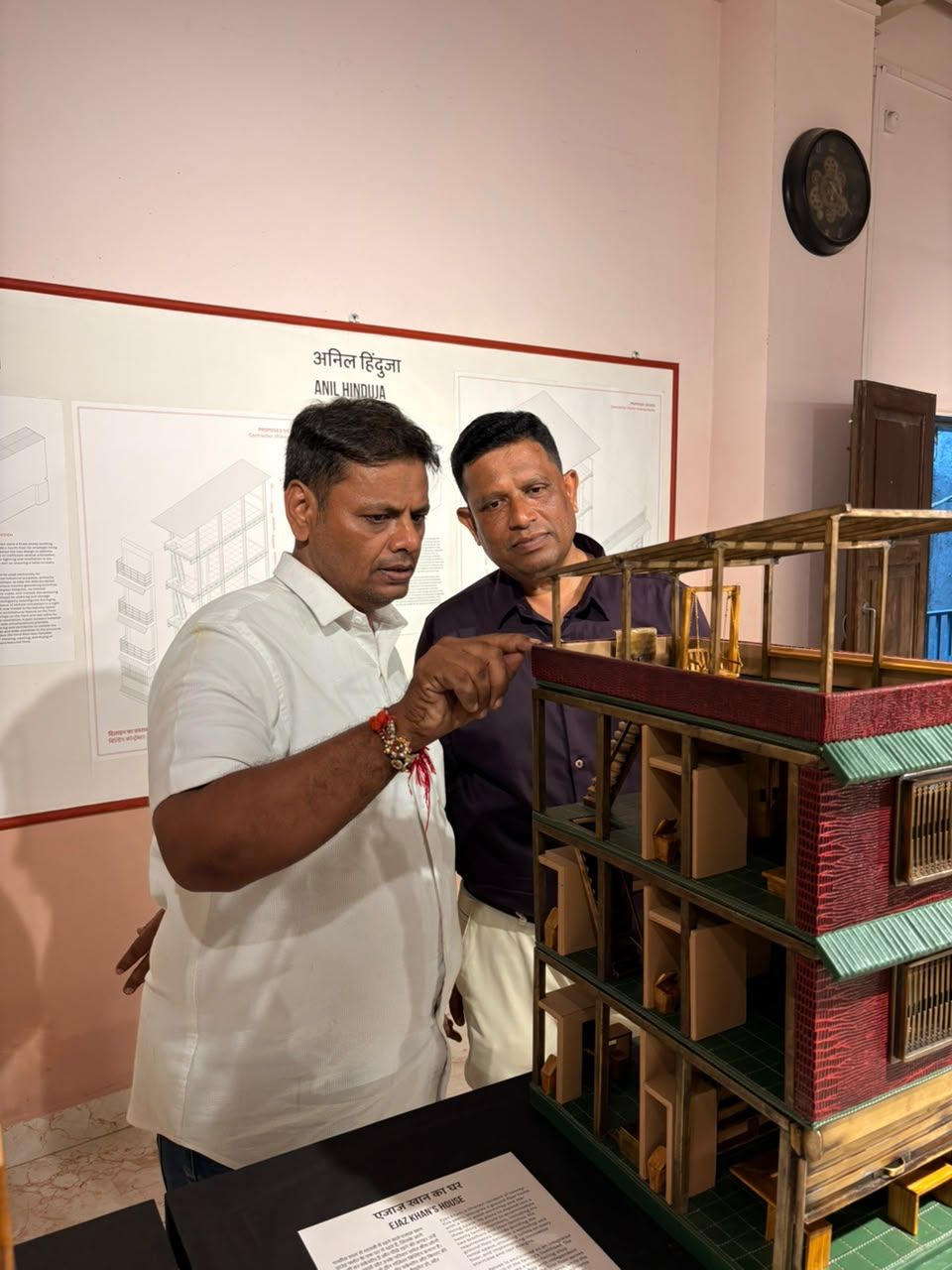
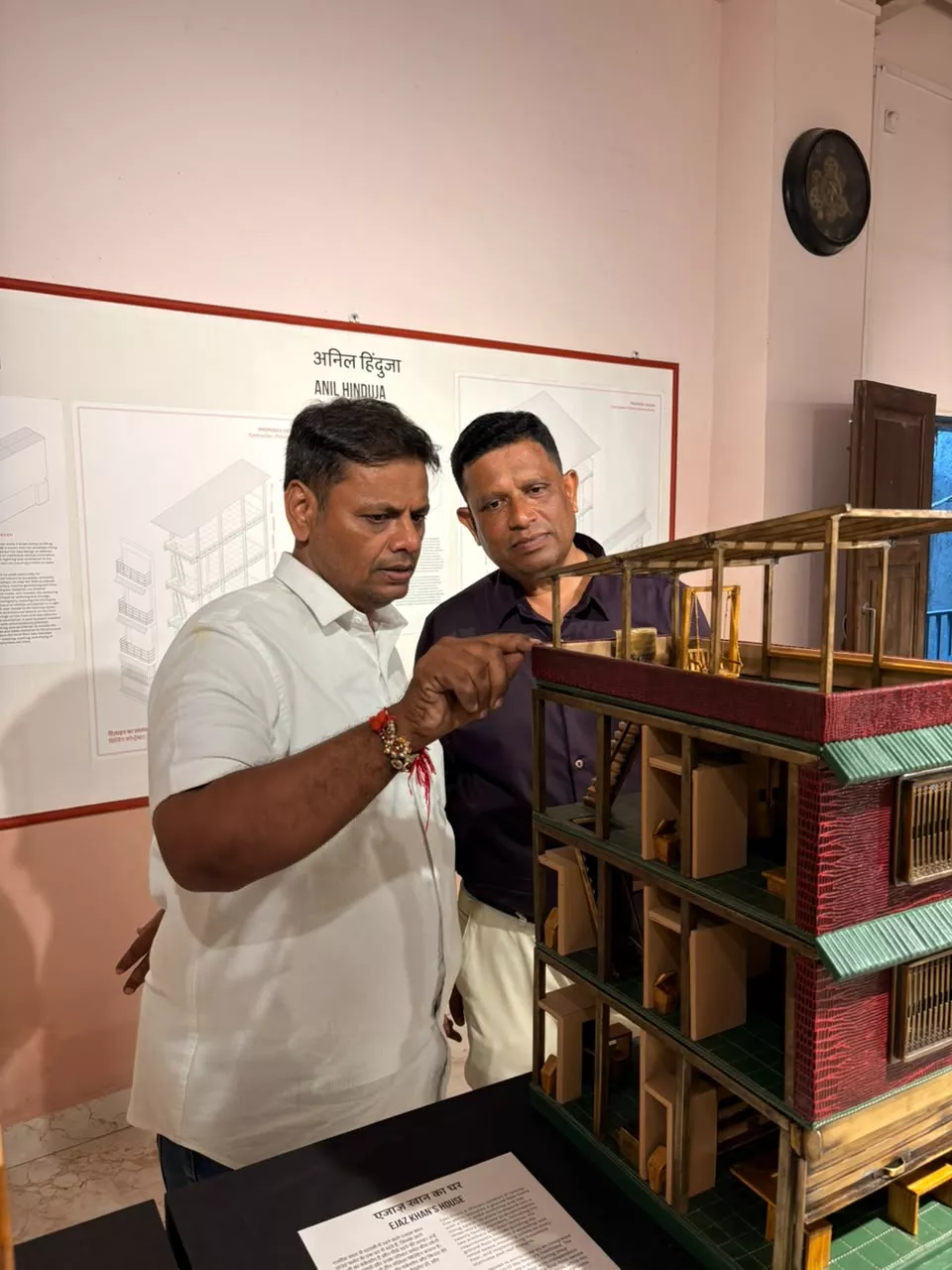
Androse Naidu, contractor and pastor, designed his house in 2019. Looking proudly at the scaled model, he pointed out its features and explained that, over decades of building, he has developed templates of popular designs that he returns to often. It is a practice with a long history: the Renaissance architect Andrea Palladio's Four Books of Architecture spread adaptable templates drawn from classical buildings that shaped architecture across the world. Looking at all the other models and the diverse use of materials, Naidu said that with seven more years of experience behind him, he would design it differently today.
Main ek aur ghar design karna chahta hoon. Mujhe ek aur mauka do, ab main isse bhi behtar ghar design karunga!
I want to design one more house. Give me another shot, I'll design an even better house now
Kishore Rokde, a brass artisan who crafts vintage-inspired brass clocks and other decorative pieces, was elated to see his work displayed with his name credited as the artist, after years of working behind the scenes. He enjoyed seeing how the different materials came together and admired the skill of his fellow artisans.
Mohammad Zubair Ansari, who makes miniature wooden toys and furniture for high-end brands, said he had never before seen his work presented as art.
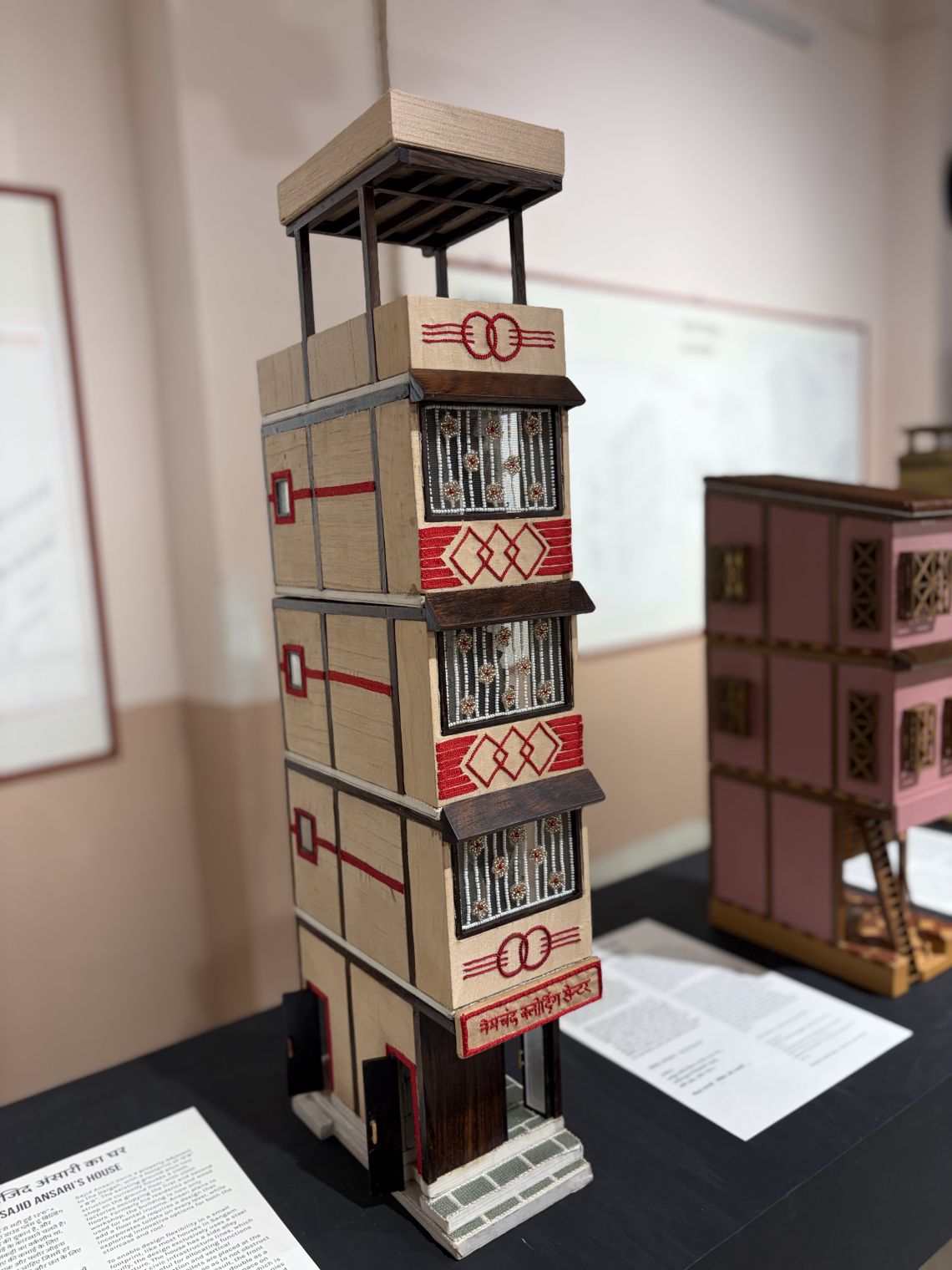
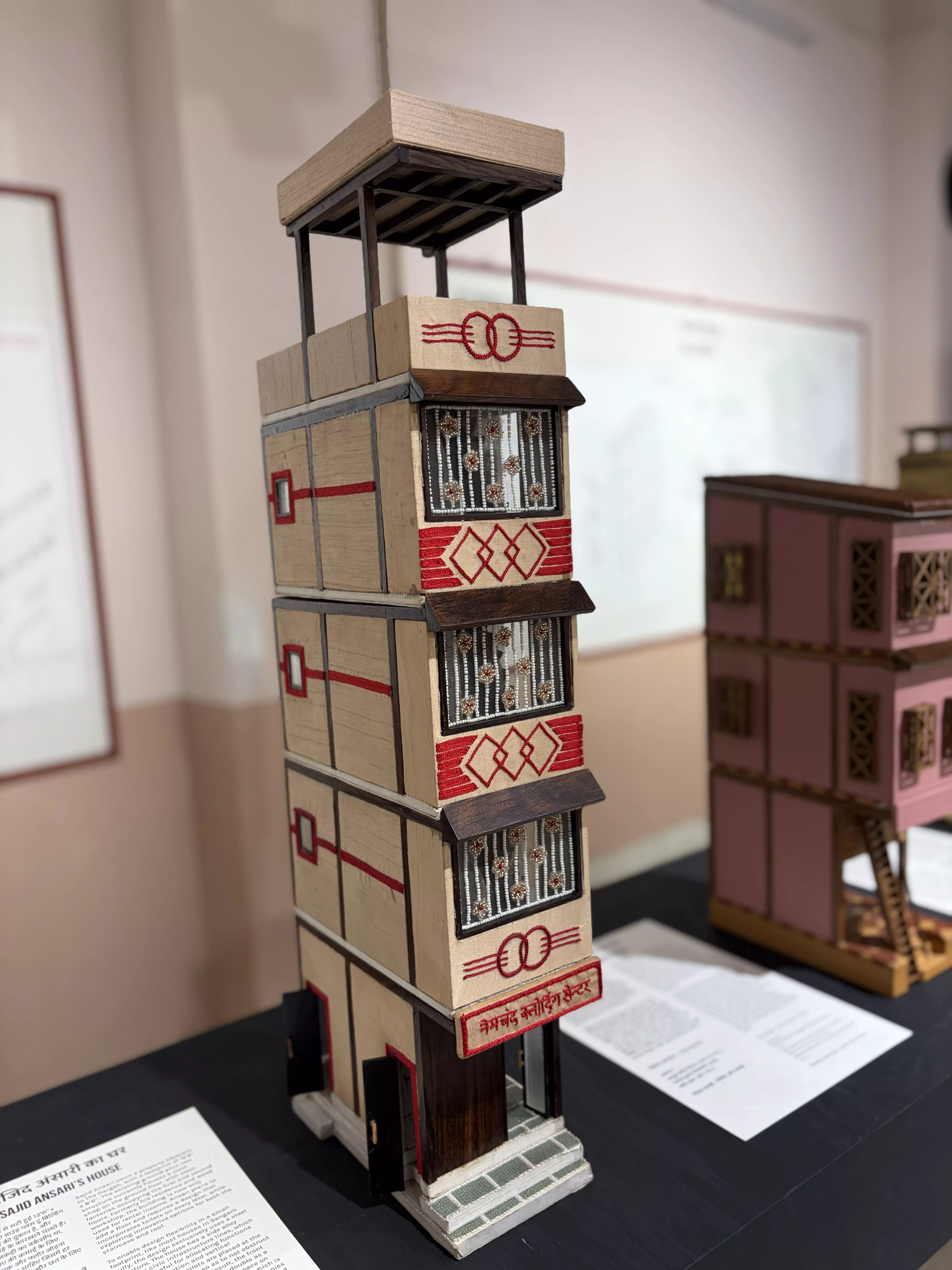
Shaikh Mohammad Sher Ali, whose family has embroidered garments and textiles for generations, stitched the grills, kota floors, and wall and facade motifs for one of the most photographed models, which also featured in the Times of India's coverage of the exhibition.
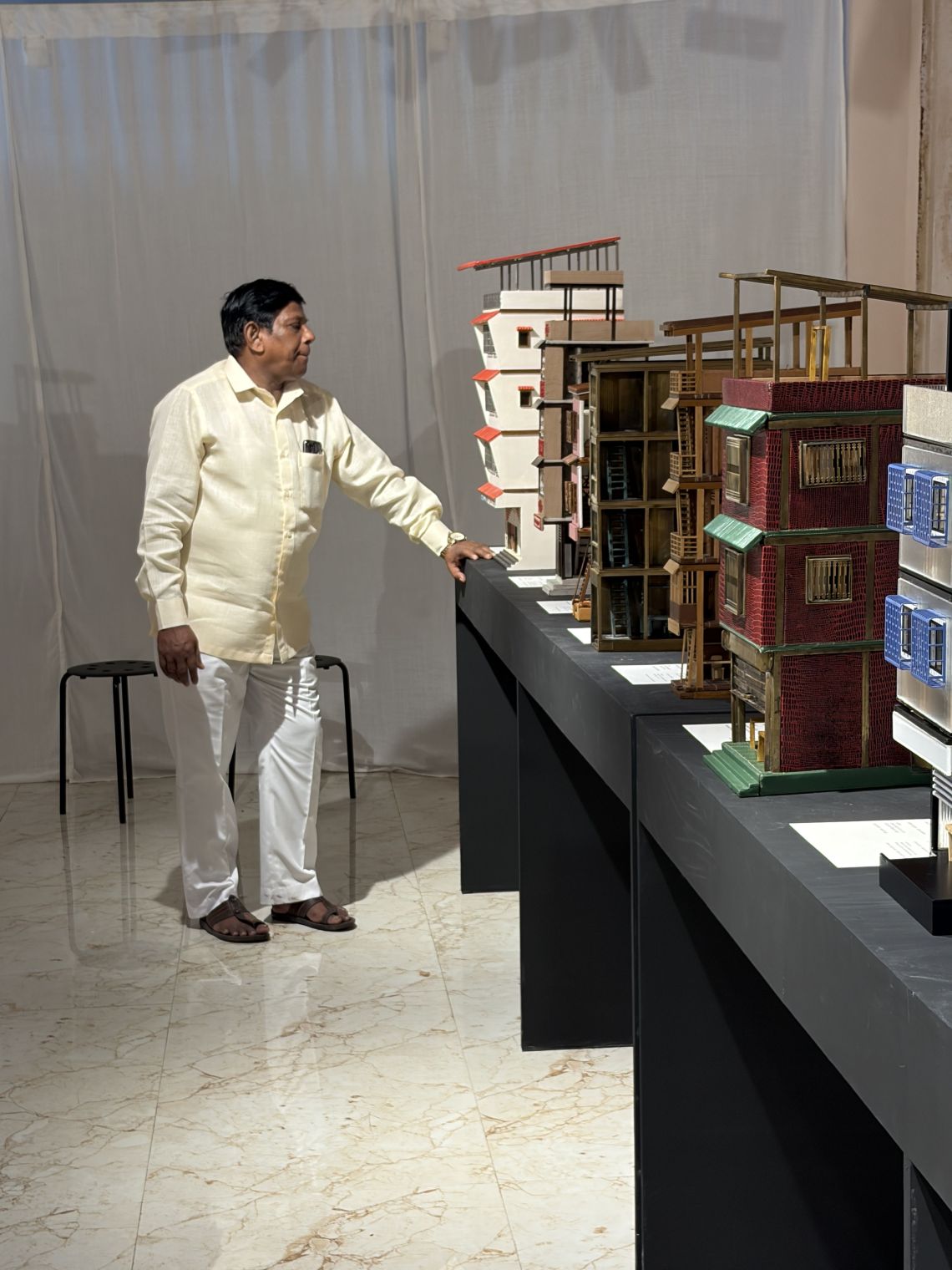
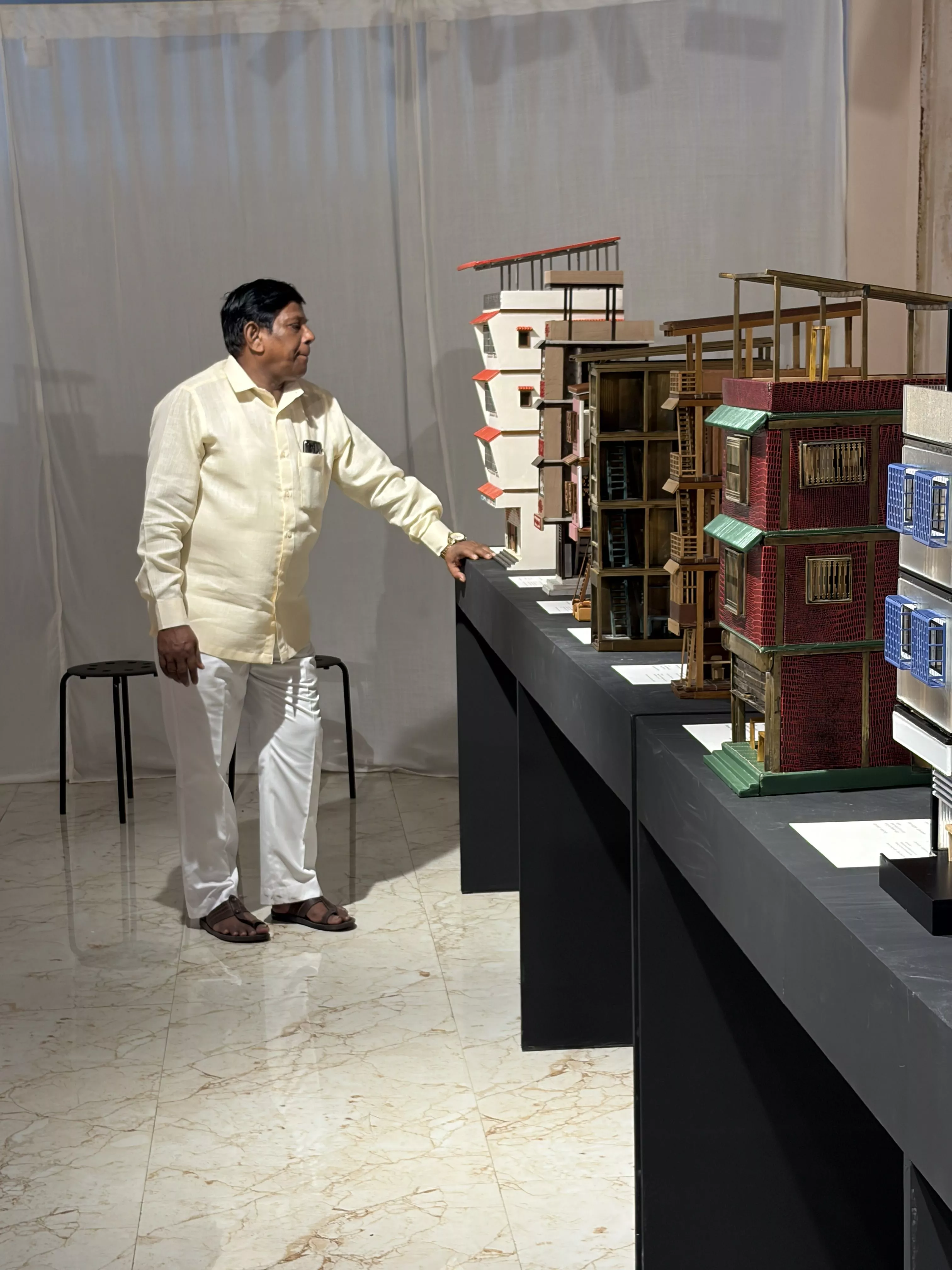
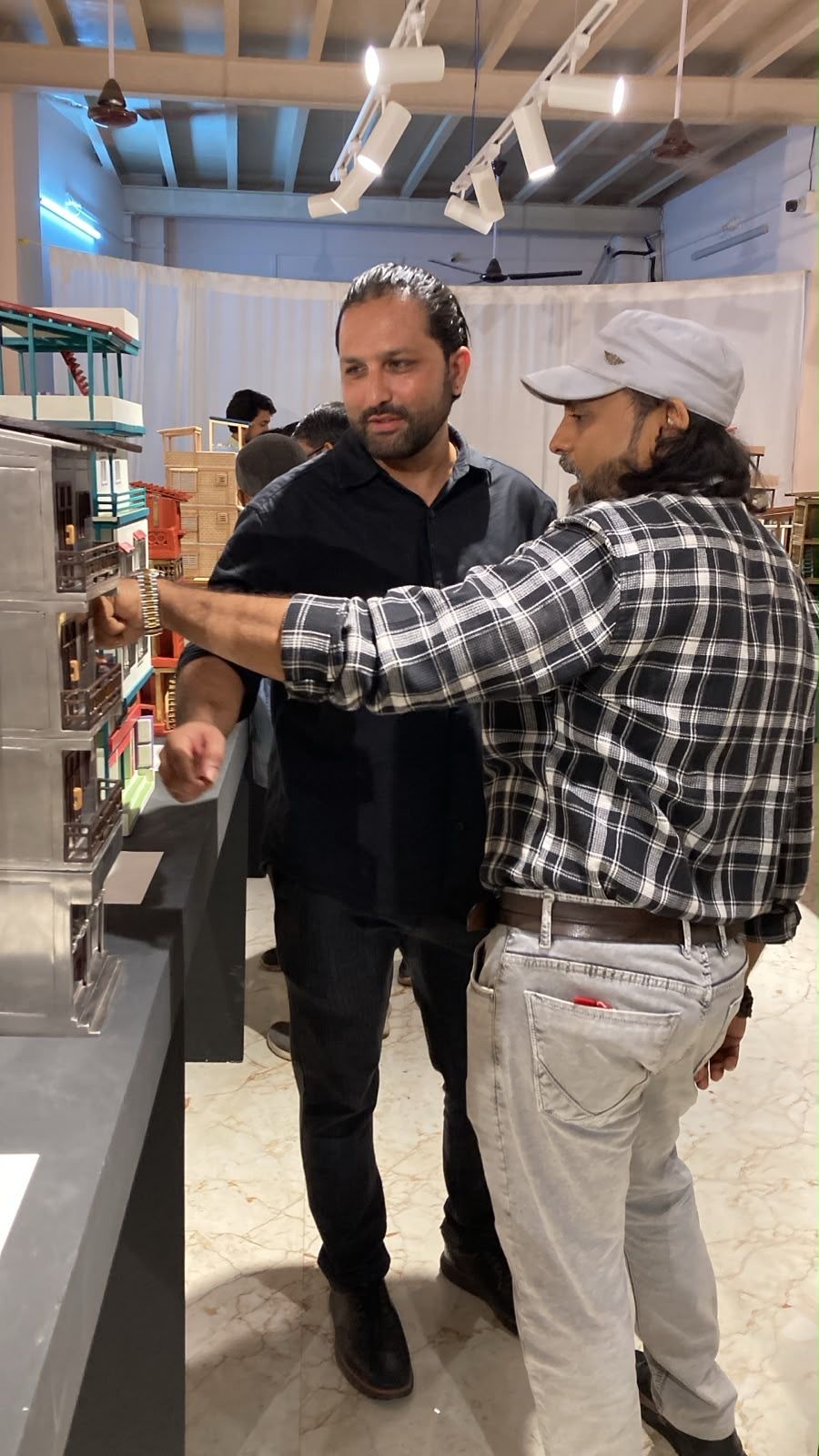
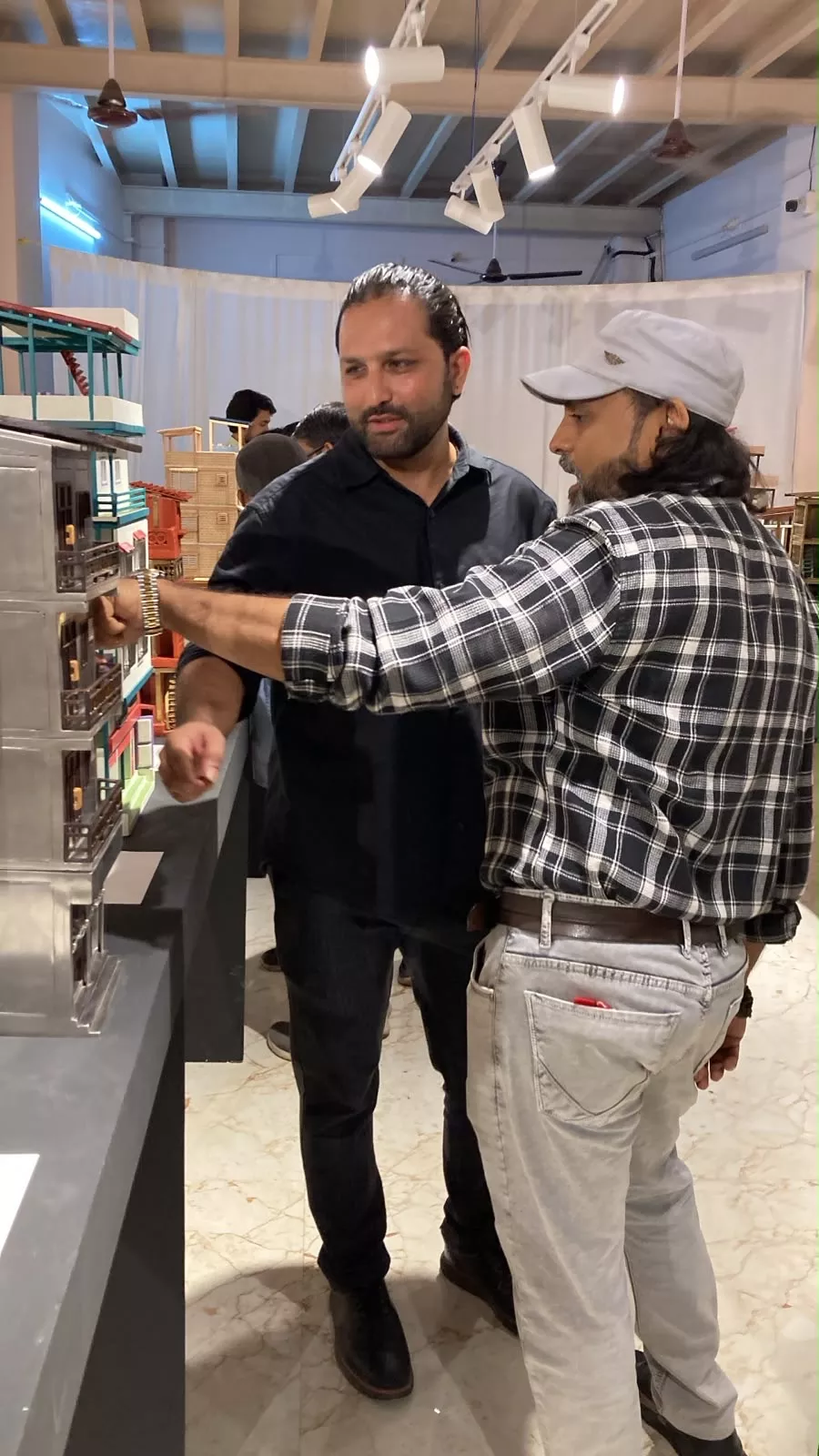
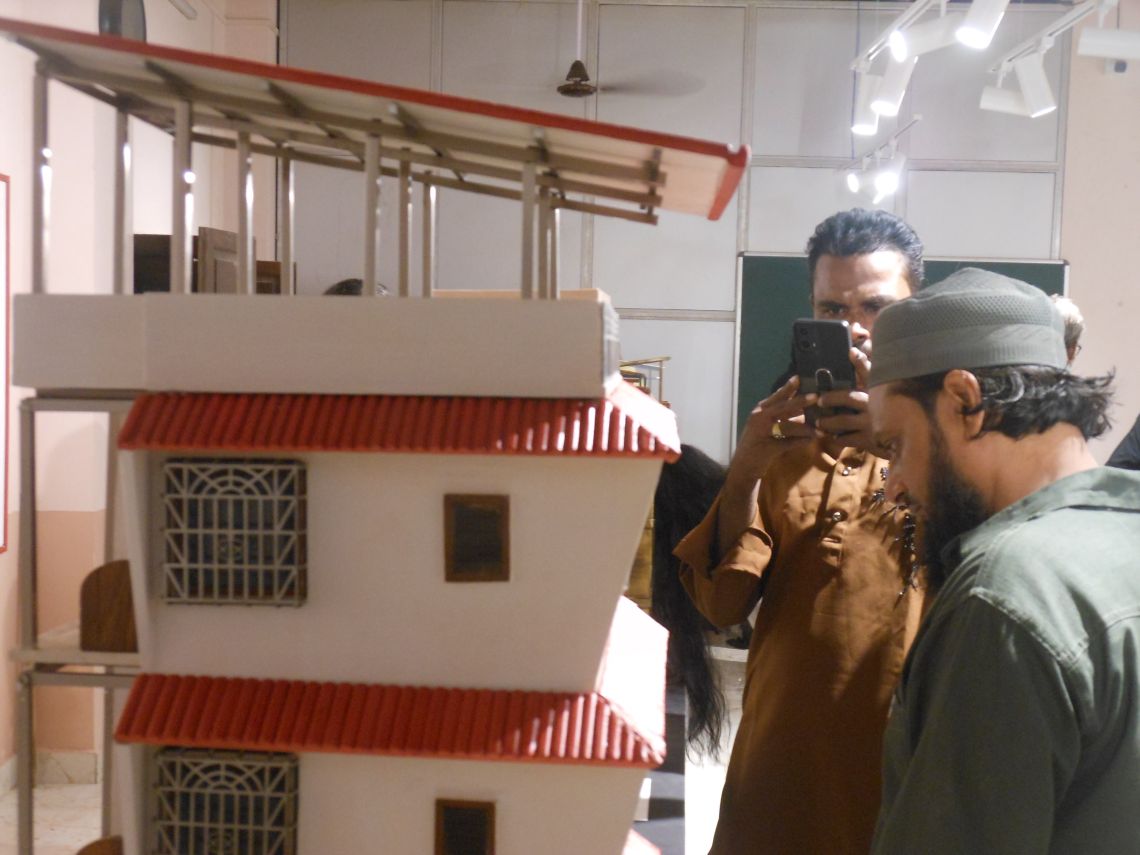
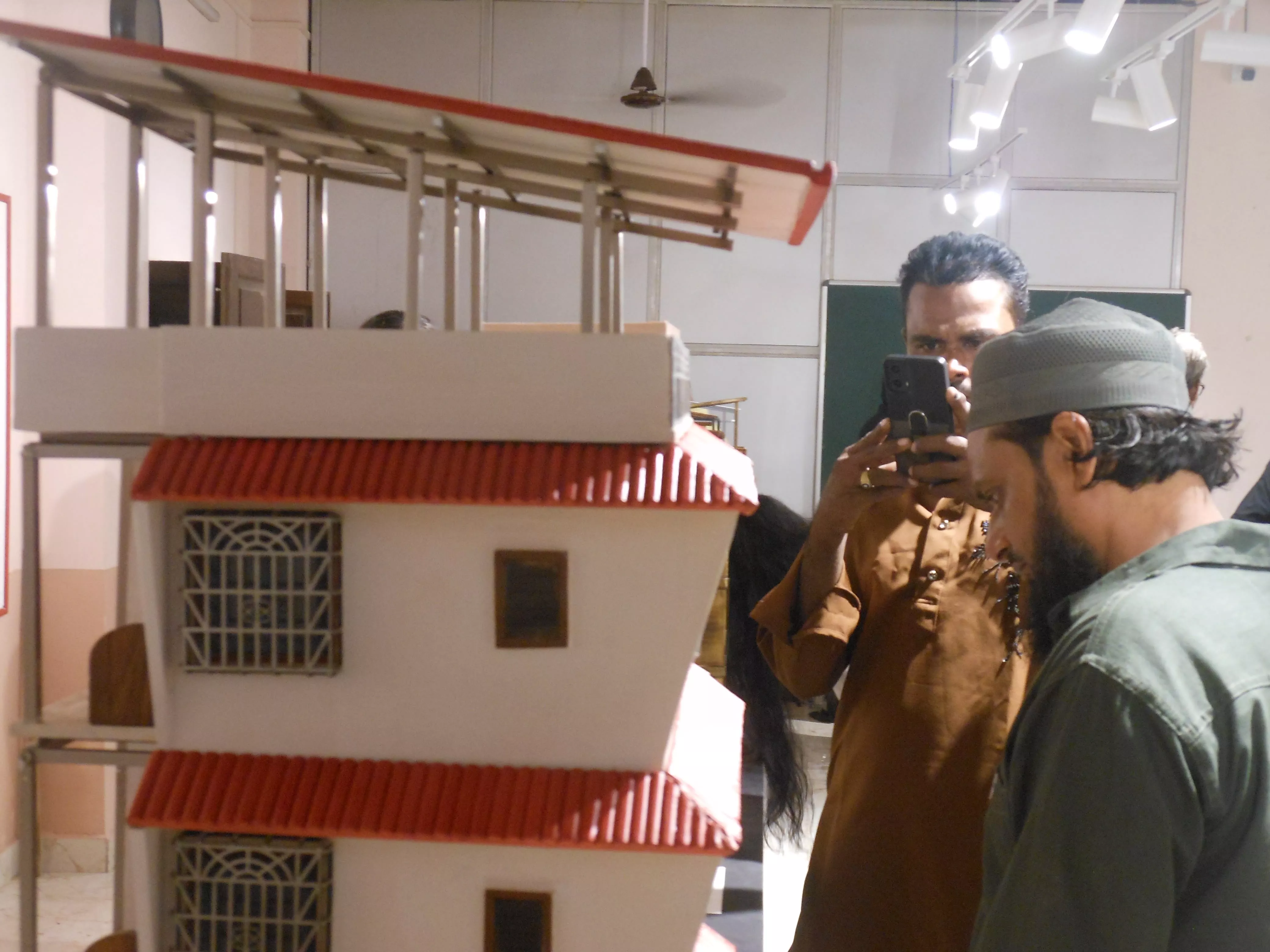
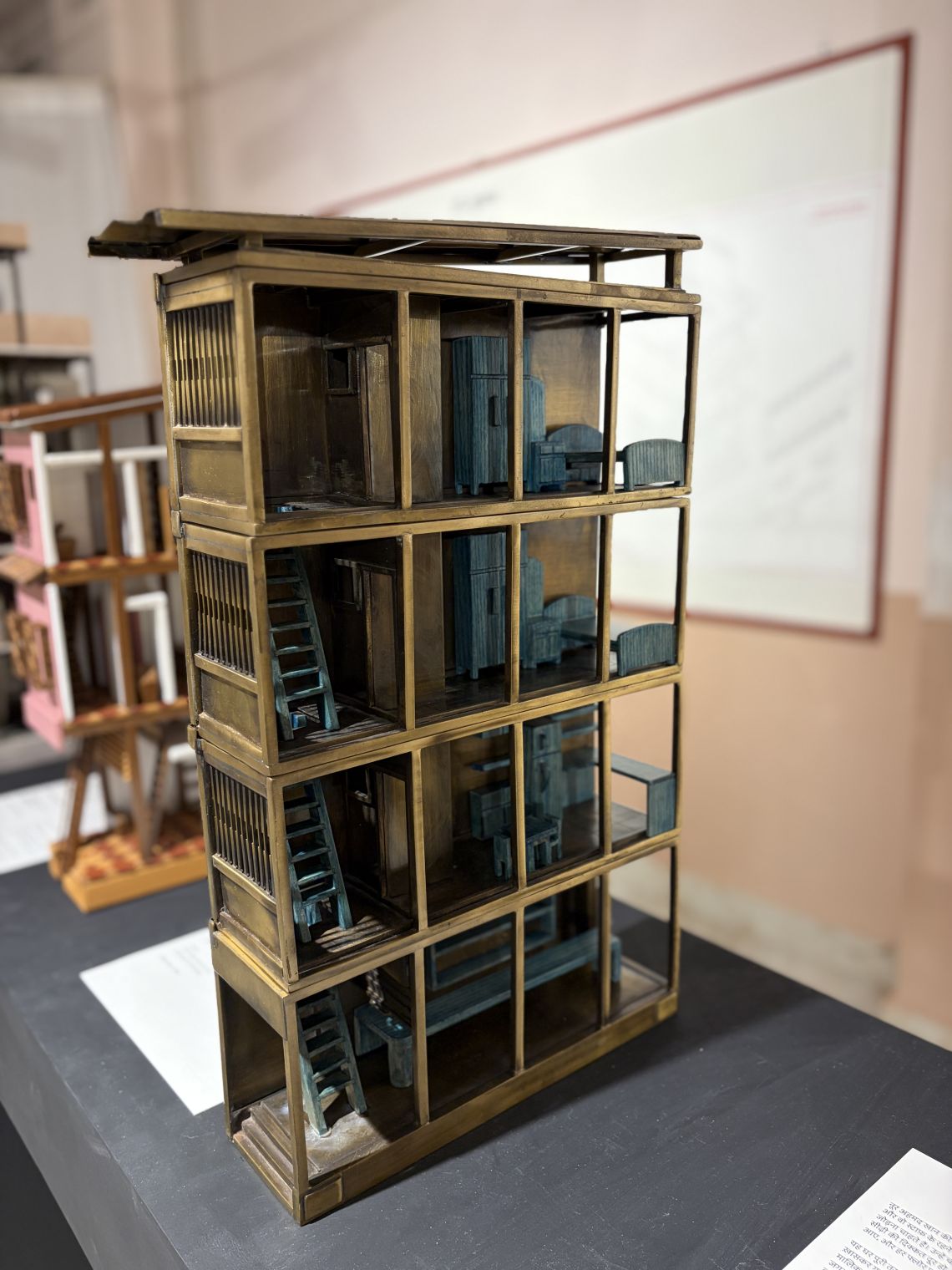
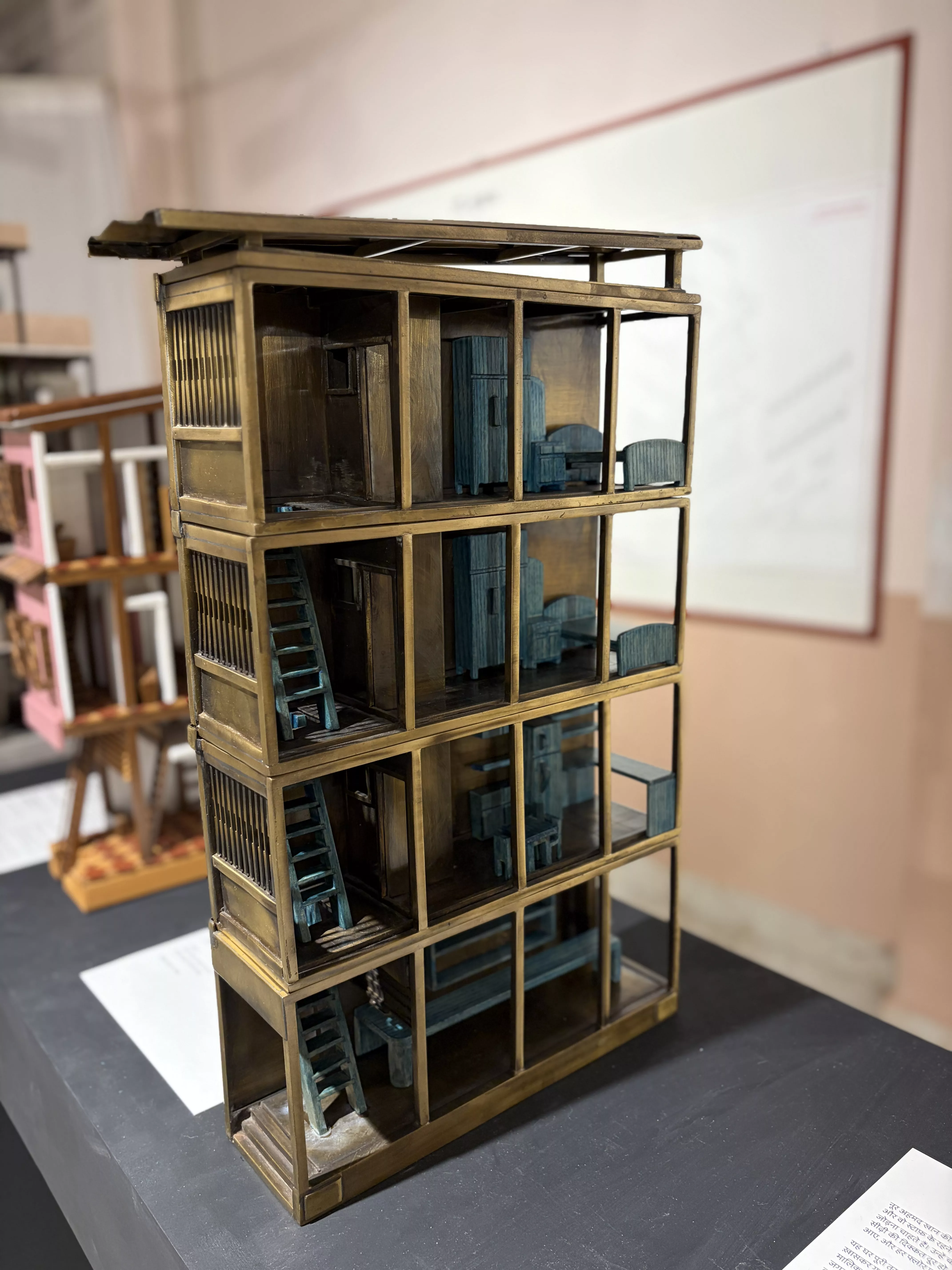
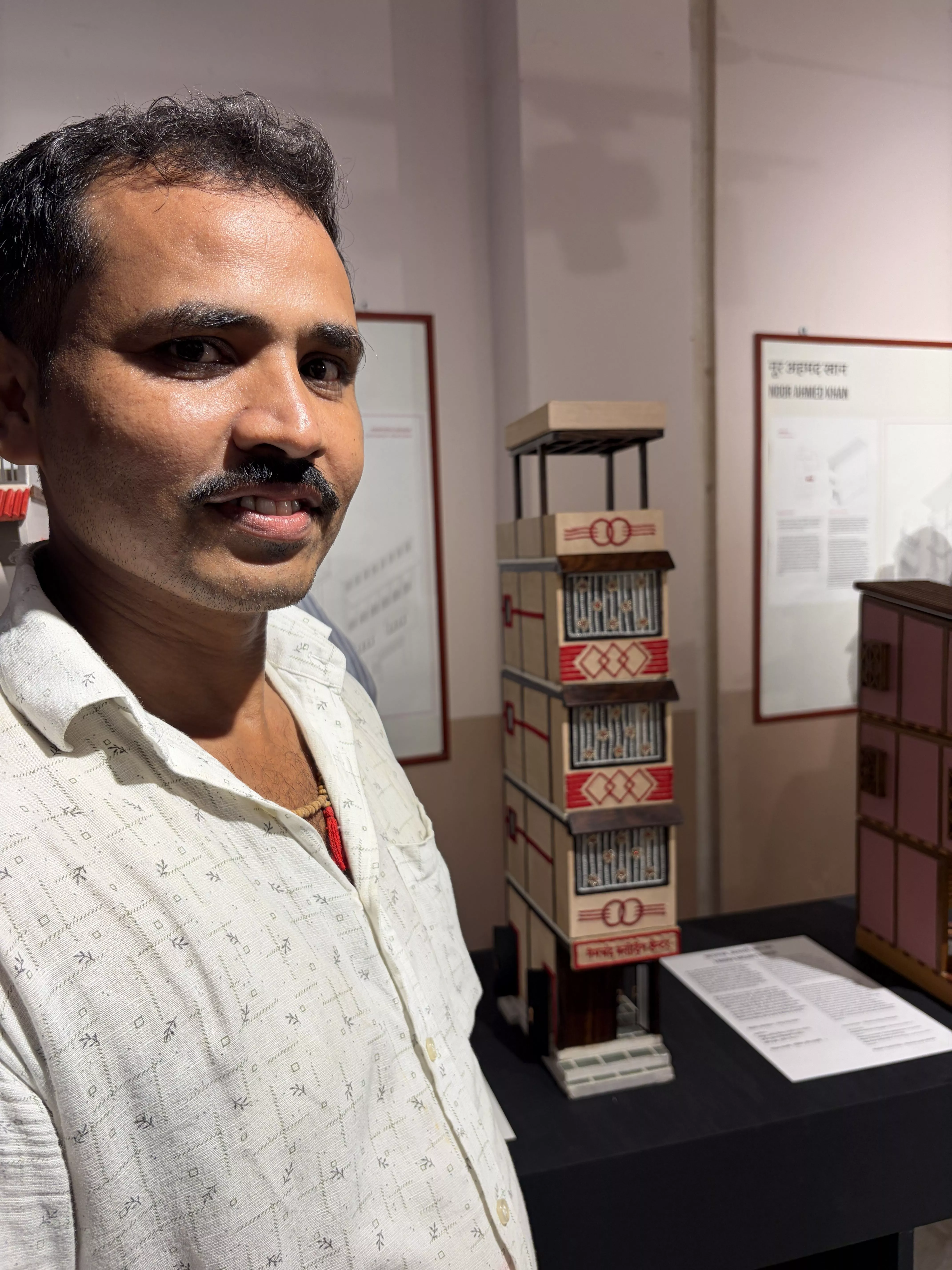
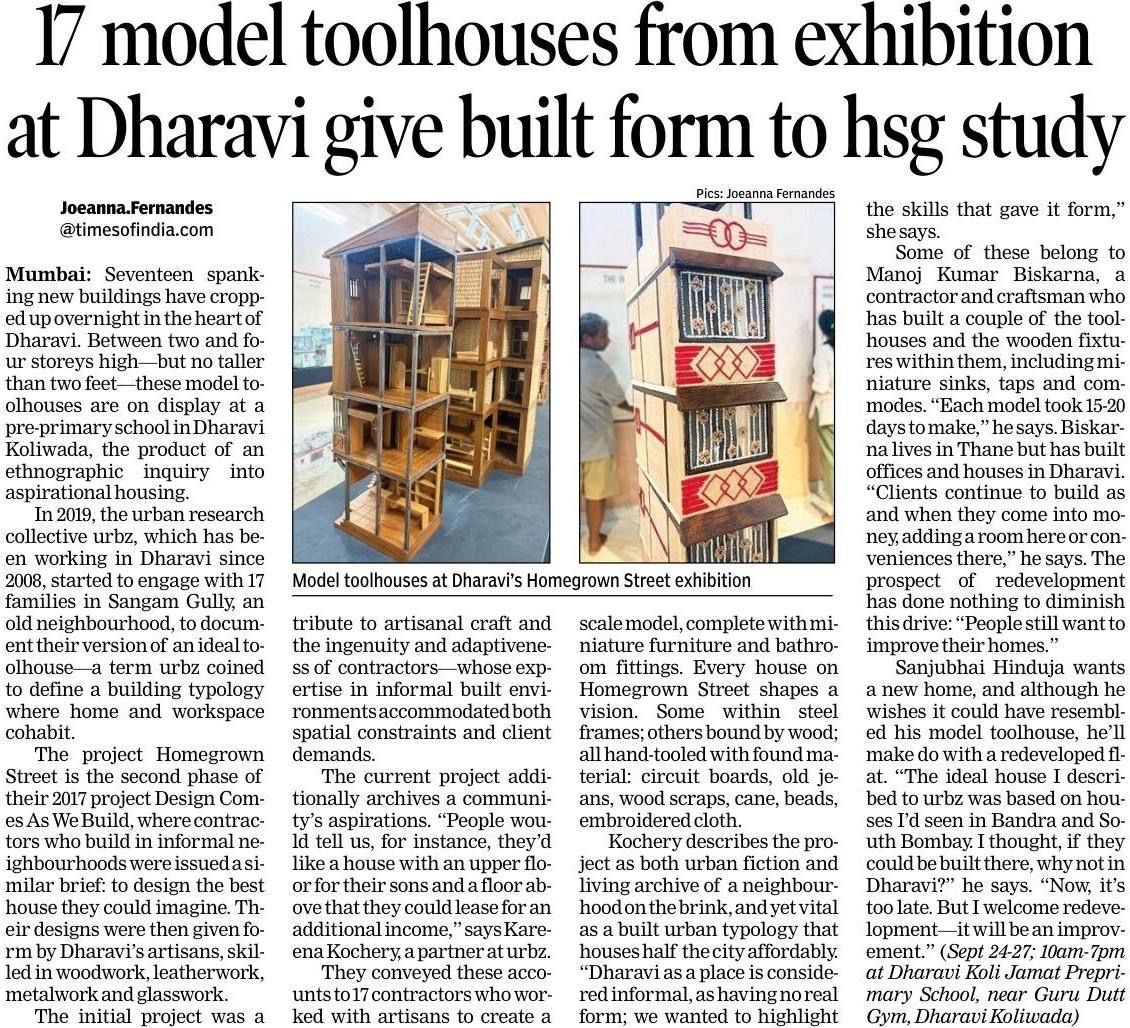
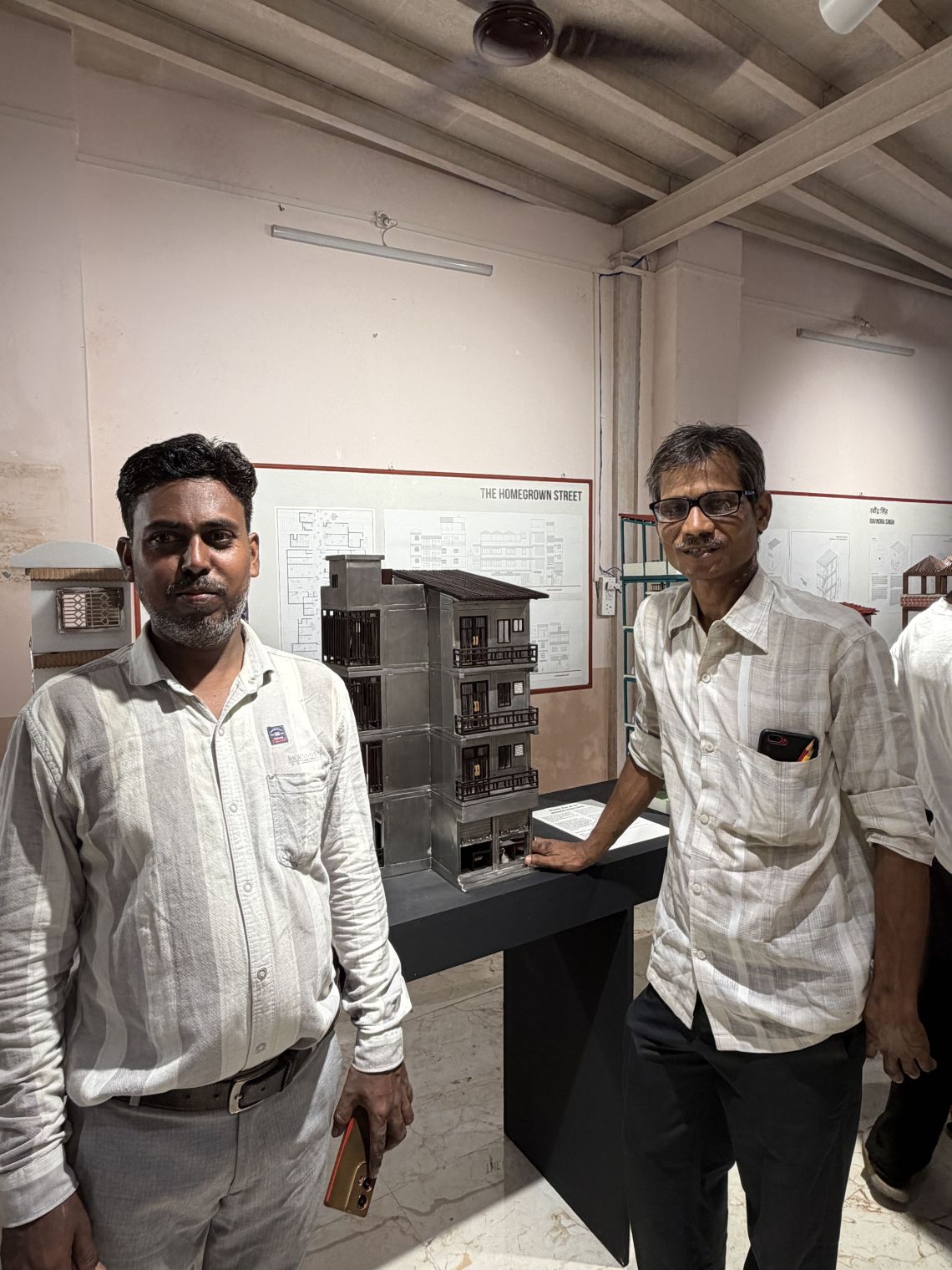
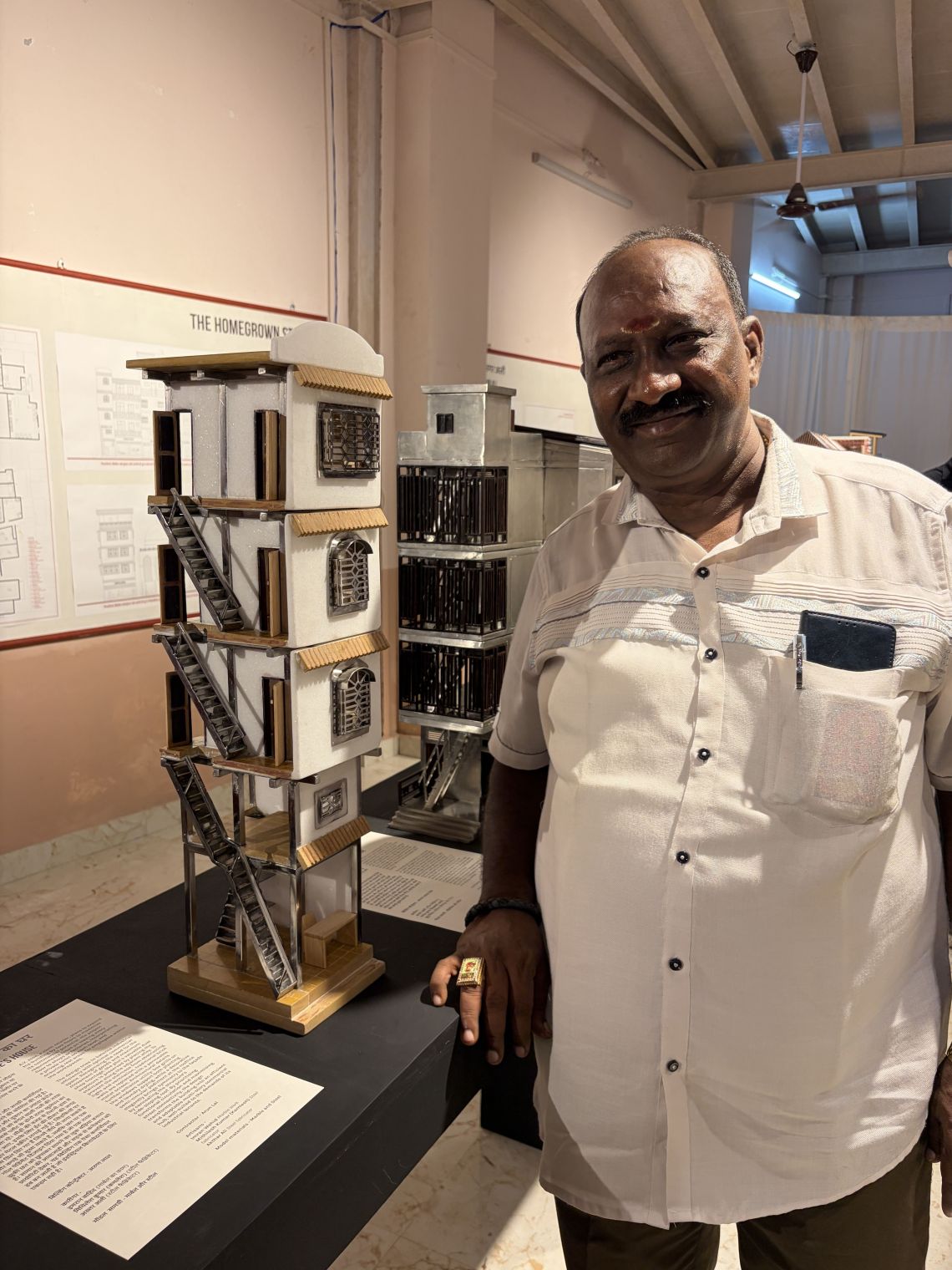
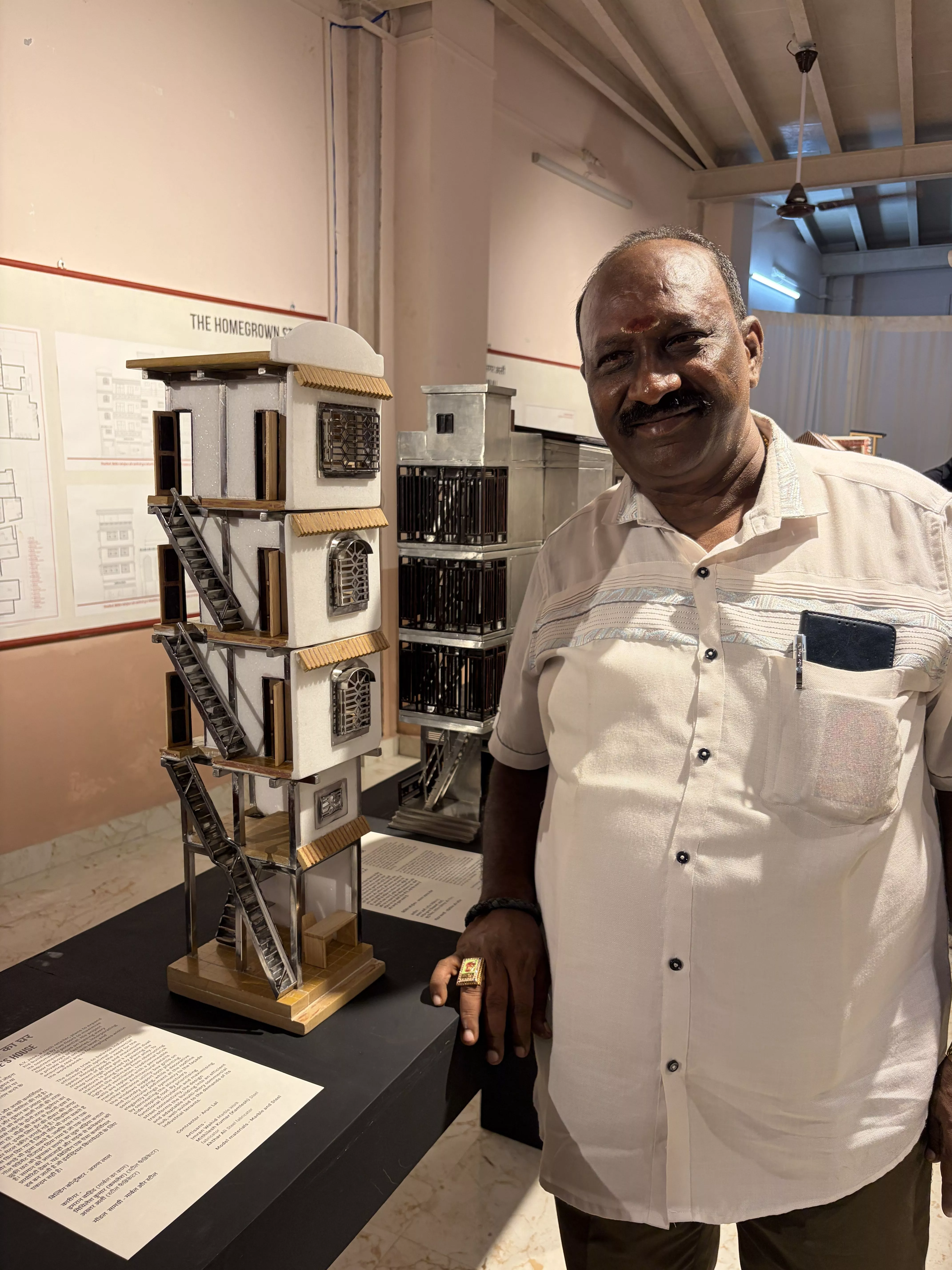
Arun Lal, a contractor who has built several structures in Dharavi, was struck by how stone artisan Imran Nadar and steel artisan Akhtar Ali brought his design to life. The marble walls, sandstone floors and stainless steel structure suited it perfectly, he said, and the model turned out even more beautiful than he had imagined.
Akhtar Ali, a master welder, took on the challenge of fabricating an intricate steel staircase for Arun Lal's model, work far from his usual large-scale fabrication that demanded time and care.
Main aam taur par bahut bade scale pe kaam karta hoon, buildings ke liye grill, fence aur structural members weld karta hoon. Itne chhote scale pe kaam karna bada challenge tha, itne chhote ghar ke liye grill aur seedhiyan weld karte waqt mujhe bahut dhyan rakhna pada ki meri ungliyan na jal jaayein!
I usually work on a much larger scale, welding grills, fences, structural members for buildings. Working at this scale was a big challenge, I had to be super careful not to burn my fingers while welding grills and stairs for such a tiny house!
He also worked on the steel-and-wood model, and was excitedly photographing his pieces, clearly moved by the recognition and appreciation his work was getting.
Kundan bhai, a leather craftsman and entrepreneur from Dharavi, said it was the first time he had seen an exhibition in Dharavi that celebrated its housing and the skills of its people.
We hope it will soon be commonplace to say that homegrown neighbourhoods have a strong construction economy from which the rest of the city can learn.
This project is being presented publicly for the first time before travelling to Goa for the Serendipity Arts Festival in December, followed by exhibitions in Paris and London in 2027.
We would be delighted if you dropped by!
Open daily until Sunday, 27th September, 10:00 am to 7:00 pm
Once you get here, posters will guide you to the venue!
We are grateful to the Dharavi Koli Jamat for allowing us to use their premises for the exhibition.

After the earthquake that shook El Choco region and Cali, local associations are mobilising to provide basic necessities and build shelters.
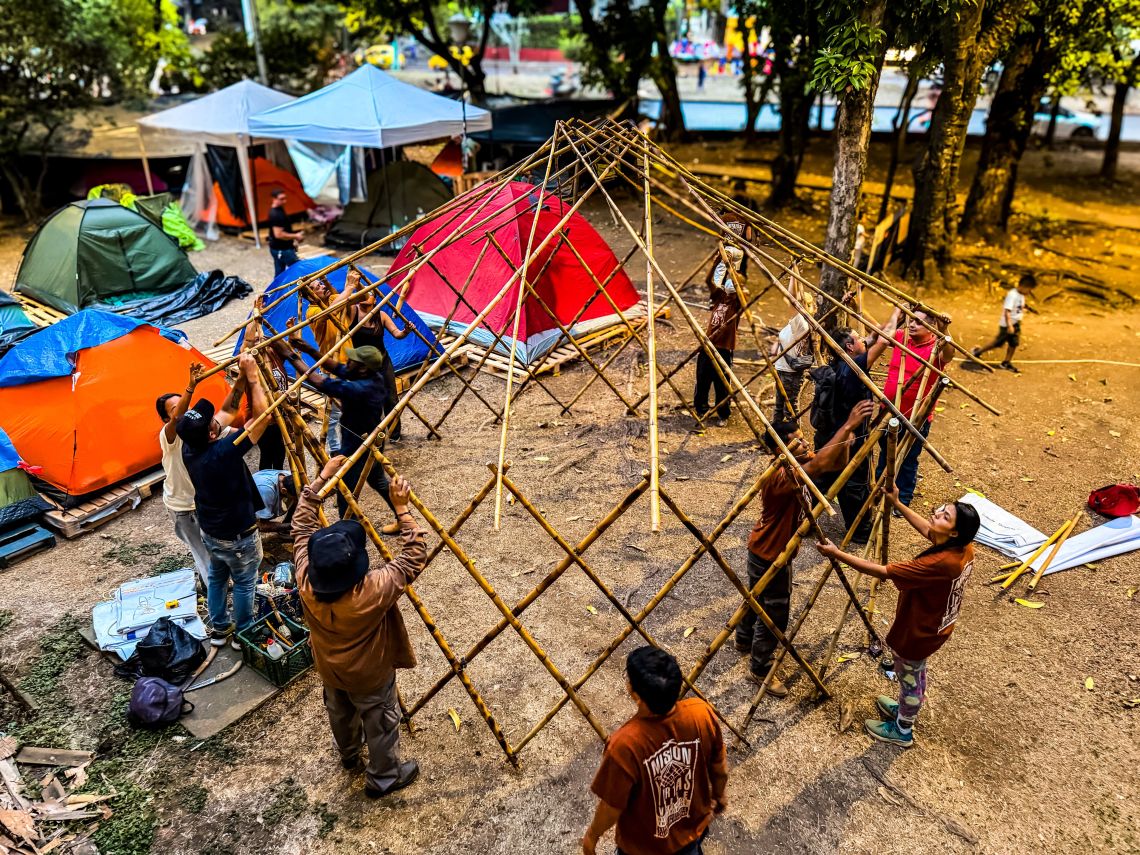
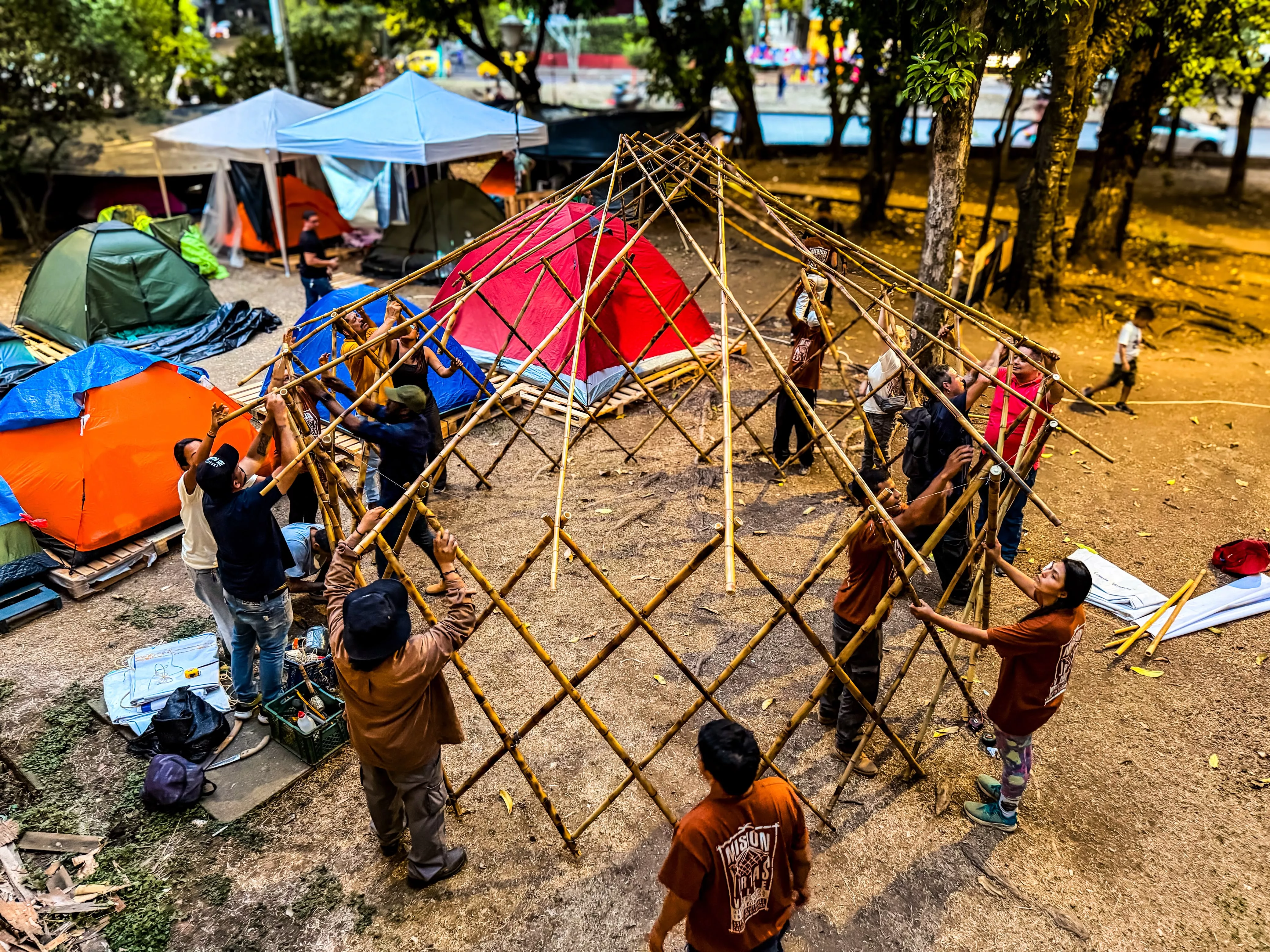
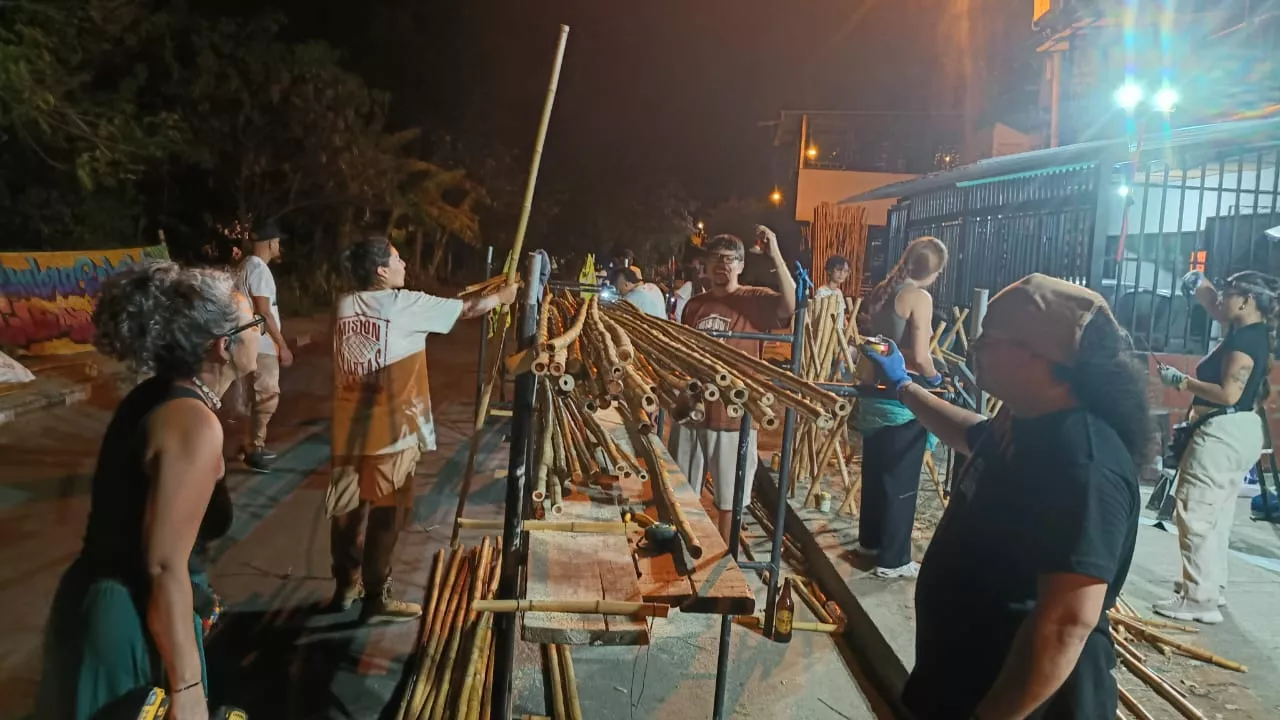
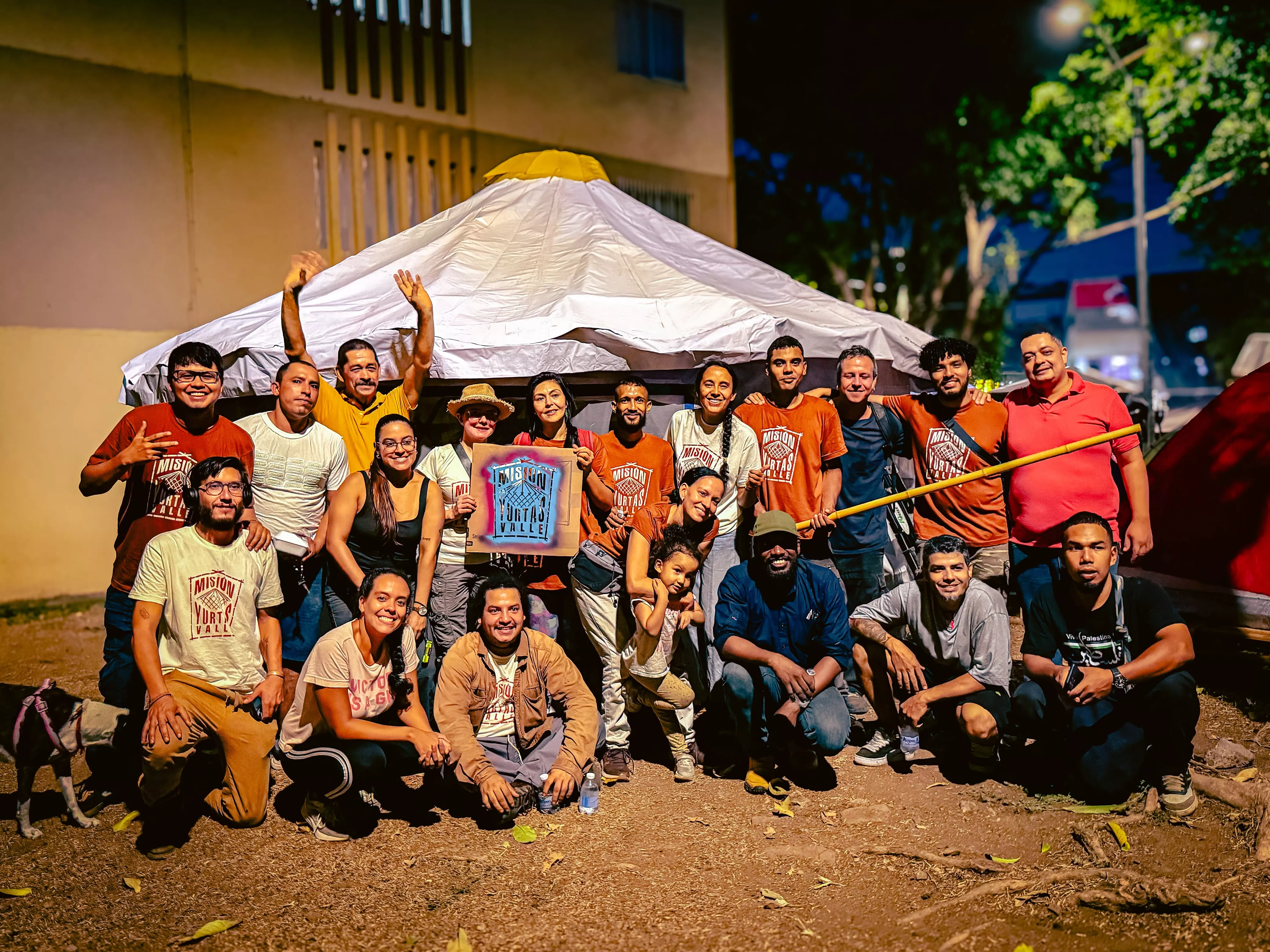
Our friends of Casagrafo, Taller77 and Casa Cultural el Chontaduro are implementing community- and nature-based solutions to the urban havoc caused by the earthquake that shook the El Choco region on August 10th.
Hundreds died and over 10,000 homes were destroyed. Now it’s time to rebuild.
In Cali, and particularly in the district of Aguablanca, people have learned to sort themselves out without much help from public institutions. From political resistance to grassroots mobilisation to homegrown construction, people are fighting back—and they need to know that humanity stands with them.
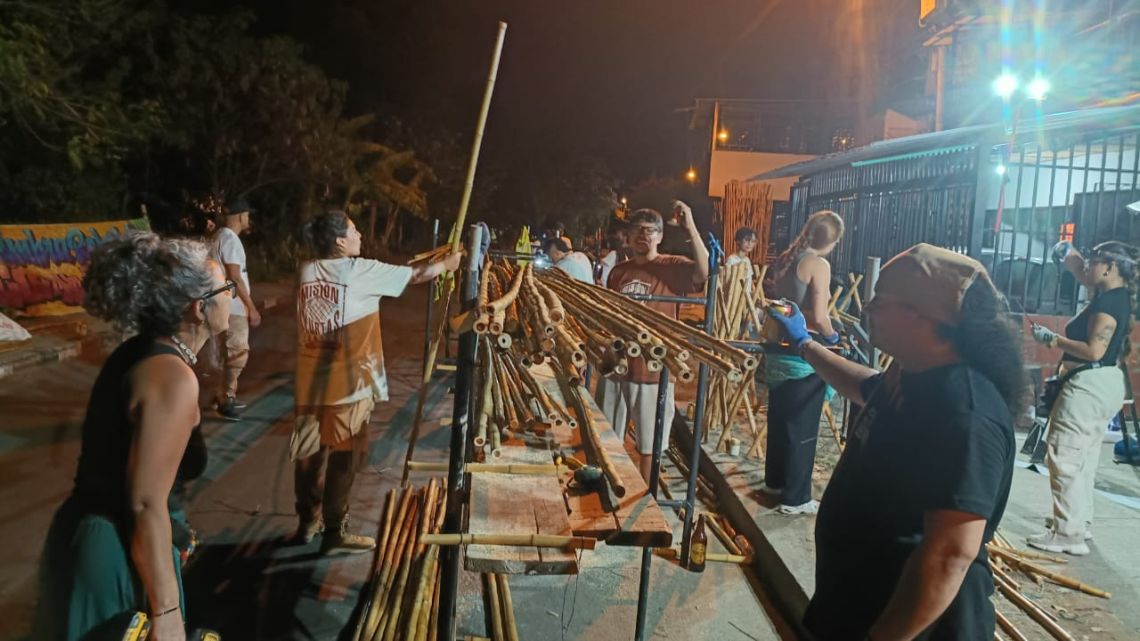
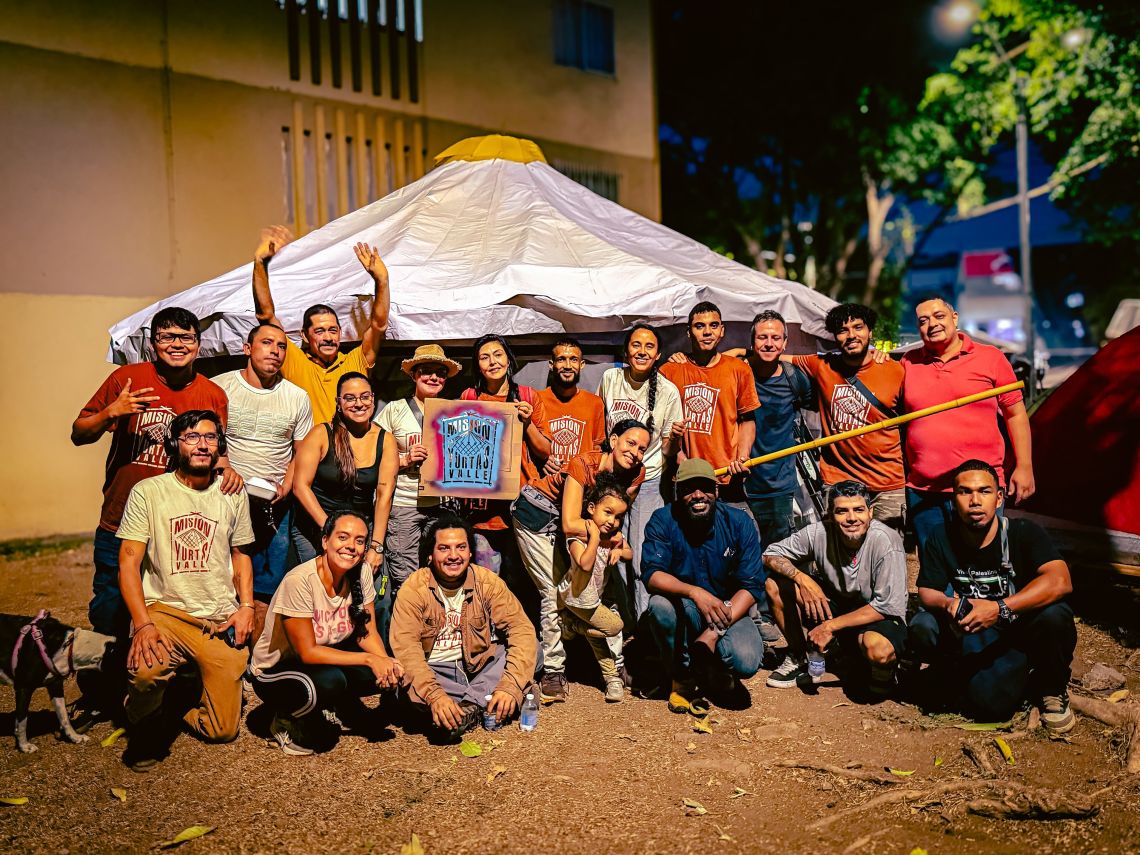
Andres, who runs the urbz Bogota office, didn’t think twice: he took a flight and spent time building shelters with Miguel of Casagrafo and others. Miguel is a master at building yurts and other structures with guadua, a super bamboo found in Colombia, Venezuela and Ecuador.
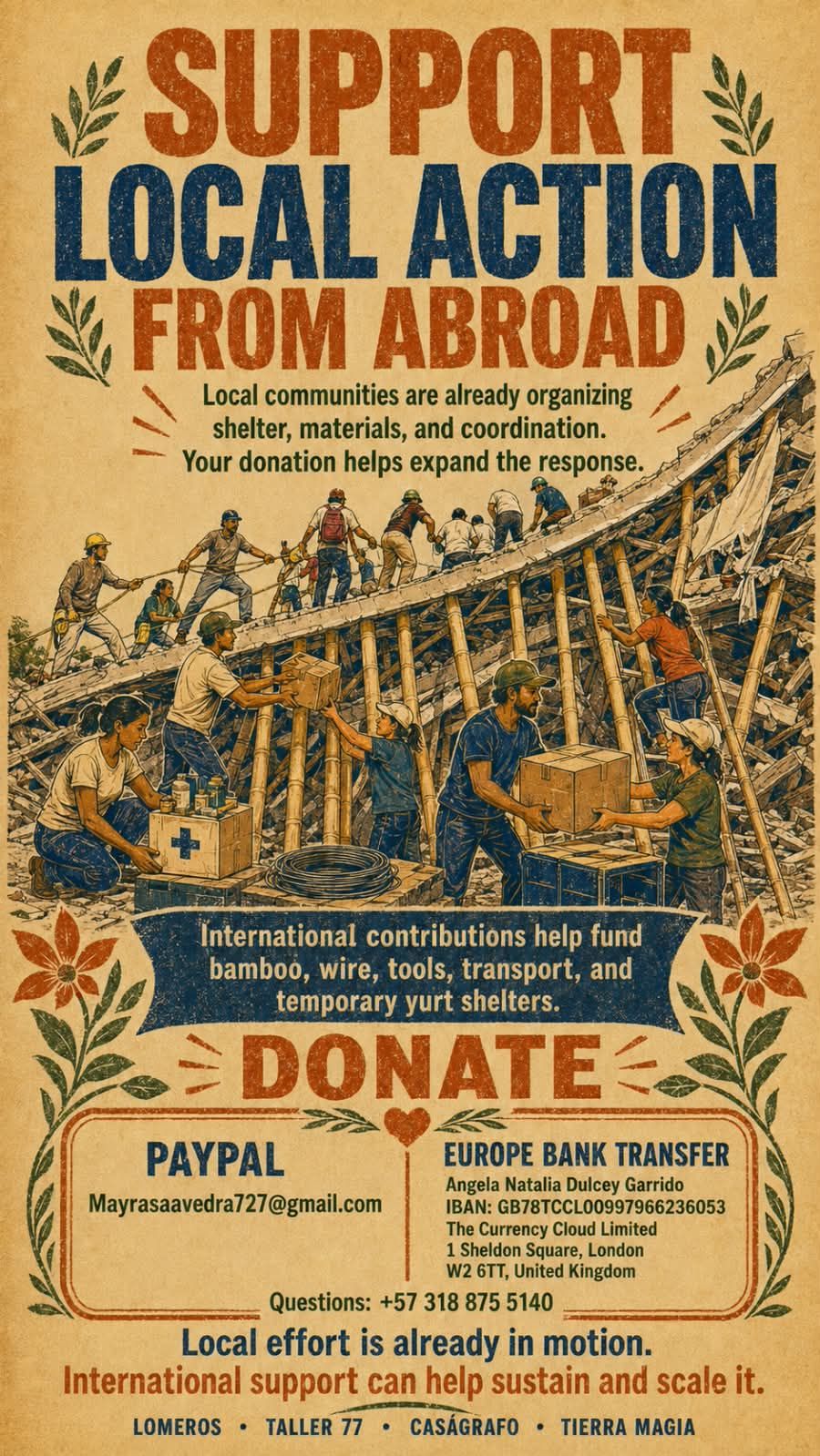
You can show your solidarity by contributing to these grassroots, local and transparent organisations. We know them personally and we can vouch that your support will be put to good use.
Casagrafo
PAYPAL: Mayrasaavedra727@gmail.com
EUROPE BANK TRANSFER:
Account Name: Angela Natalia Dulcey Garrido
IBAN: GB78TCCL00997966236053
Bank/Service: The Currency Cloud Limited
Address: 1 Sheldon Square, London, W2 6TT, United Kingdom
Casa Cultural el Chontaduro
Banco Caja Social
Savings account number 24127940744
SWIFT Code: CASOCOBBXXX
Account Holder: LINA MERCEDES LUGO MATURANA
Account Holder ID: 1144153963 (Cali-Colombia)
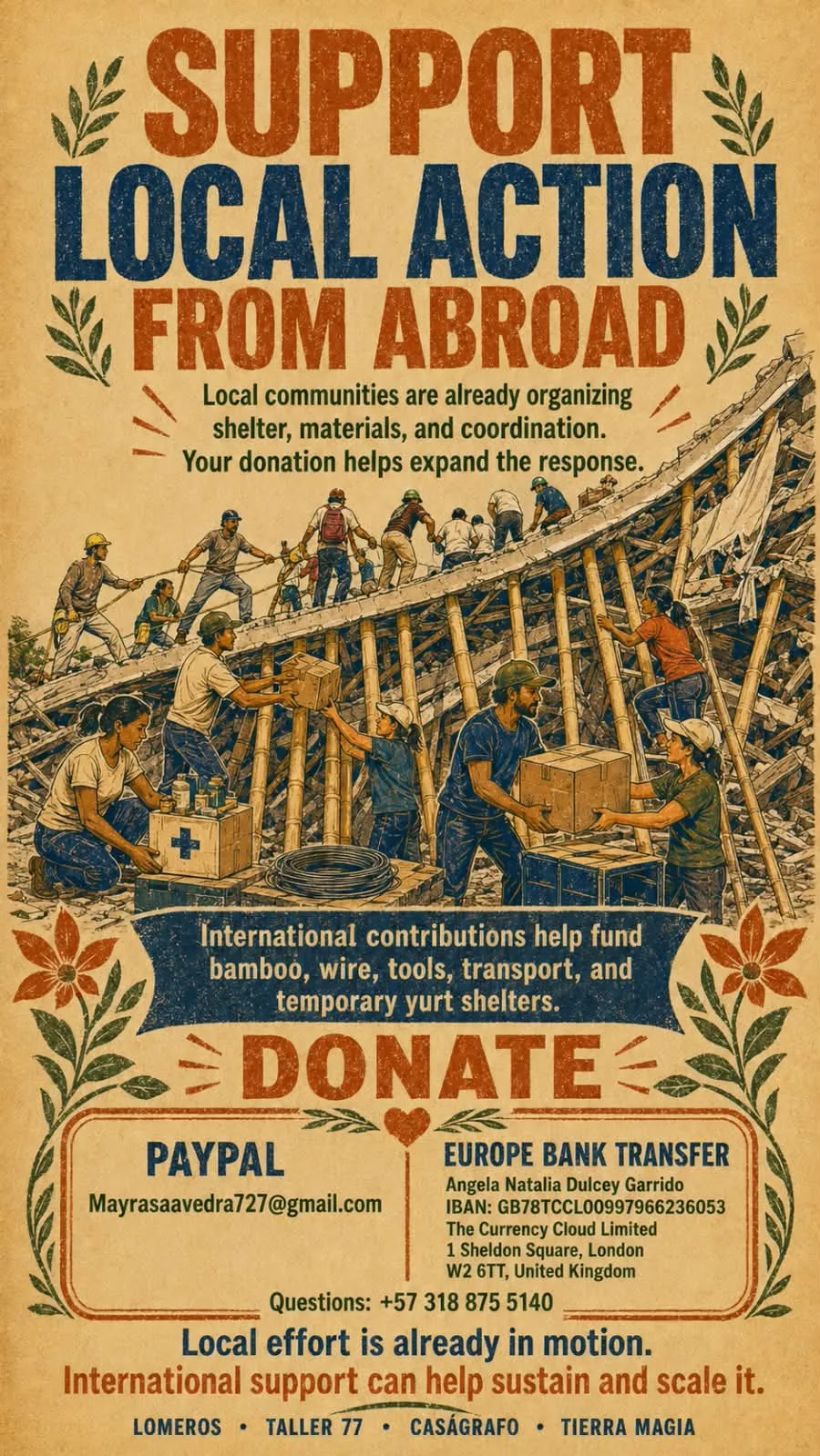

Tucked away in Sangam Gully, is Trissha's tattoo studio. She is a friendly woman, with a warm demeanour and a knack for challenging herself. Step into her studio to get a glimpse into the everyday life of an artist and the unspoken reliability of community.
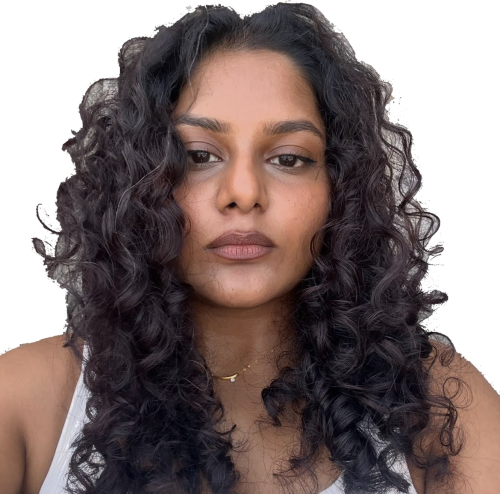
On Sangam Gully in Dharavi, past a saree shop and a vegetable market, a red storefront reads ‘Gully Girls Tattoo Studio’ in hand painted letters. As soon as I step into the studio, the sounds of the city become muffled. The walls are covered with original artwork, trinkets, tattooing equipment and flash art templates. Trissha sits inside, giving me a warm, friendly smile as I enter.
Trissha Vikneshwar is the eldest child in her family and like most eldest children in India, she grew up carrying a certain weight- the instinct to work hard and support her family. Before tattooing, she trained briefly to be a flight attendant before moving into the hospitality sector. She always had a knack for drawing while growing up. Having never been trained formally in art, she honed her skills by watching youtube tutorials in the way an entire generation of self made artists have learned to do. It was during covid, in that strange suspended time that many people used to reckon with what they actually wanted to do with their time (and life), Trissha decided to turn her art into something more. She says that she wasn’t always drawn to tattooing; things changed when she herself considered getting one for her mother’s birthday. That’s when it clicked that this was the right path for her. Once she stepped into the tattooing world, she noticed that there weren’t many women doing this in India. That absence in itself became a reason for her to stay and pursue something out of the norm.


Five and half years later, she’s still here. Still a minority in the tattooing industry, she talks about the kind of scrutiny she has to face, something that male tattoo artists rarely have to think about. In tattooing school, she recalls being compared to her male counterparts and being told to be “less ambitious”, as she outpaced them in learning. She left the academy soon after and taught herself the rest, practicing on a skin pad or on her friends who were willing to lend a limb to her. She also speaks fondly of her other tattoo artist friends who constantly motivate her and whom she can turn to in the process of learning a new technique or style.
Her family has always been supportive of her choice; no one did art or tattooing professionally before her and yet no one questioned her for trying. She initially started her career out of her mother’s beauty salon and slowly built a client base there, one walk-in at a time and then saved enough money to open a studio of her own in Dharavi, first on 90 Feet Road and then in Sangam Gully. She says that despite having to prove herself more than her male counterparts, she trusts her skills and knows that other women feel more at ease with a female tattoo artist.
Her current studio, tucked away in Sangam Gully, is smaller and gets fewer walk-ins than the 90 Feet Road space did. But to Trissha, this is not a compromise in any sense of the word. She points to an uncle who runs a saree shop across the road, someone who keeps an eye out for her.
Yahan agar kuch galat hua toh 10 log meri madad karne aa jayenge.
Here, if something goes wrong, ten people will come to help me.
This kind of unspoken and reliable warmth of the community is the real reason why she hasn’t moved her studio to someplace with a bigger client pool. She believes Dharavi has the potential to grow into a place where her business and others like it, can continue to thrive.
A self proclaimed night owl, her days are characterised by flexible work hours. She usually opens shop at noon and works until 10 or 11pm on most days. Roughly 30% of her clients come from Dharavi and the rest from other parts of the city, either through word of mouth or social media. In order to diversify her income, she taught herself how to do piercings, which she now carries out professionally from her studio. She also does freelance tattooing when visiting family in Bangalore, Goa or Chennai. On days when bookings are slow, she organises art workshops for children and sells custom charcoal portraits on the side. Additionally, tucked beneath her tattooing equipment, is a shelf she pulls open to show me her side venture: Karuvaachi, a cotton saree business, with sarees sourced from Madurai.
The most requested tattoo designs, she tells me, are names of partners. She doesn't discourage people from getting them, though she's seen enough cover-ups to know how these things go. What she won't do is impose her own taste onto a client's skin.
End of the day vo khush rahe aur unhe koi regrets na ho
At the end of the day, they should be happy and have no regrets.
It's a philosophy that seems to guide most of what she does.
Religious symbols come up often too such as a trishul, a crescent or a cross. They sit side by side on her flash sheet without much fuss, the way faiths sit side by side on this street. When asked about a design that she hasn’t done yet but would love to do, she points giddily at a tattoo flash stuck on the wall - she recently had the opportunity to do a piece that she had often seen only foreigners do, an abstract sleeve with motifs. She hopes to do a full back tattoo in the future.
What frustrates her is the word “slum” being used to describe Dharavi, how it almost reduces or flattens all that it is. The word fails to capture the ecosystem it is: a place buzzing with life and activity, with people creating and surviving on their own terms. She feels disheartened when people disregard her or everything she has built here, simply with the excuse that “vo dharavi se hai”. Even people in Chennai, Bangalore or Goa visibly react differently when she mentions that she is from Dharavi.
Iss jagah ko mauka toh do tumhe galat prove karne ki.
Give this place a chance to prove you wrong.
She knows she can't undo anyone's preconceptions single-handedly, but strives to, with honest work, hopefully make people visit despite them.
Atleast ek client ka mann badal jaaye toh shayad vo ghar jaakar apne family ko bhi bata sake.
Even if one client leaves her studio and goes home to tell their family something different about Dharavi, she considers that a small victory worth having.


With redevelopment looming over all of this, the way it looms over most of Dharavi, Trissha is sure about what it might cost her. She is afraid that with the increase in rent she might not be able to afford to live in Dharavi any longer. There is also a cautious hope buried in her uncertainty.
Shayad hume yaha se jaana pade, lekin hopefully Dharavi ke taraf nazariya thoda badal jayega.
Maybe we’ll have to leave, but hopefully the way people see Dharavi will finally change.
If she does get to stay after the redevelopment, she pictures herself with a studio on the main road, charging what her work is actually worth; the kind of price that a tattoo artist in Bandra or Andheri wouldn’t be questioned about charging.
Normal insaan apna personal life chhod ke kya hi bada perspective rakh sakta hai.
What big perspective can an ordinary person really hold, beyond their own personal life.
She acknowledges that we are small players in a much bigger game. A modest thought, for someone who has slowly been creating a small but steady shift in how a handful of people think about this place. She hopes people can come together to build a better future for Dharavi.

Through Mary Maushi’s steel dabbas, this story follows the daily journey of a home-cooked Koli meal from her kitchen in Dharavi Koliwada to the shared lunch table at urbz. Along the way, it explores food, inherited knowledge, and the conversations that unfold around a meal
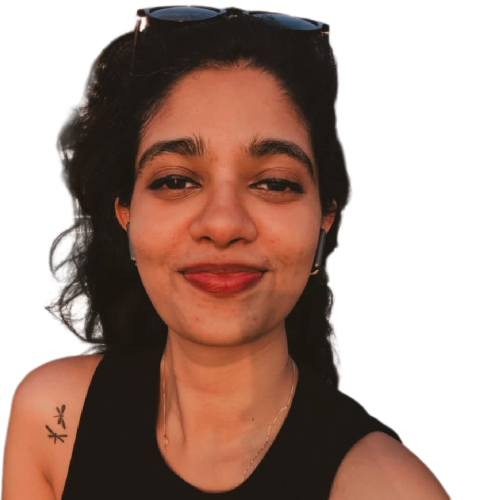
On my first day at Urbz, on one of Mumbai’s reliably hot and humid afternoons, I saw a figure zoom across the office carrying a theli (read: a large cotton tote bag) filled with towering steel dabbas. Food, I assumed, following the dependable logic of steel containers arriving around lunchtime. My stomach had begun growling around one, despite my attempts to reason with it. By half past one, however, I think my hunger had become audible enough to reach Kareena and Samidha. The office slowly gathered around the brown wooden table, and the unboxing began. Four shiny steel dabbas emerged from the theli. Everyone quickly laid out the steel plates, bowls and spoons. Parth began opening the dabbas, dismantling the steel structure one container at a time.
Realising that lunch was a collective operation, I picked up the sabji dabba and began serving it. Dal was poured into bowls, papads were placed on plates, and two sabjis were passed around. The spread resembled the North Indian thaalis we used to order from our favourite Gujju restaurant back home. The rice remained untouched. It appeared that rice was reserved for the second round, after the chapathi, a custom I observed with some suspicion. I am not very good at saying no, so I watched helplessly as a chapathi was placed on my plate. I remembered the many times I had waved away waiters offering rotis and insisted on rice instead. Wherever I went, I maintained a strict loyalty to rice, dutifully preserving the Kerala stereotype. It is only lunch, I told myself. I can eat chapathi. Adults eat chapathi. I am an adult.
We sat around the table, now crowded with curries and dishes. Kareena reminded me that there was achaar, which, in my opinion, remains one of India’s greatest inventions. Then came the curd, occupying the final available patch of wood, and my first lunch at Urbz officially began. With the first bite, I realised that perhaps chapathis deserved another chance. It was buttery soft, lightly polished with ghee, and seemed to melt into the sabji. The dal, sabji and curd soon disappeared from my plate. The first luncheon had been a success. Curious about the person responsible, I asked, “Who cooked this? Where does the lunch come from?”
The answer was Mary Koli, known to everyone as Mary Maushi (aunt - Often used respectfully for any close female family friend or neighbor of your mother's age). She handled the housekeeping at Urbz after office hours and had been working there for nearly fifteen years. Since the previous year, she had also begun preparing lunch for the team, adding another source of income to her work. The office had tried lunches from a few local cooks, but Mary Maushi’s food had remained the favourite for some time in this informal roster of chefs. Mary Maxi Koli was born and raised in Dharavi Koliwada and belongs to the Christian Koli community. She is a small, lean woman with her hair gathered into a neat bun and a rosary hanging around her neck. Near her wrist is a small cross tattoo, now slowly fading. When you smile at her, you receive a smile in return.


She studied until the third standard before leaving school to support her family through piecework in a garment factory. Like many women in the community, she began balancing paid work with household responsibilities at a young age. She learnt to cook from her mother, a fisherwoman from Malad, and those memories continue to shape her understanding of food, work and community. Mary Maushi plans the menu for Urbz every day. For her, the taste of sea fish is distinct and irreplaceable. She prefers it even to fish caught from the Mithi River. “Taste different,” she explained as a matter of fact. I accepted that my understanding of fish still had some catching up to do.
One afternoon, I became a fly on the wall in her kitchen as she prepared chavlachi roti (flatbread made from rice flour) and lal surmai curry (tuna). After a recent eye surgery, she now had to put on her glasses while cooking. Between one task and the next, she kept feeding me halwa that she had brought back from a trip to Velankanni (A famous Christian pilgrimage town in Tamil Nadu, India). The kitchen was small, but everything required for lunch had its place. The fish had been cleaned using water stored in large buckets, necessary because water reaches Dharavi homes only at fixed intervals. Coriander, coconut, chillies and other spices had been ground beforehand and stored for the curry. Mary showed me the different kinds of imli and kokum in her kitchen. She was also very clear about what did not belong there: Coorgi kodampuli, she told me, was used more widely in southern parts of the country, unlike the imli and kokum she used. Her movements carried the certainty of repetition. The tawa stayed on for precisely as long as it needed to, while one rice roti followed another. Yet the work was not effortless. Making the rotis hurt her elbows, she said, but she continued because her children, Loretta and Lucas, still liked them. Mary Maushi lives on the upper floors of a house tucked inside one of Dharavi’s many narrow lanes, with her husband, three children and two rescued dogs. The colourful home, its walls covered with pictures, was typical of Dharavi’s incremental construction. Her husband passed away last year, and her eldest daughter, Rebecca, has since married and moved out of the small home.
Once the rotis and curry were ready, Maushi served me a plate. Leo, one of her rescued dogs, settled near my feet and waited as I ate. Lal surmai, apparently, was one of his favourites too.
“Matthi pasand hain?” she asked.
It took me a moment to realise that she was talking about sardines, also called matthi in Malayalam. She had heard customers use the word at fish markets and worked out which fish they meant. It was a small reminder of how knowledge travels through markets: across languages, customers and repeated conversations over fish. After every few bites, she asked whether I liked the food. I nodded enthusiastically, assuring her that Koli fish curry could stand proudly beside Kerala-style fish curry, a declaration I do not make lightly. Meanwhile, Leo continued to wait near my feet, perhaps hoping that the comparison would conclude with a practical demonstration of generosity.
By 12:45 p.m., the food had been packed into the large steel dabbas, ready to make its daily journey from Mary Maushi’s kitchen to the brown wooden table at Urbz. The figure I had seen zooming into the office every afternoon, I later learnt, was her daughter Loretta, delivering her mother’s food promptly.


With time, lunch became more than the arrival and dismantling of steel dabbas. On her last day at the office, Aruvi, another co-intern, said that lunchtime was her favourite part of the day. I realised that it was mine too. Around that wooden table, we discussed Dharavi, politics, the state of the country, movies, women and protests. Growing up, like many other women, in an environment where discussing politics over food was frowned upon, this felt refreshing. At Urbz, it came naturally. Of course politics could be discussed over good food, food deeply connected to the identity of one of Maharashtra’s oldest Indigenous communities. Where could it be more fitting than this? We made plans between mouthfuls of dal and sabji. I never felt the need to reach for my phone or play another series to keep me occupied while eating. We talked, shared and enjoyed Mary Maushi’s Koli thaali. On request, she would send chicken or fish. Once, she sent shrimps so tiny that I held one close to my eyes to inspect it properly. The food had witnessed two months of my learning and unlearning, about alternative ways of thinking about cities, community identity and, somehow along the way, the names of many different fish.
Before joining Urbz, people had offered me cautionary tales about Dharavi. My own assumptions had joined in, warning me that the food might not be safe and that I should avoid eating anything. Sitting around the table day after day, waiting for Mary Maushi’s dabbas to be opened, I understood how misplaced those assumptions had been.
When Shikha joined, she told me that a friend had already informed her that lunch at Urbz was superb. And I find myself qualified to confirm this. It is indeed.

A small gully, adjacent to Dharavi Main Road, takes you to Hasmat’s tool-house. She is a friendly businesswoman, with inspiring resolve accompanied by a small smile.
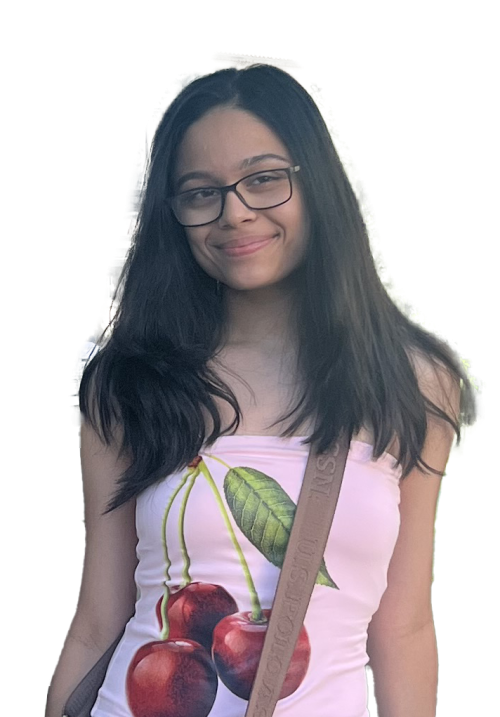
Hasmat Shaikh is a resident and business owner of Dharavi. In a small gully stemming from Dharavi Main Road lies her tool-house: shop in the front, house at the back, the two connected by a door. Hers is a family business, started by her parents 45 years ago. Today, it is managed by her and her entire family- her two brothers, their wives, and even their children, who help out.
Hasmat and her siblings were born and brought up in Dharavi. She studied at St. Anthony’s school till grade 4, after which she shifted to Canossa School in Mahim. She studied there till grade 6, after which her education ended and her journey to running a family business began. As a child, she started helping out in a small capacity. But as her parents grew older, they started facing certain health issues. So, over a period of time, she took over the majority of the work, so that her parents could take a back seat and rest in their old age.
“Sahavvi nantar mi aai vadilanna madat karayla aale. Tyanchi pan tabbet thik nhavti. Koni tari dukan chalavla pahije na.”
“I studied till the sixth standard. After that I started helping my parents in the shop. They were having health problems, and somebody had to step up. So, I did.”
In the story of Hasmat’s life, duty and responsibility came before everything else. She said, if she’d had a choice, she would’ve loved to continue her studies. She used to enjoy learning and studying and didn’t have any favourite subject; she liked them all. But she enjoyed math in particular, and she was quite good at it. There was a small smile on her face, and a kind of quite acceptance in her demeanour as she narrated her past. If she had gotten the opportunity to complete her studies, she says she would probably be a working woman, sitting in an office right now. Or perhaps she would’ve joined the post.
“Mala abhyas avdaycha, sagli subjects. Maths madhye mi azun hushar hote.”
“I liked studies, all the subjects. I was particularly good at maths.”
But that’s all in the past. Today she runs a successful shop, that is a one stop paradise for the women and girls of Dharavi. It has everything- bangles, bindis, nail polish, mehendi (henna), powder and more. Just in the short while of our conversation, 3 ladies and a man came and bought items. 2 came and enquired about the availability of certain items. Overall, it was a full house! She told me usually customers don’t prefer to step out of their homes in the daytime, since the Mumbai heat is terrible. So, her shop, and the streets in general, start crowding evening onwards. Hasmat has loyal customers who have been coming from the time her parents used to run the shop. The people that came in those times now send their sons, daughters, and daughters-in-law here, and sometimes accompany them too, for old times’ sake!


She goes on to tell me about the festivities in Dharavi. She says neighbours, friends and others come out to celebrate together. Since the number of Marathi people (Maharashtrians) are higher in number, Ganesh Chaturthi and Diwali are truly enjoyable and memorable, and act as moments of oneness among all the coexisting communities in Dharavi. She says even she enjoys them immensely. She prefers keeping her shop open even on festivals, where she sits and watches, while also tending to customers.
“Dukan ughadlach pahije…dukan ughadla tar khaayla milel.”
“I have to open the shop and keep the business running…only then will we have food on our plates.”
Her business takes her to various parts of Mumbai. To buy her products at a wholesale rate, especially bangles, she goes to Dadar, Kurla, or Masjid Bandar. She usually goes in the mornings or afternoons, and takes the local train, from either Sion or Mahim stations. The frequency of her visits depends on customers- sometimes her entire stock gets over in 2 to 3 days and she has to go more often. But other times, during the slow season, when customers go to their villages or due to other factors, items get sold out after 8 to 10 days, reducing her visits.
Even though she has a lot of known sellers in these markets, there is no guarantee of the availability of stock. These sellers buy all of these products in Aurangabad and Firozabad, and get them transported to Mumbai. Since they are in high demand, they get sold out quite fast. But she never has to worry, because stock keeps getting replenished. She has to scout the markets till she finds what she’s looking for, which usually takes about 20 to 30 minutes. When she finds a seller who has an impressive variety of bangles, comes her next task- sifting through the bangles to see which ones are good, and then separating them from the broken ones.
After this is the hardest task- bringing those heavy bangles along with other items on her back, to Dharavi. For her, these visits are quite strenuous and exhausting, due to her age and health problems. The repeated carrying of the bangles on her back has resulted in major spine issues. There is a nerve in her back, which has been pressed. They have worsened to the point where she can sit at the stall only for 15 to 20 minutes at a stretch, after which she has to lie down. Even in her free time, such as the afternoons when the shop is closed from 2-4 pm, she likes to rest. She takes her medicines after lunch, and takes a nap.
“Saaman khup zad aahe, maajhi kambar duktey…majhya paathitli nas dabli aahe, mhanun paath dukhtey.
Jevdha zamta tevdha bastey, mag thoda aaram kartey, mag parat dukanavar bastey.”
“The items I carry on my back are very heavy; that’s why my back hurts. Some nerve in my spine has been pressed, that is why it’s so bad.
I sit for as long as I can, then rest for a bit, then I come back.”
Despite all her spine issues and incomplete dreams of continuing her education, she truly enjoys running a business, and is grateful for it. She likes the fact that she does not have to wait each month for a salary. If she were working in an office, she would have had to depend on a pay check, but in a business, that is not the case. There is a daily inflow of income, which she uses for day-to-day needs. It is convenient and preferred for the family.
“Yevdhi varsha mi dhanda kela, aata mala dhanda aavadto. Office madhye mahinyala pagar milto, pan dhandhyat roz paise yetat. Mag roj cha khana and garzaa tyachatach houn zaatat.”
“I’ve been running this business for so many years, now I have a liking for it. In an office, there is a salary, but in a business, I earn money daily. Our daily food and other expenses get covered in that.”
Many small business owners of Dharavi prefer the independence that comes with having their own venture. In the unpredictable times these days, it's comforting for them to have something of their own, that provides their friends, neighbours, and other loyal customers with products and services, and them with stability and income.


Some people leave to never look back. Ajeet left knowing exactly when he'd return. Now, you'll find him in Dharavi Koliwada, behind a wall of glass bangles and ceiling-hung toys, running a business that three years in Dubai quietly paid for.
The shop barely has enough room to turn around in. Glass bangles fan out in stacked displays at the entrance, gold, red, blue, green, the kind of colour that stops you in a narrow lane. Inside, toys hang from the ceiling sealed in clear plastic: small kites still folded flat, soft balls, dolls in bright packaging. Shelves at the back hold rows of beauty products. Everything is close together. No space is wasted.
Ajeet stands somewhere in the middle of all this with a quiet ease, unhurried, watching the lane from the threshold.
Ajeet was born in Dharavi. He grew up in these lanes, studied here through his early years before shifting to a school near Masjid station, Urdu medium. He finished his 12th standard and started his working life at a café somewhere in the city, where he trained as a barista. It was work he became fond of and which he started to take seriously. When an opportunity came to take that skill somewhere further, he was ready. Three years in Dubai. He worked at Jamaica Blue, a café chain, and the barista training he had built in Mumbai transferred cleanly into something bigger. According to him, the city was rich and fast, the work he did was more polished, and the environment was unlike anything he had experienced before. Thanks to his previous experience as a barista, he was able to speak both Hindi and English throughout his Job. He expressed his pride in learning and adapting at such a young age, and thanked his first job for teaching him that. However, despite liking the place, staying in Dubai was never the plan.
"Dubai teek tha, lekin humara desh to hamesha behtar hi hoga."
"Dubai was nice, however our country will always be better."
While he continued to admit that Dubai, the company, and the life he lived there were excellent, he always had an internal plan to go back. In his own words, he preferred to come back because he felt like he belonged in India, as his family still resided in Dharavi. According to him, he collected enough money to return and use, so the three-year stay was the plan from the beginning. When those three years ended, coming back was the default decision.
He returned and started his own business/shop. The years away had given him money, confidence, and a clearer sense of what he wanted to build. While he was originally part of a different glass industry, it had later led him to sell bangles, and bangles led him here, to this narrow shop in Dharavi Koliwada that he has been running for two years with his partner. From the outside, it displays its stock right on the street: bangles on wire stands, children's clothes hung at the entrance, everything visible and within reach. From the inside, it is even denser, shelved floor to ceiling, every corner accounted for. The bangles are mostly glass, sourced from suppliers across Bombay. The toys and beauty products fill in around them, whatever the lane asks for.
While we were talking, a boy of about eight appeared at the entrance. He stood with his neck craned back, scanning the ceiling with the particular focus of a child who knows exactly what he wants. A Dhoom 3, he said. A spinning top, named after the Bollywood film, is somewhere up among the hanging toys. Ajeet looked up, reached, found it, and handed it down. The boy paid and left on a run. Ajeet returned to the conversation without missing a beat.

Whilst making conversation with him, we spoke about Mumbai the way people do when they’ve seen the world outside of it. He said that Mumbai is open to all, and there’s not much discrimination compared to other cities because at the end of the day, everyone just wants to get on with their business.
In Dharavi, he said, “there is no distance between people, because the lanes don't leave room for it” subtly implying that due to the dense fabric of the neighbourhood, people end up knitting themselves and their community closer to one another. Though he had spent three years in a city that was larger, richer and more polished than anything he had ever known, in his mind, he still belonged in Dharavi.

An old building in Dharavi Koliwada stands at the threshold of change. Through conversations with the residents of Jantu Bai Niwas, this story explores the hopes, concerns, and everyday realities shaping the future of a community in transition.
You can tell Jantu Bai Niwas is getting old before anyone tells you. Cracks run across the walls, rust stains mark the exterior, and years of repairs have left their traces on the building. These marks are not just signs of ageing but of a building that has been lived in, adapted, and cared for over decades. Neighbours stop to exchange greetings, plants spill out from windows that double as storage spaces, and families go about their daily routines.
Soon, the building will enter a new chapter. The area around Jantu Bai Niwas offers small glimpses into the many layers of life that shape Koliwada today. Beside it stands the bright yellow building, i.e.‘Lajru Pajru Chawl’, a redevelopment project completed by urbz several years ago. Nearby, children play in shared open spaces, bikes gather at the porch lined with plants, and residents move through familiar daily routines. A seabed rock worshipped by the Koli community and a small shrine attached to the building itself reflect the importance of faith, tradition and history within the neighbourhood.
Like many older structures in Dharavi Koliwada, Jantu Bai Niwas has evolved gradually over time, adapting to changing families, livelihoods, and everyday needs. Today, as the building approaches redevelopment, it stands at a moment of transition. Rather than being imposed from outside, the idea of redevelopment was discussed and agreed upon by residents, many of whom recognised the challenges of living in an ageing structure. The questions surrounding its future extend beyond construction itself and touch on how existing social relationships, routines, and ways of living might continue within a new built form.
While redevelopment projects are often discussed through plans, timelines, and buildings, an equally important part of the process is understanding the people who will eventually live in those spaces. Through conversations with residents, urbz seeks to understand their needs, concerns, and aspirations so that the redevelopment benefits the community it is intended to serve. While the redevelopment will result in a new building, residents hold different expectations about what that transformation should achieve. Their perspectives offer insight into the diverse ways people experience and inhabit the same structure.


One of them is Rhea, a pre-primary school teacher who grew up in Dharavi. She eventually moved away for work, but something about the move never felt complete. While it brought new opportunities, she found herself missing aspects of everyday life that she had always taken for granted. When she speaks about returning, she does not mention larger homes or better infrastructure. Instead, she talks about people. Festivals, neighbours, familiar faces, and the feeling that everyone knew one another. For Rhea, what drew her back was not the place itself, but the sense of community that came with it.
"There was no community there," she recalls. It is a feeling that comes up often when people talk about Dharavi. For many residents, home is not just a physical space but also the people around it. The redevelopment may change the building, but for residents like Rhea, the challenge lies in preserving the relationships and familiarity that make the place meaningful.
Within the same building, Paarasmal Jain's story reflects a different chapter of Dharavi's history. A retired businessman, he arrived here around 1970 from his village, part of a generation that came to Mumbai in search of work and opportunity. Through the metal scrap business, he built a livelihood, raised a family, and educated his sons.
Unlike Rhea, who speaks about community, Paarasmal speaks about time. Five decades is long enough to watch a neighbourhood change again and again. Shops open and close, families move in and out, and children grow up and start families of their own. From his perspective, redevelopment feels less like a dramatic turning point and more like the next step in a process that has been happening for years. The building is old, he says. Change is necessary.
There is little hesitation in his response. Having spent most of his life in Dharavi, he sees redevelopment as a practical response to the realities of an ageing structure. While the process may take time, he believes it is ultimately a step towards a safer future.


If Rhea's perspective is shaped by community and Paarasmal's by decades of experience, Vikas Kenny's is shaped by everyday realities.
Born in Dharavi, Vikas spent part of his life away from the neighbourhood before returning in 2008. After getting married in 2015, he moved into the house where he lives today. Unlike many residents, his connection to the building is tied to family history. The property originally belonged to his family before being divided among relatives, and today he remains one of the few members of the original family still living there.
When discussing redevelopment, Vikas focused less on aspirations and more on practical concerns. One issue he highlighted was the gradual rise of the road level outside his house. Over the years, repeated layers of concrete have raised the surrounding ground, leaving the entrance to his home lower than the street. During the monsoon, this often results in water entering the house, forcing the family to move furniture and belongings to avoid damage.
His expectations from redevelopment are simple. A properly developed home would be welcome, but more importantly, he hopes the new building addresses issues that have become part of everyday life in the existing structure. For him, redevelopment is a chance to improve living conditions and create a more secure future for his family.


Listening to these conversations, it becomes clear that there is no single resident perspective on redevelopment. For Rhea, the future is meaningful only if it preserves the sense of community she returned to. For Paarasmal, redevelopment is a practical response to the passing of time. For Vikas, it is an opportunity to address the everyday challenges that come with living in an ageing building.
Different lives. Different priorities. Yet they all arrive at a similar conclusion: change is necessary.
As Jantu Bai Niwas prepares for redevelopment, the conversations with residents reveal that the future of a building cannot be measured only through new construction. For some, redevelopment represents improved infrastructure and safer living conditions. For others, it raises questions about continuity, familiarity, and the social relationships that have developed over many years. The building that stands today carries traces of different generations, adaptations, and everyday practices. Soon, those spaces will be reimagined. New homes will need to respond to old challenges, changing family needs, and the aspirations of the people who call Jantu Bai Niwas home.
The residents have shared what they hope to see in the future. The next step is to explore how those hopes might take shape in the building itself. For now, Jantu Bai Niwas stands between what it has been and what it could become. As plans evolve and new possibilities emerge, one question remains at the centre of it all: what comes next for Jantu Bai Niwas?

What happens when a home is also a workshop, a storeroom, and the centre of a livelihood? Step inside Bashir Ahmed's tool-house, where stacks of wood and velvet become jewellery boxes, while home and work remain inseparable parts of everyday life.
Bashir Ahmed did not come to Mumbai looking for Dharavi.
When he arrived from Tamil Nadu in 1983, he hoped to eventually work abroad. His passport was already prepared, and Mumbai was simply one stop along the way. Today, he runs a jewellery-box workshop in Dharavi, where he spends most of his day overseeing production alongside his employees.
Bashir first learnt the trade while working under an employer after arriving in Dharavi. For nearly eight years, he worked in the industry, learning the process and gaining experience before eventually starting his own business in 1991. More than three decades later, the workshop is still running. Four employees now work alongside him, helping produce the boxes that leave the workshop each day.


The workshop was packed with materials. MDF boards, wood, velvet, foam sheets, tools, unfinished boxes, and scraps occupied almost every available corner. Looking around, it sometimes felt as though the materials had become part of the walls. Bashir showed us some of the boxes they produce: jewellery boxes, trophy boxes, presentation cases, and customised storage boxes. Some were neatly finished and stacked away, while others were still taking shape.
As he explained the process, it became clear that making the boxes required much more than simply covering a frame with velvet. A box first had to be designed. The work began with planning and measurements, ensuring that every component matched the client's requirements before production could begin. Then a frame was made. Foam interiors were fitted. Only then could the final covering be added. More than once, Bashir returned to the same point. The work requires clean hands. Small mistakes show immediately. It did not take long to realise that Bashir knew the workshop inside out. Questions about materials were answered immediately. Questions about production were often followed by a demonstration. Every now and then, he would pause to guide a worker, inspect a piece being worked on, or pull out an example from a stack of finished products nearby. There was a quiet pride in the way he spoke about the craft, the kind that comes from spending decades doing the same thing and understanding it well.


At one point, Bashir explained how the building was organised. The workshop occupied the ground floor. The floor above stored materials and stock. On the top floor, he lived with his family. Together, the three floors formed what urbz describes as a tool-house, a live-work arrangement where the house itself becomes part of the production process. The building was not simply a place to live or a place to work. Materials were stored there, products were made there, and when flooding disrupted work below, operations could shift upstairs. Home, storage, and production all existed within the same structure, each floor supporting the others.
When asked about Dharavi, Bashir's thoughts often drifted towards the years when he first arrived. The road outside, he recalled, was once made of laal maati (red mud). Basic facilities like toilets were limited. During the monsoon, floodwater regularly entered the workshop. At its worst, the water rose as high as his chest. Work often had to stop, and at times he shifted operations upstairs simply to keep orders moving. When asked how he feels about Dharavi today, Bashir spoke positively about the improvements he has witnessed over the years. The roads, services, and overall conditions have changed significantly since he first arrived, making daily life and work far easier than before.


When the conversation eventually turned to redevelopment, Bashir's concerns centred less on the building itself and more on what surrounded it. For him, the question depends largely on where people are relocated. Much of his work is tied to Dharavi. Materials come through suppliers and workshops he has known for years, while orders arrive through connections built over decades. His workshop is here, but so is his family. If redevelopment allows residents and businesses to remain connected to the area, he believes things can continue smoothly. But if people are moved far away, the process of sourcing materials, completing orders, and running the business becomes more difficult.
After decades of living and working in the same place, Dharavi has become much more than the location of his workshop. It is where he built a business, raised a family, and developed the relationships that continue to support his work today.

Anil Chawda, owner of Khushi Tailor, is a friendly, multilingual man, who enjoys his work-life balance, cricket, and the occasional beer!
If you hear the constant ticking of a sewing machine, the clean cuts of a scissor, a movie playing faintly in the background, and chatter over all of this, you have reached Anil Chawda’s tailoring shop, Khushi Tailor.
Anil is a Gujarati, born and raised in Dharavi. If there was one thing young Anil was passionate about, it was cricket- the love of almost every Indian’s life. Every day of his entire childhood, he would go play cricket with his friends at Holi Maidan (a ground in Dharavi Koliwada). The memory of those golden days brings a smile on his face as he narrates them to me.
“Arey main roj Holi Maidan mein cricket khelta tha. Lekin abhi time kiske paas hai…”
“I used to play cricket in Holi Maidan everyday. But now who has that kind of time…”
But, as they say, all good things come to an end. With adulthood came responsibilities, and for Anil, that meant taking over his family business. The business was started by his grandfather decades ago, who not only trained Anil’s father, but also taught a young Anil how to cut and sew. Anil had a liking for it since then. As a child, he used to watch the two of them work. He calls them a ‘family of darjis (tailors).’
Today, he has two shops, one karkhaana (workshop) and a 3 BHK house in Dharavi. He has 10 workers working under him, and around 700 loyal customers!


But maintaining this success requires a lot of hard work. There are certain neighbourhoods in Mumbai that are known for their incredible variety of fabrics sold at wholesale rate, and tailors from all over the city go there to get the best stock. Masjid Bandar is one such neighbourhood. Anil buys the fabric and other raw material required to make his intricate pieces from there, and gets it transported to his workshop. He too goes there on his bike, because he is very particular about the selection of fabrics- the quality, variety, colours, and prefers to do it himself instead of outsourcing it. Mondays, the only time his shop remains closed, are reserved for this, and if he’s lucky, a party and a couple of beers too! The rest of the week, he is constantly working, his loyal workers by his side, completing one order after another. He says that at the moment, intricate blouses with stones and embellishments are in high demand and are also fun to make. But because most of his workers have gone on their annual vacation, he hasn’t been taking those orders, since it takes a lot of time, effort and manpower to make them. Instead, they have been making dresses. The workers will return from vacation in a couple of days, he tells me, since their children’s schools will start by mid-June. That’s when he'll be able to start taking blouse orders again, and work will be in full swing.
When I asked if I could see one of these blouses, or maybe a picture, he said:
“Time nahi reheta hain photo-voto nikal ne ke liye. Order bante hi customer aake leke jata hai.”
“We don’t have the time to take pictures and all. When an order is complete, the customer comes and takes it; they don’t leave it here.”
Anil enjoys his work, and is proud that he has taken forward the business his grandfather built all those years ago. He has reached a point in his life where he just wants to work, make money, and live comfortably. He aims to expand his business, and open his own clothing store, in about 2 years. He wants to buy readymade blouses and pieces, and sell them, here, in Dharavi, in a large shop. He is confident he’ll do it in 2 years.
“Do saal mey mujhe kapde beychney hain; bahar se laake yaha bade dukan mey blouse wagera beychna hai. Ho jayega, do saal mey karna hi hain mujhe, who Dadar mein Matching Centre hain na, waise.”
“In about 2 years, I want to start selling clothes. I want to buy clothes from outside and sell them here (in Dharavi), when I open a big shop. It’ll happen; in 2 years I’m definitely going to do it. You know ‘Matching Centre’ in Dadar? Yeah, just like that.”
To keep himself entertained while working, he plays shows and movies on his phone, and watches it simultaneously as he cuts and sews. When I visited him the first time, I noticed much later that he had propped up his phone against the wall behind a mountain of cloth, and was watching Dhurandhar, while working and also chatting with me! That’s when I realised that he’s quite the multitasker.
In his work-life balance, he has also managed to include his childhood passion - cricket. Adulthood managed to take Anil out of cricket, but not cricket out of Anil, because where there is a will, there surely is a way. And Anil found it.
His busy schedule doesn’t let him play cricket. So instead, he bets on it! He has been in the betting game for about 15-20 years now. There is a twinkle in his eye as he tells me about his betting experiences. There are many places where one can physically go and place bets, among friends, acquaintances and neighbours. He also places bets on Dream11, an Indian fantasy sports app. Just recently, he won INR 1 lakh in IPL 2026, after betting on the Gujarat Titans! As a proud Mumbaikar, when I asked him why he doesn’t support Mumbai and bet on it, he laughed and said that he supports Gujarat because he's a Gujrati, and besides, the way Mumbai has been playing recently is quite disappointing.
I laughed sheepishly, because there was no denying that!
But then he said something surprising- that this was his last season of betting! He had been keeping it a secret from his family, especially his wife, who didn’t approve of it. But he recently announced to his wife that he is quitting.
Speaking of the Dharavi Redevelopment Project, Anil was very confident that it would happen by 2030. He says that the implications of the project on him and his neighbours could be varied, since it all depends on their current ownership of ‘rooms’. He claims that he will benefit if it were to happen, because he has 3 ‘rooms’ (the two shops and the karkhaana) and a 3 BHK house. In the redevelopment project, those who own ground and first floors will be compensated. That is why, according to Anil, those who have invested heavily in building floors one on top of another will not get the expected returns from the developer, and they have a lot to lose.
“Ameer log ek kamre pey paanch-chhey mala khada karte hain...kaise chalega? Dharavi mey jo ameer hai unka nuksaan hoga, aur jo gareeb hai unka fayda hoga.”
“The rich persons of Dharavi build 5-6 floors above the one small room they own…how is that fair? If the redevelopment happens, the rich will suffer and the poor will benefit.”
The future may be away, but Anil has already envisioned it for himself. And perhaps that is who Anil Chawda is: someone who keeps moving forward. One shop became two, and two years from now, a tailor's workshop will become a clothing store. He has been building on what already exists, layer by layer, the way Dharavi itself always has. The machine keeps ticking, the orders keep coming, and Anil, phone propped up, scissors in hand, keeps going.
Anil’s shop will complete 20 years in 2027, the fruit of his labour and his amazing Gujarati business acumen!


Dharavi Koliwada is on a mission to re-establish a dwindling connection to its fishing ponds. Along with the crew from Sullivan Carpentry and urbz, they are actively designing and building an amphibious device that helps fishing boats get into the water.
The blazing summer heat is inexorable even on the banks of the Mithi estuary. The waters adapt by surrendering to altered states – contamination, vapour, condensation, and finally descending as rain. But before the monsoons arrive, Dharavi Koliwada is on a mission to re-establish a dwindling connection to its fishing ponds. Along with the crew from Sullivan Carpentry and urbz, they are actively designing and building an amphibious device that helps fishing boats get into the water. The coming together of carpenters from Sydney and the Kolis from Dharavi, Mumbai, is an example of what Doreen Massey would call a ‘Global sense of place’ - a local community actively shaping its trajectory by drawing the outside world in, on its own terms.
The capacity to draw people in coexists with ecological and spatial severance. Decades ago, the ‘Khadi’ or marshes sustained Dharavi Koliwada, with an abundance of field crabs, prawns, clams and other creatures that inhabited the watery terrain. The construction of the Dharavi Sion Link Road in the 1980’s and Dharavi Metro station, which spanned nearly a decade, has proved devastating for the fishers' long-evolved relationship to the khadi. Built 3 mts higher than the surrounding settlement, the road partitioned the Koliwada from its fishing habitat, forming an embankment that also effectively cut off any visual connection with the khadis. Decades later, the tunnelling for the underground metro reverberated through the wet soil and waters of the khadi. Relentless tremors disrupted the sensitive breeding cycles of its more-than-human inhabitants.
The Kolis' profound relationship with the khadis, encompassing the spiritual to the material, has inspired them to respond ingeniously to their rapidly urbanising habitat. About 50 handmade fishing ponds are connected to the river by manually operated sluice gates, which keep out the detritus of urban life while maintaining a living connection to the river. Against all odds, they continue practices of sustenance, care and repair.


Where once the land gradually merged into the water, there is now a looming edge of construction debris, medical waste and other junk that spills into the river. The fishermen navigate this toxic terrain to carry their boats into the water. Alternatively, they traverse bunds built through dense mangroves leading to their ponds. In this case, their boats are hidden in adjacent nooks to protect them from being stolen or damaged.
Chandrakant Koli, secretary of the fishermen’s association, is keen on improving access to the ponds - for the Koli community at large, the fishermen and other interested cityfolk. The community celebrates Naralli Purnima on a full moon in August every year. The ritual celebration evokes their spiritual connection to the natural world with the offering of coconuts to the Sacred Waters. It is primarily this ritual connection that the amphibious device facilitates - it is the soul of the project. The fishermen are keen to offer boat tours that spotlight the urban aquaculture system developed over generations. They believe that a trip to the ponds will allow for an experience of the Natural world rooted in sacred relationships - expressed through songs, rituals and festivities.
The ponds offer an expanded sensorial dimension of the city, curated by its Waters. Slowly gliding along in a Hodi (traditional fishing boat), staying perfectly still, trying not to make any sudden movements that could capsize it, the sound of oars skimming the water's surface, birds circling an open sky framed by mangroves – every element converges into an oasis amidst its hyper-urban surroundings. The amphibious device - part jetty, part floating ramp - is a key that unlocks possibilities for reconnection and resistance to a homogenous vision of urbanity.


On a covered stage, a few metres away from the watery landscape, five carpenters are busy transforming logs of Babool - a timber most suitable to withstand the brackish waters of the Khadi. They work in a rhythm of quiet efficiency, established over years of experience and camaraderie. As the amphibious device came together, so did people. Some watched, some actively participated. Curious kids from the surrounding settlements expertly hammered nails and offered to run to the hardware store to restock supplies of screws that were rapidly consumed.
Five days of relentless cutting, sawing and sweating later. The structure, birthed on land, was ready to inhabit the shifting edge between land and water. It was a heavy beast, weighing nearly 2 tonnes. A crane, guided by a cacophonous choir of competing voices, miraculously achieved a synchronised coda and transferred it to its amphibious habitat. Dozens of eyes watched with bated breath as the structure was carefully hoisted. Suspended mid-air, it became a flying spectacle of possibility in the face of the impossible. A symbol of levity, a hope that transcends present realities.


